
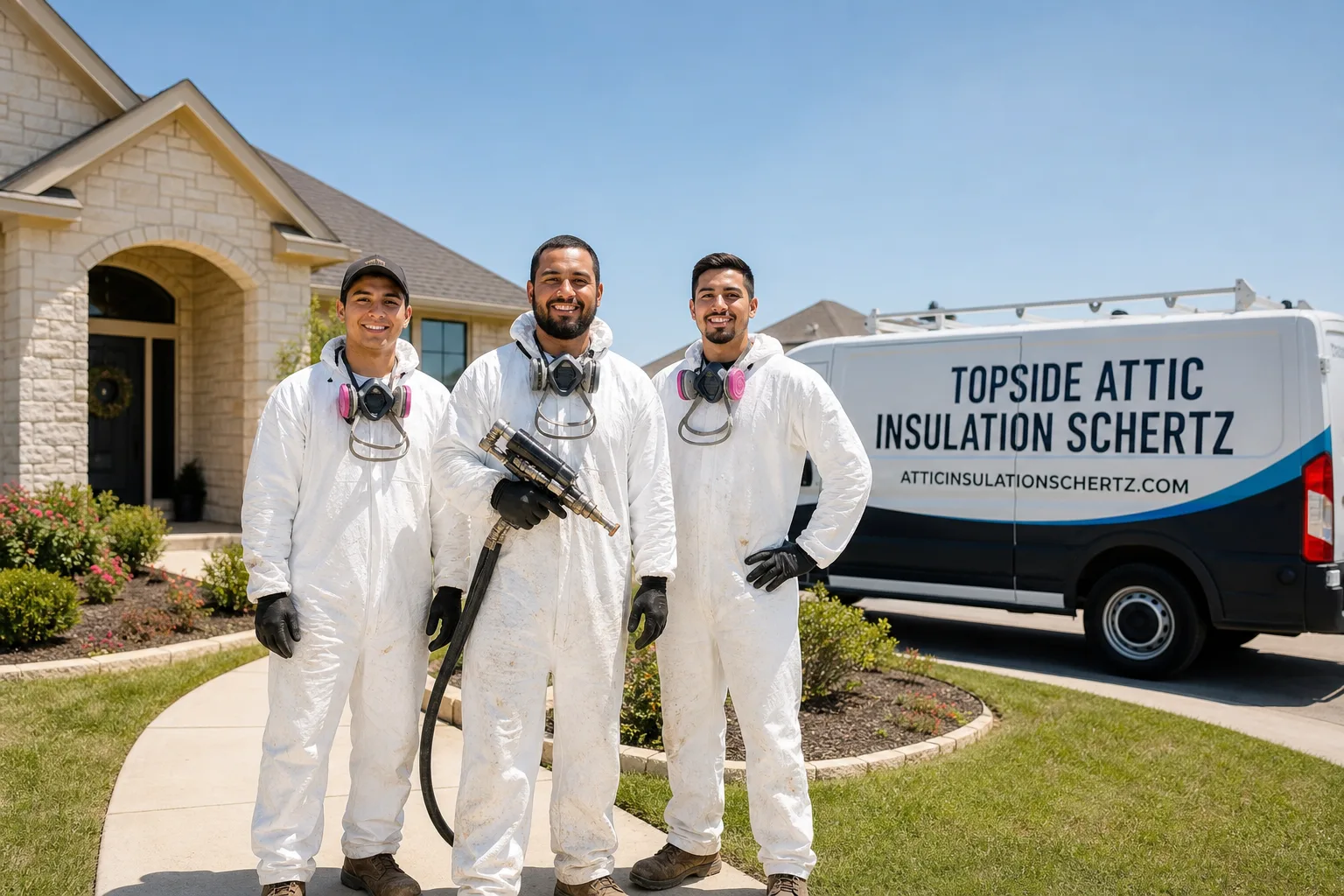
How Much Does Spray Foam Insulation Cost in Schertz?
Our Spray Foam Insulation services in Schertz, TX typically cost between $1.50 and $3.50 per board foot installed, depending on whether you need open-cell or closed-cell foam and how much area needs to be covered. Most Schertz homeowners spend between $1,800 and $6,500 for a standard attic or crawl space application, with larger whole-home projects running $8,000 to $14,000 or more. Those are real installed numbers – materials, labor, and cleanup – not figures pulled from a national average that has nothing to do with the Schertz market.
At Spray Foam Insulation in Schertz, we put a flat written price in front of you before anyone touches a tool. That’s not a courtesy – it’s Haven Standard Clause 1, and it’s how every job at Envelope Insulation Co. works, Wes Okafor included.
Spray Foam Insulation Cost Breakdown (2026)
The table below reflects what Schertz homeowners are actually paying in 2026. Bexar County labor rates, the regional summer heat load, and material freight into the San Antonio metro all factor into these numbers – they’re not national averages averaged down.
| Application | Foam Type | Typical Cost Range | Notes |
|---|---|---|---|
| Attic floor (1,200 sq ft) | Open-cell (R-19 to R-30) | $1,800 – $3,200 | Common in Schertz slab homes; air sealing completed first |
| Attic roof deck / rafter spray | Closed-cell (R-24 to R-38) | $3,500 – $6,500 | Creates conditioned attic; often paired with HVAC in attic |
| Crawl space (800 sq ft) | Closed-cell (R-19 underfloor) | $2,200 – $4,400 | Less common in Schertz; seen in older Schertz Hills homes |
| Rim joists / band joists | Closed-cell (2-3 inch) | $400 – $900 | Add-on to larger project or standalone; stops corner drafts |
| Wall cavities (exterior walls, 1,500 sq ft home) | Open-cell or closed-cell | $3,000 – $7,500 | Requires drywall removal or injection port drilling |
| Whole-home envelope package | Mixed: open + closed | $8,000 – $14,000+ | Attic, walls, rim joists; blower-door tested before and after |
What’s Inside That Number
Every price Envelope Insulation Co. quotes covers the full scope: surface prep and masking, foam application by a trained technician, any overspray trimming, basic cleanup, and the documented photo record you receive when the crew leaves. On applicable jobs – any project where air sealing is in scope – we also include a before-and-after blower-door test. That’s a pressurization reading, measured in CFM50 (cubic feet per minute at 50 pascals of pressure), that shows in one number how much conditioned air your building envelope was losing before the work and how much it’s losing after. A Schertz home that tests at 3,800 CFM50 before air sealing and 1,900 CFM50 after has effectively cut its envelope leakage in half. You get those numbers in writing, not just a technician’s word for it.
What’s not included: removal of existing insulation (if your attic has old fiberglass batts that need to come out first, that runs an additional $500 to $1,500 for a typical Schertz attic), any drywall patching after wall injection, or permit fees if required by the City of Schertz for your specific project type. We’ll flag those line items in your written estimate so nothing surprises you.
Open-Cell vs. Closed-Cell: The Price Difference Explained
Open-cell foam runs $0.44 to $0.65 per board foot for materials, while closed-cell runs $1.00 to $1.50 per board foot – roughly double, and sometimes more. That’s because closed-cell foam has a higher R-value per inch (around R-6 to R-7 per inch versus R-3.5 to R-4 for open-cell) and acts as a vapor retarder. In Schertz’s climate zone 2B – hot and humid enough that summer moisture drives in from outside – closed-cell is often the right call for roof deck applications and any below-grade or ground-adjacent surfaces. Open-cell is appropriate for attic floors in many cases, especially when you’re going for R-38 or higher and want to keep material cost down without sacrificing air sealing performance.
Choosing the wrong foam type for the wrong location isn’t just a comfort problem – in Schertz’s climate, it can create moisture accumulation inside wall cavities or at the roof deck. We’ll tell you which product makes sense for your specific assembly, and we’ll put that recommendation in writing before the job starts.
What Affects Spray Foam Insulation Pricing in Schertz
- Foam type (open-cell vs. closed-cell): Closed-cell costs roughly twice as much per board foot as open-cell. For a 1,200-square-foot attic floor, switching from open-cell to closed-cell can add $1,200 to $2,000 to the project total. The choice isn’t arbitrary – the right foam depends on where it’s going and what your moisture conditions look like.
- Attic access and height: Many Schertz homes built in the Northcliffe, Schertz Farms, and Majestic subdivision areas have low-slope rooflines or tight attic decks above the garage. Tight access slows the work and raises labor cost. A 1,400-square-foot attic with a 4-foot peak is a harder job than a cathedral-style attic with walk-in clearance, even if the square footage is similar.
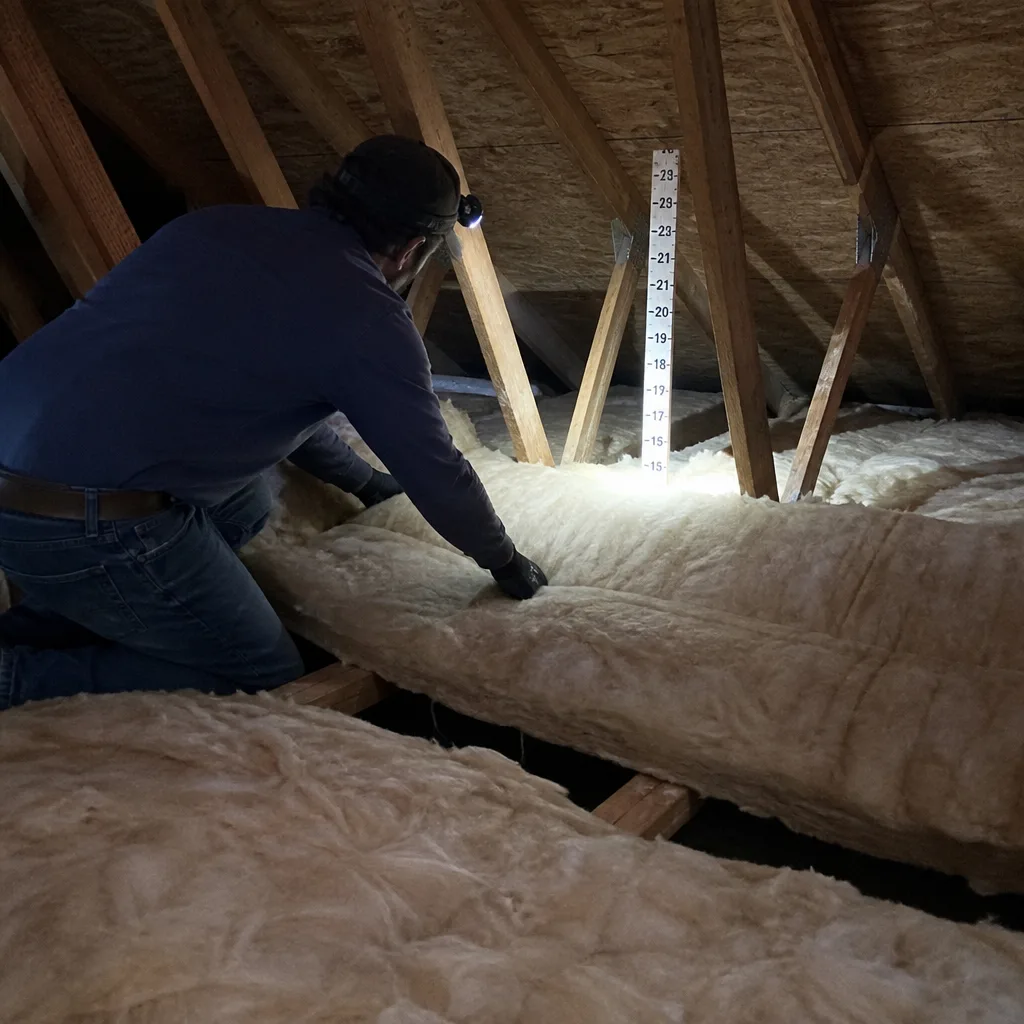
- Existing insulation condition: If your attic already has old blown fiberglass or fiberglass batts that have compressed, become contaminated (rodent activity is not rare in older Schertz neighborhoods near the Cibolo Creek corridor), or have moisture damage, that material needs to come out before foam goes in. Removal runs $0.40 to $0.90 per square foot, and it’s a hard prerequisite – not an upsell. Spraying foam over compromised insulation doesn’t fix the problem; it buries it.
- Air sealing scope: Envelope Insulation Co. treats air sealing as a prerequisite, not an optional add-on. Top plates, can lights, plumbing penetrations, and HVAC boots all get sealed before foam is applied. This adds time – typically two to four hours on a standard Schertz attic – and is priced into the written quote. What it prevents is a foam job that looks complete but still leaks conditioned air through every electrical can in your ceiling.
- Summer scheduling and regional demand: The Schertz and greater San Antonio market tightens significantly from April through August when homeowners feel their energy bills spike. Material and labor availability both tighten in that window. Scheduling a project in January or February doesn’t just avoid the heat – it often results in faster scheduling and, in some cases, better material availability from suppliers. We don’t manufacture scarcity, but the seasonal pattern is real and worth knowing.
- Project complexity and mixed assemblies: A home in the Schertz Cibolo area that has a partially conditioned bonus room above the garage, standard attic space over the main living area, and an unencapsulated crawl space under an addition is three different insulation assemblies. Each requires a different foam specification. Complexity drives cost up – but it also means the quote should itemize each assembly separately, not average them into one number. That’s how a written scope works under Haven Standard.
How to Save on Spray Foam Insulation in Schertz
Start with a Blower-Door Test, Not a Guess
The single biggest mistake Schertz homeowners make before a foam project is skipping a diagnostic step. If you don’t know where your building envelope is leaking – measured by a blower-door test, not estimated by feel – you may spend money on foam in the wrong locations. A $300 to $500 energy audit that includes a pressurization test can redirect your budget toward the leaks that are actually costing you money. We include before-and-after blower-door readings on applicable jobs so you can see what the investment actually did. If you’re not sure whether foam is the right solution for your specific home, that diagnostic is the right first step, not the foam itself.
Bundle Air Sealing and Insulation in One Project
Air sealing and insulation are separate line items, but they happen on the same visit for good reason: mobilizing a crew to Schertz costs time and fuel either way. When you combine air sealing of top plates, can lights, and penetrations with the foam application in a single project, you avoid a second mobilization charge. Breaking them into two projects – air sealing now, foam later – can add $300 to $600 in repeated setup costs. We’ll structure the quote to reflect the savings of doing both at once.
Check for CPS Energy and Local Rebates
CPS Energy, which serves much of the greater San Antonio metro including Schertz, has historically offered rebates on qualifying insulation upgrades. As of 2026, the rebate structure rewards improvements that bring your home above a threshold R-value – typically R-38 in the attic – and may require a pre- and post-inspection. We’ll flag in your written estimate whether your project likely qualifies and what documentation you’ll need. These rebates don’t require you to use a specific contractor, but they do require documentation of the work – which is exactly what the blower-door readings and photo record provide.
Get a Second Opinion on Any Written Estimate
If you have a written quote from another contractor, bring it to us. We offer a free second opinion on any written estimate – we’ll read it with you line by line, flag anything that’s missing (like whether air sealing is included or whether the R-value listed matches the foam depth proposed), and tell you whether the price reflects what the Schertz market actually looks like in 2026. You are not obligated to hire us to do this. If the other quote is fair and complete, we’ll say so.
Don’t Default to the Lowest Bid
In the Schertz and Cibolo area, we regularly see homes where a previous contractor applied foam over unsealed penetrations, used open-cell foam in locations that needed closed-cell for vapor control, or quoted in square feet when they should have quoted in board feet – a unit substitution that makes a thinner application look equivalent to a proper installation on paper. Remediation of a poor foam job – which sometimes requires mechanical removal of cured foam – costs more than the original project. A written scope that names the foam type, the target R-value, the application depth, and the air sealing method gives you something to compare and something to hold a contractor to. Without that in writing, the lowest bid is often the most expensive outcome.
To get a flat written price with no guesswork, call Envelope Insulation Co. at (830) 402-5240. Wes Okafor’s team will assess the job and hand you a written number before any work begins.
Schertz-Specific Conditions That Affect Your Foam Project
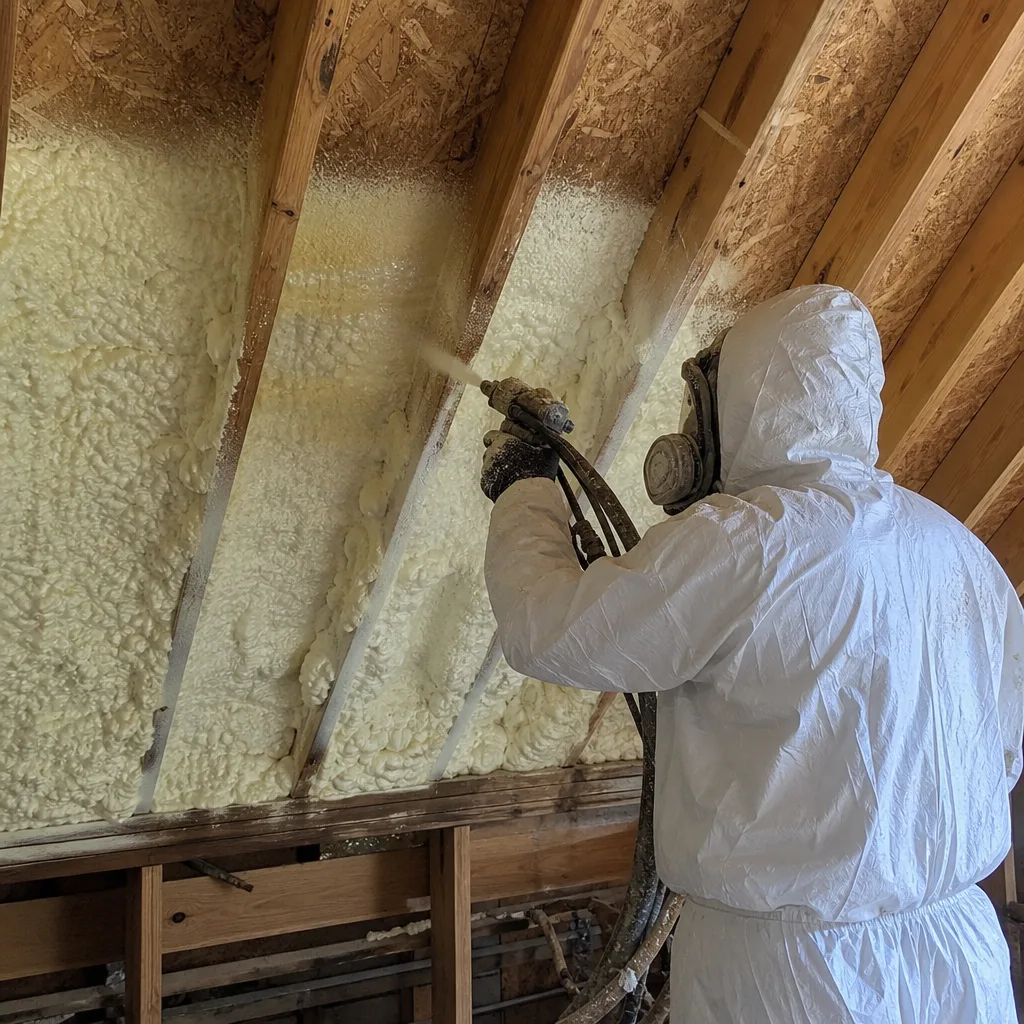
Schertz sits in Bexar County at the northeast edge of the San Antonio metro, which puts it squarely in IECC Climate Zone 2 – one of the most demanding climates in the continental US for building envelope performance. Summers regularly exceed 100°F through July and August, and the humidity that pushes in off the Gulf through the summer months creates a moisture load that doesn’t exist in drier Texas markets like Midland or El Paso. That matters for spray foam because vapor drive – the movement of moisture through your building envelope – runs inward in winter and outward in summer, which is the opposite of a northern climate. Closed-cell foam’s vapor retarder properties are not a luxury in Schertz; they’re often a code-relevant requirement depending on where in the assembly the foam is going.
The Cibolo Creek corridor near older Schertz neighborhoods also means a higher prevalence of slab-on-grade construction with limited crawl space, which changes the thermal and moisture dynamics compared to pier-and-beam homes in older parts of the state. And the volume of new construction in subdivisions like Homestead, Fairway Ridge, and Crossvine means that homes built between 2018 and 2024 often have spray foam already at the roof deck – but the quality of that application varies considerably by builder. We’ve seen original applications in Schertz-area new construction that tested well below the stated R-value when inspected, because the foam was applied at insufficient depth or before penetrations were sealed. A pre-project blower-door test and a visual inspection of the existing foam are both worth doing before you add more material on top of what’s already there.
Air Sealing First – Why the Sequence Matters
Spray foam is one of the most effective air barriers available for residential construction. But “spray foam” and “air sealing” are not the same thing. Foam applied over open top plates, ungrouted plumbing penetrations, and recessed can lights that penetrate the thermal boundary will still allow conditioned air to bypass the foam and escape into the attic. In Schertz homes with standard 6-inch can lights in the ceiling – very common in homes built through the 2000s and early 2010s – each unprotected can is essentially a hole in your thermal boundary. A 2,000-square-foot Schertz home might have 20 to 30 of those cans, and the cumulative leakage can represent 15 to 25 percent of the home’s total air infiltration.
Envelope Insulation Co. will not apply insulation over an unsealed attic floor. That’s not a policy preference – it’s the reason the company was built the way it was. Air sealing of top plates, can lights, plumbing boots, and HVAC penetrations is completed first, inspected, and photographed. Then the foam goes in. The blower-door reading after the job reflects both pieces of work, and the number you get in writing shows you what the combination actually did – not what the foam alone would have done over an unsealed floor.
This is what the home page refers to when it describes the approach: sealed first, insulated second. The sequence isn’t optional, and it’s the part that most lower-bid contractors skip because it adds time to the job without adding visible material to the invoice.
FAQs – Spray Foam Insulation Cost in Schertz
How much does spray foam insulation cost per square foot in Schertz, TX?
Spray foam insulation in Schertz runs $1.50 to $3.50 per board foot installed, which translates to roughly $1.50 to $2.25 per square foot for a 1-inch application and $4.50 to $7.00 per square foot for a standard 2-to-3-inch closed-cell roof deck application. Open-cell foam at 3.5 inches (R-13) runs about $1.60 to $2.10 per square foot in the Schertz market. Those ranges assume a crew mobilization from the San Antonio metro, standard attic access, and no existing insulation removal. Call (830) 402-5240 for a flat written price specific to your home’s square footage and application type.
Is spray foam insulation worth the cost in Schertz’s climate?
For most Schertz homeowners, yes – but the value depends on where you put it and whether the air sealing was done first. A properly applied closed-cell roof deck application in a Schertz home with an HVAC system in the attic can reduce cooling load significantly, because it brings the attic into the conditioned envelope and eliminates the temperature differential between the attic and the living space. We’ve documented blower-door readings drop from 3,800 CFM50 to under 1,800 CFM50 after combined air sealing and foam on Schertz-area homes built in the 1990s. The foam alone, without the air sealing, produces a fraction of that result. The cost is real; so is the performance – provided the work is done in the right sequence.
How long does spray foam insulation last in Schertz, TX?
Closed-cell spray foam, properly applied, has an effective service life of 80 years or more under normal conditions – it doesn’t settle, compress, or absorb moisture the way fiberglass batts do. Open-cell foam is similarly durable, though it remains vapor-permeable and can absorb moisture if the vapor management strategy for the assembly isn’t correct for Schertz’s humid climate. The material itself isn’t the variable; the application quality and the assembly design are. That’s why the written scope, which names the product, the application depth, and the target R-value, matters as much as the material choice.
Can I spray foam my attic myself to save money?
Two-component DIY spray foam kits are available at big-box stores and run $100 to $200 per kit, with each kit covering roughly 50 to 100 board feet. For small gap-filling work – around a pipe penetration or a small rim joist section – they’re appropriate. For an attic floor or roof deck application in a Schertz home, they’re not a practical substitute. A 1,200-square-foot attic floor at 3.5 inches of open-cell requires approximately 4,200 board feet of foam – that’s 42 to 84 kits, well over $4,000 in material alone, applied without the equipment that allows a professional to control temperature, humidity, and mix ratio. Foam applied at the wrong temperature or off-ratio cures brittle, shrinks, and loses R-value. More practically: the respiratory hazard from uncured spray foam is significant. The chemicals involved – isocyanates specifically – require a supplied-air respirator during application, not a dust mask. This is not a job to improvise. A professional quote from Envelope Insulation Co. starts with a flat written price, so you can compare the real cost of doing it right against the real cost of doing it yourself.
Does Schertz require a permit for spray foam insulation?
The City of Schertz generally does not require a permit for attic insulation applied over an existing conditioned space, but permit requirements do apply in some cases – particularly for roof deck applications that change the conditioned volume of the home, or for work done as part of a larger renovation that crosses a permit threshold. If your project triggers a permit requirement, we’ll flag it in your written estimate before any work starts and tell you exactly what the City of Schertz building department will need. Pulling the permit when it’s required protects you at resale and during any future homeowner’s insurance claim. Skipping it when it’s required doesn’t.
What’s the difference between spray foam and blown-in insulation for my Schertz home?
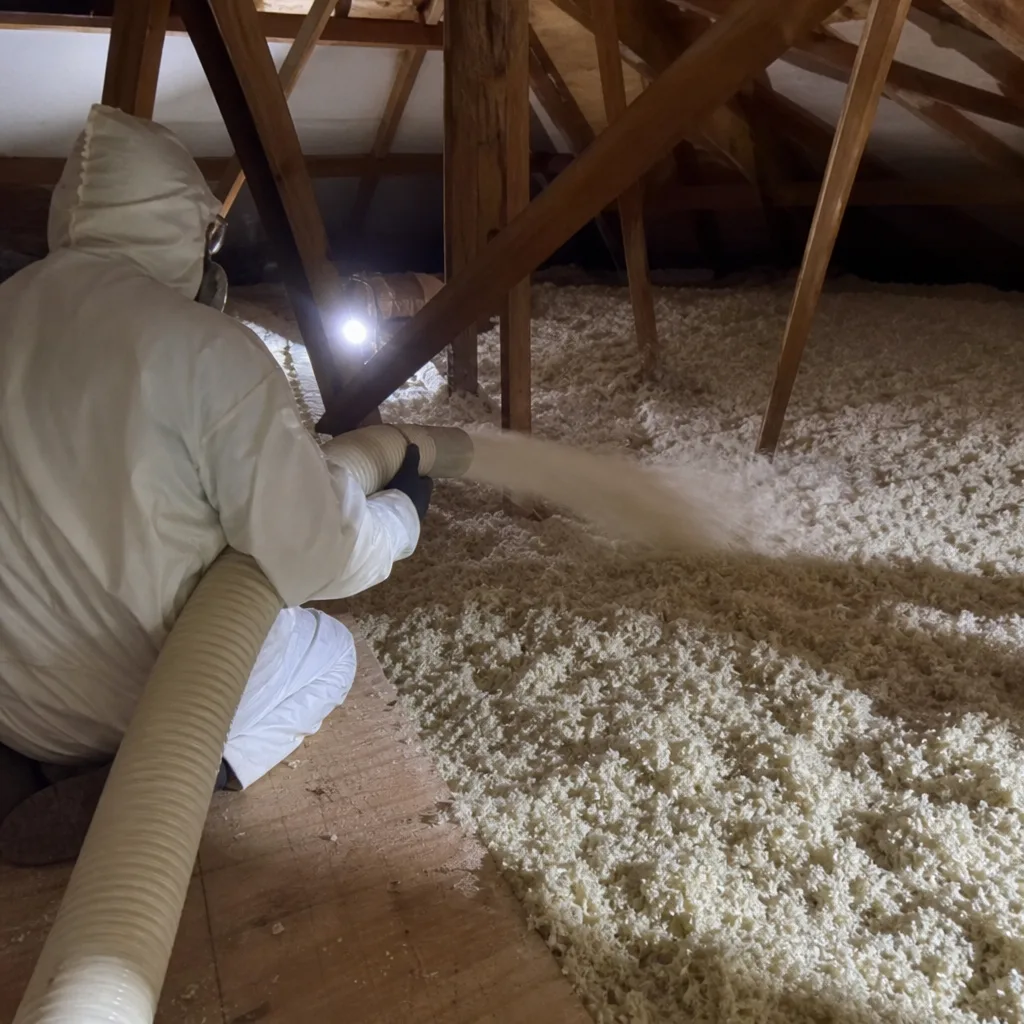
Blown-in insulation – typically fiberglass or cellulose – costs significantly less upfront, running $0.40 to $1.10 per square foot for a standard attic floor application in Schertz. Spray foam costs more per square foot but also air-seals as it expands, which blown-in material does not. Blown-in over an unsealed attic floor in a Schertz home still allows conditioned air to bypass the insulation through every top plate gap and can light penetration. Spray foam, applied after proper air sealing, closes both the thermal gap and the air gap in a single step. The right choice depends on your budget, your existing air sealing condition, and the specific assembly you’re addressing. We’ll tell you which one actually makes sense for your home – and put that recommendation in writing before any work begins.
The Written Price Commitment
Every estimate Envelope Insulation Co. provides names the foam type, the target application depth, the target R-value, the air sealing scope, and the total flat price. Nothing is left vague. When Wes Okafor or a member of the Envelope team puts a number in front of you, that’s the number – not a starting point for negotiation after the crew is already in your attic. That’s Haven Standard Clause 1, and it applies to every spray foam project in Schertz without exception.
When the job is done, you receive a documented photo record of the completed work and, on applicable projects, before-and-after blower-door readings that show the actual air-leakage change. Those aren’t available on request – they’re part of every applicable job. You leave with evidence, not just a receipt.
The 365-Day Done Right Promise covers all completed work. If something isn’t right within a year of the job closing, we make it right. That promise is in writing before anyone starts – not mentioned afterward if something goes wrong.
Key Takeaways
- Spray foam insulation in Schertz costs $1.50 to $3.50 per board foot installed; most residential projects run $1,800 to $6,500 depending on application type and foam choice.
- Closed-cell foam costs roughly twice as much as open-cell per board foot and is often the right choice for roof deck, vapor-sensitive, and below-grade applications in Schertz’s humid climate.
- Air sealing of top plates, can lights, and penetrations must be completed before foam is applied – skipping this step produces significantly worse performance results regardless of foam thickness.
- Before-and-after blower-door readings are included on applicable jobs so you can verify the performance change in a single number.
- CPS Energy rebates may apply to qualifying projects – check eligibility before the work starts, and keep the photo record and blower-door results as your documentation.
- A written flat price is provided before any work begins, every time – no estimates that shift after the crew arrives.
- The 365-Day Done Right Promise applies to all completed work.
Get a Flat Written Price for Your Schertz Home
If you’re ready to know what spray foam insulation will actually cost for your specific home in Schertz, call Envelope Insulation Co. at (830) 402-5240. Wes Okafor’s team will assess your attic, identify any air sealing work that needs to happen first, and hand you a flat written price before any work begins. No estimates that change when the crew shows up, no pressure to decide on the spot, and no work starts until you have the number in writing. That’s how every project works, and it has been since 2016.
If you have a written quote from another Schertz-area contractor, bring it. The free second opinion offer is real – we’ll read it with you and tell you whether the scope and price reflect what the work actually requires.
Written by Wes Okafor, Owner at Envelope Insulation Co., serving Schertz, TX since 2016.
Pricing reflects the Schertz market as of 2026. Topside Attic Insulation Schertz offers free estimates – call (830) 402-5240.
What Our Customers Say
"The winter gas bill dropped by about a third. They had estimated a quarter, so they under-promised."
- Genevieve R."Two other companies quoted to blow more insulation on top of what was there. These were the only ones who said the existing material had to come out first, and explained why."
- Clifford E."Fixed price, clean work, and they hauled the old material away as agreed."
- Todd M.