
Johns Manville Crawl Space Encapsulation: The Schertz Owner’s Guide
We stock and install Johns Manville-compatible crawl space encapsulation systems in Schertz, with most complete vapor-barrier replacements running $2,800-$4,200 installed and partial repairs starting around $1,200. Same-day service is available when we have your liner spec on the truck, which we do for JM 3000 and 5000 series poly in 10-mil and 16-mil weights. Most Schertz homeowners discover a failure when they catch that wet-cardboard smell creeping up through the floor registers or notice their dehumidifier running nonstop through what should be a dry November.
Which Johns Manville Models This Applies To
Johns Manville labels their crawl-space line by mil weight and reinforcement type, not by catchy model names, so you’ll want to read the stamped edge of your existing liner before calling. The 3000 series is a 10-mil woven-reinforced polyethylene, the 5000 series steps to 16-mil with a heavier scrim, and the 7000 series hits 20-mil for commercial or flood-prone zones near Cibolo Creek. We see the 3000 and 5000 most often in Schertz residential work, particularly the 2005-2019 build years when JM had strong distribution through San Antonio-area suppliers.
The compatibility gotcha: JM switched from a 12-foot standard roll width to 13-foot in 2017, and the seam tape chemistry changed with it. Old 3000-series tape won’t bond reliably to post-2017 liner stock, something we’ve confirmed on three jobs in the Sutton Fields area where a homeowner patched with leftover tape and watched it peel within a season. We carry both tape formulations, but we need to know your install year to send the right roll.
OEM Johns Manville liner runs 15-20% above quality aftermarket equivalents like Raven or Stego, but the JM tape and termination-bar systems are proprietary enough that mixing brands at the seam usually fails within 18 months. For a full encapsulation, we quote JM material by default; for a partial patch on an older system, we’ll walk you through whether the savings of a matched aftermarket liner outweighs the longevity trade-off.
Signs Your Johns Manville Crawl Space Encapsulation Is Failing
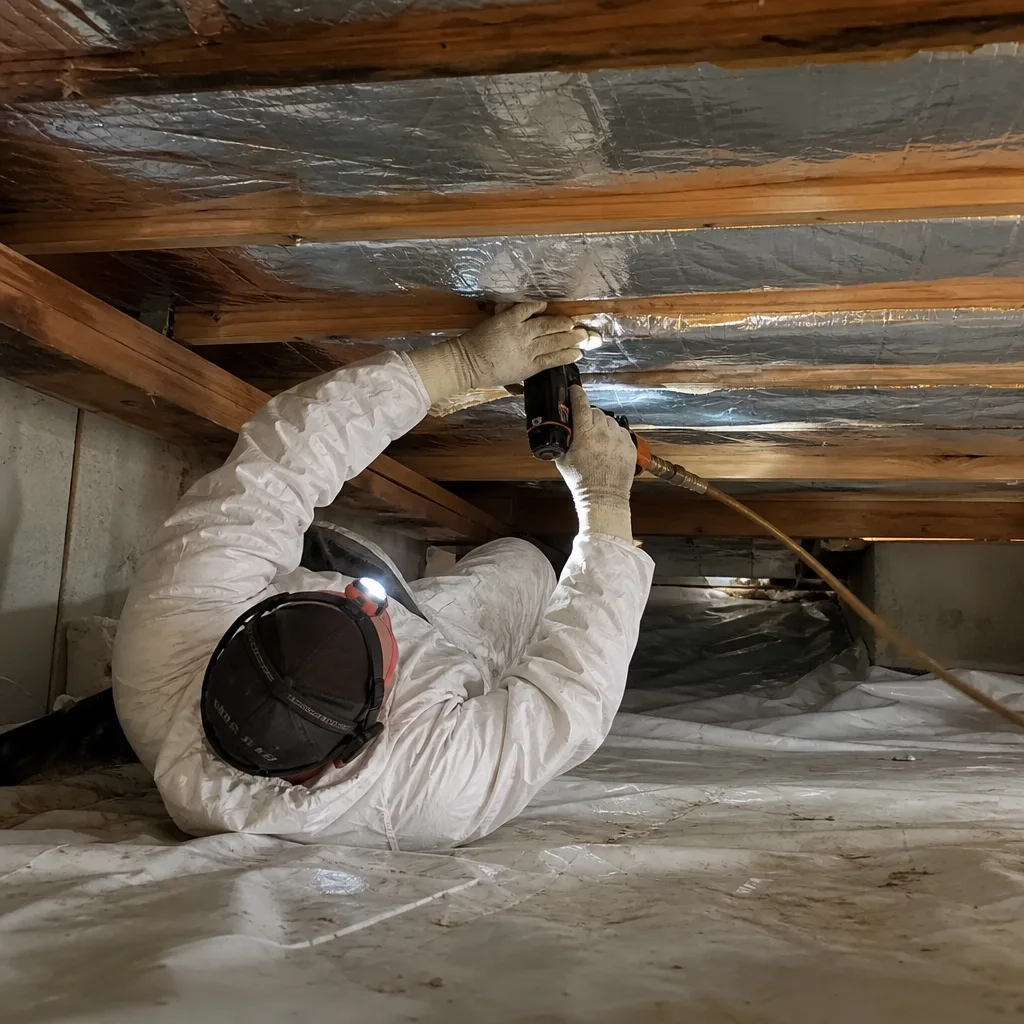
- Wet, musty odors rising through floor gaps. The vapor barrier’s perm rating has degraded, or a seam has opened, letting soil moisture migrate into the conditioned envelope. In Schertz’s clay-heavy soils, this happens faster where the grade doesn’t drain well, like the lower lots near Selma.
- Dehumidifier running continuously or icing up. Your crawl space humidity is exceeding 70% because the liner is no longer blocking the source. The dehumidifier is treating the symptom; the barrier is the actual problem.
- Visible tears, sagging, or pooling water on the liner surface. JM’s woven scrim resists puncture well, but UV exposure during storage or install can embrittle the polyethylene. Once it sags, water collects, algae grows, and the liner becomes a reservoir instead of a shield.
- Insect or rodent activity increase. A compromised barrier removes the dry-zone boundary that discourages pests. We find this most often where the termination bar has pulled from the foundation wall, usually from improper masonry anchor selection during original install.
- Flooring cupping or hardwood gaps widening seasonally. Moisture is reaching the subfloor from below. The JM liner’s job is to keep the crawl space air separate from the soil air; when that seal breaks, the wood absorbs the difference.
Replacement Cost & What’s Included
In Schertz, a full Johns Manville 5000-series encapsulation for a typical 1,500-square-foot crawl space runs $3,400-$4,200, including liner, seam tape, termination bars, foundation sealant, and a new 6-mil column wrap. A partial replacement, targeting only the failed sections of a 3000-series system, typically falls between $1,200 and $2,100 depending on how many seams need re-taping and whether the sump pit skirt needs reworking.
What drives the range: crawl height (belly-crawls take longer), debris removal from previous failed DIY attempts, and whether the foundation walls need grinding for proper termination-bar adhesion. We itemize this in writing before work starts, Haven Standard Clause 1, no exceptions. Every encapsulation job includes a Documented Photo Record of the pre-condition, the seam work, and the post-install integrity check. The 365-Day Done Right Promise covers seam failures and tape delamination; liner puncture from subsequent trades is excluded, which we’ll note on your written scope.
DIY or Call Us?
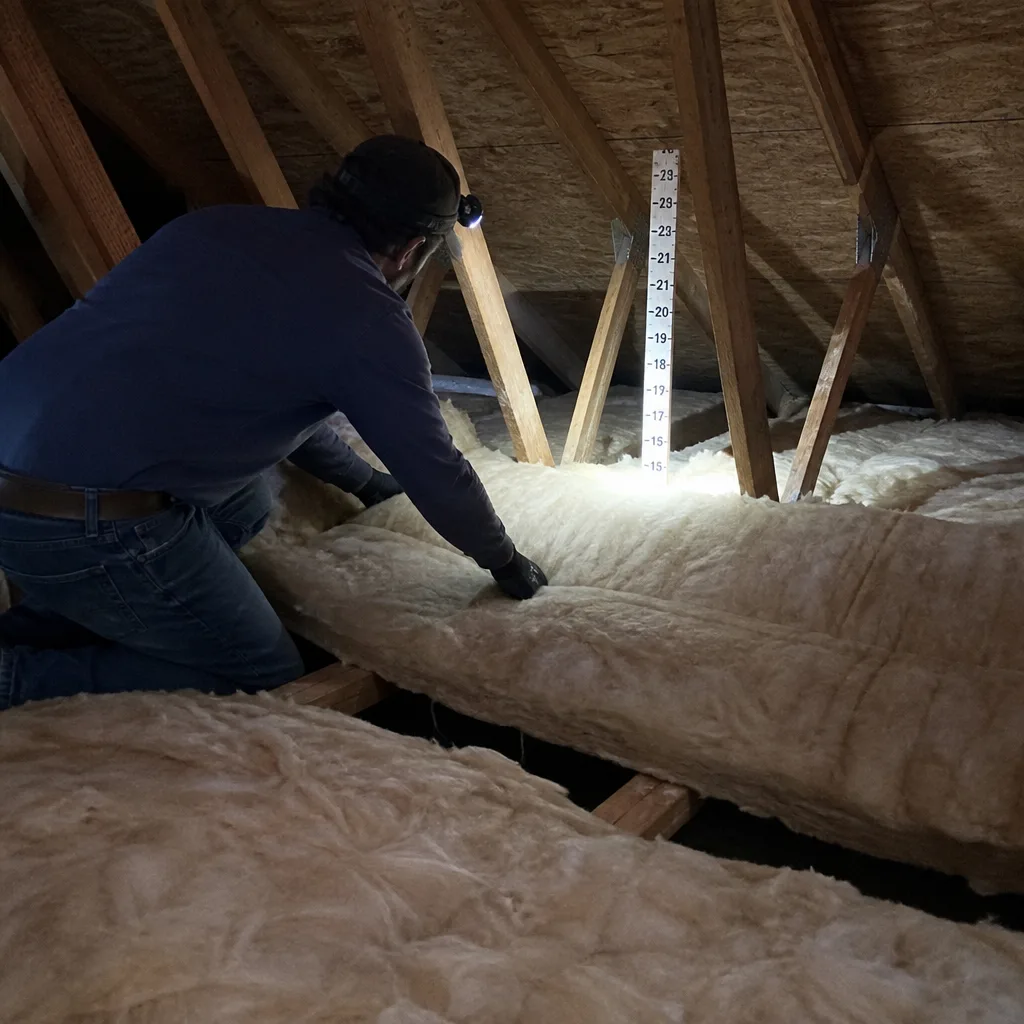
There’s no high-tension danger in crawl-space liner work like there is with garage-door springs or gas lines, but there is a sequencing trap that wastes money. An owner can safely check: whether the sump pump is actually discharging, whether the dehumidifier drain line is kinked, and whether any obvious tears are visible from the access hatch. What we see go wrong: homeowners laying new liner over wet soil without drying the space first, trapping moisture against the subfloor; using hardware-store tape on JM liner, which off-gasses adhesive failure within months; and skipping the termination bar entirely, tucking liner into the sill plate gap where it pulls free with seasonal expansion.
Seal the leaks first. Then insulate. The attic doesn’t care how thick the insulation is if the air is still moving through it. Same principle applies below grade, the moisture source has to be controlled before the barrier goes down. If your dehumidifier can’t pull the space below 60% relative humidity in 48 hours, you’ve got a bulk water problem that liner alone won’t fix. Call (830) 402-5240 and we’ll sort out whether you need encapsulation, drainage, or both before quoting anything.
FAQs
Properly installed JM 5000-series liner lasts 15-20 years in Schertz’s climate, though the 3000-series tends toward 10-12 years in the clay-soil zones where groundwater pressure is higher. The 20-mil 7000 series can exceed 25 years, but it’s overkill for most residential crawl spaces unless you’re in a designated floodplain. Call (830) 402-5240 for an exact assessment of your current liner’s condition, estimates are free.
A clean puncture smaller than a softball can be patched with JM-compatible tape and a pressure-rolled seam, but tears along the weave line, sagging with pooling, or multiple failure points mean replacement is the cost-effective call. We’ve done patch jobs in Schertz’s Westhaven community that held fine, and others where we should have recommended full replacement upfront, the difference is whether the scrim reinforcement is frayed. Call (830) 402-5240 and we’ll give you a straight answer after seeing photos.
Most residential jobs in Schertz are completed in one to two days, a single day for a clear 1,200-square-foot crawl with good access, two days if we need to coordinate debris haul-out or address drainage first. We don’t start the liner install until the space is dry and the written scope is signed, Haven Standard Clause 1. Call (830) 402-5240 to check current scheduling.
We carry JM 3000 and 5000 series liner in 12-foot and 13-foot widths, both tape formulations, and the full termination-bar system on every Schertz-area truck. Specialty sizes or 7000-series commercial stock typically arrives next business day from our San Antonio supplier. If you know your liner weight and install year, we can confirm stock before dispatching, call (830) 402-5240.
Topside Attic Insulation Schertz is an independent service provider, not affiliated with Johns Manville. We also stock parts for Reflectix and other major building-envelope brands.
Need a written price before any work starts? Call (830) 402-5240. A live person answers 24/7. We’ll review your crawl space photos, confirm your Johns Manville spec, and deliver a flat-price scope with warranty terms in writing, no site visit required for most standard replacements. Every job closes with a Documented Photo Record and, where applicable, before-and-after moisture readings so you can verify the result.
Written by Wes Okafor, Owner, Topside Attic Insulation Schertz at Topside Attic Insulation Schertz, serving Schertz and nearby areas.