
Johns Manville Vapor Barrier Installation: The Schertz Owner’s Guide
Johns Manville vapor barrier installation in Schertz typically runs $1,800-$3,400 for a full crawl space or attic floor application, and we can usually get a crew out same day if you call before noon. Most homeowners in Schertz discover their JM vapor barrier is failing when they notice musty odors returning after a rain, or when they spot polyethylene sheeting that’s pulled loose from the walls or turned brittle where the Texas sun bakes the crawl space vents. We stock 6-mil and 10-mil JM-approved polyethylene on every truck, along with the butyl tape and mechanical fasteners that actually hold up in our clay-heavy soils.
Which Johns Manville Models This Applies To
Johns Manville doesn’t sell vapor barriers as standalone branded SKUs the way they sell batts or loose-fill. What Schertz homeowners are usually holding is JM-specified polyethylene sheeting that was installed as part of a crawl space encapsulation system, or as a ground cover beneath a JM fiberglass batt job in the attic. The critical identifier is the mil rating stamped on the roll edge: 6-mil for basic ground cover, 10-mil for full encapsulation with taped seams, and 15-mil for high-traffic crawl spaces or rodent-prone areas.
We’ve found the compatibility gotcha in Schertz specifically: some builders in the 2018-2022 construction wave used 4-mil sheeting to cut costs, and that grade degrades in about 18 months under our UV exposure through crawl space vents. OEM Johns Manville spec calls for 6-mil minimum with UV inhibitors. We source the same virgin polyethylene JM specifies from their approved distributors, not the recycled-content hardware-store rolls that tear at the staple line. If your existing barrier has “JM” or a lot number beginning with the Denver plant code (035-), we can match it exactly.
Signs Your Johns Manville Vapor Barrier Installation Is Failing
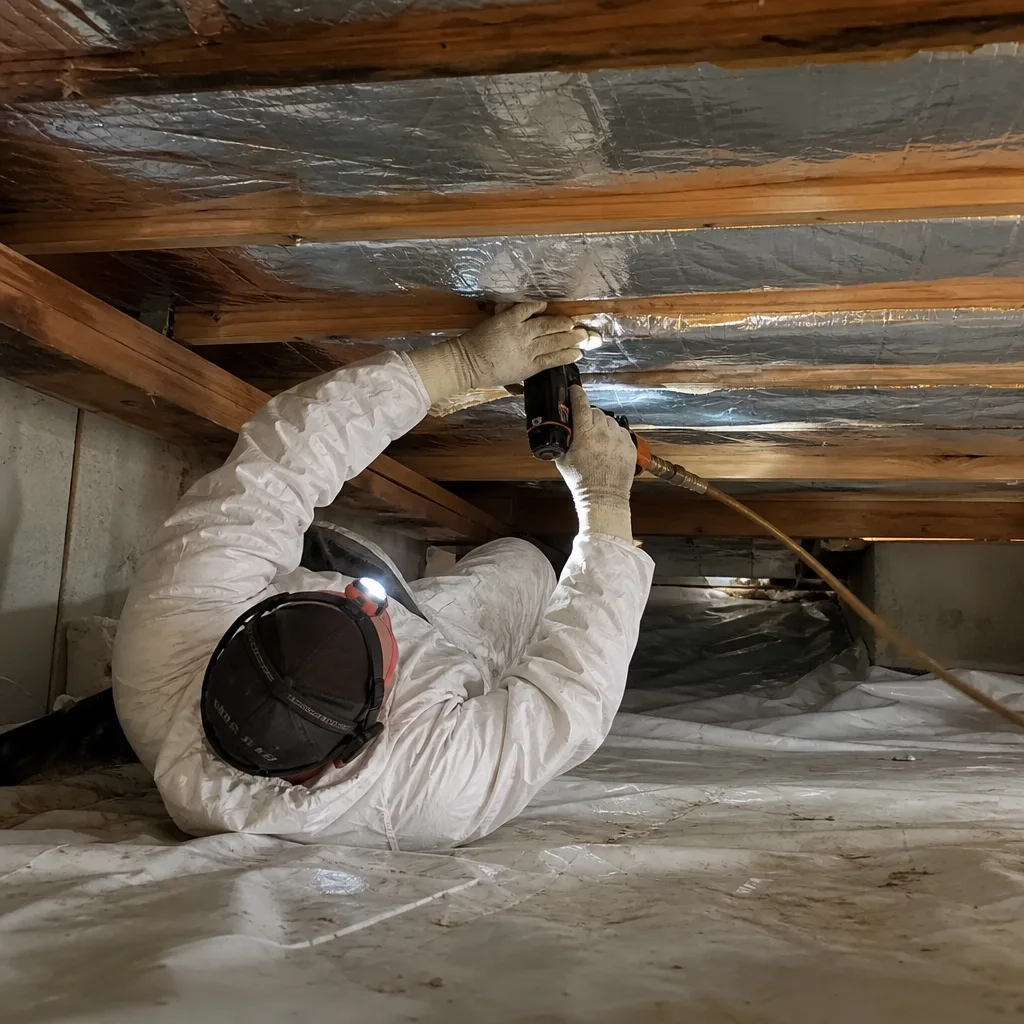
- Condensation pooling on top of the sheeting. This means the seal at the perimeter walls has failed, letting warm, humid Schertz air meet the cooler ground surface. The barrier is doing half its job - blocking soil moisture - but the convection loop above it is creating new water.
- White, chalky residue on the polyethylene surface. That’s UV degradation of the plasticizers, common in Schertz crawl spaces with unshielded vents facing west or south. Once the surface oxidizes, tears propagate fast.
- Musty smell returning within 48 hours of heavy rain. The clay soils in Schertz neighborhoods like Sedona and West Creek hold water for days. A properly sealed JM barrier with intact seams should block that vapor; if you smell it, the barrier’s compromised at a seam or penetration.
- Sagging or bridging over the soil. JM spec requires the barrier lie flat and weighted, not draped like a tablecloth. Sagging creates condensation pockets and gives rodents a nesting cavity.
- Visible gaps at piers, plumbing penetrations, or the perimeter wall. These are the first failure points we check on every Schertz inspection. JM’s detailing calls for 12-inch overlaps at seams and butyl tape at all penetrations; when installers skip this, the system fails from the edges inward.
Replacement Cost & What’s Included
Most full Johns Manville vapor barrier replacements in Schertz run $1,800-$3,400 for a typical 1,200-2,000 square foot crawl space. That range breaks down to $0.85-$1.40 per square foot for materials (polyethylene, tape, fasteners, mechanical anchors) plus labor to remove the failed barrier, regrade any soil bridging, and install to JM spec with documented seam taping.
What drives the high end: active mold remediation before we can lay new sheeting, rodent-damaged subfloor insulation that has to come out first, or a crawl space with less than 18 inches of working height. What keeps it at the low end: clean removal, good access, and no secondary damage. Every job gets a Written Price Before Any Work Starts under Haven Standard Clause 1, and the 365-Day Done Right Promise covers both materials and installation. We publish before-and-after photos and a moisture-meter reading log with every completed barrier job.
DIY or Call Us?
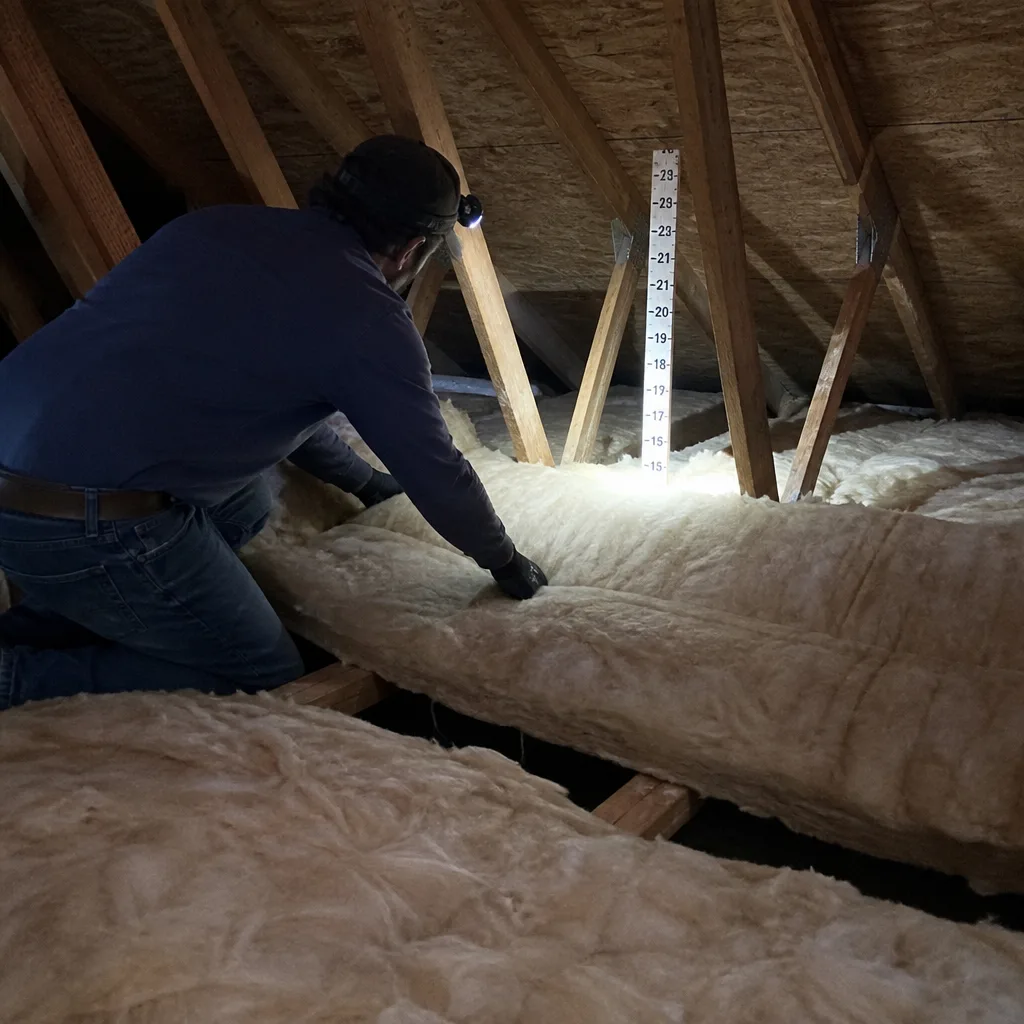
There’s nothing electrically dangerous about polyethylene sheeting, and a homeowner with a headlamp and patience can certainly roll out 6-mil plastic. Where DIY goes wrong in Schertz: our clay soils shift, so ground prep matters more than the plastic itself. We’ve pulled out homeowner jobs where the sheeting looked fine but was trapping condensation against the joists because the perimeter wasn’t sealed to the walls. We’ve also seen 4-mil “contractor grade” from the hardware store installed with a staple gun - the staples rust through in two seasons, and the sheeting tears at every puncture.
What you can safely check: lift a corner at the perimeter wall and look for butyl tape residue, or shine a flashlight at the seams for gaps wider than a quarter. What we handle: full removal, soil regrading, proper mechanical fastening to foundation walls, and the seam taping that actually holds under our humidity swings. If you want a free second opinion on what you’re seeing, call (830) 402-5240. We’ll read your situation with you, no charge.
FAQs
Properly installed JM-spec 10-mil barrier with UV inhibitors lasts 15-20 years in Schertz’s climate. The 4-mil builder-grade shortcuts we find in newer subdivisions often fail in 18-36 months. Call (830) 402-5240 and we can check your mil rating and seam detail - estimates are free.
Patching works for isolated punctures smaller than a softball using JM-approved polyethylene tape on clean, dry sheeting. If the tear is at a seam, near a plumbing penetration, or if the plastic has gone chalky from UV exposure, the material itself is degrading and patches won’t hold. We assess this on every inspection and will tell you straight if a patch buys you time or wastes it.
Most Schertz crawl spaces take one day for a two-person crew, assuming standard access and no pre-existing mold or rodent damage. Tight crawls under 18 inches, or jobs requiring insulation removal first, can stretch to a second day. We give you a written timeline with the written price before anyone starts.
Yes - 6-mil and 10-mil virgin polyethylene, butyl seam tape, mechanical fasteners for masonry and wood sill plates, and UV-rated vent shields. We also stock Reflectix radiant barrier for homeowners pairing vapor control with thermal management. We’re an independent service provider, not affiliated with Johns Manville, but we source to their published specifications and keep common widths on every truck.
Topside Attic Insulation Schertz is independently owned and operated under The Haven Standard since 2016. We’ve sealed and insulated more than 9,000 homes, every one with a written price before work started and a documented record when the crew left. Wes Okafor and our crew have been working the Schertz corridor for several years now, including jobs in the Sedona subdivision off FM 1518 where summer attic temps regularly push past 140°F before a single batt goes in. Seal the leaks first. Then insulate. The attic doesn’t care how thick the insulation is if the air is still moving through it.
Ready to get your crawl space or attic floor sealed right? Call (830) 402-5240 for a free estimate. A live person answers 24/7, and we’ll bring a written price before any work starts.
Written by Wes Okafor, Owner, Topside Attic Insulation Schertz at Topside Attic Insulation Schertz, serving Schertz and nearby areas.