
Rockwool Radiant Barrier Installation: The Schertz Owner’s Guide
Rockwool radiant barrier installation in Schertz typically runs $1,800-$3,400 for a standard 2,000-square-foot attic, and we stock Rockwool-compatible barrier systems on every truck for same-day completion. Most homeowners in Schertz figure out something’s wrong when their upstairs bedrooms won’t cool below 78°F even after sundown, or when their July electric bill jumps $80-$120 against the same thermostat setting. The radiant barrier’s reflective surface degrades, separates, or was never properly integrated with the insulation layer to begin with.
Which Rockwool Models This Applies To
Rockwool doesn’t manufacture standalone radiant barrier products. They produce high-density stone wool batts and boards, primarily the Rockwool Comfortbatt (residential walls and attics), Comfortboard 80 (exterior continuous insulation), and AFB evo (commercial interior). The radiant barrier is a separate component, usually Reflectix or a kraft-faced aluminum product, installed as a facing or independent layer above or below the Rockwool.
Here’s the compatibility gotcha: Rockwool Comfortbatt in attics is designed for friction-fit between joists at 16″ or 24″ centers. If a previous installer laid Reflectix bubble-barrier directly on the attic floor and then compressed Comfortbatt on top, you’ve created a double failure. The compressed batt loses R-value, and the trapped air gap the barrier needs to function is eliminated. We see this exact sequencing error in Schertz homes built between 2015 and 2020, especially in the Sedona subdivision off FM 1518 where production crews prioritized speed over assembly order.
To identify what you have: check for a stamped “ROCKWOOL” label on the batt facing, measure the nominal thickness (Comfortbatt is 3.5″ or 5.5″ for 2×4 and 2×6 framing), and note whether there’s a shiny aluminum layer integrated or floating separately. OEM integration means a factory-applied facing. Aftermarket means a separate product added in the field. We source both approaches, but the fix differs. Factory-faced batts get replaced as units. Field-applied barriers get removed, the air gap re-established, and new barrier material installed to spec.
Signs Your Rockwool Radiant Barrier Installation Is Failing
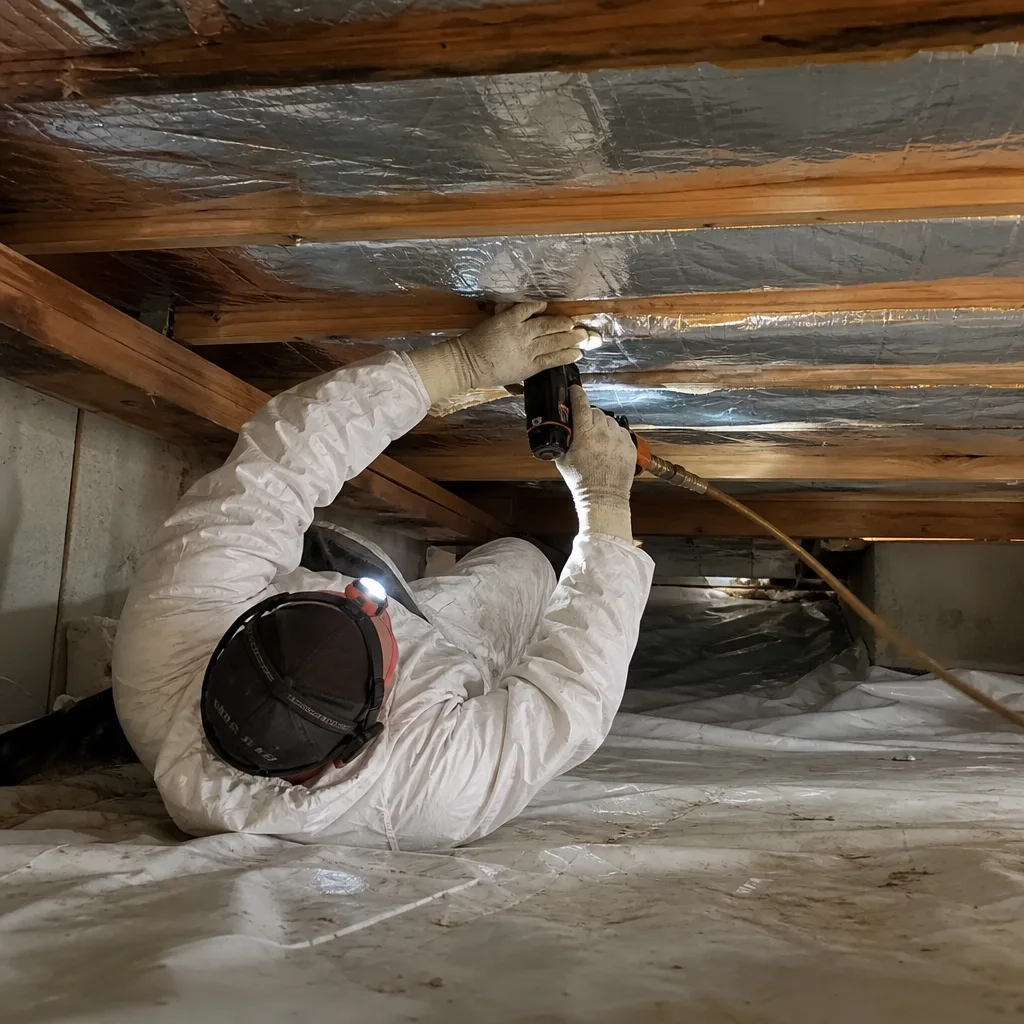
- Upstairs rooms heat up faster than downstairs and stay hot past 10 PM. The radiant barrier’s aluminum surface has oxidized, torn, or collected dust, dropping its reflectivity below 0.05 emissivity. Without that reflective bounce, attic radiant heat loads transfer straight through the Rockwool into your conditioned space.
- Your HVAC runs 20-40 minutes longer per cycle in July and August. The barrier isn’t reflecting solar gain back out; the Rockwool is absorbing and re-radiating that heat inward. Your thermostat calls for cooling, the equipment delivers, but the thermal load overwhelms the design capacity.
- You find loose, torn, or balled-up silver material when you poke your head through the attic hatch. Staples pull through Reflectix in Schertz’s heat cycles, or the adhesive on tape-sealed seams fails. Once the barrier sags or gaps, air convection loops form underneath and the product becomes a collector, not a reflector.
- The Rockwool batts look flattened, stained, or displaced from their joist bays. Improper installation sequence put the barrier on the wrong side, trapping moisture against the stone wool. Rockwool resists mold, but compression from walking or stacking storage on top destroys its loft and thermal resistance.
- Your energy bill spiked after a roof replacement or solar panel install. Crews disturb existing barrier material and rarely restore it correctly. We’ve found entire sections of barrier rolled up in corners or left draped over ductwork after roofing work in Schertz’s Live Oak and Cibolo Valley areas.
Replacement Cost & What’s Included
| Component | Price Range (Schertz) |
|---|---|
| Attic radiant barrier removal + disposal | $280-$450 |
| New Reflectix or foil-faced barrier material | $0.85-$1.40/sq ft installed |
| Rockwool Comfortbatt replacement (if compressed/damaged) | $1.10-$1.60/sq ft installed |
| Air sealing of top plates, can lights, penetrations | $380-$620 |
| Before-and-after blower-door test | Included on applicable jobs |
| Documented Photo Record + written scope | Included |
Most complete jobs in Schertz fall between $1,800 and $3,400. The range depends on attic square footage, accessibility (truss height, decking coverage), whether we’re restoring or replacing the Rockwool layer, and how much air sealing the floor needs before any barrier goes back in. We don’t quote over the phone without photos or a site visit. Under Haven Standard Clause 1, you get a flat written price, a written scope, and a written warranty before anyone lifts a tool. The 365-Day Done Right Promise covers all completed work.
DIY or Call Us?
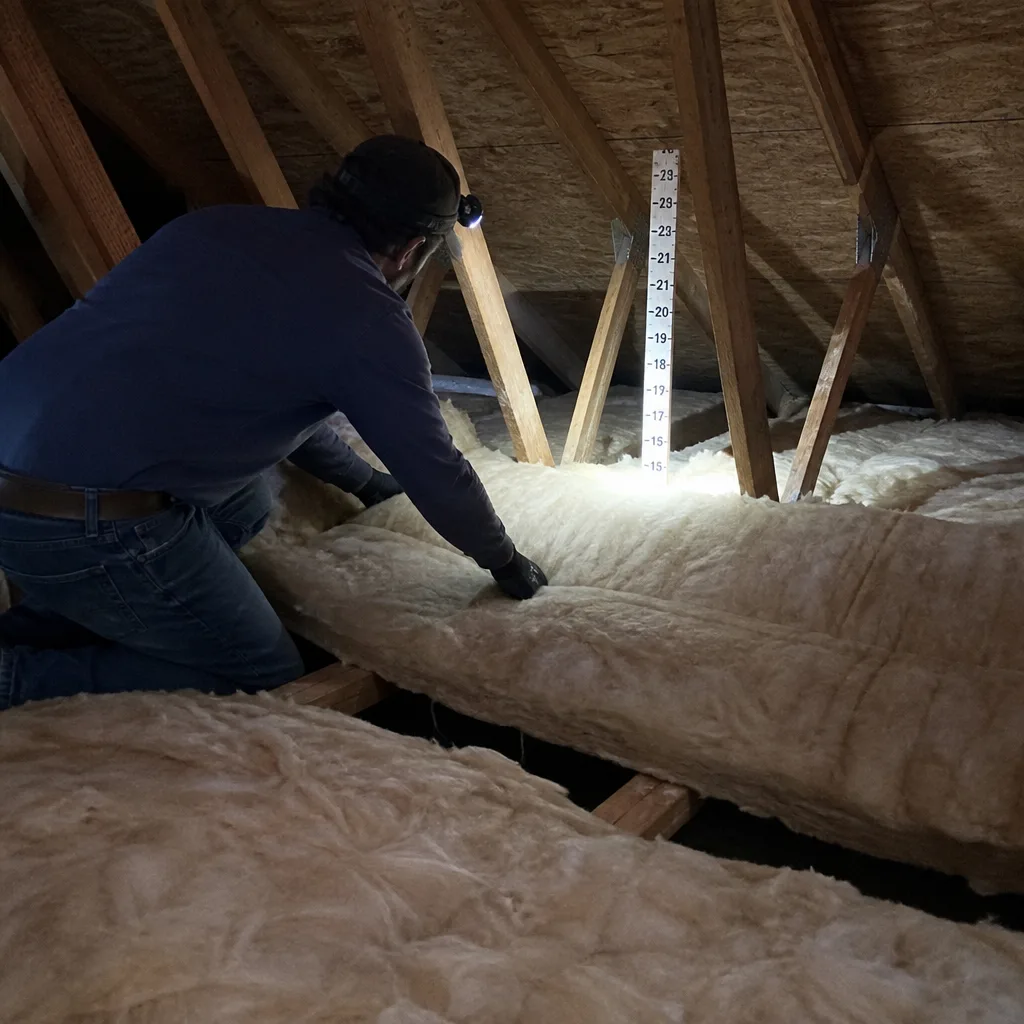
Here’s what you can safely check yourself: confirm the attic hatch opens without obstruction, photograph any labels you can find on existing insulation, and note whether your upstairs temperature problem is seasonal or year-round. That’s it for the safe list.
Here’s where DIY goes wrong. Radiant barrier installation requires precise air gap geometry, typically 0.75″ minimum between the reflective surface and the next solid layer. Get it backward, compress it, or leave gaps at the perimeter, and you’ve paid material costs for a product that performs worse than nothing. Attic work in Schertz during summer means 140°F+ ambient, uneven footing on joists, and electrical hazards from exposed romex or active junction boxes. We carry liability insurance and workers’ compensation for reasons that matter in tight, hot spaces.
We also stock Rockwool-compatible barrier systems on every truck. If your inspection turns up a failed installation, we can typically schedule within 48 hours and complete same-day. Call (830) 402-5240 for a free estimate, or bring us a competing written quote for our Free Second Opinion.
FAQs
Properly installed radiant barrier material lasts 20-30 years, but dust accumulation in Schertz’s windy, pollen-heavy springs can degrade reflectivity in 10-15 years if the attic isn’t sealed well. Rockwool itself doesn’t degrade, but the barrier facing does. We check emissivity during our pre-work inspection and document current performance so you know whether you’re replacing prematurely or right on time. Call (830) 402-5240 for an exact assessment, estimates are free.
Patching works only for small, accessible tears in otherwise intact material. Most failures we find in Schertz involve widespread sagging, staple pull-through, or improper original installation that created thermal bridging. Repairing those usually costs nearly as much as replacement with worse results. We recommend replacement when more than 20% of the barrier surface is compromised. Call (830) 402-5240 and we’ll show you the photos before you decide.
A standard Schertz attic, 1,500-2,500 square feet, takes one full day for removal, air sealing, and new barrier installation. Add a half day if we’re replacing compressed Rockwool batts. We don’t rush the sequence. Seal the leaks first. Then insulate. The attic doesn’t care how thick the insulation is if the air is still moving through it. You’ll get a text when the crew is en route, and a Documented Photo Record before they leave.
We stock Reflectix radiant barrier rolls and Rockwool Comfortbatt on every truck. We’re an independent service provider, not affiliated with Rockwool, but we source directly through their distributor network along with Owens Corning, Johns Manville, Knauf, and others. No proprietary lock-in means we match the material to your existing assembly, not our inventory. Same-day completion is standard for most Schertz addresses.
Written by Wes Okafor, Owner, Topside Attic Insulation Schertz at Topside Attic Insulation Schertz, serving Schertz and nearby areas.