
Rockwool Vapor Barrier Installation: The Schertz Owner’s Guide
Rockwool vapor barrier installation in Schertz typically runs $1,800-$3,400 for a full attic or crawl space application, and we stock the compatible membranes and seam tapes on our trucks for same-day starts. Most Schertz homeowners discover their existing vapor barrier has failed when they pull back insulation and find damp OSB, rusted nail heads, or a thin white mineral deposit on the underside of the roof deck - all signs that moisture is migrating through the envelope and condensing where it shouldn’t. We see this pattern often in the Sedona subdivision and along the FM 1518 corridor, where the combination of clay-heavy soils and the rapid temperature swings between our 95°F August afternoons and 55°F attic mornings creates real vapor drive pressure.
Which Rockwool Models This Applies To
Rockwool doesn’t manufacture a proprietary vapor barrier membrane, but their Comfortbatt, Comfortboard, and AFB (Acoustical Fire Batt) products require specific permeance ratings in the companion membrane to perform as designed. The critical match is between the Rockwool product’s density and the vapor barrier’s perm rating: Comfortbatt in 2×6 walls (R-23, 5.5-inch) pairs with a Class I vapor retarder at 0.1 perm or less in our climate zone, while Comfortboard 80 on exterior walls needs a variable-perm “smart” membrane like CertainTeed MemBrain or ProClima Intello to allow seasonal drying.
We identify the right membrane by checking what’s currently installed: look for a printed perm rating and ASTM E96 compliance on the existing sheet, or measure the Rockwool batt thickness and density (Comfortbatt is 0.6 pcf, Comfortboard 80 is 8.0 pcf - a tenfold difference that changes the vapor strategy). OEM-spec membranes from Rockwool’s distribution partners run 15-20% higher than quality aftermarket equivalents from Johns Manville or CertainTeed that meet the same ASTM specs. We stock both on the truck, but default to aftermarket for Schertz jobs unless the homeowner is matching an existing warranty claim documentation.
One compatibility gotcha we hit regularly: Rockwool’s higher-density products won’t compress to accept a thin polyethylene sheet the way fiberglass will. If you’re retrofitting over existing Rockwool, the membrane needs to be installed as a continuous plane above or below the insulation, not wrapped around individual batts. We learned that the hard way on a 2019 job near Crescent Ridge, where wrapping batts individually created thermal bypasses at every seam.
Signs Your Rockwool Vapor Barrier Installation Is Failing
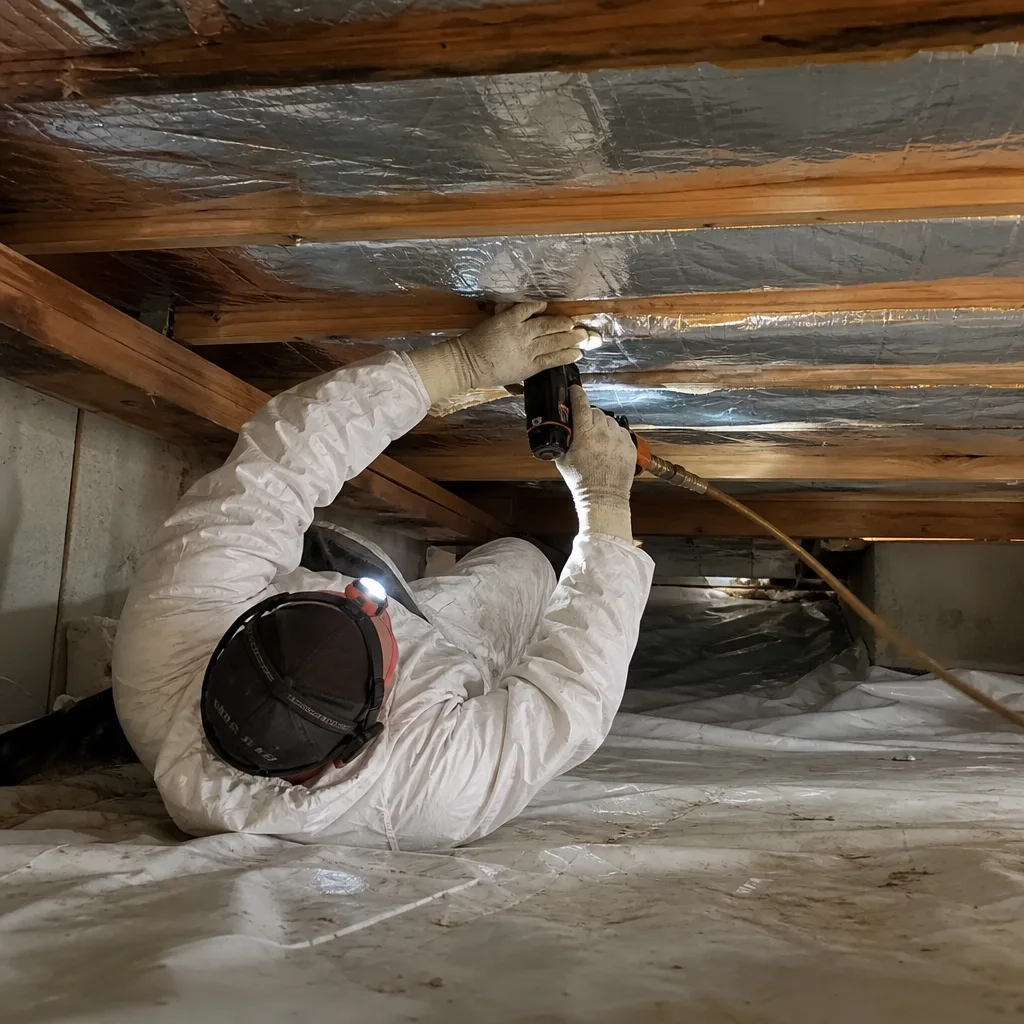
- White powder on the attic side of your drywall or roof sheathing. That’s efflorescence - minerals left behind when moisture evaporates. It means vapor is moving through your Rockwool, hitting a cold surface, and condensing. In Schertz, we see this most on north-facing roof planes where morning dew lingers.
- Insulation that feels damp or clumps when compressed. Rockwool is hydrophobic and shouldn’t hold moisture. If your batts feel wet, the vapor barrier is either missing, torn, or incorrectly placed on the wrong side of the assembly for our cooling-dominated climate.
- Musty odor that intensifies after rain. This usually traces to a compromised vapor barrier in the crawl space or rim joist area, where Schertz’s clay soils wick moisture upward and the barrier was never sealed to the foundation walls at the perimeter.
- Visible mold spots on the vapor barrier itself. Mold growing on the warm side of a vapor barrier means the barrier is trapping moisture instead of blocking it - typically a perm rating mismatch, like using a Class I retarder where a Class II or smart membrane was specified.
- Energy bills climbing without thermostat changes. Wet insulation loses R-value fast. Rockwool holds up better than fiberglass, but saturated Comfortbatt can drop from R-23 to effective R-15 or lower. We verify this with a thermal imaging pass and compare to our blower-door baseline.
Replacement Cost & What’s Included
For a typical Schertz single-family home - 1,800-2,400 square feet, attic or crawl space application - Rockwool-compatible vapor barrier installation runs $1,800-$3,400. The lower end covers a straightforward attic retrofit with accessible joist bays and minimal air-sealing prep; the upper end reflects crawl space work, extensive top-plate sealing, or homes with complex rooflines and multiple vapor barrier transitions.
| Component | Price Range |
|---|---|
| Vapor barrier membrane (per sq ft, installed) | $0.85-$1.40 |
| Seam tape and acoustic sealant | $180-$320 |
| Air sealing (top plates, penetrations, can lights) | $450-$890 |
| Blower-door test (before/after) | $275 (included on full jobs) |
| Documented Photo Record delivery | Included |
What drives the range: accessibility (crawl spaces under 18 inches add labor), existing condition (removing failed poly with mold remediation), and whether we’re integrating with new Rockwool or working around existing batts. Every job gets a Written Price Before Any Work Starts under Haven Standard Clause 1 - flat price, written scope, written warranty before anyone lifts a tool. The 365-Day Done Right Promise covers all completed vapor barrier work, and we publish before-and-after blower-door numbers on every applicable job so you can verify the air-sealing result in a single figure.
DIY or Call Us?
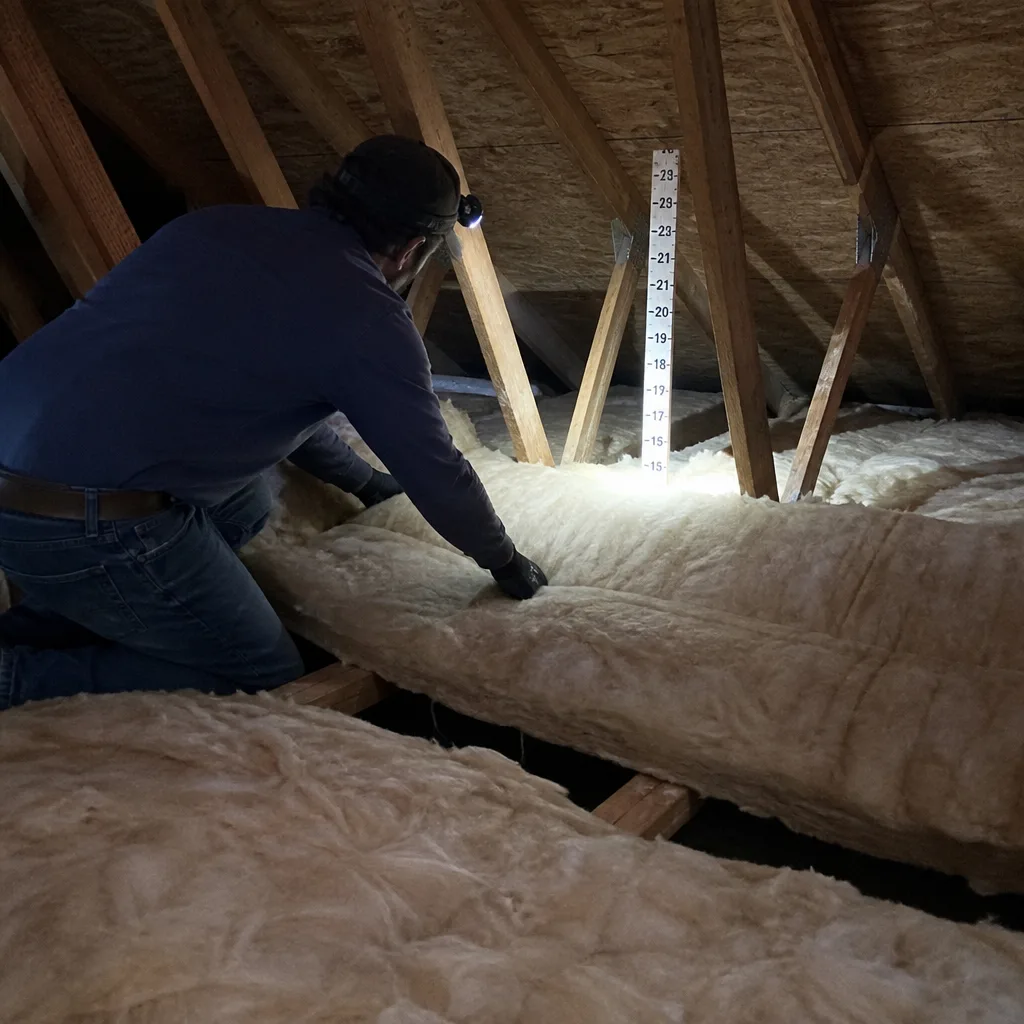
There’s a safe middle ground here. A homeowner can verify the problem: check for the ASTM E96 rating printed on any existing vapor barrier, look for tears or gaps at penetrations, and use a basic moisture meter on exposed framing (readings above 16% warrant attention). What you can’t safely assess from the attic hatch is whether the vapor barrier is on the correct side of the assembly for our climate zone, or whether your top plates and electrical penetrations are leaking enough air to render any new membrane ineffective.
Where DIY goes wrong: installing a vapor barrier over an unsealed attic floor traps moisture in the insulation layer; using the wrong perm rating for our cooling-dominated climate creates a one-way trap in the wrong direction; and working in attics above 130°F without proper hydration and egress planning is genuinely dangerous. We’ve been called in after three Sedona-area homeowners installed Class I poly on the wrong side and created condensation problems that didn’t exist before. Seal the leaks first. Then insulate. The attic doesn’t care how thick the insulation is if the air is still moving through it.
Topside Attic Insulation Schertz is an independent service provider, not affiliated with Rockwool. We also stock parts for Reflectix systems when that’s what your assembly requires.
For a written price on your Rockwool vapor barrier installation in Schertz, call (830) 402-5240. We’ll read your existing setup with you, match the membrane to your specific Rockwool product, and give you a flat price before any work starts.
FAQs
In Schertz’s climate, a properly installed vapor barrier paired with adequate air sealing lasts 20-30 years. The failure point we see at year 8-12 is almost always seam tape degradation from attic heat cycling, not the membrane itself. Our crews use acrylic-based tapes rated for 180°F continuous exposure, which handles our 140°F+ peak attic temperatures with margin to spare. Call (830) 402-5240 if you’re seeing early failure signs - estimates are free.
Spot repairs work only if the existing membrane is intact, properly placed, and the failure is limited to seam gaps or small punctures. If the barrier is on the wrong side of the assembly, has widespread embrittlement, or was never integrated with air sealing, partial repair throws good money after bad. We assess this during our pre-work inspection and document the finding with photos you’ll receive before we quote. Call (830) 402-5240 for an exact evaluation - estimates are free.
Most Schertz attic vapor barrier installations take one day; crawl spaces or homes requiring extensive air sealing run into a second day. We won’t schedule the Rockwool placement until the blower-door test confirms the air-sealing target is met. Wes Okafor has been known to cancel a Friday install if the pre-work inspection turns up something the crew needs to address properly - the schedule yields to the sequence. Call (830) 402-5240 to check current availability.
Yes - we carry 6-mil and 10-mil reinforced poly, CertainTeed MemBrain smart membranes, and the acrylic seam tapes and acoustic sealants that integrate with Rockwool’s density profile. For same-day starts, we need to confirm your square footage and Rockwool product line by phone so the crew loads the correct membrane width. Call (830) 402-5240 with your batt thickness and we can verify stock and schedule.
Written by Wes Okafor, Owner, Topside Attic Insulation Schertz at Topside Attic Insulation Schertz, serving Schertz and nearby areas.