
Icynene Vapor Barrier Installation: The Schertz Owner’s Guide
Most Icynene vapor barrier installations in Schertz run between $1,800 and $3,400 for a standard crawl space or attic application, and we typically schedule within 48 hours of your call. The barrier itself - a 6-mil to 10-mil reinforced polyethylene or cross-laminated sheet, depending on your Icynene foam spec - prevents ground moisture from migrating into conditioned space and degrading the foam’s adhesion and R-value over time. Homeowners usually notice the problem first as a musty spike in summer humidity, efflorescence on block walls, or Icynene foam that has begun to pull away from the substrate in the crawl space.
Which Icynene Models This Applies To
Icynene’s open-cell (LD-C-50, LD-R-50) and closed-cell (MD-C-200, H2Foam Lite) formulations all require vapor barrier coordination, but the specification changes based on foam density and local code. In Schertz, we’re in IECC Climate Zone 2 - hot-humid - which means closed-cell Icynene often acts as its own vapor retarder at 2+ inches, while open-cell installations almost always need a supplemental Class I or Class II barrier on the warm-in-winter side. Check your original install documentation for the Icynene lot number (stamped on the foam substrate edge) or the spray rig calibration sheet if you have it.
We stock reinforced 10-mil StegoCrawl and 6-mil Tu-Tuff equivalent on our Schertz trucks, both Icynene-compatible and taped with acrylic vapor-barrier tape rated for the 140°F+ attic temps we see in Sedona and other FM 1518 corridor subdivisions. OEM Icynene-branded barrier is available special-order, but in our experience the aftermarket equivalents outperform it on puncture resistance and seam adhesion - we publish the blower-door numbers either way, so the proof is in the test, not the logo. One gotcha: Icynene’s early 2010s formulations (pre-2014 resin change) can off-gas plasticizers that degrade standard polyethylene over 5-7 years, so if your foam dates to that era, we spec a barrier with higher chemical resistance.
Signs Your Icynene Vapor Barrier Installation Is Failing
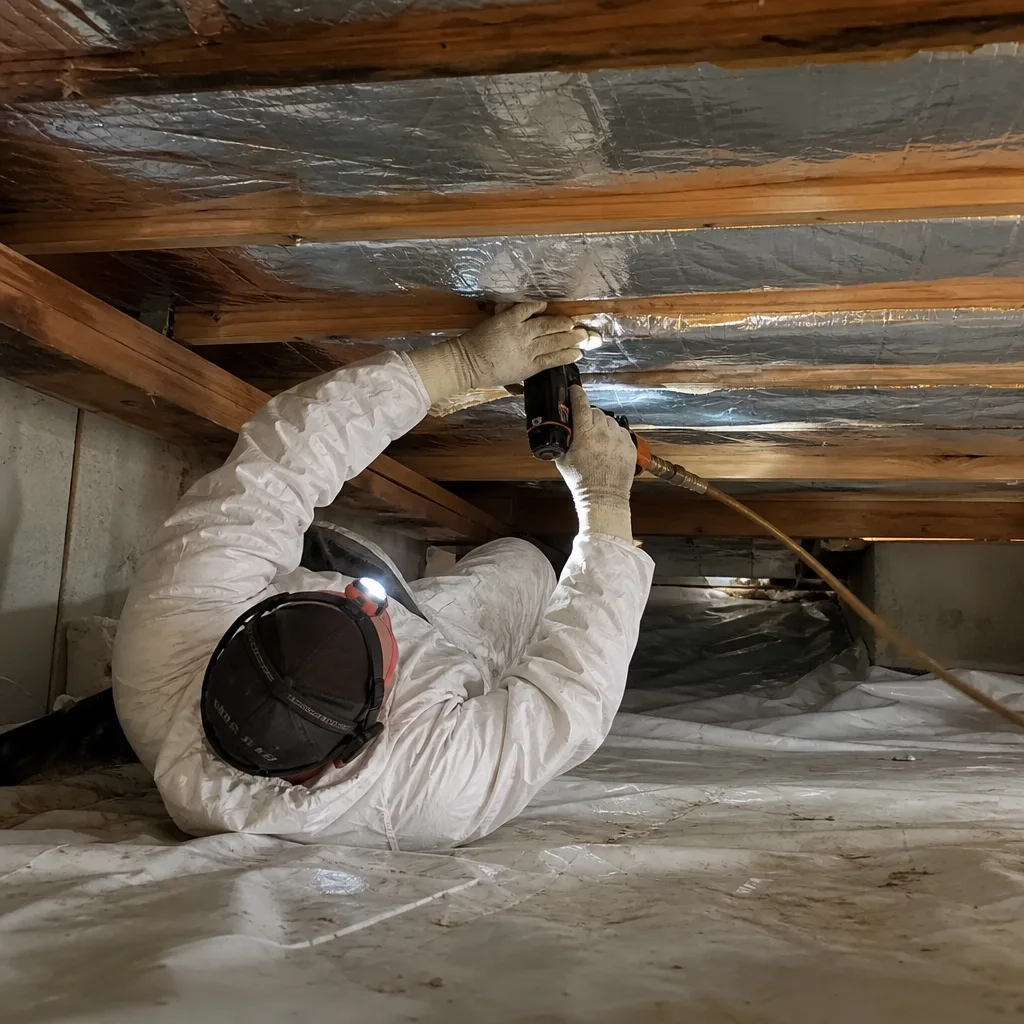
- Condensation beading on the Icynene surface. When the barrier tears or pulls at seams, ground moisture hits the temperature differential at the foam interface and condenses. In Schertz’s clay-heavy soils, this often starts at the perimeter where seasonal soil movement stresses the tape joints.
- Musty odor that spikes after rain. A intact barrier blocks the soil moisture drive; once compromised, relative humidity in the crawl space climbs above 70% and microbial growth follows. We see this most in homes built 2015-2019 on the east side of Schertz where grading was minimal.
- Foam discoloration or surface tackiness. Icynene’s yellow tone darkens where chronically wet, and the resin surface can re-emulsify. This is not cosmetic - it’s the foam losing its closed-cell structure and thermal performance.
- Increased HVAC runtime with no thermostat change. Wet insulation conducts heat faster than dry; your system works harder to maintain setpoint. We document this with before-and-after blower-door and thermal imaging so you can see the load difference.
- Visible tears, tape failure, or barrier sagging. Polyethylene creeps over time, especially where installers used non-vapor-barrier tape (duct tape, masking tape) that dries and releases. Our crews photograph every seam before touching anything.
Replacement Cost & What’s Included
| Scope | Price Range in Schertz |
|---|---|
| Standard crawl space vapor barrier replacement (1,000-1,500 sq ft), Icynene-compatible 10-mil reinforced | $1,800 - $2,600 |
| Attic vapor retarder installation over existing Icynene open-cell, including seam taping and mechanical fastening | $2,200 - $3,400 |
| Barrier replacement with active air-sealing of top plates and penetrations (recommended) | Add $400 - $800 |
The range depends on three things: accessibility (crawl height, obstructions), whether we need to remove degraded foam first, and if the original install skipped mechanical fastening and we’re correcting that. Every job gets a Written Price Before Any Work Starts - Haven Standard Clause 1 - with line-item breakdown. The 365-Day Done Right Promise covers labor and materials; the barrier itself carries a 10-year manufacturer defect warranty. We publish before-and-after blower-door numbers on every applicable job so you see the air-sealing result, not just our word.
DIY or Call Us?
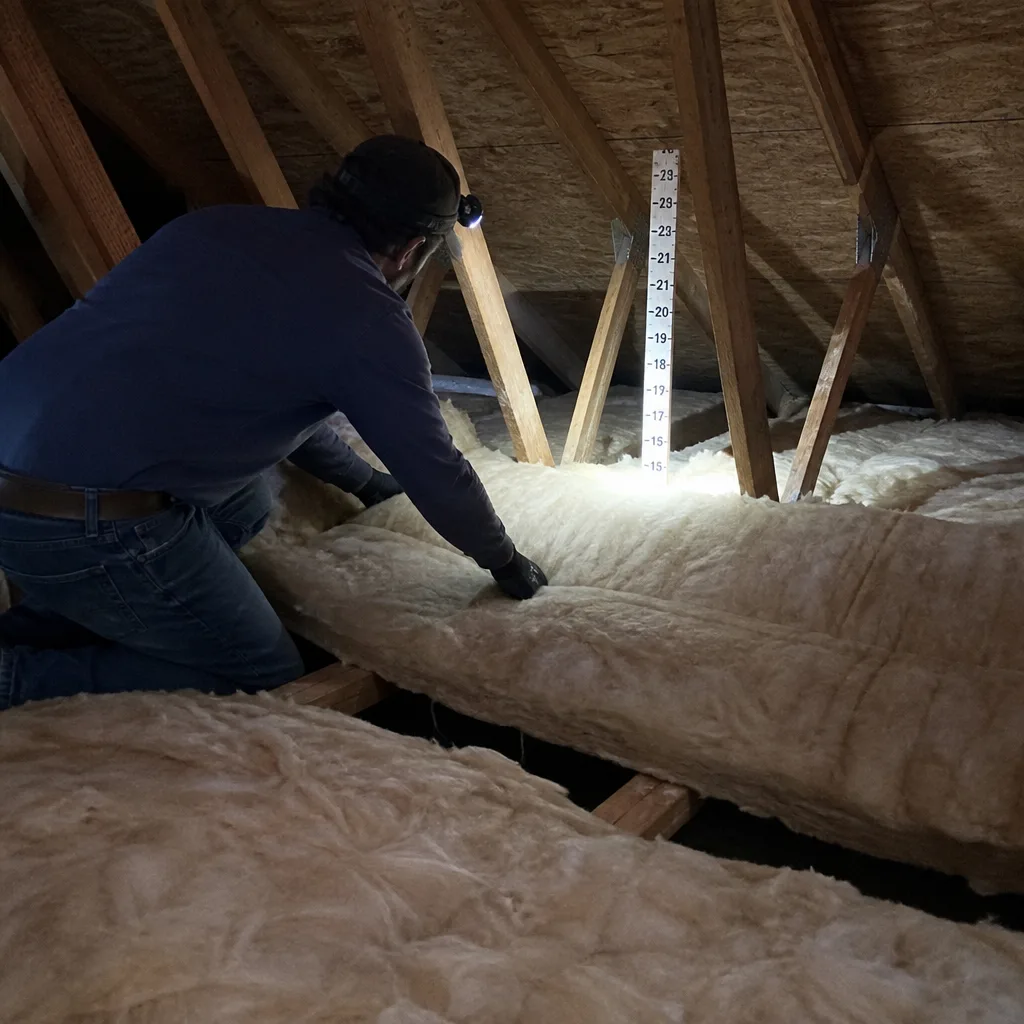
There’s no high-tension danger here like a garage door spring, but there is a sequencing trap that wastes money. A homeowner can safely inspect: look for tears, check that tape is still adhesive (press and pull - if it releases clean, it’s failed), and verify the barrier extends 6 inches up foundation walls per code. What goes wrong in DIY is installing new barrier over unsealed air leaks - you’re trapping moisture in a different place, not solving the drive.
We also find homeowners often use 4-mil or 6-mil unreinforced sheeting from the hardware store, which won’t survive a Schertz summer in a crawl space. The 140°F temps we measured last August in the Sedona subdivision off FM 1518 will degrade that grade of plastic in two to three seasons. If you’re unsure about the foam type or whether your barrier is the right spec, call (830) 402-5240 - estimates are free, and we’ll read your existing documentation with you.
FAQs
In Schertz’s hot-humid Climate Zone 2, a properly installed 10-mil reinforced barrier should last 15-20 years, but we’ve seen 6-mil unreinforced fail in 3-5 years due to heat creep and soil movement. The clay soils east of I-35 shift more than the rocky substrate west of town, stressing seams faster. Call (830) 402-5240 and we’ll inspect your specific conditions - estimates are free.
Patching works for isolated punctures smaller than a quarter using vapor-barrier tape and primer, but seam failures, widespread embrittlement, or any degradation under Icynene foam means full replacement - patches don’t restore the continuous seal that prevents moisture drive. We document the extent with photos before recommending either route. Call (830) 402-5240 for an assessment.
Most crawl space vapor barrier replacements take 4-6 hours for a crew of two; attic applications run 6-8 hours depending on access and whether we’re coordinating with existing Icynene foam. We arrive with the barrier stock on the truck, so there’s no material delay. You’ll get a Documented Photo Record and, on jobs with air-sealing, printed blower-door results before we leave.
Yes - we carry 10-mil reinforced polyethylene and 6-mil cross-laminated barrier on every Schertz truck, both tested for compatibility with Icynene’s current resin formulations. We also stock Reflectix radiant barrier products for hybrid applications. OEM Icynene-branded barrier is available by special order, but we typically recommend the aftermarket equivalents on performance and puncture-resistance grounds. Topside Attic Insulation Schertz is an independent service provider, not affiliated with Icynene.
Seal the leaks first. Then insulate. The attic doesn’t care how thick the insulation is if the air is still moving through it. If your Icynene vapor barrier is showing age or you’re seeing humidity spikes you can’t explain, call (830) 402-5240. We’ll give you a written price before any work starts, a Documented Photo Record when we’re done, and blower-door proof that the envelope actually changed.
Written by Wes Okafor, Owner, Topside Attic Insulation Schertz at Topside Attic Insulation Schertz, serving Schertz and nearby areas.