
Demilec Vapor Barrier Installation: The Schertz Owner’s Guide
Demilec vapor barrier installation in Schertz typically runs $1,800-$3,400 for crawl space or slab-edge applications, and we can usually schedule within 48 hours. Most homeowners realize something’s wrong when their crawl space starts smelling musty in July or their hardwood floors cup at the edges during the first humid stretch. We stock Demilec-compatible 10-mil and 15-mil reinforced polyethylene barriers on our trucks, along with the butyl tape and mechanical fasteners that actually hold up in Guadalupe County’s clay-heavy soils.
We discovered this issue in a 2019 build near the Schertz Municipal Complex last spring: the original builder-grade barrier had torn at the pier pad, and the fiberglass batts above it were sagging into wet soil. The homeowner’s dehumidifier was running 14 hours a day and couldn’t keep up. That’s the pattern we see - the barrier fails silently, then everything above it becomes the symptom.
Which Demilec Models This Applies To
Demilec doesn’t sell vapor barriers as standalone branded SKUs the way they do spray foam kits. What we’re talking about here is the polyethylene ground cover and perimeter sealing system installed as part of Demilec’s crawl space encapsulation specifications - typically paired with their Heatlok or Sealection 500 spray foam on rim joists. If your crawl space was encapsulated by a Demilec-certified installer in the last 10-15 years, the barrier is likely 6-mil to 10-mil virgin polyethylene with reinforced fiber mesh.
Here’s how to identify what you’ve got: look for the installation tag, usually stapled to a floor joist near the access hatch. It should list the installer, date, and foam product used. The barrier itself may have a manufacturer stamp - common ones are Stego, Crawlspace Depot, or Viper - but the critical spec is the mil thickness and whether it’s reinforced. A 6-mil non-reinforced sheet in Schertz’s active clay soils is usually the failure point. We upgrade these to 15-mil reinforced during replacement because the extra puncture resistance pays for itself in this market.
We are an independent service provider with no affiliation to Demilec. We source compatible materials from multiple manufacturers, including Demilec-authorized distributors, and we’ll show you the product data sheet before we cut anything.
Signs Your Demilec Vapor Barrier Installation Is Failing
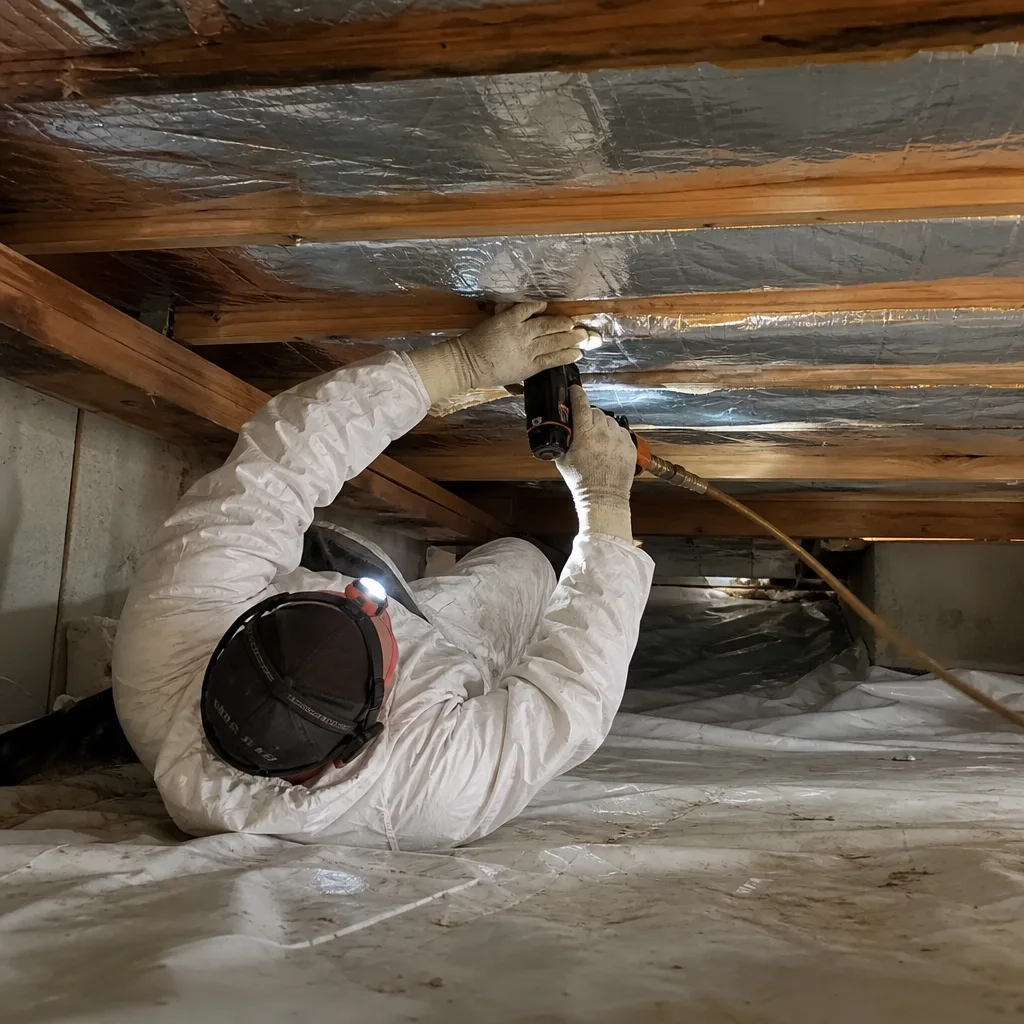
- Musty odors that worsen after rain. When the barrier tears or pulls away from the foundation wall, groundwater vapor rises directly into the crawl space. In Schertz, where the water table sits higher than most newcomers expect, this happens fast during spring storms.
- Cupping hardwood or tile tenting. Wood flooring pulls moisture from below when the vapor barrier stops blocking soil evaporation. We measured 78% relative humidity in a crawl space off Huber Road last August; the barrier had degraded to the point that it was passing gallons of water vapor daily.
- Sagging or fallen insulation. Fiberglass batts absorb moisture, gain weight, and drop from the floor joists. If you’re finding pink or yellow insulation on your crawl space floor, the barrier failed first and the insulation is now compromised.
- Visible mold on floor joists or sill plates. Surface mold appears at sustained 70%+ relative humidity. The barrier’s job is to keep that humidity down; when it can’t, organic surfaces in the crawl space become mold food.
- Pest activity increase. Termites and rodents prefer damp environments. A failing barrier creates the moisture gradient that draws them in, especially in older Schertz neighborhoods like Oak Creek where mature tree roots already stress foundation seals.
Replacement Cost & What’s Included
Most full vapor barrier replacements in Schertz run between $1,800 and $3,400 installed. The range depends on three things: crawl space square footage, whether we need to remove degraded material first, and if the rim joists need re-sealing with closed-cell foam.
| Component | Price Range |
|---|---|
| 15-mil reinforced polyethylene barrier (materials) | $0.85-$1.20/sq ft |
| Removal and disposal of old barrier | $300-$600 |
| Perimeter attachment (butyl tape + mechanical fasteners) | $400-$700 |
| Rim joist spray foam re-sealing (if needed) | $800-$1,400 |
| Final moisture reading and documentation | Included |
Every replacement includes our Documented Photo Record - before, during, and after shots with a moisture meter reading. If we’re also air-sealing the living space above, you’ll get before-and-after blower-door numbers. The work carries our 365-Day Done Right Promise: if the crawl space humidity doesn’t hold below 60% RH at the one-year mark, we return and fix it. Written scope, written warranty, both delivered before anyone enters the crawl space. Haven Standard Clause 1.
DIY or Call Us?
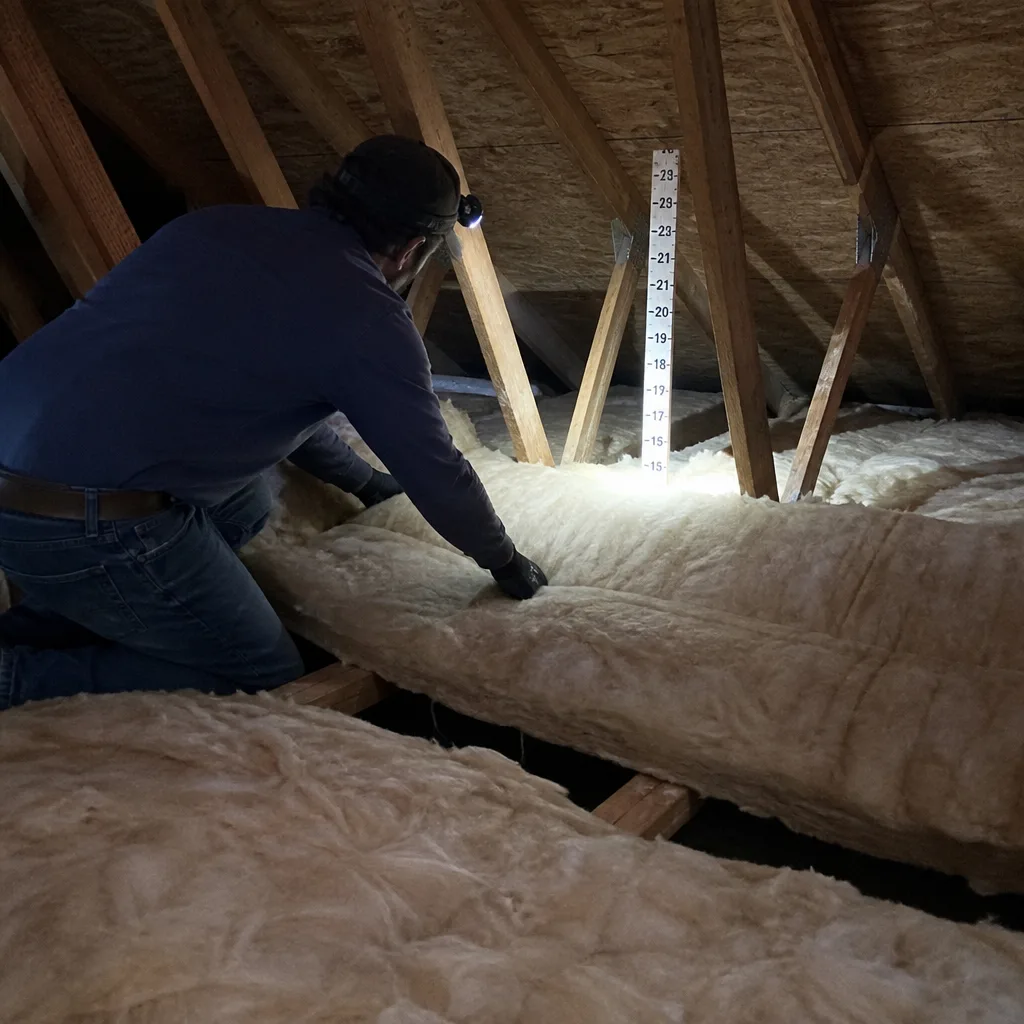
Here’s what you can safely check yourself: confirm the access hatch location, measure your crawl space approximate dimensions, and look for obvious tears or standing water. Take photos of any installation tags you find. That information saves us time on the phone and gets you a more precise written price.
Where DIY goes wrong: cutting and seaming polyethylene in a confined crawl space requires knee pads, a headlamp, and patience most people don’t budget for. More importantly, overlapping seams without proper butyl tape creates channels for vapor migration - you’ll think you fixed it, but the moisture just found a new path. In Schertz’s expansive clay, piers shift seasonally; a barrier attached too rigidly tears within two years. We’ve re-done three homeowner installations in the Sedona subdivision alone because the barrier was fastened with staples that pulled out after the first dry summer.
We carry Demilec-compatible 10-mil and 15-mil reinforced barriers, proper mechanical fasteners, and the butyl tape rated for soil contact on every truck. Call (830) 402-5240 and we’ll read your situation with you - no charge for the conversation, and if you have a competing quote, we’ll give you a free second opinion.
FAQs
A properly installed 15-mil reinforced barrier should last 15-20 years in Schertz, but we’ve seen 6-mil builder-grade material fail in 5-7 years due to our active clay soils and seasonal moisture swings. The 140°F attic temperatures Wes Okafor measures in summer don’t directly affect the crawl space, but they do stress the overall building envelope and can accelerate degradation at foundation penetrations. Call (830) 402-5240 if you’re unsure of your barrier’s age - we can usually date it from the installation tag or material stamp.
Small punctures under 6 inches can be patched with compatible polyethylene tape if the surrounding material is still supple. If the barrier is brittle, extensively torn, or pulling away from perimeter walls, patching is temporary at best. We won’t sell you a patch job that buys six months. Call (830) 402-5240 and we’ll show you what’s actually happening down there - estimates are free.
Most residential crawl spaces in Schertz take one to two days: half a day for removal and prep, half a day for installation and sealing, plus time for any rim joist foam work. We don’t rush the seam work - a proper overlap and tape seal is what determines whether this lasts 5 years or 20. You’ll get a written schedule with your written price before work starts.
Yes - 10-mil and 15-mil reinforced polyethylene, butyl tape rated for soil contact, and mechanical fasteners designed for masonry and wood sill plates. We also stock Reflectix as an alternative for specific applications where radiant barrier properties are needed alongside vapor control. If your original Demilec specification calls for something specific, we’ll source it and show you the product data before installation.
Seal the leaks first. Then insulate. The attic doesn’t care how thick the insulation is if the air is still moving through it. That sequencing applies to crawl spaces too - a vapor barrier on an unsealed foundation wall is only doing half the job.
Ready to see what’s actually happening under your floor? Call (830) 402-5240. A live person answers, 24/7. We’ll schedule a free inspection, deliver a written price before any work starts, and leave you with a Documented Photo Record and moisture readings you can reference next year, next sale, or next time someone asks why your floors don’t cup anymore.
Written by Wes Okafor, Owner, Topside Attic Insulation Schertz at Topside Attic Insulation Schertz, serving Schertz and nearby areas.