
GreenFiber Crawl Space Encapsulation & Vapor Barrier in Schertz: What to Know First
We provide independent GreenFiber crawl space encapsulation and vapor barrier service in Schertz, with most jobs completed in one day and a written price delivered before any work starts. As an independent GreenFiber service provider, we’re not affiliated with or authorized by the manufacturer - we simply know their product lines from hands-on work in local crawl spaces. Typical turnaround from call to completion runs 3-5 business days for standard encapsulation, 24-48 hours if standing water or active mold requires immediate moisture control intervention. This page is for Schertz homeowners who’ve found GreenFiber insulation in their crawl space and need to know whether it can stay, what it should be paired with, and what the honest price looks like. Call (830) 402-5240 for a free estimate - we’ll bring a written scope, not a sales pitch.
How GreenFiber Products Fail - and How We Fix Them
- Low-Shed blow-in cellulose settling against foundation walls - GreenFiber’s All Borate and Sanctuary lines are common in Schertz builds from 2012-2019, and both compress where crawl space humidity runs above 70% for extended periods. The material doesn’t rot, but it loses its loft and creates a gap at the rim joist where outside air pours in. We remove the settled material, install a 6-mil or thicker vapor barrier sealed to the wall with butyl tape, then reinstall only if the crawl space is fully encapsulated - otherwise we’re insulating a space that’s still breathing wet air.
- Insulmax blown-in bridging over irregular joist bays - GreenFiber’s higher-density Insulmax line can bridge across uneven crawl space framing instead of filling corners, leaving thermal bypasses that show up on our FLIR camera as 15-20 degree differentials. We spot these during pre-work inspection, break the bridges by hand, and dense-pack the corners with Rockwool or Knauf before laying the vapor barrier - because the encapsulation seal is only as good as what’s behind it.
- Borate-treated cellulose wicking ground moisture upward - All Borate’s fire retardant is also a mold inhibitor, but it’s not a moisture barrier. In Schertz’s clay-heavy soils, especially in the older neighborhoods near I-35 where drainage was never great, we’ve pulled GreenFiber that’s wicked enough moisture to weigh triple its install weight. The fix is full encapsulation: 12-20 mil reinforced polyethylene on the floor, sealed seams, and mechanical dehumidification - not just a thin sheet thrown down.
- Sanctuary line compressing after pest intrusion - GreenFiber’s Sanctuary, marketed for its recycled content, lacks the structural binder density of some competitors. When rodents or carpenter ants move through a crawl space, they tunnel and compress it into paths. We see this regularly in Schertz’s established subdivisions where mature trees overhang foundation vents. Our repair includes rodent proofing with 1/4-inch hardware cloth at vent openings, removal of contaminated material, and encapsulation that seals the remaining substrate from re-infestation.
- Vapor barrier incompatibility with cellulose dust - GreenFiber’s loose-fill creates fine cellulose dust that prevents proper adhesion of polyethylene sheeting to foundation walls if the prep is rushed. We’ve had to re-do other contractors’ encapsulations where the barrier peeled at the wall seam within 18 months. Our crew vacuums the sill plate and wall base with HEPA filtration before any tape goes down - the Haven Standard calls it “clean substrate, clean seal.”
Our GreenFiber Crawl Space Encapsulation & Vapor Barrier Process
- 1
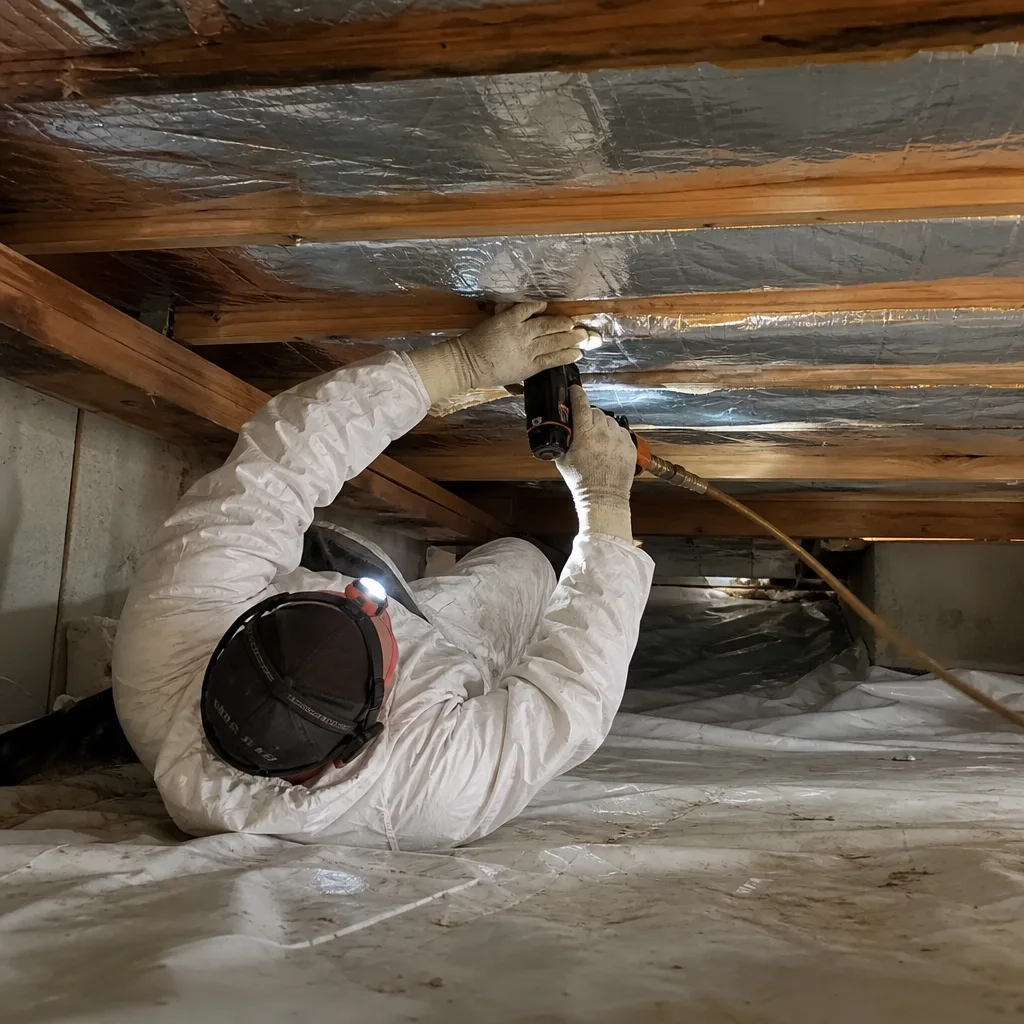
Inspection and moisture mapping. We start with a hygrometer reading at multiple points, thermal imaging for air leaks, and documentation of existing GreenFiber condition - settled, contaminated, or salvageable. You get the photos before we quote.
- 2
Blower-door or smoke-pencil test of the floor assembly. Not every crawl space needs a full blower-door, but we pressure-test or at minimum smoke-test the rim joist and penetrations. Seal the leaks first. Then insulate. The attic doesn’t care how thick the insulation is if the air is still moving through it - and neither does your crawl space.
- 3
Written price and scope, signed before work starts. Haven Standard Clause 1: flat price, written scope, written warranty. No exceptions. If you have another quote, we’ll read it with you - free second opinion.
- 4
GreenFiber-specific prep: removal, cleaning, or preservation. Salvageable GreenFiber stays; contaminated or compressed material comes out. We vacuum to clean substrate, then seal all penetrations with appropriate foam or caulk.
- 5
Vapor barrier installation and encapsulation sealing. 12-20 mil reinforced polyethylene on the floor, sealed with polyester-cord reinforced tape at seams and butyl tape at wall transitions. Dehumidifier sizing calculated based on crawl space volume and Schertz’s design dew point.
- 6
Post-work documentation and 365-Day Done Right Promise. Documented Photo Record of the completed encapsulation, written warranty, and our commitment: if it’s not done right, we make it right.
What GreenFiber Crawl Space Encapsulation & Vapor Barrier Costs in Schertz
Most GreenFiber crawl space encapsulation jobs in Schertz run between $3,200 and $6,800 for a standard 1,200-2,000 square foot footprint. What moves the price:
- GreenFiber removal required: Add $800-$1,400 if the existing material is contaminated, wetted, or must be cleared for full encapsulation
- Vapor barrier thickness and reinforcement: 6-mil basic barrier at the low end; 20-mil woven polyethylene with antimicrobial coating at the high end
- Dehumidifier inclusion: $1,200-$2,400 for a properly sized unit with condensate pump and drain line to exterior
- Active moisture or mold remediation needed: Can push total above $8,000 if fungal growth requires treatment before encapsulation
- Access limitations: Tight crawl spaces under 18 inches or requiring exterior access cutting add labor hours
We also work with Reflectix and other brands if your crawl space has mixed materials or you’re considering alternatives. Every estimate is free, written, and delivered before any work starts - call (830) 402-5240 to schedule.
Why Schertz Homeowners Call Topside Attic Insulation Schertz for GreenFiber Work
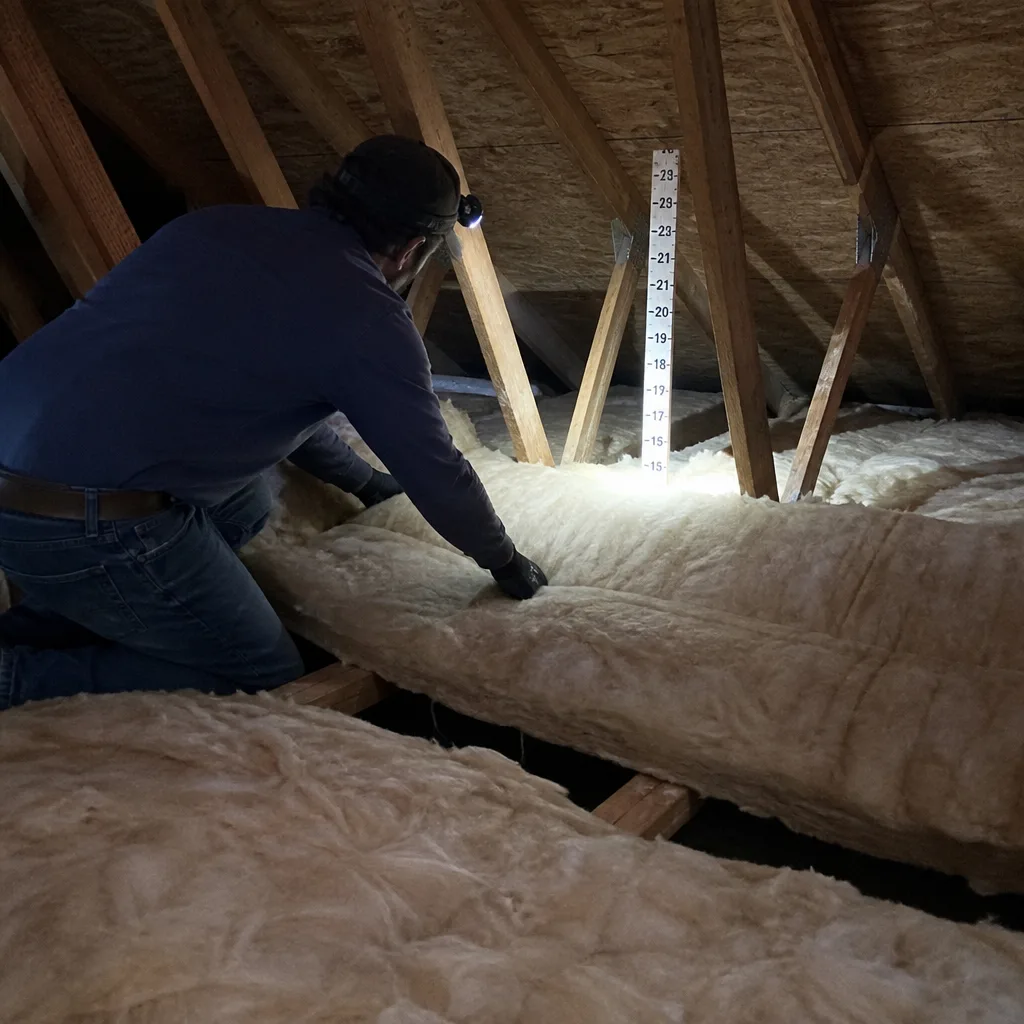
We’ve been working the Schertz corridor for several years now, including jobs in the Sedona subdivision off FM 1518 where summer humidity and clay soil make crawl space moisture control non-negotiable. Wes Okafor built this operation on sequencing: diagnose first, seal second, treat or insulate third. Our techs are background-checked and uniformed; calls are answered by a live person, 24/7. We publish before-and-after documentation on every job - not marketing fluff, but the actual photos and readings you can show your home inspector or next buyer. The 365-Day Done Right Promise applies to all completed work, and our materials come from Owens Corning, Johns Manville, Knauf, Rockwool, CertainTeed, Icynene, Demilec, and GreenFiber - no proprietary lock-in, ever. If another contractor told you GreenFiber “can’t be encapsulated,” get a second opinion. We’ve done it. We’ll show you how.
FAQs
GreenFiber’s product warranty covers manufacturing defects, not installation conditions - so proper encapsulation does not void it, but improper installation (wet application, compression in contact with standing water) can void coverage regardless of what you do afterward. As an independent GreenFiber service provider, we document existing conditions with photos before we start so there’s a clear record. Call (830) 402-5240 and we’ll review your specific situation - estimates are free.
GreenFiber does not sell “parts” in the traditional sense - it’s a loose-fill or batt product, not a mechanical system. For patching after encapsulation, we match density and R-value with current GreenFiber stock or equivalent cellulose from Knauf or Rockwool, depending on availability and what’s appropriate for your sealed crawl space. We never claim exclusive or preferred status with any brand. Bring us your concerns and we’ll specify exactly what goes where.
Encapsulating over dry, uncontaminated GreenFiber is usually cheaper by $800-$1,400 - but only if the material is truly dry and the crawl space has no active pest issues. We’ve pulled too many Schertz jobs where a homeowner saved on removal upfront and paid for mold remediation two years later. We test moisture content with a pin meter before recommending; if it’s above 18%, removal is the honest call. Call for a free inspection and we’ll give you the number.
Standard GreenFiber crawl space encapsulation is typically completed in one day once scheduled; emergency moisture control with standing water can start within 24-48 hours. Our live-answered line means you’re not waiting for a callback window. Call (830) 402-5240 - we’ll give you a real date, not a range.
In Schertz’s climate, a vapor barrier alone often isn’t enough - summer dew points here regularly hit the low 70s, and a passive barrier without mechanical dehumidification can still allow condensation on cool ductwork or framing. We size dehumidifiers based on crawl space volume and your home’s specific load; most of our Schertz encapsulations include one. The written scope spells out whether it’s required or recommended for your job - no surprises after signing.
Written by Wes Okafor, Owner, Topside Attic Insulation Schertz at Topside Attic Insulation Schertz, serving Schertz and nearby areas.