
GreenFiber Radiant Barrier Installation: The Schertz Owner’s Guide
GreenFiber radiant barrier installation in Schertz typically runs $1,800 to $3,400 for a standard 2,000-square-foot attic when done with proper air-sealing prep, and most jobs we price in the morning are underway that same afternoon. We stock GreenFiber-compatible radiant barrier rolls and fastening systems on every truck, so you’re not waiting on a distributor run to San Antonio. Most Schertz homeowners realize something’s wrong when their upstairs bedrooms won’t cool below 78°F even after sunset, or when their July electric bill jumps $80 to $120 over the previous year despite no thermostat change.
Which GreenFiber Models This Applies To
GreenFiber doesn’t manufacture a standalone radiant barrier product under its own brand, which is where most homeowners get stuck. What we install are GreenFiber-compatible radiant barrier systems, typically foil-faced kraft laminates or double-sided aluminum radiant barrier rolls that pair with GreenFiber’s blown-in cellulose insulation in the same attic assembly. The critical match point is the emissivity rating, the measure of how much radiant heat the surface reflects rather than absorbs. GreenFiber cellulose performs best when paired with a barrier rated at 0.05 emissivity or lower, and we verify this on the product stamp before any roll leaves the truck.
To identify what you’re working with, check the existing barrier for a printed ASTM C1313 compliance mark and a perforated or non-perforated designation. Non-perforated barriers trap moisture and require a specific ventilation strategy in Schertz’s humid subtropical climate, perforated allows vapor transmission. We’ve pulled water-damaged non-perforated barriers from attics in the Sedona subdivision off FM 1518 where the homeowner’s original installer skipped the ventilation calculation. For OEM-grade replacement, we source from the same mills that supply GreenFiber’s distribution network, we don’t use hardware-store rolls that delaminate at 140°F attic temps.
Signs Your GreenFiber Radiant Barrier Installation Is Failing
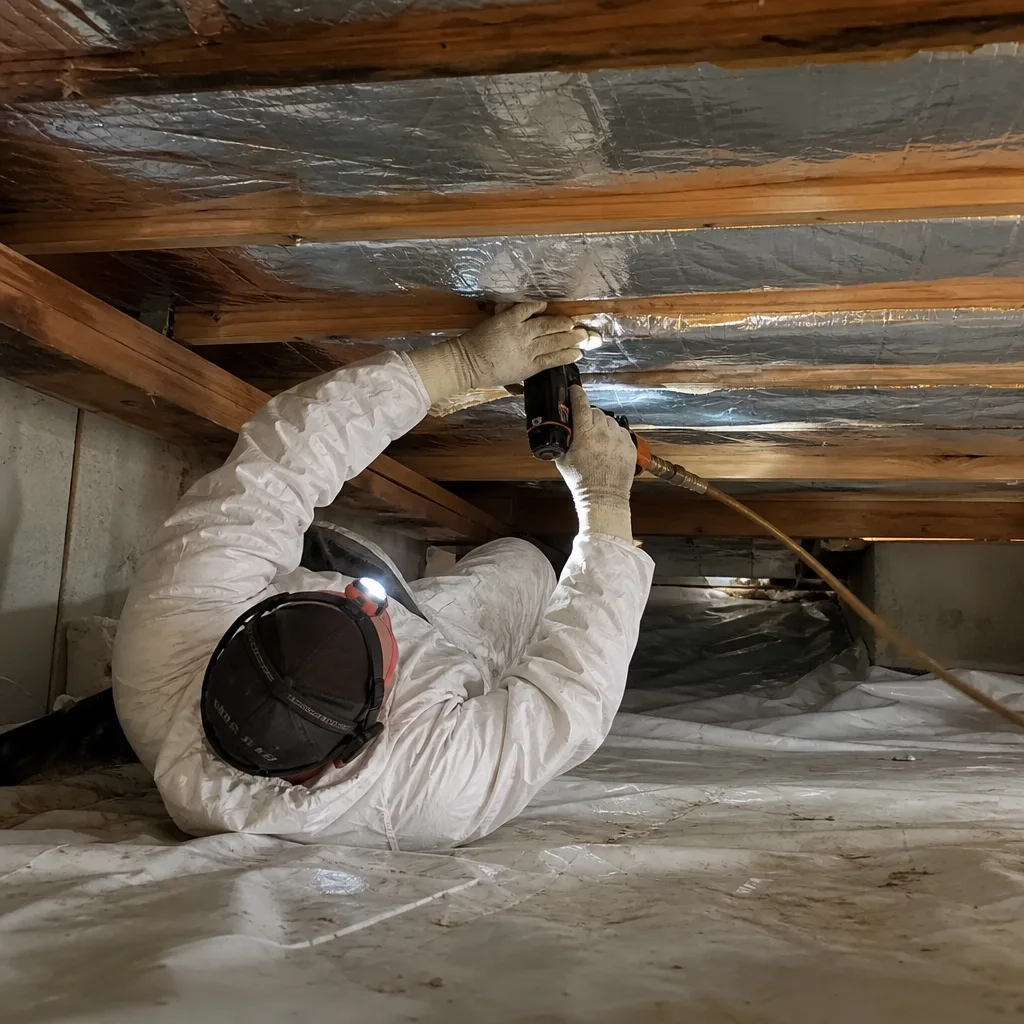
- Hot ceiling patches in late afternoon. The barrier has pulled away from the rafters or developed tears, creating gaps where radiant heat penetrates directly. In Schertz, we see this most often on south-facing roof planes where summer thermal cycling loosens staple lines.
- Dust-coated reflective surface. A radiant barrier that faces upward in an unsealed attic collects cellulose and fiberglass dust, and once the emissivity rises above 0.10, it’s reflecting almost nothing. We check this with a flashlight during inspection, a clean barrier shines like aluminum foil, a failed one looks gray.
- Moisture stains on the attic side of drywall. This usually means a non-perforated barrier was installed without adequate soffit-to-ridge airflow, or the barrier was placed directly against the roof deck with no air gap. Schertz’s 30+ inches of annual rainfall makes this a recurring issue in homes built 2015 to 2020 with rushed attic work.
- Insulation compression directly beneath the barrier. When installers staple radiant barrier to the attic floor over existing insulation, the weight compresses the GreenFiber cellulose below, reducing its R-value by 20 to 40 percent. The barrier isn’t failing, but the installation method has destroyed the insulation it was meant to protect.
- Visible corrosion or delamination at staple points. Cheap barriers use adhesive laminates that separate when attic humidity spikes, which it does regularly from May through October in this corridor. Once the aluminum layer flakes off, that section is just expensive plastic sheeting.
Replacement Cost & What’s Included
| Component | Typical Range (Schertz) |
|---|---|
| Radiant barrier material (per 1,000 sq ft attic) | $680 - $1,200 |
| Air-sealing prep (top plates, penetrations, can lights) | $450 - $890 |
| Fastening system and ventilation baffles | $180 - $340 |
| Labor (crew of two, half-day to full-day) | $490 - $970 |
| Typical installed total | $1,800 - $3,400 |
What drives the range: attic square footage, whether we need to remove a failed existing barrier, and how much air-sealing the floor requires before the new barrier goes in. We won’t install radiant barrier over an unsealed attic, that’s Haven Standard Clause 1, and it’s why our quotes include the blower-door test and the sealing work upfront. Every job closes with a Documented Photo Record showing the barrier placement, the air gap measurements, and the post-install blower-door reading so you can verify the assembly performs as specified. The 365-Day Done Right Promise covers labor and materials.
DIY or Call Us?
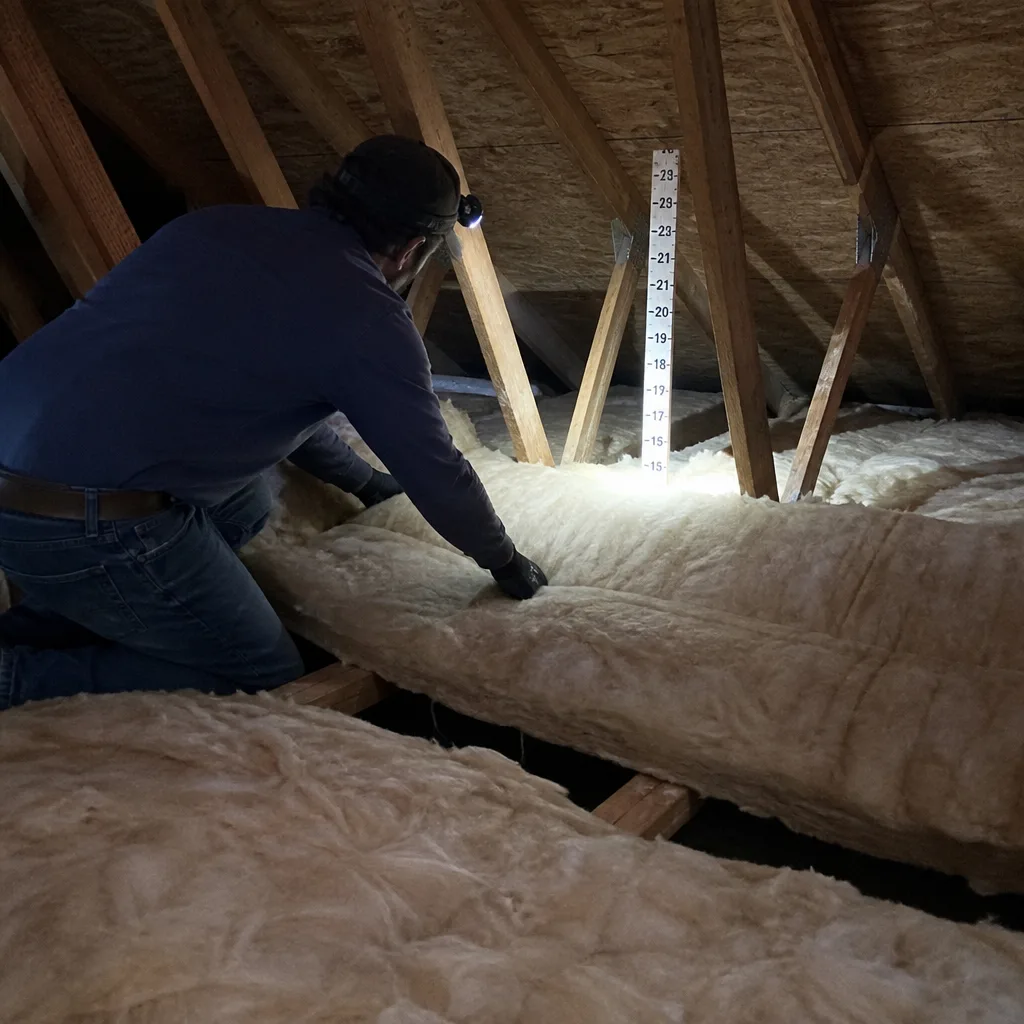
There’s one thing a careful homeowner can safely check: whether the existing barrier is perforated or non-perforated, and whether attic vents are blocked. Do this from the attic hatch with a flashlight, don’t traverse the ceiling joists unless you’re experienced with overhead work.
Where DIY goes wrong for radiant barrier is the sequencing. The barrier must maintain a minimum ¾-inch air gap on the reflective side to function, which means precise fastening to rafters, not decking, with proper baffles at the soffits. Get this wrong and you’ve paid for a product that does nothing, or worse, traps moisture. We’ve also seen homeowners staple through electrical wiring and flex ductwork in Schertz attics where the original builder packed utilities tight to the roofline. For the install itself, call (830) 402-5240. We carry the correct perforated barriers for this climate, the fastening guns that don’t split rafters, and the blower-door rig to prove the air sealing worked before we leave.
FAQs
A properly installed perforated radiant barrier in Schertz should perform for 20 to 25 years, though dust accumulation on upward-facing surfaces typically reduces effectiveness after 10 to 15 years in our pollen-heavy spring seasons. We inspect for dust loading and fastener integrity during any subsequent insulation service call. Call (830) 402-5240 for an exact quote, estimates are free.
Localized tears can be patched with foil tape rated for high-temperature exposure, but delamination, widespread dust coating, or incorrect original placement (floor-laid instead of rafter-mounted) always warrants full replacement. We assess this during our pre-work inspection and document the findings with photos before quoting. Call (830) 402-5240 for an exact quote, estimates are free.
Most Schertz residential jobs finish in four to six hours for a crew of two, assuming the attic is accessible and we’ve completed the required air-sealing prep. Larger homes or attics requiring old barrier removal can extend to a full day. We schedule with a written arrival window and text when the technician is en route.
Yes, we carry perforated double-sided aluminum radiant barrier rolls, compatible fastening systems, and ventilation baffles on every Schertz-area truck. We’re an independent service provider, not affiliated with GreenFiber, but we source through the same distribution channels to ensure material compatibility with existing GreenFiber cellulose installations. Call (830) 402-5240 for an exact quote, estimates are free.
Seal the leaks first. Then insulate. The attic doesn’t care how thick the insulation is if the air is still moving through it.
Topside Attic Insulation Schertz is independently owned and operated under The Haven Standard since 2016. We also stock and install Reflectix radiant barrier systems and parts. For a free written estimate on your GreenFiber-compatible radiant barrier installation in Schertz, call (830) 402-5240. A live person answers 24/7, and you’ll receive a Written Price Before Any Work Starts with a documented scope and warranty.
Written by Wes Okafor, Owner, Topside Attic Insulation Schertz at Topside Attic Insulation Schertz, serving Schertz and nearby areas.