
GreenFiber Crawl Space Encapsulation: The Schertz Owner’s Guide
We stock and install GreenFiber-compatible crawl space encapsulation systems in Schertz, with most complete jobs running $3,800-$6,400 depending on square footage and existing moisture damage. Same-day starts are available when we have your liner size in the warehouse, which we usually do for the standard 6-mil and 12-mil rolls. Most Schertz homeowners realize their encapsulation has failed when they notice a sharp musty smell returning after months of absence, or when their dehumidifier starts running continuously without dropping the relative humidity below 65%.
Which GreenFiber Models This Applies To
GreenFiber does not manufacture its own encapsulation liner; the brand sources through distribution partners, typically labeling rolls with a GreenFiber SKU sticker over the base product. What you’re looking for is the mil rating and the ASTM E1745 Class C (or higher) vapor-retarder classification printed on the roll edge, not the GreenFiber logo itself. The two thicknesses we see in Schertz homes are 6-mil for basic vapor barrier and 12-mil for full encapsulation with taped seams.
To identify what you have, check the white tape label on your existing liner’s edge for “ASTM E1745” and a Class A, B, or C rating. Class C is minimum for crawl spaces; Class A is overkill unless you’re over a high water table like parts of Schertz near Cibolo Creek. We carry both 6-mil and 12-mil virgin polyethylene in 12-foot and 16-foot widths, the two standard GreenFiber-compatible sizes. Aftermarket virgin poly matches GreenFiber’s sourced spec exactly at lower cost; the only difference is the absence of the GreenFiber SKU sticker. We do not stock proprietary GreenFiber-labeled rolls, and we are an independent service provider with no affiliation to GreenFiber.
Signs Your GreenFiber Crawl Space Encapsulation Is Failing
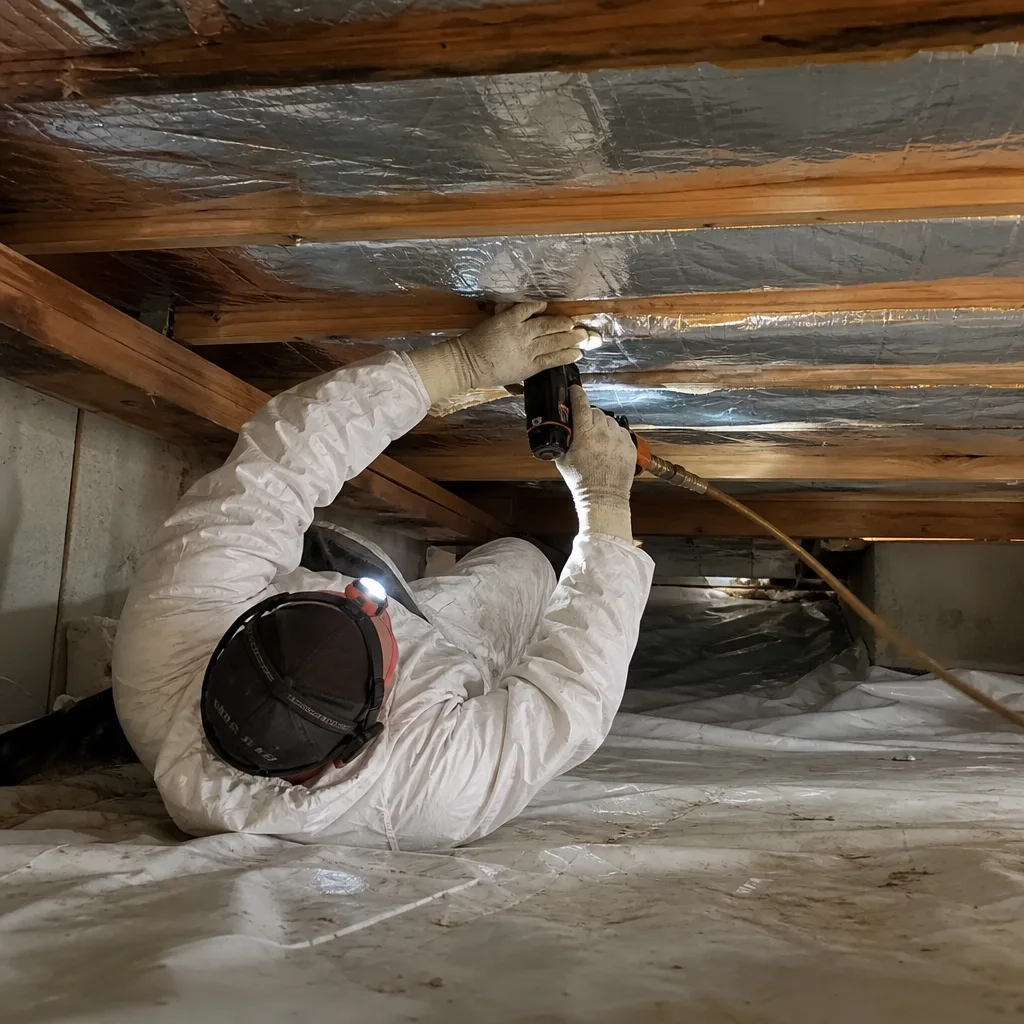
- Musty odor returning indoors. The vapor barrier has torn at seams or pierced on sharp foundation edges, letting soil moisture evaporate into the crawl space and migrate upward through floor gaps. In Schertz’s clay-heavy soils, this happens faster after dry spells when the ground shrinks and sharpens.
- Dehumidifier running nonstop. Your dehumidifier is working against an unsealed moisture source. If the liner has pulled from walls or the sump pit seal has degraded, the unit cannot reach its setpoint and will cycle continuously until it burns out.
- Condensation on ductwork or joists. Warm, humid exterior air is entering through gaps in the encapsulation, hitting cooler surfaces. This is common in Schertz where summer ground temps stay near 72°F while crawl space air can spike past 85°F if the seal is compromised.
- Visible tears, pooling, or liner sag. The polyethylene has degraded from UV exposure during initial installation, rodent activity, or weight stress from stored items. Pooling water on top of the liner indicates a drainage failure beneath, not just a liner problem.
- Floor insulation falling or damp. Fiberglass batts between joists absorb moisture when the encapsulation fails, then sag and detach. In Schertz, we’ve replaced batts in the Sedona subdivision that were saturated within 18 months of a botched encapsulation where the installer skipped taping the wall termination.
Replacement Cost & What’s Included
Complete GreenFiber-compatible encapsulation replacement in Schertz typically runs $3,800-$6,400 for crawl spaces between 800 and 1,800 square feet. The lower end covers 6-mil virgin poly with re-taped seams and wall termination; the upper end includes 12-mil liner, new drainage matting, sump pit resealing, and dehumidifier repositioning. What drives the range is existing damage to subfloor insulation, whether we need to remove saturated batts, and how much of the original liner has fused to itself from heat aging.
Every job includes: written price before work starts, removal and disposal of failed liner, installation of new virgin polyethylene with double-sided butyl tape at all seams, mechanical fastening at wall terminations, and a Documented Photo Record showing before, during, and after. We also run a moisture-meter reading at three points and log it with your file. Work is covered by our 365-Day Done Right Promise. Call (830) 402-5240 for a written estimate; we also provide a Free Second Opinion on any written estimate you’ve already received.
DIY or Call Us?
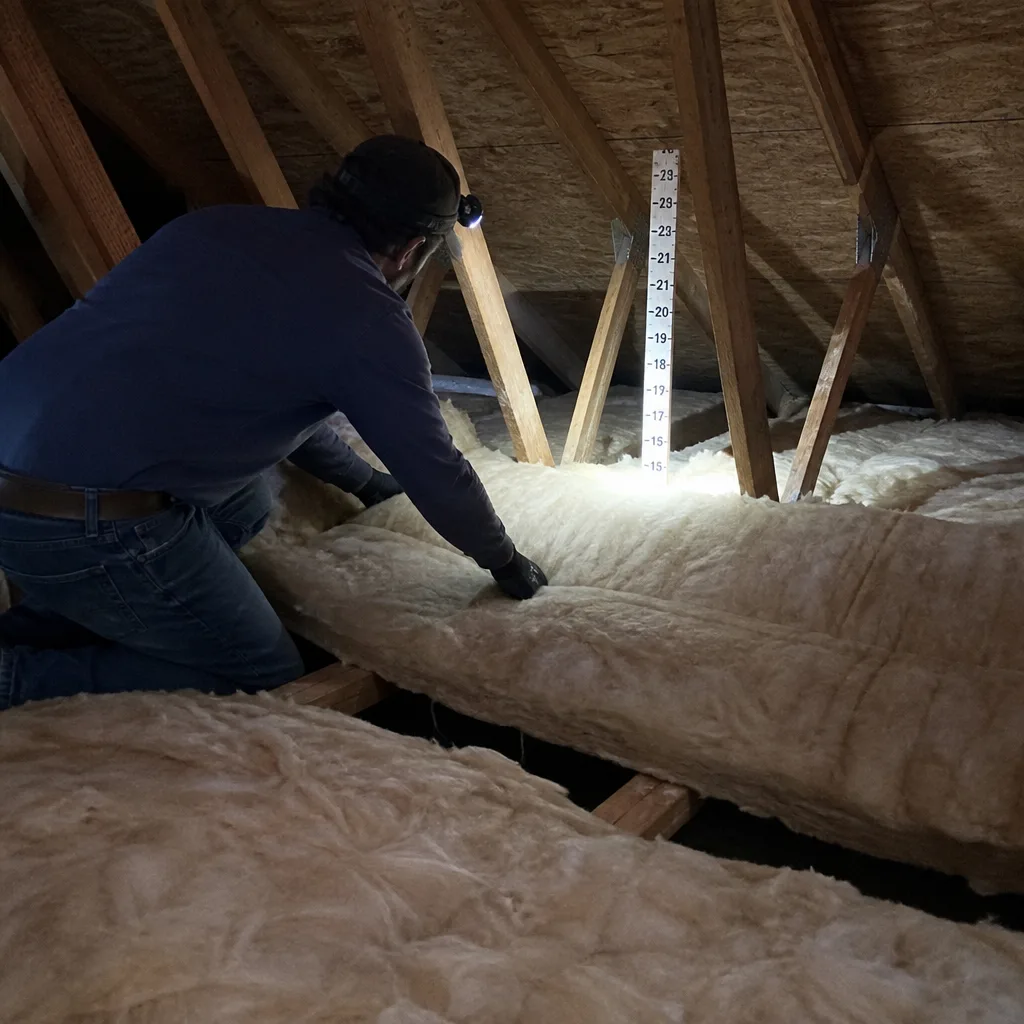
What you can safely check: walk your crawl space with a flashlight and look for tears, pulled seams, or pooling. Note the mil rating on your existing liner’s edge label. What goes wrong fast: cutting and seaming polyethylene in a confined space with limited headroom, properly terminating at uneven foundation walls, and evaluating whether the drainage layer beneath has failed. The real risk isn’t the liner itself; it’s missing the underlying moisture source, installing over wet substrate, or trapping existing mold against the subfloor. We’ve been called to Schertz homes where a homeowner’s DIY encapsulation actually accelerated floor joist rot by sealing moisture in rather than out. If your crawl space has standing water, mold visible on joists, or a musty smell you can’t locate, call (830) 402-5240. We’ll give you a written scope and price before anyone enters the space.
FAQs
Properly installed 12-mil virgin polyethylene lasts 15-20 years in Schertz’s climate; 6-mil closer to 10-12. The clay soils and seasonal expansion-contraction near FM 1518 and Cibolo Creek can stress wall terminations, so we mechanically fasten rather than rely on adhesive alone. Call (830) 402-5240 if you’re unsure of your liner’s age; estimates are free.
Small punctures under 2 inches can be patched with virgin poly and double-sided tape if the surrounding material is still flexible. If the liner is brittle, chalking, or has multiple tears, patching buys months, not years, and you’ll pay for the access labor twice. We assess patch viability during our free estimate and will tell you outright if replacement is the better spend.
Most Schertz crawl spaces between 1,000 and 1,500 square feet take one day for removal and replacement, assuming no subfloor insulation replacement or mold remediation. Larger crawl spaces, or those with limited access hatches requiring us to work in sections, may extend to a second day. We give you a written timeline with your price before starting.
We keep 6-mil and 12-mil virgin polyethylene in 12-foot and 16-foot widths at our Schertz warehouse, along with butyl seam tape, mechanical fasteners, and drainage matting. For non-standard widths or Class A-rated material, we can typically source within 48 hours. Call (830) 402-5240 to confirm we have your spec in stock; same-day starts are common.
We also stock parts for Reflectix radiant barrier systems if your crawl space or attic has mixed materials from prior work.
Written by Wes Okafor, Owner, Topside Attic Insulation Schertz at Topside Attic Insulation Schertz, serving Schertz and nearby areas.