
Insulation Before & After in Schertz, TX
Photos don’t lie. A compressed attic floor, a crawl space sweating through a July afternoon, a wall cavity pumping conditioned air into the Texas sky - these problems hide above your ceiling and below your feet. The gallery below shows what we found, what we did, and what the homeowner held in their hands when we left: a written scope, a photo record, and blower-door numbers that prove the envelope changed.
Recent Transformations
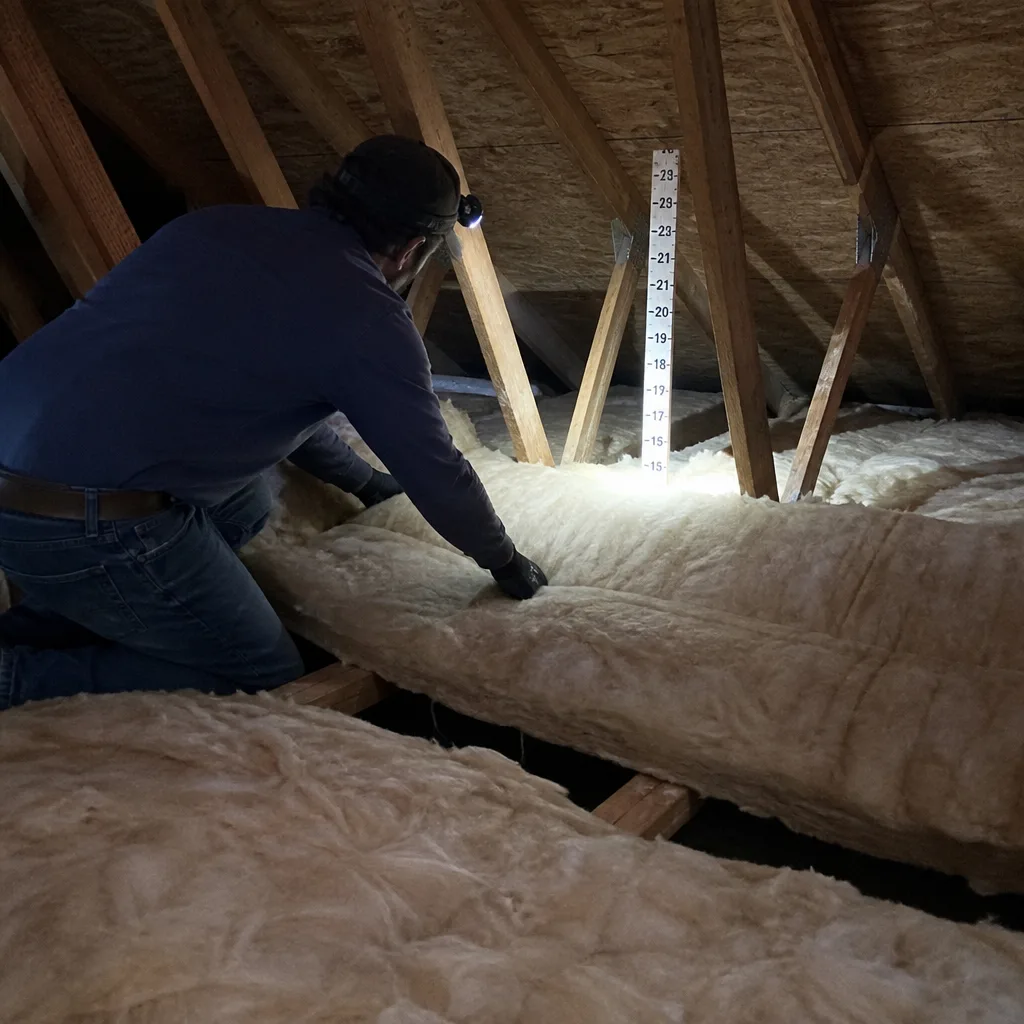
Attic Insulation Removal & Replacement - Schertz Home Built 1987
The homeowner in the Schertz neighborhood near Clemens High School called because their upstairs bedrooms wouldn’t cool below 78 degrees even with the AC running flat out. We pulled back the existing batts and found three problems: the insulation had compressed from its original R-30 to roughly R-19 after years of storage traffic and moisture cycling, the top plates where interior walls met the attic floor were unsealed and pulling conditioned air upward, and a bathroom vent was dumping humidity directly into the fiberglass. We removed the old material, air-sealed every penetration and top plate with fire-rated caulk and foam, installed baffles at the soffits for proper ventilation, then blew GreenFiber cellulose to a consistent R-38 depth. The blower-door test read 3,800 CFM50 before sealing and 2,400 after. The homeowner’s written scope shows the exact square footage treated, the bag count installed, and the depth measurements we took in six locations across the attic floor.
Crawl Space Encapsulation & Vapor Barrier - Live Oak Creek Area
This ranch-style home near Live Oak Creek had a crawl space that smelled like mildew every time the HVAC cycled on. The dirt floor was bare, the block piers were wicking moisture, and the fiberglass batts between joists were sagging and black at the edges. We pulled the degraded material, graded the dirt floor, laid a 20-mil reinforced vapor barrier with sealed seams and perimeter attachment to the foundation walls, wrapped the piers, and sealed the rim joist with closed-cell spray foam. A dehumidifier with a dedicated drain line keeps the space below 60% relative humidity year-round. The homeowner received a photo record showing each pier wrap, the seam overlap measurements, and the dehumidifier placement. Under Haven Standard: Written Price Before Any Work Starts, the full scope and flat price were delivered before our crew unloaded the first roll of barrier.
Spray Foam Insulation - Open-Cell in Schertz Attic Knee Walls
A finished bonus room above a garage in the Schertz neighborhood off FM 3009 was unusable from May through October. The knee walls - the short vertical walls where the roof pitch meets the finished space - had R-13 batts falling out of their cavities, and the floor of the attic behind them was completely unsealed. Conditioned air was leaking through every electrical box and into the vented attic. We removed the failing batts, installed open-cell spray foam at 5.5 inches on the knee walls and the attic floor behind them, creating a continuous thermal and air boundary. The foam seals around every wire and box without additional caulk work. The blower-door reduction on this job was 1,100 CFM50, and the homeowner’s documentation includes the foam thickness check at four points and the pass/fail on our substrate moisture test before application.
Radiant Barrier Installation - Schertz Home with Dark Shingle Roof
This single-story home in the Schertz area near Randolph Boulevard had a dark architectural shingle roof with zero shade coverage. On an August afternoon, the roof deck surface hit 140°F and the attic air temperature peaked at 128°F. The existing R-30 blown insulation was doing its job for conductive heat, but radiant heat from the deck was overwhelming the thermal boundary and keeping the ductwork in the attic sweating. We installed a perforated radiant barrier - a foil-based product that reflects radiant energy rather than absorbing it - stapled to the underside of the rafters with proper air gaps above and below. The attic air temperature dropped to 105°F on the next comparable afternoon, measured with our own logging thermometer left in place for 72 hours. The homeowner’s photo record shows the barrier placement, the ventilation clearance at the ridge, and the temperature log graph. We sourced the barrier from Owens Corning, one of eight major brands we carry with no proprietary lock-in.
Attic Air Sealing & Blown-In Top-Up - Schertz Home with Can Lights
The homeowner noticed dust collecting rapidly on their return air grille and suspected the attic was pulling particulate through the ceiling. We found twelve non-IC-rated can lights with no sealing, top plates gaping where interior walls met the attic floor, and a plumbing stack boot that had cracked around the pipe. The existing blown fiberglass was adequate in depth but compromised by air movement washing through it. We installed fire-rated Tenmat covers over every can light, sealed all top plates with acoustic sealant, replaced the plumbing boot, and blew new Johns Manville fiberglass to restore a uniform R-38 depth. The blower-door test showed the most dramatic improvement we’ve documented in Schertz: 4,200 CFM50 before, 2,100 after. The homeowner’s written scope includes a diagram marking every sealed location and the before-and-after pressure reading on our digital manometer, photographed and included in the Documented Photo Record.
Insulation Removal After Rodent Activity - Schertz Home Near Crescent Ridge
A homeowner near the Crescent Ridge area in Schertz heard scratching in the ceiling for three weeks before calling. We found Norway rat trails through the existing fiberglass, droppings concentrated near the furnace flue chase where they’d chewed a gap, and compressed nesting material reducing the insulation’s effectiveness by roughly half. We removed all contaminated material following Texas Department of State Health Services guidelines for rodent waste, HEPA-vacuumed the attic floor, sanitized with an enzyme treatment, sealed the flue chase and three other entry points with hardware cloth and foam, then installed Rockwool batts - a mineral wool product rodents find significantly less hospitable than fiberglass for nesting. The homeowner received photos of every entry point before and after sealing, the contamination removal process, and the new material installation. Under Haven Standard, the 365-Day Done Right Promise covers this work; if any sealed entry point fails, we make it right.
Want Results Like These?
Every job starts with a written price before any work starts - Haven Standard Clause 1 - and ends with a Documented Photo Record you’ll have forever. Call (830) 402-5240 to schedule a free assessment in Schertz. A live person answers, 24/7. Bring us a competing written estimate and we’ll read it with you; our Second Opinion is free.
Written by Wes Okafor, Owner at Topside Attic Insulation Schertz, serving Schertz since 2016.