
CertainTeed Spray Foam Insulation in Schertz: What to Know First
We provide independent CertainTeed spray foam insulation in Schertz, typically completing residential jobs in one to two days with a written price delivered before any work starts. Most open-cell attic jobs in a home this size run between $2,800 and $4,200; closed-cell garage ceiling or rim joist work runs $3,500 to $5,800 depending on access and square footage. This page is for homeowners who already have CertainTeed insulation in place and need a qualified crew that understands how CertainTeed’s product lines behave in the Schertz climate, or for new construction and retrofit jobs where CertainTeed is specified. Call (830) 402-5240 for a free estimate with a written scope, or bring us a competing quote for a free second opinion.
How CertainTeed Products Fail - and How We Fix Them
- SmartBatts with Moisture-Sensing Technology - the color-changing indicator tabs can misread in Schertz’s high-humidity shoulder seasons when attic ventilation is marginal. We’ve found tabs showing “wet” in attics reading 18% wood moisture content, which is within normal range. We verify with a calibrated pin meter before recommending any removal, and we won’t tear out material that doesn’t need to come out.
- CertainTeed MemBrain - the smart vapor retarder can delaminate from OSB roof decks when summer attic temperatures in Schertz subdivisions like Sedona off FM 1518 regularly push past 140°F. The adhesive backing softens, the sheet sags, and the effective permeance rating changes. We re-secure with mechanical fasteners and compatible spray foam at the perimeter, not just more adhesive that’ll fail again next August.
- Optima and InsulSafe blown-in fiberglass - these products settle predictably, but in Schertz homes with unsealed top plates, the settling pattern accelerates where air is moving through the material. We see 2-inch gaps at eaves within three years. Our fix is blower-door guided air sealing first, then replenishment to labeled depth with depth-stick photo documentation.
- CertainTeed spray foam applied over unsealed substrates - when previous contractors skipped the prep, the foam bonds to dusty sheathing or off-gassing OSB and develops adhesion failures at the interface. We cut back to sound substrate, HEPA-vacuum the surface, apply a compatible primer where CertainTeed’s specs call for it, then re-foam to the correct pass thickness.
- Flintlastic SA self-adhered membranes in conditioned attics - used as part of hybrid systems with CertainTeed spray foam, these membranes can alligator in the heat if the foam thickness below is insufficient to keep surface temperatures in spec. We calculate the R-value stack precisely and won’t spec less foam than the membrane warranty requires.
Our CertainTeed Spray Foam Insulation Process
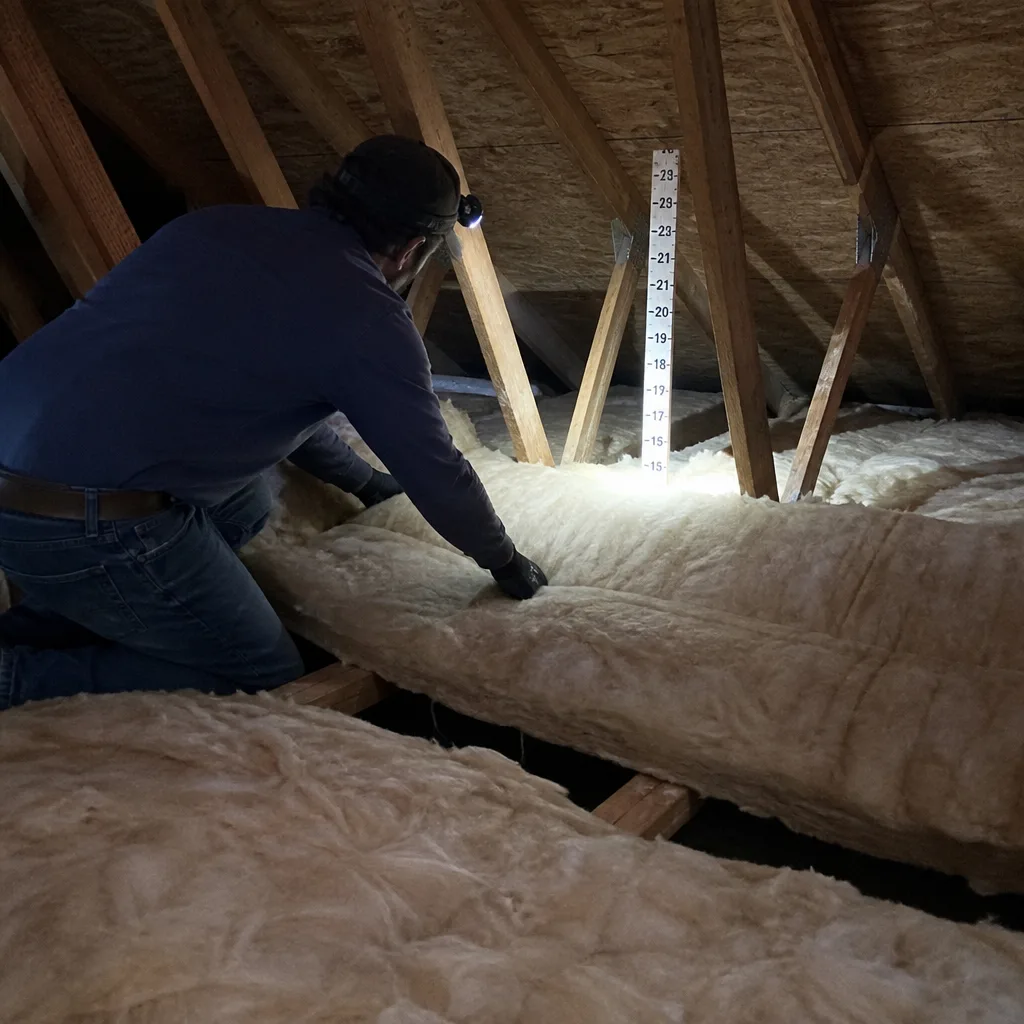
- 1
Pre-work blower-door test - we pressurize the house and record CFM50 so we know exactly how much conditioned air is escaping before we touch anything. This number becomes our benchmark.
- 2
Written price and scope - Haven Standard Clause 1: flat price, written scope, written warranty, delivered before anyone lifts a tool. No exceptions, no “we’ll figure it out when we get up there.”
- 3
Air sealing of top plates, can lights, and penetrations - we seal first, then insulate. The attic doesn’t care how thick the insulation is if the air is still moving through it. We use compatible sealants that CertainTeed’s foam will bond to properly.
- 4
Spray foam application to spec - pass thickness, temperature, and substrate moisture all logged. For CertainTeed open-cell products, we watch for overfilling that compresses the final pass and reduces R-value. For closed-cell, we monitor lift thickness to prevent exotherm cracking.
- 5
Post-work blower-door test and thermal imaging - we run the door again and deliver the before-and-after numbers, plus a printed thermal-imaging summary and depth-stick photo log. You get documentation, not just a receipt.
- 6
365-Day Done Right Promise walkthrough - if the blower-door number doesn’t move, or the thermal camera shows a miss, we make it right. Written warranty in hand, crew off the clock until you’re satisfied.
What CertainTeed Spray Foam Insulation Costs in Schertz
These are real ranges for jobs we’ve completed in the Schertz corridor, including the Sedona and Willow Grove areas:
| Job Type | Typical Range | What Moves the Price |
|---|---|---|
| Open-cell attic (1,800-2,400 sq ft home) | $2,800 - $4,200 | Attic height, existing removal, sheathing repairs |
| Closed-cell rim joist (full basement) | $3,500 - $5,800 | Access difficulty, soil gas mitigation needs |
| Closed-cell garage ceiling (2-car) | $2,200 - $3,600 | Fire-rated assembly requirements, ductwork relocation |
| Open-cell roof deck (conditioned attic) | $4,500 - $7,200 | Vaulted sections, skylight curbs, chimney saddles |
| CertainTeed removal and replacement | Add $1.20 - $1.80/sq ft | Containment needs, disposal fees, substrate condition |
Factors that push toward the high end: homes built 2015-2020 with hybrid CertainTeed systems that need partial teardown, attics with active rodent damage requiring cleaning and proofing before foam goes in, and any job where the previous contractor skipped the air sealing and we’re doing remediation plus new work. We don’t guess at price; we inspect, measure, and deliver a written number. Free estimates, free second opinions on any written quote you’ve already received. Call (830) 402-5240.
Why Schertz Homeowners Call Topside Attic Insulation Schertz for CertainTeed Work
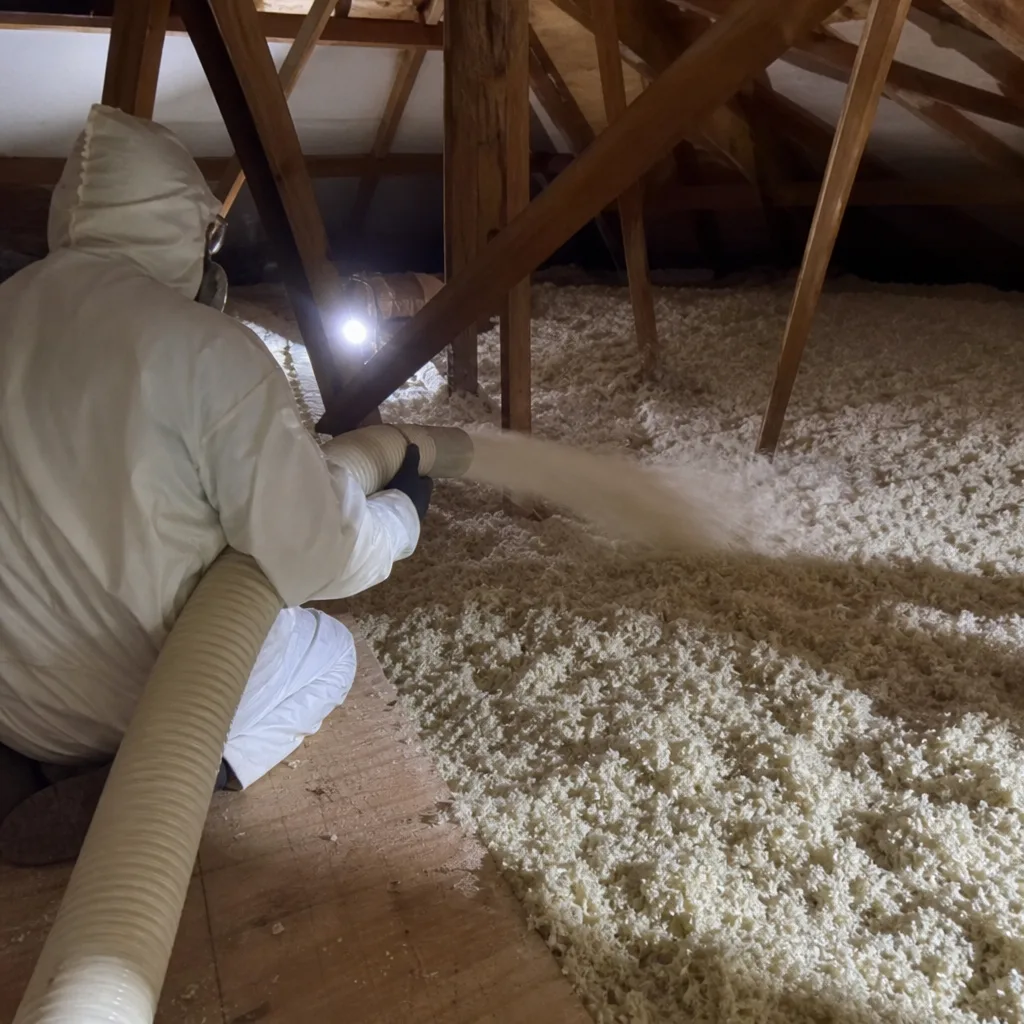
We’re independently owned and operated under The Haven Standard since 2016, not a franchise or a brand-locked installer. That matters because we source materials from Owens Corning, Johns Manville, Knauf, Rockwool, CertainTeed, Icynene, Demilec, and GreenFiber - if CertainTeed’s the right product for your Schertz home, we install it; if another manufacturer’s line makes more sense for your assembly and budget, we’ll say so. Wes Okafor and our crew have been working this corridor long enough to know which CertainTeed batches from which years had the adhesion issues, and we inspect for them before quoting. Every job gets a named technician, a text when they’re en route, and a Documented Photo Record you keep. Calls are answered by a live person 24/7. No voicemail loops, no callback windows measured in business days.
FAQs
No, provided the installation follows CertainTeed’s published application guidelines and uses compatible materials. As an independent CertainTeed service provider, we document substrate prep, pass thickness, and environmental conditions during application - the same records CertainTeed would require for any warranty claim. We deliver that documentation to you, not to a brand representative. Call (830) 402-5240 if you have a specific warranty concern and we’ll review your paperwork with you.
Most inspections are scheduled within 48 hours, and standard jobs are typically completed within one to two weeks of written approval. Emergency situations - active leaks through foam, compromised building envelope - get same-day or next-day response. We’ll give you a specific date and arrival window, not “sometime next week.” Call (830) 402-5240 to check current scheduling.
Spot repairs run 30-50% less than full removal and replacement, but only make sense when the failure is localized and the surrounding foam has tested sound for adhesion and R-value. We cut test cores and pull adhesion samples before recommending repair over replacement. If more than 20% of the surface is compromised, removal is usually the better long-term value. We quote both options when both are viable. Call (830) 402-5240 for an inspection and written comparison.
We stock common CertainTeed spray foam components and maintain relationships with regional distributors for same-day or next-day pickup on specialized items. For CertainTeed’s closed-cell products with specific fire-rated requirements, we verify batch dates and shelf life before quoting - we won’t install foam that’s been sitting in a warehouse past manufacturer recommendations. If your job requires a special order, you’ll know the lead time before you sign the scope.
Open-cell is vapor-permeable, lighter, and less expensive per R-value - it works well in vented attics where moisture can dry to the outside. Closed-cell is vapor-closed, adds structural rigidity, and performs better in flood-prone or high-humidity zones like Schertz’s older neighborhoods near Cibolo Creek where bulk water intrusion is a real risk. We specify based on your assembly, not our inventory. Both products get the same air-sealing prerequisite and the same blower-door verification.
Written by Wes Okafor, Owner, Topside Attic Insulation Schertz at Topside Attic Insulation Schertz, serving Schertz and nearby areas.