
Demilec Attic Air Sealing: The Schertz Owner’s Guide
We stock and install Demilec-compatible attic air sealing components for Schertz homeowners, with most repairs running $340-$780 installed depending on attic square footage and penetration count. Same-day service is available when you call before noon. Most owners figure out something’s wrong when their upstairs bedroom won’t cool below 78°F in July despite the AC running nonstop, or when they spot dusty fiberglass streaks across the attic floor where conditioned air is pushing through.
Which Demilec Models This Applies To
Demilec’s attic air sealing line breaks down into three product families you’re likely to find in Schertz homes built between 2010 and 2022: the Heatlok HFO Pro series (closed-cell spray foam kits for rim joist and top-plate sealing), the Sealection 500 open-cell system (used primarily for large attic floor applications), and the Demilec Agribalance line (the bio-based formulation that was popular with local green builders around 2016-2019). The part number you’re after is stamped on the cured foam itself or on the original work order if the previous contractor left documentation. Look for a Demilec batch code starting with “HL-” for Heatlok, “SL-” for Sealection, or “AB-” for Agribalance.
We carry OEM-spec replacement foam and application equipment, plus aftermarket equivalents from Icynene and Johns Manville that meet the same ASTM E84 Class A fire rating and R-value per inch. One compatibility gotcha: Demilec’s HFO Pro uses a proprietary blowing-agent chemistry that doesn’t play well with standard open-cell touch-up foam. If your original seal was Heatlok HFO, we need to match it with HFO-compatible material or strip back to substrate and start fresh. Mixing formulations creates a delamination risk, especially in Schertz’s heat-cycling climate where attic temperatures swing 80°F or more in a single day.
Signs Your Demilec Attic Air Sealing Is Failing
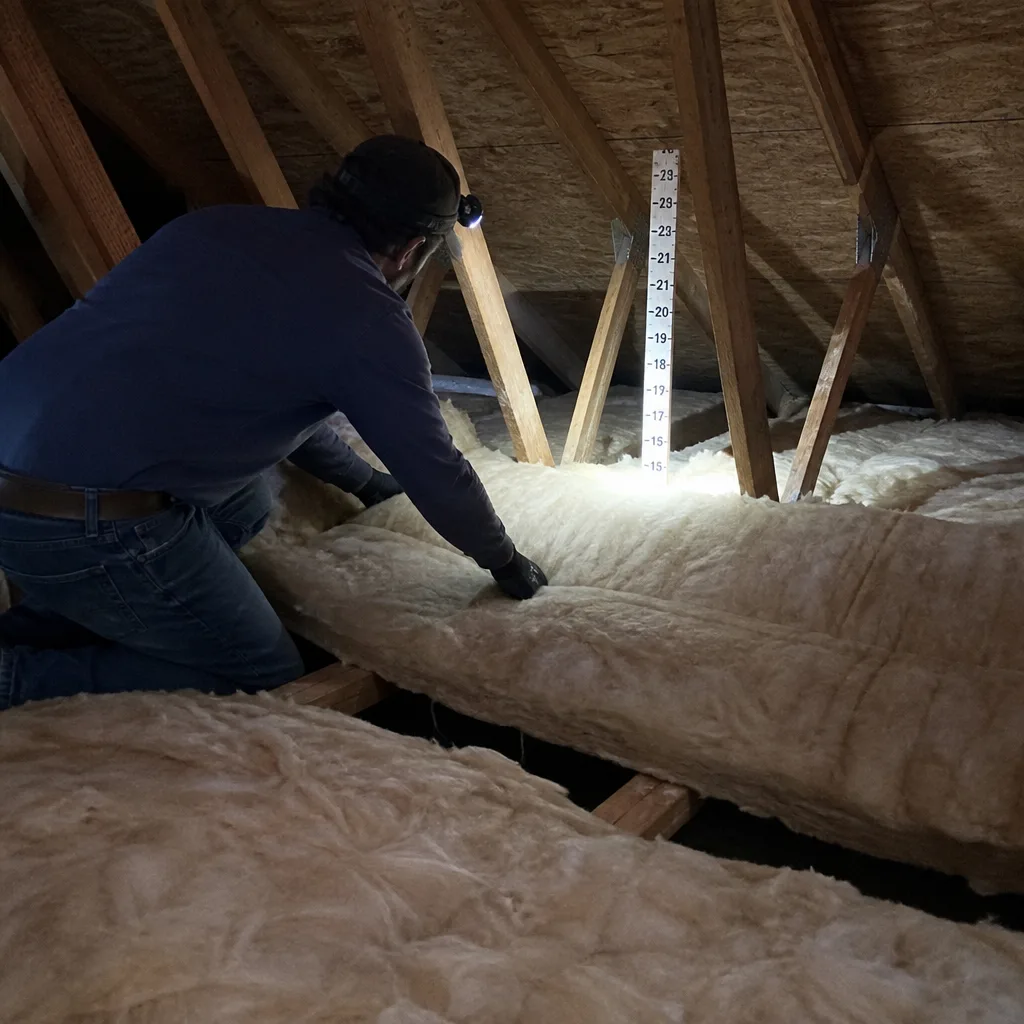
- Hot second-floor rooms that the AC can’t catch. When Demilec foam separates from top plates or shrinks away from electrical penetrations, conditioned air bleeds into the attic at exactly the rate your system replaces it. The blower-door number climbs, and your thermostat becomes a suggestion.
- Dust streaks or dark lines across attic-floor insulation. These are filtration marks, airborne dust carried by moving air through gaps the foam was supposed to seal. We see this most often in Schertz’s Sedona subdivision and similar builds where the original contractor rushed the foam cure in 100°F+ attic conditions.
- Ice damming or moisture staining at ceiling edges in winter. Failed air sealing lets warm, humid interior air hit cold roof sheathing. The moisture condenses, freezes, and melts back through drywall. Demilec’s open-cell formulations are particularly vulnerable to shrinkage cracks that open this pathway.
- Spiking summer electric bills with no rate change. A blower-door test we ran last month on a Schertz home off FM 1518 read 3,400 CFM50; after resealing the original Demilec work, it dropped to 1,900. The homeowner’s August bill fell $87. Air movement is expensive.
- Visible gaps or crumbling at foam edges. Demilec foam degrades when exposed to UV light or sustained temperatures above 180°F. In Schertz attics without radiant barriers, summer peak temps regularly exceed that threshold. The foam surface chalks, cracks, and loses adhesion.
Replacement Cost & What’s Included
| Scope | Price Range |
|---|---|
| Spot repair (1-2 penetrations, touch-up foam) | $340-$480 |
| Partial reseal (top plates + electrical/service penetrations) | $520-$680 |
| Full attic floor air seal (Demilec removal + reapplication) | $680-$780 |
What drives the range: attic square footage, accessibility (truss height and decking), whether we need to remove existing insulation to reach the substrate, and whether the original Demilec application was HFO Pro (requires compatible material). Every job includes a pre-work blower-door test, the sealing work itself, a post-work blower-door test with printed results, and a Documented Photo Record showing before, during, and after. Under Haven Standard Clause 1, you get a written price before anyone lifts a tool. The 365-Day Done Right Promise covers labor and material adhesion.
DIY or Call Us?
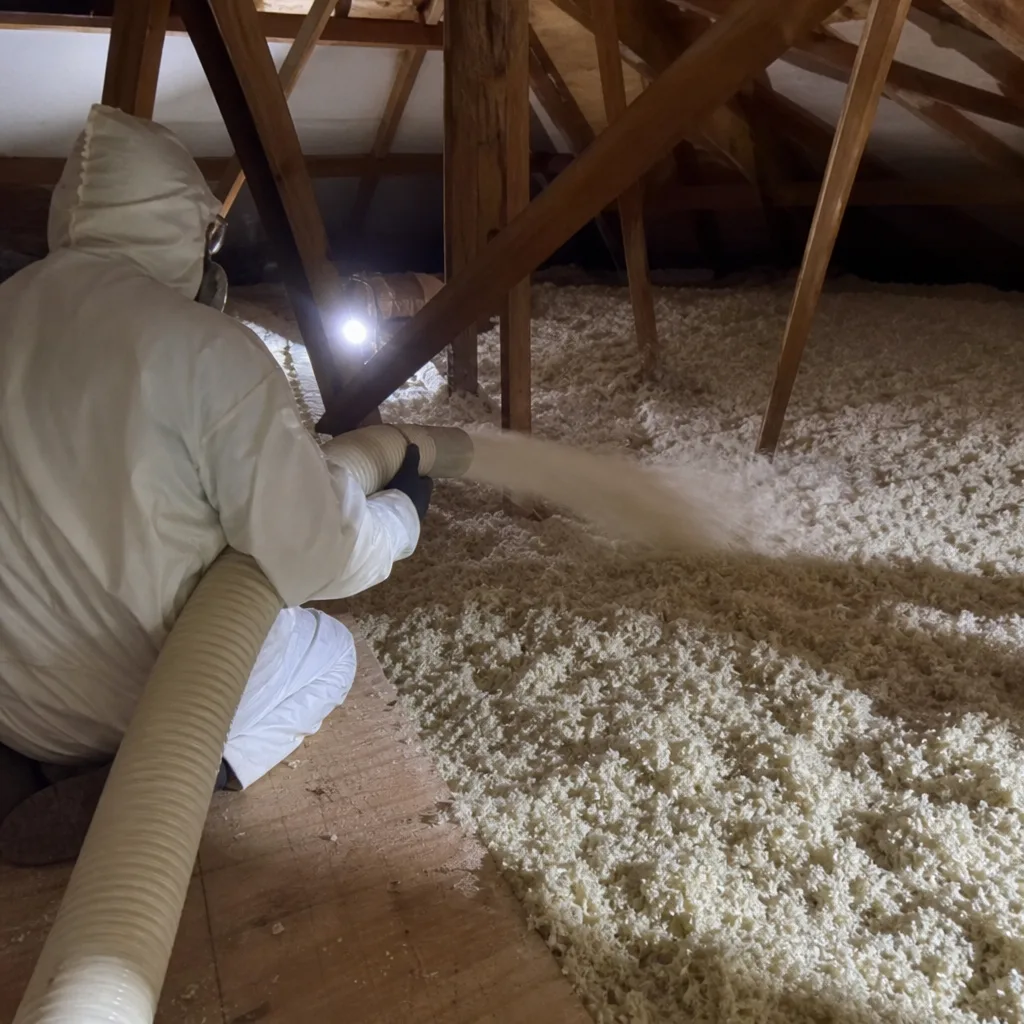
Here’s what you can safely check yourself: look for visible gaps in foam at top plates, around chimney chases, and where wiring drops through the attic floor. Use a flashlight and a phone camera. If you find crumbling, chalking, or gaps wider than a pencil, you’ve got a problem.
Here’s where DIY goes wrong: spray foam chemistry is unforgiving. Two-component kits from the hardware store require precise temperature control, exact mix ratios, and full respiratory protection (isocyanides are not optional hazards). More critically, you can’t fix what you can’t see. We use thermal imaging to find air movement paths that look sealed to the naked eye, and we verify with a blower-door test. Without that measurement, you’re guessing. We’ve been called to Schertz homes where a homeowner’s DIY touch-up actually blocked soffit ventilation and created a moisture trap. Seal the leaks first. Then insulate. The attic doesn’t care how thick the insulation is if the air is still moving through it.
Topside Attic Insulation Schertz is an independent service provider, not affiliated with Demilec. We also stock Reflectix radiant barrier components for integrated attic system repairs.
FAQs
Properly applied Demilec foam lasts 15-25 years, but Schertz’s heat-cycling attic environment shortens that to 10-15 years for installations done in peak summer without proper substrate prep. HFO Pro formulations hold up better than open-cell against temperature swings. If your foam is approaching the decade mark and you’re seeing any of the symptoms above, it’s time for an inspection. Call (830) 402-5240 and we’ll read it with you - estimates are free.
Spot repair works if the failure is isolated to a few penetrations or shrinkage cracks, and the remaining foam is well-adhered. If the original application has widespread UV degradation, chemical incompatibility from a previous touch-up, or moisture damage from a roof leak, we strip and reapply. We make that call after inspection, not before. Call (830) 402-5240 for a free second opinion on any estimate you’ve already received.
Most spot repairs finish in 2-3 hours; a full attic floor reseal runs a full day including setup, insulation removal if needed, foam cure time, and post-work blower-door testing. We schedule so you’re not sitting around waiting - you get a named technician and a text when they’re on the way. Call (830) 402-5240 to check same-day availability.
We carry HFO Pro and Sealection-compatible foam sets, application guns, and cleaning solvents on every Schertz-area truck, plus OEM-spec aftermarket equivalents from Icynene and Johns Manville. For Agribalance jobs, we special-order to match the original bio-based chemistry. We don’t start work with whatever’s closest; we match the material to your existing system. Call (830) 402-5240 to confirm compatibility before we roll.
Written by Wes Okafor, Owner, Topside Attic Insulation Schertz at Topside Attic Insulation Schertz, serving Schertz and nearby areas.