
GreenFiber Attic Air Sealing: The Schertz Owner’s Guide
GreenFiber attic air sealing repair and replacement in Schertz typically runs $340-$780 installed, depending on attic square footage and how many top plates, can-light housings, and plumbing/electrical penetrations need sealing. We stock GreenFiber-compatible acrylic-latex sealant, fire-rated caulk for fixture housings, and rigid foam blocking for chase damming on every truck, and most Schertz jobs we can start same-day if you call before noon. Homeowners usually figure out something’s wrong when their upstairs rooms won’t stay cool despite new insulation, or when their energy bill spikes after a GreenFiber blow-in job done without proper sealing first.
Which GreenFiber Models This Applies To
GreenFiber doesn’t manufacture its own air-sealing hardware; the brand’s cellulose blow-in insulation is designed to work with standard building-envelope sealing materials. What we’re talking about here is the air-sealing layer that should have been installed before your GreenFiber cellulose went in. If you’re troubleshooting, look for the original install date on your GreenFiber bag remnants (usually stapled to a rafter) or the depth card the installer left. Homes built 1995-2015 in Schertz’s older corridors, like the original sections of Sedona off FM 1518 or the pre-2010 builds near Schertz Parkway, often had GreenFiber blown directly over unsealed top plates and recessed-can housings.
To identify what you’ve got, check the attic floor for these three things: blackened or dirty insulation near the eaves (air washing through), visible gaps where interior walls meet the ceiling drywall, or metal can-light housings without a fire-rated cover or caulked seam. The OEM approach is a full air-sealing package: acrylic-latex caulk for seams under ¼ inch, fire-rated intumescent caulk for any penetration within 3 inches of a fixture housing, and rigid foam board cut and foamed into larger chases. We also carry quality aftermarket equivalents from Owens Corning and Johns Manville that meet the same ASTM E814 and ASTM E1966 fire ratings at a lower per-tube cost. The compatibility gotcha in Schertz’s climate: standard latex caulk degrades faster in attics that hit 140°F regularly, so we spec high-temp elastomeric sealant for anything within 18 inches of the roof deck.
Topside Attic Insulation Schertz is an independent service provider with no affiliation to GreenFiber.
Signs Your GreenFiber Attic Air Sealing Is Failing
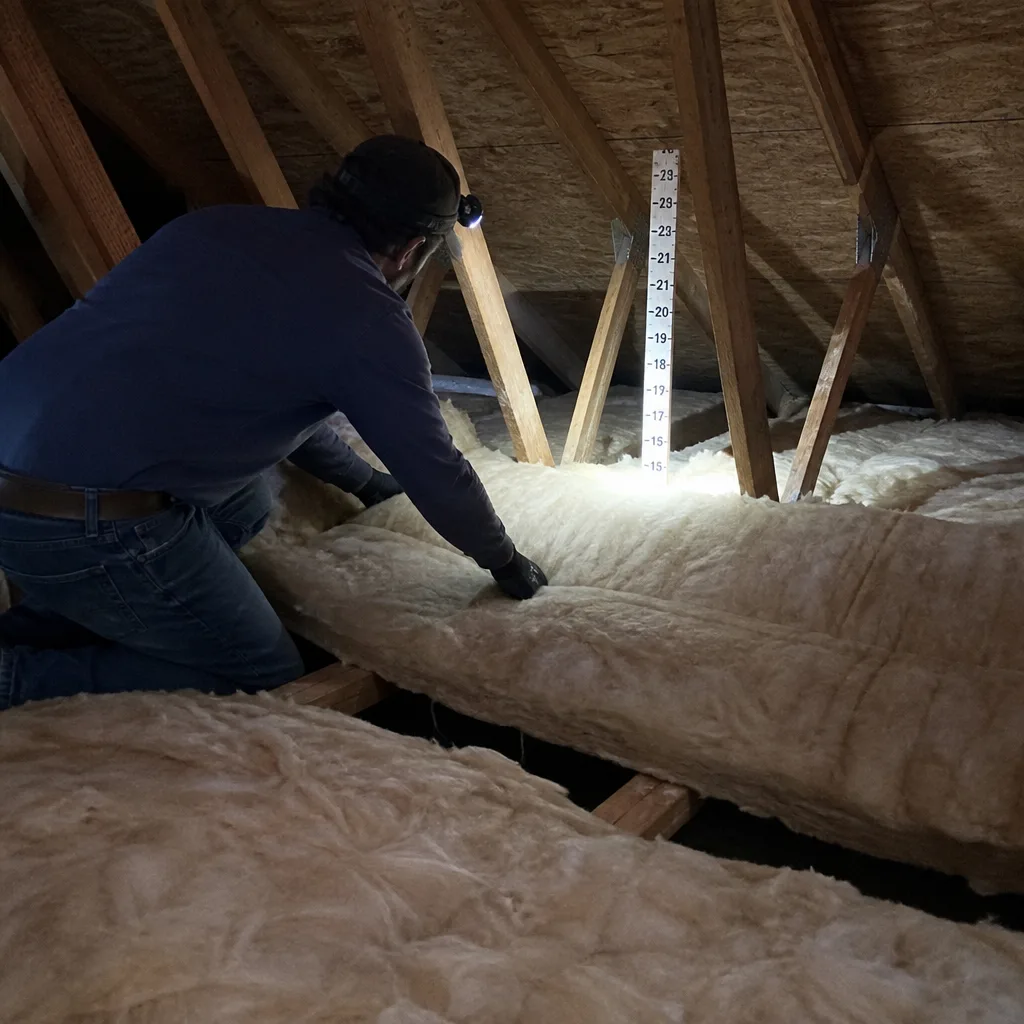
- Upstairs rooms run 4-8 degrees hotter than downstairs in July. Conditioned air escapes through unsealed top plates and is replaced by attic air pulled down through wall cavities. The GreenFiber insulation above does nothing if the air moves around it.
- Insulation looks gray or dirty near the eaves and around fixtures. This is “air washing,” where dust from the attic filters through the cellulose as air moves through gaps. Clean insulation means sealed seams; dirty insulation means you’ve got a bypass.
- Energy bills climb year-over-year despite no rate increase. A blower-door test we ran last summer on a 2012 build in the Live Oak section of Schertz showed 3,800 CFM50 before sealing and 2,100 after. That difference is conditioned air you’re paying to heat and cool twice.
- Drafty outlets and switch plates on exterior walls in winter. Unsealed top plates let attic air drop straight down the wall cavity. If you feel a draft from an outlet with the windows closed, the leak is likely 8 feet above it.
- Ice dams or persistent frost on roof sheathing in rare cold snaps. Warm, moist interior air hits cold decking and condenses. In Schertz this is uncommon, but when it happens, it’s almost always an unsealed chase or bypass letting bathroom exhaust moisture into the attic.
Replacement Cost & What’s Included
Most GreenFiber attic air-sealing jobs in Schertz run between $340 and $780. The low end covers a straightforward single-story with accessible attic hatch, 6-10 can lights, and standard top-plate sealing. The high end hits two-story homes with complex rooflines, multiple HVAC chase penetrations, or balloon framing that needs fire-blocking at each stud bay.
| Component | Typical Range |
|---|---|
| Labor: air sealing, top plates & penetrations | $220-$480 |
| Materials: caulk, foam, fire-rated sealant | $65-$180 |
| Blower-door test (before & after) | $55-$120 |
What drives the spread: attic accessibility (truss spacing, existing insulation depth), number of fixtures and penetrations, and whether we need to remove and re-install GreenFiber to get to the deck. We don’t quote over the phone without photos, but we do provide a Written Price Before Any Work Starts once we’ve seen the space. Every job includes a Documented Photo Record of sealed areas and post-work blower-door numbers so you can verify the result. Work is covered under our 365-Day Done Right Promise.
DIY or Call Us?
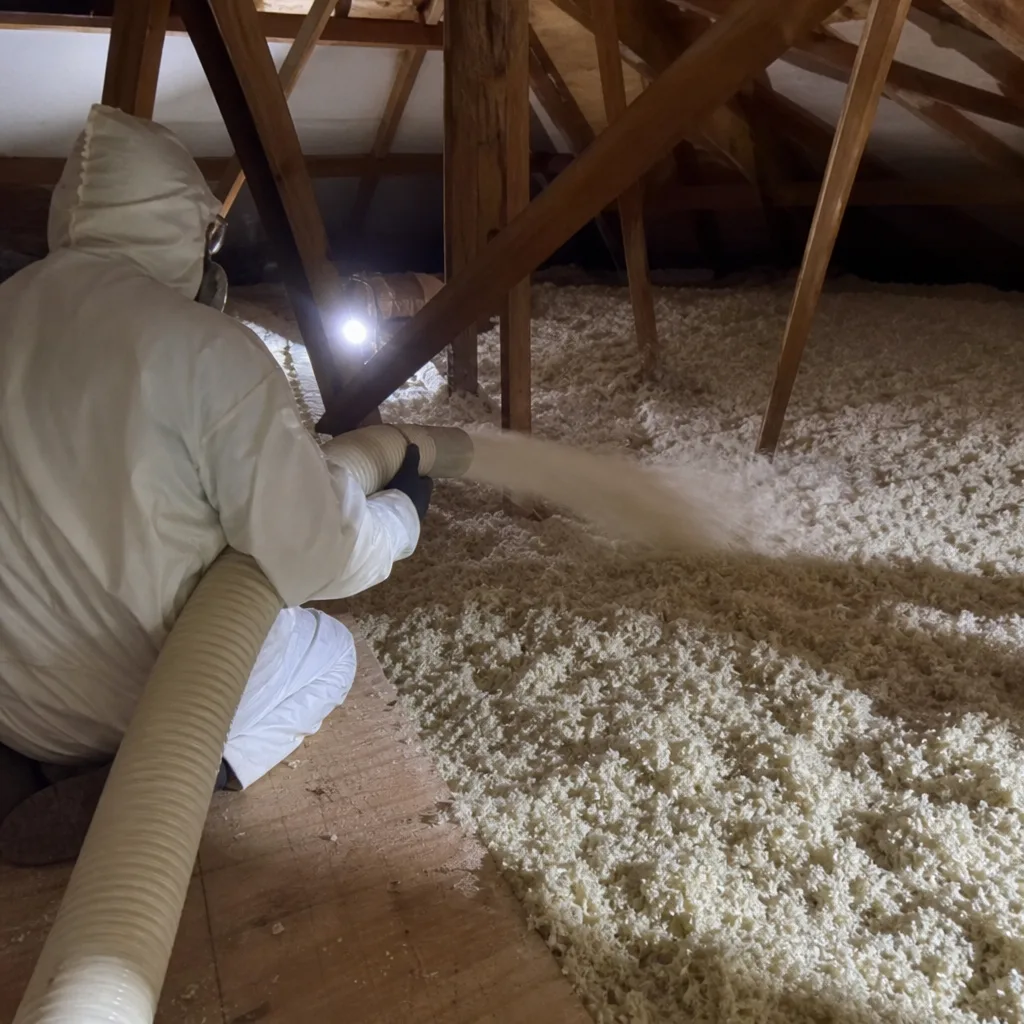
There’s safe checking, and then there’s work that belongs to someone with a respirator and a harness.
What you can do: on a cool morning, pop the attic hatch with a flashlight and look for the obvious gaps. Shine the light across the attic floor - shadows in the insulation often indicate air gaps at the top plates. Check can-light housings for missing or damaged covers. If you see any of this, you’ve got a problem, but you’ve also confirmed what we need to fix.
Where DIY goes wrong: Schertz attics in August are 130-150°F, and disturbed cellulose creates respirable dust. More critically, sealing around gas appliance vents or recessed housings without knowing the fire-rating requirements creates a real hazard. We’ve found homeowner caulk jobs that blocked combustion air or used standard latex within 3 inches of a can housing. The materials cost $80; fixing the mistake costs $600. Call (830) 402-5240 and we’ll give you a free second opinion on any written estimate you’ve already got.
FAQs
Properly installed air sealing lasts 15-25 years, but the elastomeric caulk we use near the roof deck may need inspection after 8-10 years due to thermal cycling. Schertz’s 140°F+ attic peaks accelerate degradation of standard latex products, which is why we spec high-temp materials from the start. Call (830) 402-5240 if you’re unsure what was used originally - we can read the residue and tell you.
No. Adding R-value over an unsealed attic floor is money spent on the wrong problem. The attic doesn’t care how thick the insulation is if the air is still moving through it. We’ve pulled back 14 inches of perfectly good GreenFiber to find gaps so wide you could drop a pencil through. Seal first, insulate second. Every time.
Most single-story Schertz homes take 3-5 hours; two-story or complex roofs run 6-8 hours. We schedule the blower-door test first thing, seal during the middle of the day, and run the post-test before we pack up. You’ll have the numbers same day. Call (830) 402-5240 to check availability - we often have next-day slots.
Yes. We carry acrylic-latex caulk, fire-rated intumescent sealant, high-temp elastomeric for near-deck applications, and rigid foam board with compatible adhesive on every vehicle. If your job needs something specialized - Demilec spray foam for large chase sealing, for instance - we order it with a 24-hour lead time and confirm before we arrive. No surprises on material.
Ready to stop losing conditioned air through your attic floor? Call (830) 402-5240 for a free estimate. We’ll give you a Written Price Before Any Work Starts, documented blower-door proof when we’re done, and a 365-Day Done Right Promise on every sealed seam.
Written by Wes Okafor, Owner, Topside Attic Insulation Schertz at Topside Attic Insulation Schertz, serving Schertz and nearby areas.