
GreenFiber Attic Insulation: The Schertz Owner’s Guide
Most GreenFiber blown-in cellulose insulation jobs in Schertz run between $1.80 and $2.40 per square foot installed, with typical whole-attic projects landing between $2,800 and $4,800 depending on existing depth and air-sealing needs. We stock GreenFiber loose-fill cellulose and compatible borate-treated stabilized products on our trucks, and we can usually inspect, price, and begin work same-day if you call before noon. Homeowners usually figure out something’s wrong when the upstairs bedrooms won’t cool below 78°F in July, or when they spot thin patches, settled valleys, or rodent disturbance in the attic floor after a decade of Texas heat cycling.
Which GreenFiber Models This Applies To
GreenFiber’s residential line breaks into two categories you’ll find in Schertz attics: loose-fill cellulose (ALLBORO Plus, stabilized with borate for fire and pest resistance) and stabilized spray-applied systems used in netted wall cavities. The loose-fill is what we handle most - it’s blown to R-30 to R-60 depths across attics in neighborhoods like Sedona and Copper Ridge. Check your attic floor for the white-and-green bag remnants or the stamped lot number on any exposed batts; GreenFiber labels show the borate percentage (typically 11.8% by weight) and the stabilized density, which matters because non-stabilized cellulose settles faster in our humidity swings.
We source GreenFiber through standard distribution - no proprietary lock-in, no exclusive dealer status claimed. For homeowners who want to match existing depth exactly, we measure what’s there with a depth stick, photograph the readings, and spec the same stabilized product or an equivalent from Owens Corning or Johns Manville if GreenFiber supply is tight. The critical spec is settled density, not brand loyalty: 0.5 to 2.0 pounds per cubic foot depending on application, and anything below R-30 in a Schertz attic is underperforming against our summer roof deck temperatures.
Signs Your GreenFiber Attic Insulation Is Failing
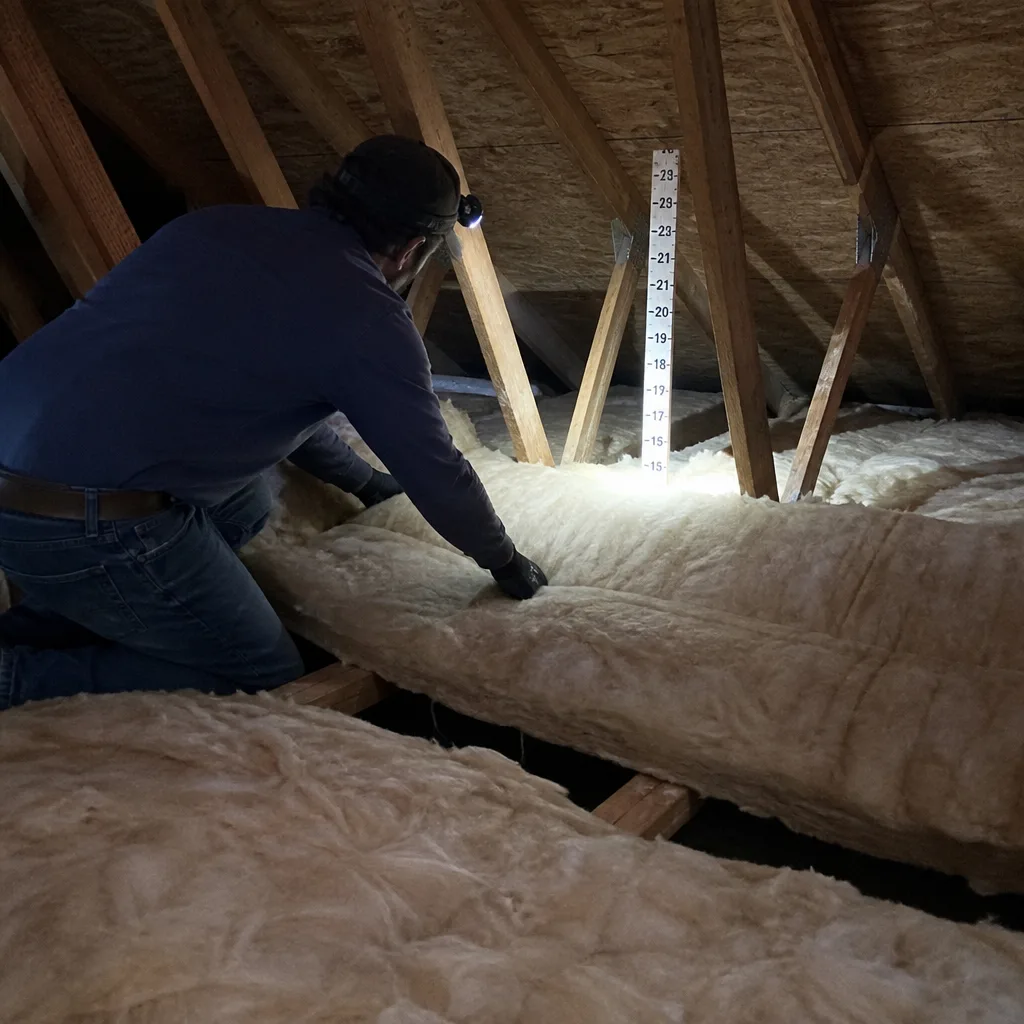
- Uneven depth or visible floor joists. Cellulose settles over time, but accelerated settling in Schertz often means moisture got in from a bathroom vent discharging into the attic or a compromised ridge vent. We measure with a depth stick every two feet; variance over two inches tells us redistribution or top-off is needed.
- Hot second floor despite HVAC running constantly. When the blower-door test shows 3,500 CFM50 or higher and the attic reads R-19 equivalent, the insulation isn’t the primary problem - but if the air sealing’s been done and the house still leaks heat, thin or disturbed cellulose is usually the culprit. We’ve seen this exact pattern in post-2010 builds near FM 3009 where builders spec’d minimum code depth.
- Dust or cellulose particles in living spaces. This means air is moving from attic to house through bypasses, carrying fine fibers with it. It’s not normal, and it means your thermal and air barriers are compromised simultaneously. The fix is never more insulation on top; it’s sealing first.
- Moisture staining or compressed, crusted patches. Borate-treated cellulose resists mold, but sustained humidity from a roof leak or duct condensation can mat the material, destroying its loft and R-value. In Schertz, we see this where HVAC flex runs sag and sweat against the attic floor.
- Rodent tunnels or nesting material mixed with insulation. Cellulose is treated with borate, which deters insects and makes the material unpalatable to most pests, but determined roof rats will still burrow. The insulation isn’t failed, but it’s contaminated and needs removal before replacement.
Replacement Cost & What’s Included
| Scope | Price Range in Schertz |
|---|---|
| Top-off existing to R-38 (1,200 sq ft attic) | $2,200 - $3,400 |
| Full removal + replacement to R-49 (1,200 sq ft) | $4,200 - $6,200 |
| Air sealing + insulation to R-60 (full envelope) | $5,800 - $8,400 |
| Contaminated removal + sanitization + new install | $6,500 - $9,800 |
The range depends on three factors: how much existing material needs coming out, how many top plates and penetrations need sealing before new product goes in, and whether we’re working around stored belongings or a finished attic floor. Every job starts with a written price - Haven Standard Clause 1 - and includes the Documented Photo Record: depth-stick readings every 100 square feet, blower-door before-and-after if air sealing is in scope, and thermal imaging showing temperature differential across the attic plane. The 365-Day Done Right Promise covers workmanship and material settling beyond normal compression.
DIY or Call Us?
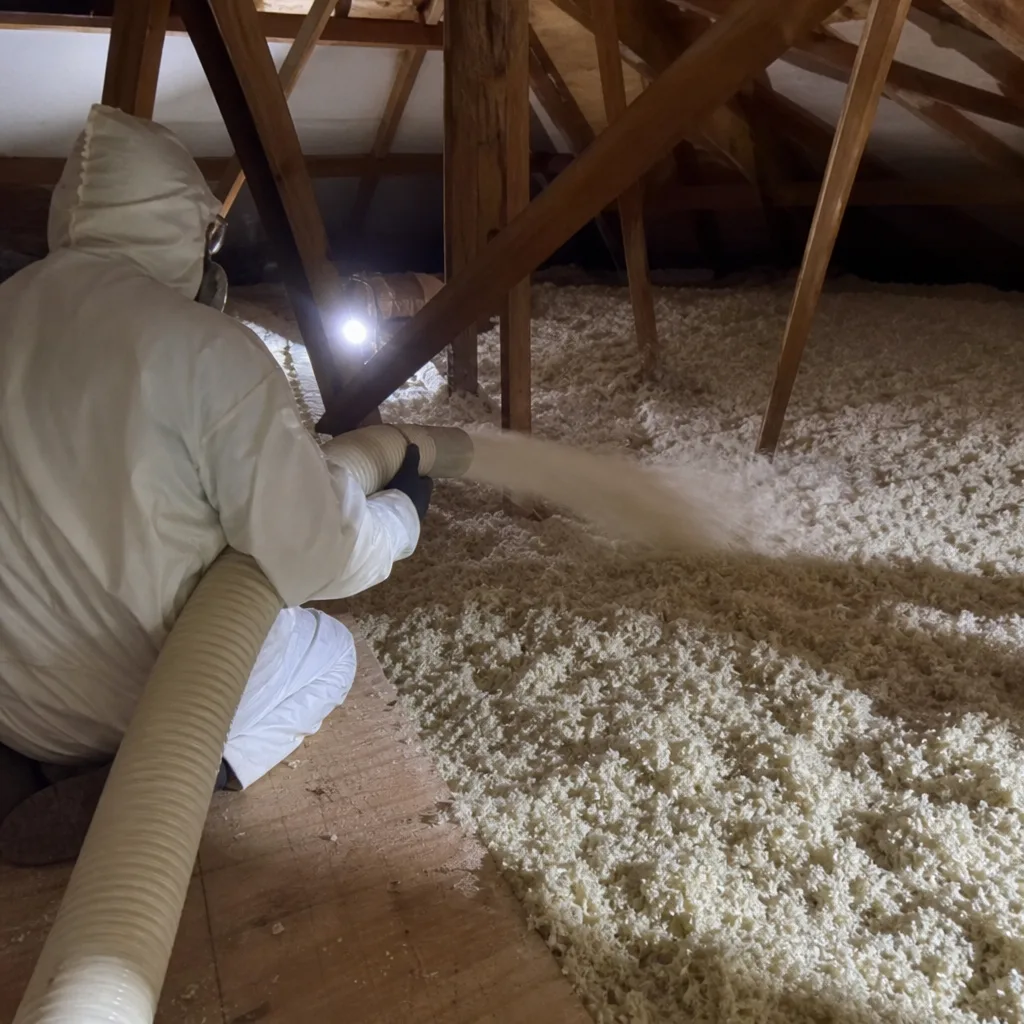
There’s no high-tension danger here like a garage door spring, but cellulose installation has its own hazards: attic heat exhaustion in Schertz summers, electrical shock from buried junction boxes, and the lung irritation from cellulose dust without proper respirators. A homeowner can safely check depth with a ruler, photograph any thin spots, and verify bathroom vents exit through the roof, not into the attic. That’s useful intelligence.
Where DIY goes wrong is sequencing. We’ve been called to Schertz homes where the owner rented a blower and added six inches over an unsealed attic floor - money spent, performance unchanged, because conditioned air was still escaping through the top plates. Seal the leaks first. Then insulate. The attic doesn’t care how thick the insulation is if the air is still moving through it. Wes Okafor and our crew handle the blower-door test, the sealing, and the installation in the correct order. If you want a free second opinion on a DIY plan or another contractor’s quote, call (830) 402-5240.
FAQs
Properly installed stabilized cellulose lasts 20 to 30 years, but in Schertz’s heat and humidity cycles, we see performance degradation after 10 to 15 years if the attic wasn’t air-sealed first or if roof leaks went unaddressed. The borate treatment doesn’t expire, but settled, compacted, or moisture-damaged material loses R-value regardless of age. Call (830) 402-5240 for a free assessment of your existing depth and condition.
Yes, if the existing material is dry, uncontaminated, and hasn’t been compressed by foot traffic or pest activity. We probe for moisture content and inspect for rodent evidence before recommending a top-off. If the old cellulose is matted, stained, or mixed with foreign material, removal is the only path that doesn’t trap problems beneath new product. We price both options in writing before any work starts.
Most residential attics in Schertz take one to two days: half a day for removal and cleanup, half a day for air sealing and blower-door verification, then the blow-in installation. Larger homes or attics with extensive storage require a second day. We don’t rush the sequencing - the blower-door test after sealing confirms the envelope is tight before insulation covers the work.
We stock stabilized cellulose compatible with GreenFiber specifications - same borate treatment, same settled density range - and can source OEM GreenFiber specifically with a day’s notice through our distributor. For most Schertz jobs, the performance-matched equivalent is what’s on the truck, and we document the product spec in your written scope so you know exactly what was installed.
Written by Wes Okafor, Owner, Topside Attic Insulation Schertz at Topside Attic Insulation Schertz, serving Schertz and nearby areas.