
Icynene Crawl Space Encapsulation & Vapor Barrier in Schertz: What to Know First
We provide independent Icynene crawl space encapsulation and vapor barrier service in Schertz, with most jobs scheduled within 48 hours and completed in a single day. As an independent Icynene service provider - not affiliated with or authorized by the manufacturer - we work on every series the company has sold in this market, from the early open-cell MD-R-200 formulations through the current closed-cell Icynene ProSeal LE line. Most full encapsulations in the Schertz corridor run between $3,800 and $7,200 depending on crawl footprint, existing moisture damage, and whether the Icynene foam itself needs remediation before the vapor barrier goes down. This page is for homeowners who found Icynene in their crawl space, suspect it’s not performing, and want a written price before anyone starts work. Call (830) 402-5240 to schedule a free inspection with documented photo record.
How Icynene Products Fail - and How We Fix Them
- Icynene MD-R-200 (open-cell, pre-2012) - bulk water saturation. The early open-cell formula installed in Schertz homes during the 2008-2011 building boom absorbs standing water like a sponge once the vapor barrier beneath it fails. We’ve pulled saturated MD-R-200 off rim joists in the Sedona subdivision that weighed eight pounds per square foot. Our fix: complete removal, structural drying to 12% wood moisture content, then closed-cell replacement or a properly sealed polyethylene ground cover system depending on the crawl’s drainage profile.
- Icynene ProSeal (closed-cell, 2012-2019) - off-ratio curing and odor. ProSeal is sensitive to substrate temperature during application. In Schertz, crews working winter jobs sometimes sprayed onto 45°F rim joists, causing incomplete cure and the persistent “fishy” amine odor that still generates complaints in the Green Valley neighborhood. We identify off-ratio foam with a simple acetone swab test, then remove the affected material and reinstall to manufacturer thickness with proper substrate pre-conditioning.
- Icynene ProSeal LE (low-emissivity, 2019-present) - vapor barrier delamination at the foam-to-ground transition. The LE formulation’s improved R-value per inch doesn’t solve the fundamental problem: closed-cell foam on walls still needs a continuous ground vapor barrier, and the tape-to-foam detail fails when seasonal groundwater rises through Guadalupe County’s clay-heavy soils. We extend 20-mil reinforced polyethylene 12 inches up the wall and mechanically fasten through a termination bar, never relying on adhesive alone.
- Icynene Classic Max (open-cell attic/crawl hybrid) - wind-washing in vented crawls. Classic Max was sometimes installed in “semi-conditioned” crawl schemes that Schertz builders experimented with around 2015. When crawl vents weren’t sealed per the original design intent, Gulf humidity moved straight through the open cell. We convert these to fully sealed encapsulations or, where homeowners prefer, extract the Classic Max and install a vented-crawl-appropriate system with borate-treated subfloor batts.
- All Icynene crawl installations - missing piers and supports. Whether open-cell or closed-cell, Icynene installers often skip the central beam piers to save material, leaving structural wood exposed to soil moisture. Our crews map every pier, post, and HVAC plenum boot before quoting, then include them in the sealed envelope. The difference shows up in the post-encapsulation humidity reading: we target sub-60% RH year-round, not just the day we leave.
Our Icynene Crawl Space Encapsulation & Vapor Barrier Process
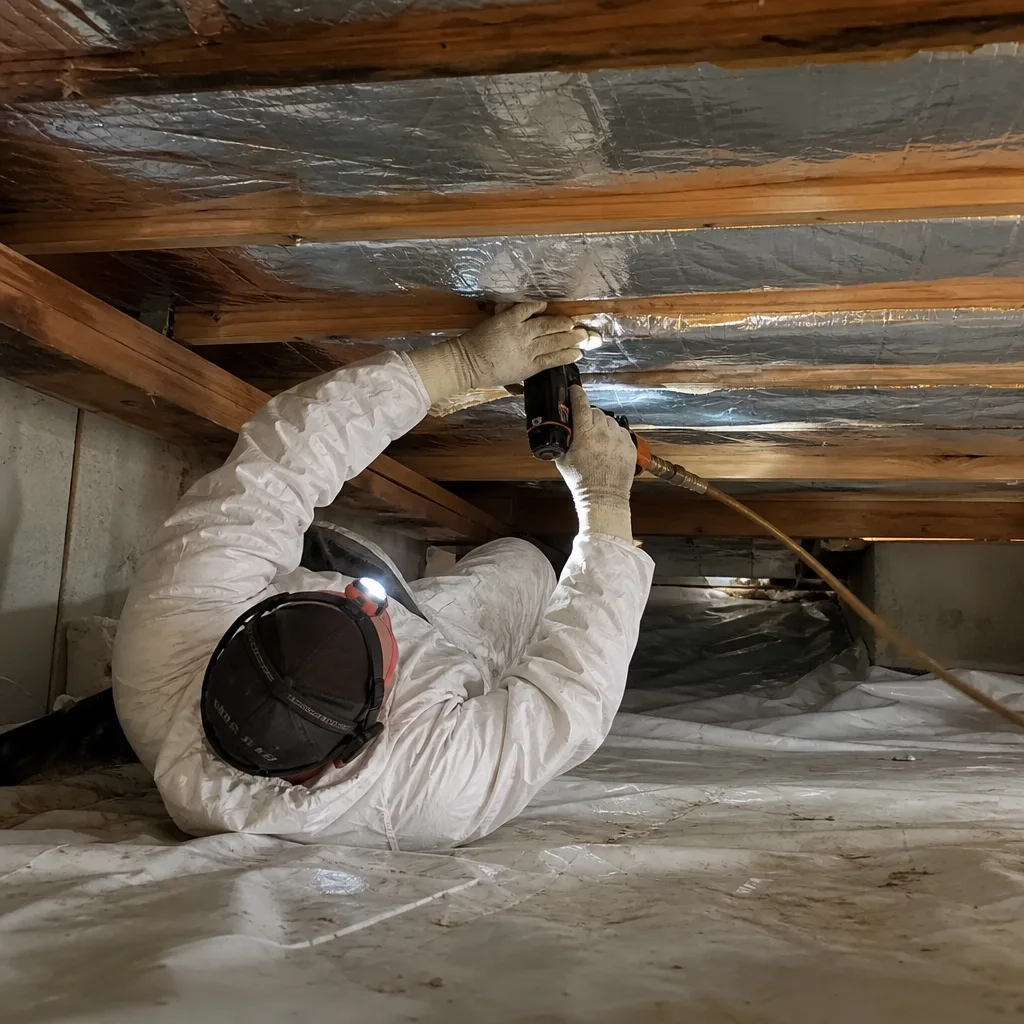
- 1
Pre-work inspection with documented photo record. We photograph every Icynene surface, moisture meter every structural member, and run a thermal imaging pass to find air leaks the foam missed. You get this record before we quote.
- 2
Written price and scope under Haven Standard Clause 1. Flat price, written warranty, material spec - all delivered before anyone lifts a tool. No exceptions.
- 3
Remediation of existing Icynene if needed. We remove failed foam mechanically, never with solvents that off-gas in confined crawl spaces. Structural repairs come first; new foam or barrier second.
- 4
Air sealing and ground prep. Seam seal all polyethylene laps with 4-inch acrylic tape, mechanically terminate to walls, and seal rim joist penetrations with compatible closed-cell or tape detail depending on the existing Icynene condition.
- 5
Barrier installation and conditioning. Lay 20-mil reinforced virgin polyethylene, overlap seams 12 inches, install dehumidifier if humidity baseline exceeds 65% RH, and verify drainage plane slopes to sump or daylight.
- 6
Post-work documentation. Final photo record, humidity and moisture meter readings, and the written 365-Day Done Right Promise delivered to your email before the crew loads out.
What Icynene Crawl Space Encapsulation & Vapor Barrier Costs in Schertz
| Scenario | Typical Range |
|---|---|
| Vapor barrier only (existing Icynene intact, no remediation) | $2,400 - $3,800 |
| Partial Icynene removal + barrier replacement | $4,200 - $6,100 |
| Full encapsulation with Icynene remediation, new closed-cell walls, and dehumidifier | $6,800 - $9,400 |
| Structural wood repair (sistering joists, replacing sill plate) | $800 - $2,400 additional |
What moves the price: crawl square footage, headroom accessibility (less than 18 inches adds labor), whether the existing Icynene requires full removal versus localized repair, and seasonal groundwater management needs. Homes near Cibolo Creek or in the lower elevations off FM 1518 often need sump integration that plateau sites don’t. We also service Reflectix radiant barrier systems when they’re part of the same envelope - no need to coordinate two contractors. Call (830) 402-5240 for a free inspection and written price. Estimates are free; the photo record is included.
Why Schertz Homeowners Call Topside Attic Insulation Schertz for Icynene Work
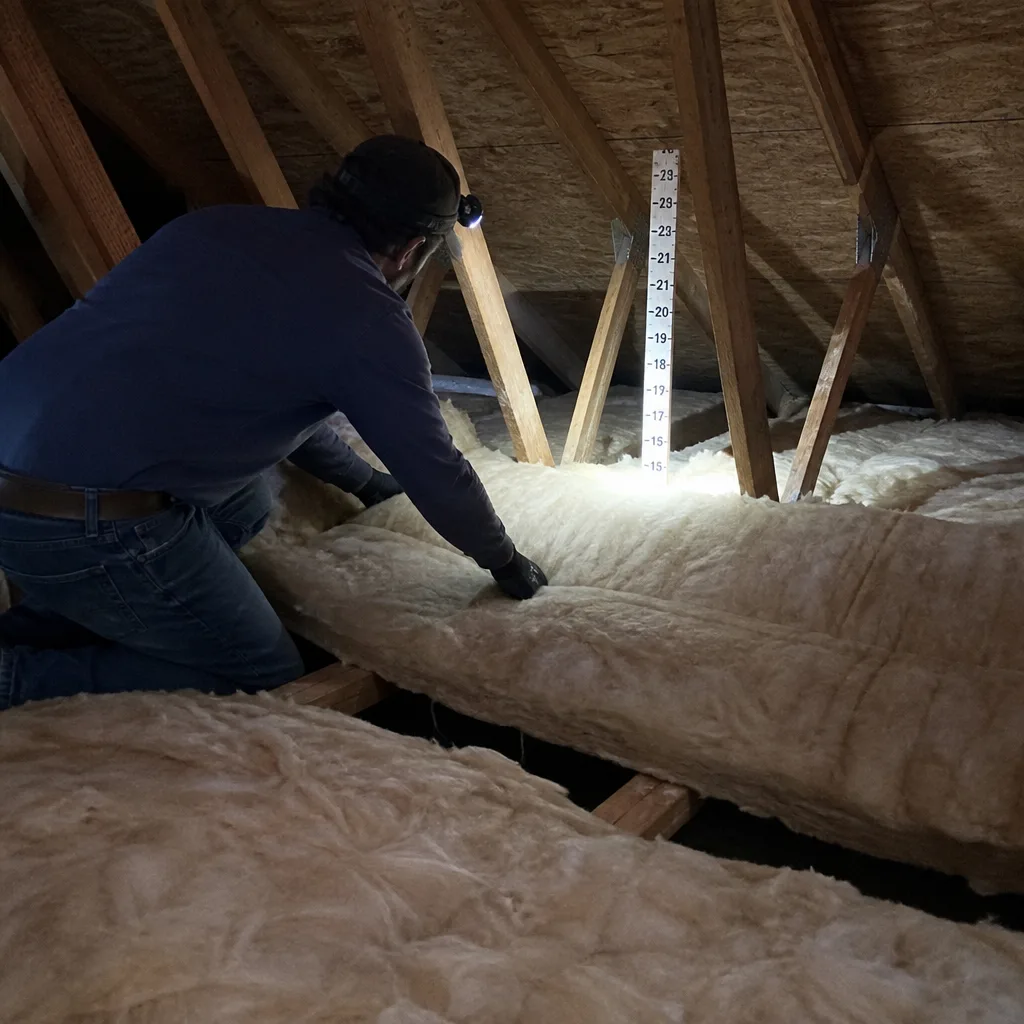
We’ve been working the Schertz corridor for several years now, including jobs in the Sedona subdivision where summer attic temps regularly push past 140°F before a single batt goes in. Wes Okafor built this crew on the same sequencing he learned at Richard J. Daley College and refined over two decades in attics: seal the leaks first, then insulate. The crawl space is no different. We publish before-and-after blower-door numbers on every applicable job, deliver a written price before any work starts under Haven Standard Clause 1, and back every completed encapsulation with the 365-Day Done Right Promise. Our technicians are background-checked and uniformed; calls are answered by a live person 24/7. And because we source materials from Owens Corning, Johns Manville, Knauf, Rockwool, CertainTeed, Icynene, Demilec, and GreenFiber, we’re not locked into a single product line that may not fit your crawl’s actual condition.
Seal the leaks first. Then insulate. The attic doesn’t care how thick the insulation is if the air is still moving through it. Same law applies six feet below grade.
FAQs
No - Icynene’s original installation warranty covers the foam itself against defects in material or application, but it doesn’t require manufacturer-authorized service for maintenance, repair, or encapsulation work. As an independent Icynene service provider, we document our work so you have a clear record of what was done and when, which protects your interests if a material defect claim ever arises. Call (830) 402-5240 if you’d like us to review your original installation paperwork during the free inspection.
We use Icynene foam for repairs and extensions where the existing system is compatible and performing; for encapsulation work, we specify the vapor barrier and detailing materials that match the application, not the brand. The 20-mil reinforced polyethylene and acrylic seam tape we install exceed the performance of Icynene’s branded accessory line at a lower installed cost. If your job requires foam remediation, we’ll tell you whether OEM Icynene or a compatible closed-cell alternative makes more sense for your crawl’s moisture profile.
Repair is viable when the foam is well-adhered, properly cured, and the only issue is a failed or missing ground vapor barrier. Full removal and replacement becomes necessary when the Icynene shows bulk water saturation, off-ratio curing with persistent odor, or delamination from the substrate. Our acetone swab test and moisture meter readings give a clear answer during the free inspection. Most Schertz homeowners in the $3,800-$5,200 range are looking at repair with barrier upgrade; full remediation typically starts around $6,800. Call for a written price either way.
Most jobs are scheduled within 48 hours of your call and completed in one day. Two-day timelines apply when full Icynene removal is needed and we must allow structural drying time before reinstalling. We don’t start work without a written price, so the schedule locks in only after you’ve reviewed and approved the scope. Call (830) 402-5240 - a live person answers 24/7.
Repair is usually cheaper in the short term, but the honest answer depends on what we find. Well-installed, dry Icynene closed-cell on rim joists has decades of service life left; adding a proper ground vapor barrier and dehumidification often solves the problem for $2,400-$3,800. If the Icynene is saturated, off-ratio, or installed at insufficient thickness, removal and replacement with a system matched to your crawl’s actual conditions is the better spend. We provide both options in writing with a Free Second Opinion on any competing quote you’ve already received.
Written by Wes Okafor, Owner, Topside Attic Insulation Schertz at Topside Attic Insulation Schertz, serving Schertz and nearby areas.