
Johns Manville Radiant Barrier Installation: The Schertz Owner’s Guide
Johns Manville radiant barrier installation in Schertz typically runs between $1,800 and $3,400 for a standard 2,000-square-foot attic, and most jobs are completed in a single day. We stock Johns Manville AP Foil-Faced and Kraft-Faced radiant barrier rolls on our trucks, along with compatible fastening systems and tape, so we’re not waiting on a supplier run while your attic sits open. Most Schertz homeowners realize their radiant barrier is failing when their summer electric bills spike $80-$150 over the previous year despite the thermostat never moving, or when they climb into the attic and find foil that’s torn, oxidized to a chalky white, or hanging in strips from failed staples.
Which Johns Manville Models This Applies To
Johns Manville produces radiant barrier products under several product lines, and matching the right material to your existing installation matters for warranty continuity and fire-code compliance. The AP Foil-Faced line - AP Foil-Faced 162, 162S, and the heavier 226 - is the most common retrofit we see in Schertz homes built between 2005 and 2019, particularly in the Sedona subdivision and along the FM 1518 corridor where builder-grade installs were standard. These rolls are labeled on the Kraft paper backing with a JM lot number and ASTM C1313 compliance mark; if your existing foil has gone silver-to-white and the backing label is intact, that’s your starting point.
The Kraft-Faced radiant barrier series, less common here but present in some custom builds near Crescent Ridge, uses a different adhesive tape system at the seams. OEM Johns Manville seam tape is polypropylene-based with a specific acrylic adhesive rated for 180°F sustained contact; generic foil tape from the hardware store degrades in two to three Schertz summers. We carry both OEM JM tape and a commercial-grade 3M alternative that meets the same temperature spec. If your existing barrier was installed with staples only and no taped seams, that’s a compatibility gotcha - the original installer skipped a step, and you’ll see seam separation as the first failure mode.
We are an independent insulation contractor with no affiliation to Johns Manville. We source their materials through standard distribution channels same as any qualified contractor.
Signs Your Johns Manville Radiant Barrier Installation Is Failing
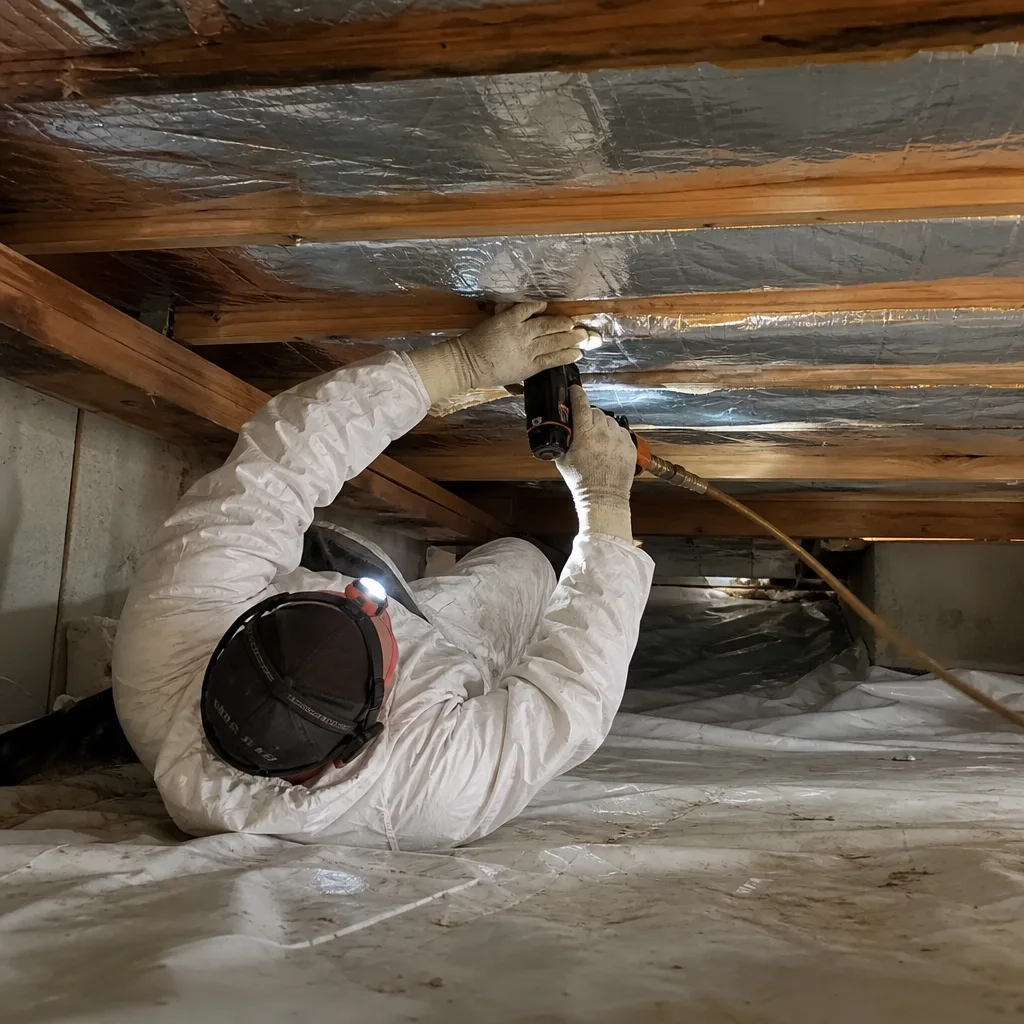
- Chalky or white oxidation on the foil surface. The reflective aluminum layer degrades when attic humidity exceeds the material’s design spec, which happens regularly in Schertz when bathroom vents terminate in the attic rather than through the roof. Once reflectivity drops below 90%, you’re paying for foil that performs like construction paper.
- Staple pull-through or hanging strips. Johns Manville specifies 1/2-inch corrosion-resistant staples at 12-inch intervals; many original installs used 1/4-inch staples or standard steel that rusts through in four to six years. The foil doesn’t fail - the fasteners do, and the barrier ends up draped over your insulation like tinsel.
- Visible gaps at seams or around penetrations. A radiant barrier is only as good as its continuity. Gaps at chimney chases, HVAC plenums, or untaped seams let infrared radiation through in a straight line; in summer, that’s 140°F attic air radiating directly onto your ceiling drywall.
- Insulation compression or discoloration beneath the barrier. When foil fails and attic temperatures climb, the insulation below cooks. You’ll notice yellowed or browned fiberglass, or blown-in cellulose that has settled unevenly because the radiant heat drove moisture cycling.
- Spiking summer cooling costs with no equipment change. Your AC isn’t broken - it’s losing the battle against radiant heat gain. We see this pattern most in Schertz homes with east-west roof orientation where afternoon sun loads peak hardest.
Replacement Cost & What’s Included
Most Johns Manville radiant barrier replacements in Schertz fall between $1,800 and $3,400, with the range driven by three factors: attic square footage, whether we need to remove failed material first, and how much air sealing is required before the new barrier goes in. A straightforward overlay on intact existing foil runs at the lower end; a full removal, top-plate sealing, and new JM AP Foil-Faced 162 install with taped seams pushes toward the upper end.
That price includes material, labor, OEM or spec-matched seam tape, and corrosion-resistant fasteners. We do not charge separately for the blower-door test when it’s bundled with radiant barrier work - it’s part of our sequencing, not an upsell. Every job closes with a Documented Photo Record showing pre-condition, installed barrier with depth and coverage markers, and post-work blower-door number if air sealing was performed. Our 365-Day Done Right Promise applies in writing before anyone starts.
DIY or Call Us?
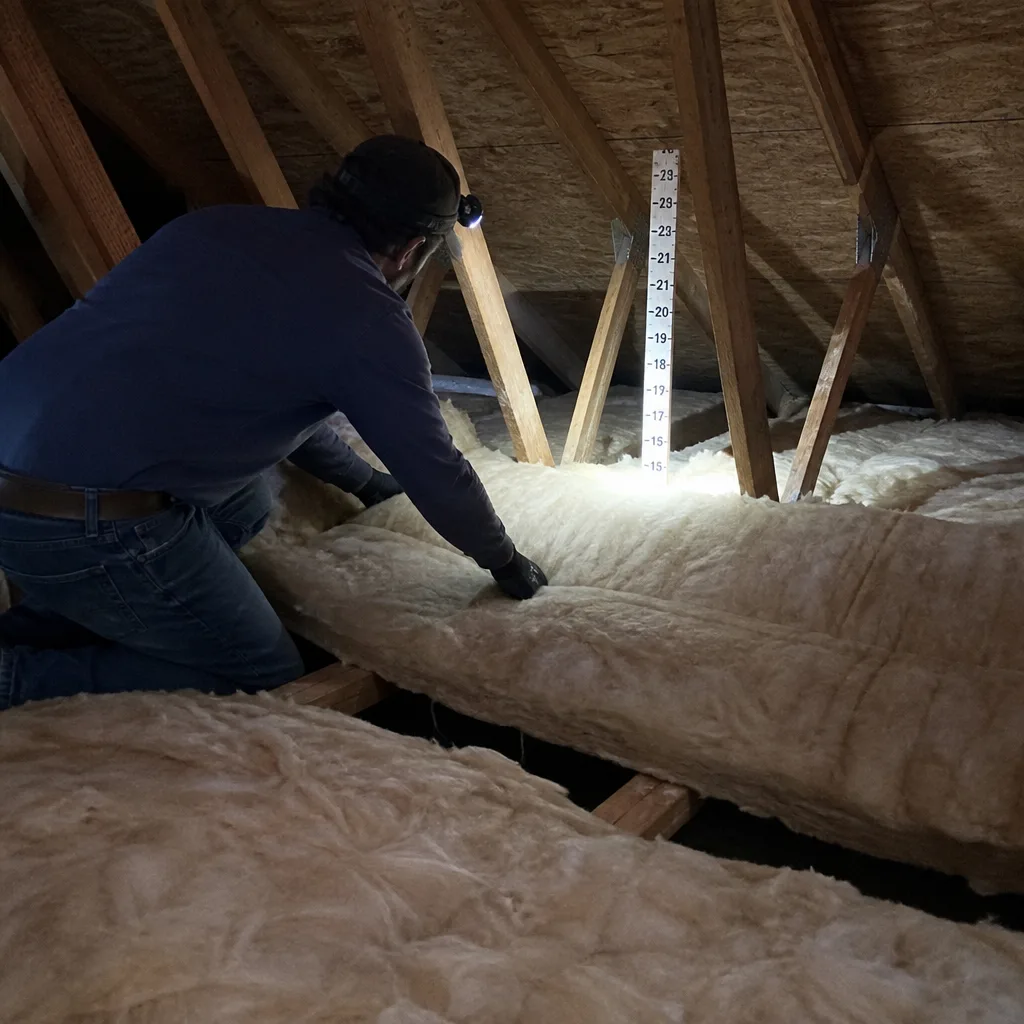
There’s safe checking, and then there’s work that belongs in trained hands. A homeowner can verify the product label, photograph the failure pattern, and confirm whether staples or tape were used originally - that information saves us time and saves you diagnostic cost. What we don’t recommend: walking trusses in a 140°F attic, working near active electrical, or attempting to stretch and fasten foil across open bays without proper fall protection and body positioning.
The failure we see most from DIY attempts isn’t injury - it’s incomplete coverage. A radiant barrier with 15% gap area loses roughly 40% of its effectiveness; the homeowner doesn’t know until the next summer bill arrives. We carry Johns Manville-compatible materials on every truck, and most Schertz replacements are same-day or next-day. Call (830) 402-5240 and we’ll read your situation with you, no charge.
FAQs
In Schertz’s climate, a properly installed Johns Manville AP Foil-Faced barrier with taped seams and corrosion-resistant fasteners lasts 15 to 25 years. Attic humidity is the killer - vented bathrooms, roof leaks, or missing soffit vents cut that lifespan by half. If your attic smells musty or you see condensation on the foil underside, the barrier is degrading faster than the material spec. Call (830) 402-5240 - we’ll inspect and give you a written price before any work starts.
Spot repairs are possible if the failure is isolated - a single torn section, localized staple pull-through, or a seam that opened at one chase. We don’t recommend patching when oxidation is widespread, when the original install used substandard fasteners throughout, or when more than 30% of the surface area shows degradation. The labor to patch often approaches replacement cost, and the result is a barrier with mixed ages and reflectivity. We offer free second opinions on any written estimate you’ve received - bring us the quote and we’ll read it with you.
Most residential radiant barrier replacements in Schertz are completed in four to six hours for a crew of two. Full removal of failed material adds two to three hours; air sealing of top plates, can lights, and penetrations adds another two to four depending on accessibility. We don’t rush the sequencing - seal the leaks first, then install the barrier. The attic doesn’t care how thick the insulation is if the air is still moving through it. You’ll get a text when the crew is en route and a named technician, under Haven Standard: Arrive on schedule.
We stock JM AP Foil-Faced 162 and 226 rolls, compatible seam tape, and corrosion-resistant fasteners on every truck serving the Schertz area. Same-day installation is available for most calls received before noon; afternoon calls typically schedule for the following morning. We don’t do “we’ll call you when it comes in” - if we book you, the material is on the truck. Call (830) 402-5240 to confirm current availability for your specific attic size.
Written by Wes Okafor, Owner, Topside Attic Insulation Schertz at Topside Attic Insulation Schertz, serving Schertz and nearby areas.