
Knauf Attic Air Sealing: The Schertz Owner’s Guide
Knauf attic air sealing in Schertz typically runs $340-$780 installed for a standard 1,500-2,500 sq ft attic, and we stock Knauf-compatible sealants, gaskets, and rigid foam blocking on every truck for same-day starts. Most homeowners realize their air sealing has failed when rooms stay hot despite new insulation, or when their summer electric bill climbs $80-$150 above neighbors with similar homes. The Knauf system relies on a specific combination of acrylic latex sealant, polyethylene gasket material, and precision-cut rigid foam blocking at top plates and penetrations; when any layer degrades, conditioned air escapes straight into the attic.
Which Knauf Models This Applies To
Knauf’s attic air sealing components ship under several product families, and matching the right material matters for warranty compatibility and fire-rating compliance. The Knauf EcoSeal line uses a water-based acrylic latex that remains flexible to -20°F; in Schertz attics hitting 140°F in July, that flexibility is what prevents the bead from cracking where drywall meets top plates. The Knauf Insulation Sealing System (KISS) pairs that sealant with pre-cut polyethylene gasket strips sized to common Texas framing: 2×4 and 2×6 top plates, with 1/2″ and 5/8″ drywall offsets. We also see Knauf Mold-Safe spec jobs in newer Schertz builds near the Selma border, where the sealant carries an ASTM G21 mold-resistance rating required by some HOA covenants.
Identification is straightforward if you know where to look. The sealant tube carries a Knauf batch code starting with “ES” for EcoSeal or “MS” for Mold-Safe; gasket strips are stamped with density and thickness on the release paper. If your attic was sealed between 2012 and 2019, check for the older Knauf AirBlock formulation, which used a solvent-based acrylic that off-gassed heavily and is now discontinued. We don’t recommend aftermarket sealants for Knauf gasket systems; the expansion coefficients differ, and we’ve pulled failed jobs in the Sedona subdivision where generic caulk separated from Knauf gasket material within 18 months. For rigid foam blocking, Owens Corning Foamular or Johns Manville AP Foil-Faced are acceptable cross-brand equivalents if the original Knauf board is unavailable.
Topside Attic Insulation Schertz is an independent service provider with no affiliation to Knauf Insulation. We source Knauf materials through authorized distribution and stock compatible alternatives when lead times stretch.
Signs Your Knauf Attic Air Sealing Is Failing
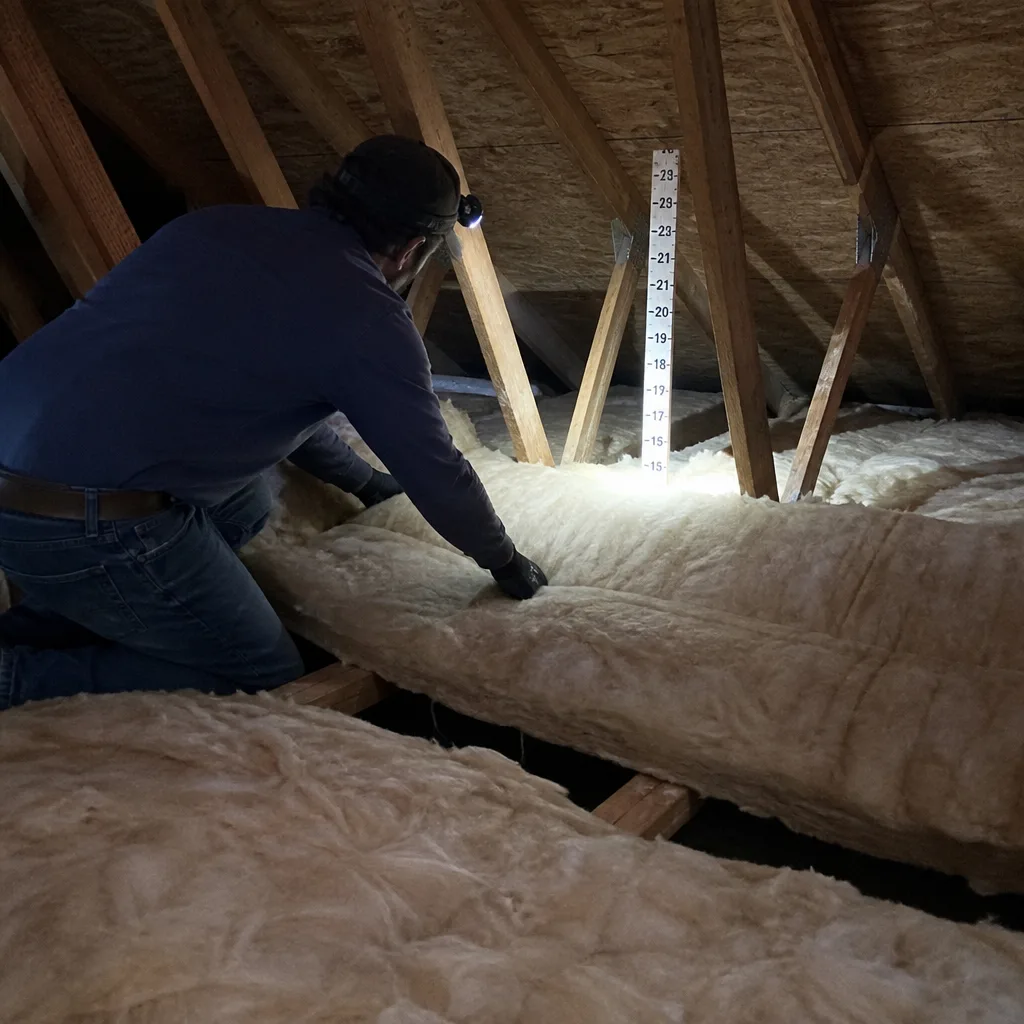
- Dust streaks on insulation or ceiling drywall. Air moving through a failed seal carries attic dust and fiberglass particles; if you see gray or black streaking where walls meet ceilings, the top-plate seal has cracked. In Schertz, thermal cycling from 95°F afternoons to 72°F conditioned interiors accelerates this cracking by 30-40% compared to milder climates.
- Hot rooms despite adequate insulation depth. The attic may show R-38 or R-49 on the depth sticks, but air leaking around can lights, electrical penetrations, or plumbing stacks bypasses that insulation entirely. We measure this with a blower-door test - a pressurization reading that shows, in one number, how much air your building envelope is losing.
- Ice damming or moisture staining in winter. Even in Schertz’s mild winters, humid conditioned air leaking into the attic condenses on cold sheathing. Knauf’s acrylic sealant is rated for interior use only; if someone applied it to exterior-facing gaps, it degrades faster than specified.
- HVAC runs constantly, especially 2-6 p.m. The thermal bypass from failed air sealing peaks when attic temperatures are highest. We’ve logged blower-door readings of 3,800 CFM50 in Schertz homes where the owner assumed the AC was undersized; post-sealing, those same homes dropped to 2,200 CFM50 and the cycle times normalized.
- Musty odor after rain. Failed sealing at chimney chases or vent stacks lets attic air pull moisture into wall cavities. Knauf’s Mold-Safe line was developed specifically for this failure mode, but standard EcoSeal offers no mold resistance without the MS formulation.
Replacement Cost & What’s Included
| Scope | Price Range in Schertz |
|---|---|
| Spot repair (1-2 penetrations, localized sealant) | $340-$520 |
| Partial attic re-seal (top plates + can lights + plumbing/electrical penetrations) | $580-$780 |
| Full attic air sealing with blower-door verification | $890-$1,400 |
| Re-seal after failed DIY or competitor install | $420-$680 (includes removal of incompatible materials) |
The range depends on attic square footage, accessibility, and how many penetrations need blocking. A 1980s Schertz ranch with a truss attic and six can lights takes less time than a two-story custom home in the Crossbridge area with recessed lighting, a media room soffit, and a chase for a direct-vent fireplace. Every job includes: removal of degraded sealant and incompatible aftermarket materials; application of Knauf-compatible sealant and gasket; rigid foam blocking at all code-required locations; and a Documented Photo Record showing before, during, and after. On applicable jobs, we provide before-and-after blower-door numbers so you can verify the air-sealing result. Work is covered by our 365-Day Done Right Promise - if it’s not done right, we make it right.
DIY or Call Us?
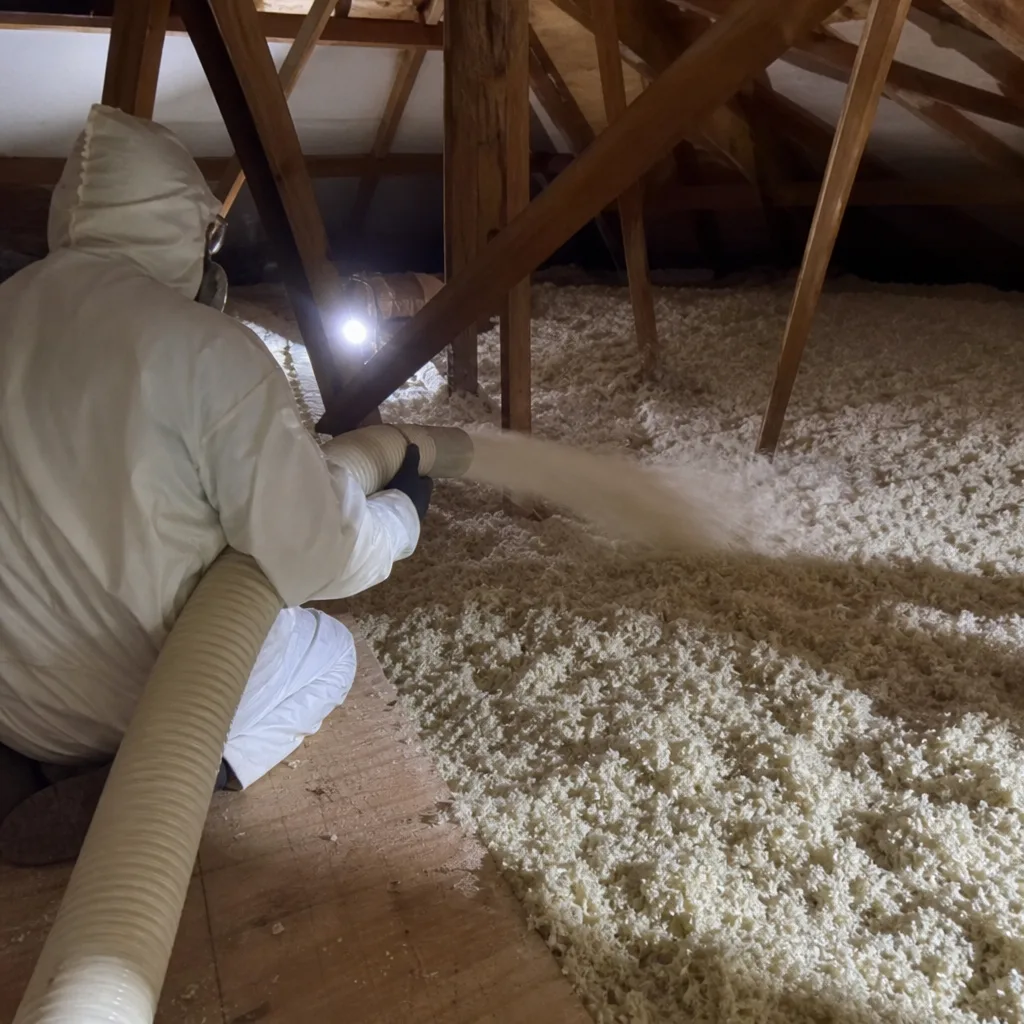
There’s a safe middle ground here, and then there’s where DIY goes wrong. A homeowner can safely inspect: check attic hatch weatherstripping, look for visible gaps around obvious penetrations, and note any brand markings on existing sealant. What you cannot safely or effectively do yourself: work near live electrical in a 140°F attic, properly seal recessed can lights without fire-rated covers (a code violation in Guadalupe County), or interpret blower-door numbers without the equipment. We’ve re-done three Schertz jobs this year where the owner used big-box silicone caulk on Knauf gasket material; the silicone never bonded, and the attic was leaking worse than before within six months. Seal the leaks first. Then insulate. The attic doesn’t care how thick the insulation is if the air is still moving through it. For a written price before any work starts, call (830) 402-5240.
FAQs
Knauf’s acrylic latex sealant carries a 20-year material warranty when applied to clean, dry substrates per manufacturer spec. In practice, Schertz’s combination of intense attic heat and thermal cycling stresses the bond line at drywall-to-framing joints; we see first degradation at 8-12 years in unconditioned attics, sooner if the original application missed primer or was done in high humidity. Call (830) 402-5240 for an inspection - estimates are free.
Spot repair works if the failure is isolated to one or two penetrations and the existing sealant is still flexible. Once Knauf acrylic has hardened and cracked across top plates, overlaying new sealant on old creates a laminate that separates under movement. We test existing sealant with a simple probe; if it crumbles, full removal and reapplication is the only durable fix. Call (830) 402-5240 and we’ll show you what we found.
A standard Schertz attic of 1,800-2,400 sq ft takes one crew day, including setup, removal of failed material, application, and blower-door verification. Two-story homes or attics with limited hatch access add a half day. We arrive with Knauf-compatible materials on the truck, so there’s no supplier delay. Call (830) 402-5240 to schedule.
We stock Knauf EcoSeal acrylic latex, gasket strips in 2×4 and 2×6 framing widths, and compatible rigid foam blocking on every service vehicle. For discontinued Knauf AirBlock jobs, we carry verified cross-reference materials that match the original thermal and fire ratings. If your home has a Knauf specification we haven’t seen before, we’ll source it within 48 hours rather than substitute blindly. Call (830) 402-5240 to confirm compatibility with your specific install.
Ready to stop losing conditioned air into your Schertz attic? Call (830) 402-5240 for a free estimate with a written price before any work starts. We also stock parts for Reflectix and other major brands if your system is mixed-manufacturer.
Written by Wes Okafor, Owner, Topside Attic Insulation Schertz at Topside Attic Insulation Schertz, serving Schertz and nearby areas.