
Knauf Vapor Barrier Installation: The Schertz Owner’s Guide
Knauf vapor barrier installation in Schertz typically runs $1,200-$2,800 for a full crawl space or attic application, depending on square footage and whether the space needs prep work. We stock Knauf Insulation’s Faced Batt and EcoSeal-compatible vapor retarder systems on our trucks, and most Schertz jobs can be started same-day once we’ve done the walk-through. Most homeowners in Schertz figure out something’s wrong when they notice musty odors returning after winter, or when their spring energy bills spike despite the AC running constantly - that’s usually a failed vapor barrier letting Gulf Coast humidity migrate straight into conditioned space.
Which Knauf Models This Applies To
Knauf manufactures vapor retarders as part of three distinct product families, and matching the right one to your existing insulation matters for warranty and performance.
Knauf Insulation EcoSeal System - This is the water-based elastomeric sealant paired with a vapor retarder facing on Knauf’s fiberglass batts. If your attic has the bright yellow batts with the printed “EcoSeal Compatible” label, the facing itself is the vapor control layer. The facing is kraft paper with an asphalt coating; in Schertz’s humidity, that asphalt layer degrades after 8-12 years if the attic ventilation is marginal.
Knauf Faced Batt Insulation - Standard kraft-faced batts in R-30, R-38, and R-49 thicknesses. The facing is stamped with “THIS SIDE DOWN” toward the conditioned space. We’ve found that homeowners in the Sedona subdivision off FM 1518 often have R-30 faced batts that were installed with the facing reversed - vapor barrier on the wrong side traps moisture against the drywall in summer.
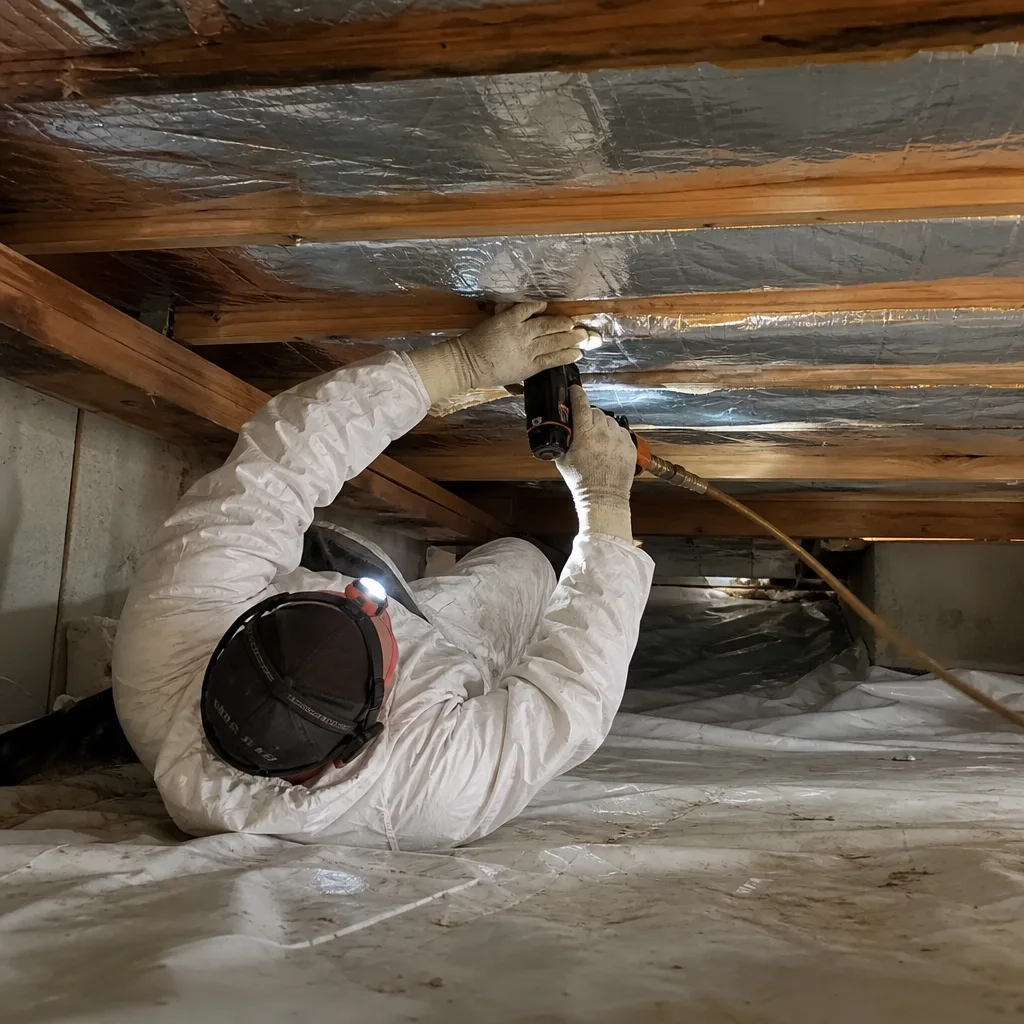
Knauf Unfaced with Separate Polyethylene Sheeting - Used in crawl spaces and some attic applications where a continuous 6-mil poly barrier is required by code. The poly is held in place with Knauf-compatible fasteners; generic box-store staples often tear the sheeting at the edges within two seasons.
We do not use off-brand poly sheeting as a direct replacement for Knauf’s specified facing. The perm rating - a measure of how much moisture vapor passes through - needs to match the original design. Too low and you trap moisture; too high and you lose the protection entirely. Topside Attic Insulation Schertz is an independent service provider with no affiliation to Knauf, but we source Knauf materials through authorized distribution so the spec sheets line up with what’s already in your home.
Signs Your Knauf Vapor Barrier Installation Is Failing
- Musty odors that return within 48 hours of running a dehumidifier. This means moisture is entering faster than you’re removing it. In Schertz, with summer dew points regularly hitting 70°F, a compromised vapor barrier lets humid air migrate through wall cavities and attic floors, saturating drywall and framing.
- Insulation that looks flat, gray, or clumped. Knauf fiberglass relies on trapped air for its R-value. When vapor passes through a failed barrier and condenses inside the batt, the fibers mat together. We’ve pulled batts in Schertz homes where the labeled R-38 was performing closer to R-15 because of moisture compression.
- Water stains on ceiling drywall directly below attic insulation. This usually means the facing has torn at a seam or around a penetration. The Knauf kraft facing is only effective when it’s continuous; a 6-inch gap at a top plate is enough to funnel conditioned air and moisture into the cavity.
- Mold or mildew on the underside of roof decking. This is the advanced stage. In Schertz’s climate, summer attic temperatures above 140°F create a steep temperature gradient across the ceiling. A failed vapor barrier lets moisture hit that cold drywall surface, and the resulting condensation feeds mold growth on the structural side.
- Energy bills climbing 15-30% year-over-year with no rate change. Wet insulation loses effectiveness fast. We documented a home near Crescent Ridge in Schertz where blower-door testing showed 3,800 CFM50 before air sealing and 2,100 after - but the wet Knauf batts had to come out entirely because their R-value was shot.
Replacement Cost & What’s Included
| Scope | Typical Range in Schertz |
|---|---|
| Crawl space vapor barrier replacement (6-mil poly, 1,000-1,500 sq ft) | $1,200-$1,800 |
| Attic faced batt removal + replacement with new Knauf facing | $1,800-$2,400 |
| Full attic air sealing + vapor retarder + new blown-in insulation | $2,400-$3,800 |
| Spot repair (localized tear, single section) | $400-$700 |
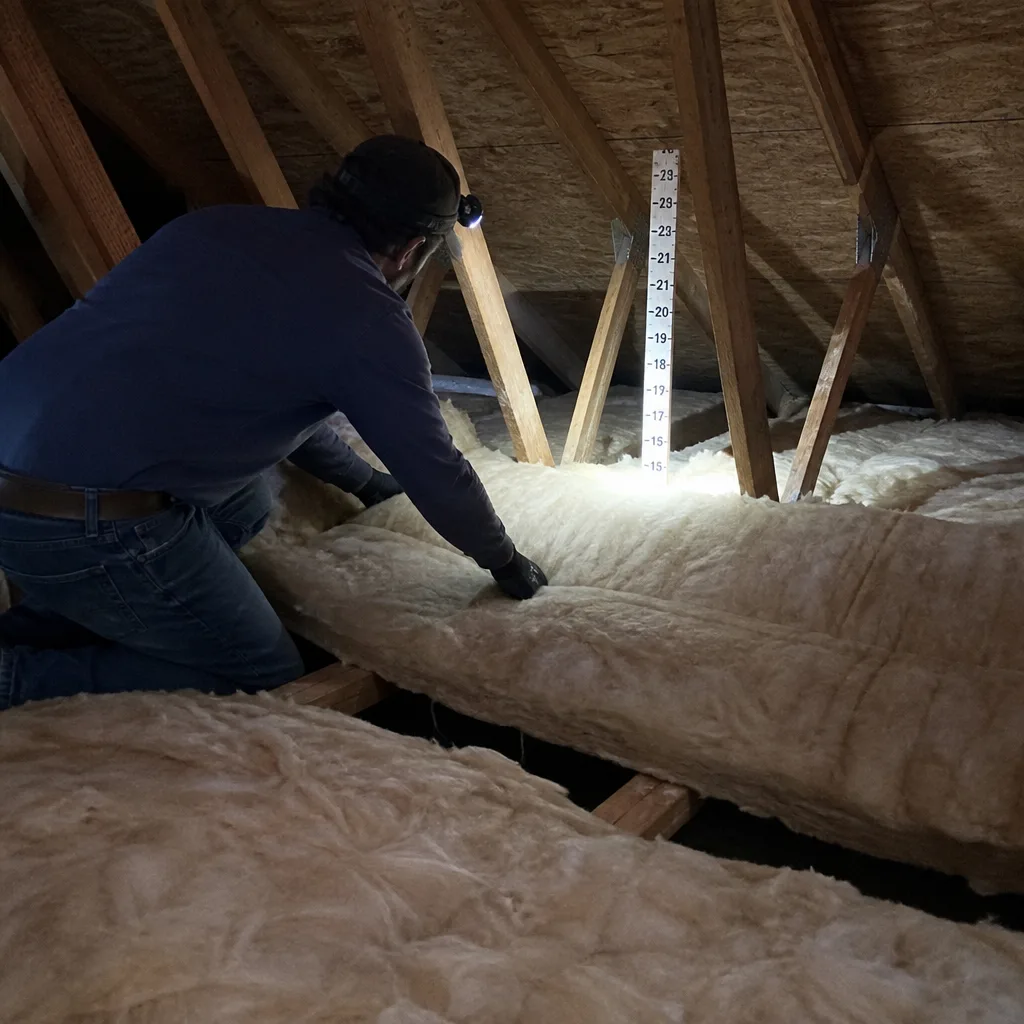
What moves the number: accessibility (crawl height, attic hatch location), whether existing insulation is wet and must be removed per our protocol, and whether the space needs active ventilation added. Every quote is a written price before any work starts - Haven Standard Clause 1 - and includes a Documented Photo Record of the condition we found, the work performed, and post-install depth measurements. The 365-Day Done Right Promise covers installation defects; material warranty comes through Knauf’s standard product guarantee.
DIY or Call Us?
There’s a safe middle ground here, and then there’s the point where you’re working in a 140°F attic or a crawl space with limited egress.
What you can check safely: Look at your attic hatch. If you see Knauf batts with the kraft facing torn, discolored, or hanging loose, that’s documentation you can photograph. Check your crawl space access - if the 6-mil poly is pulled back from the walls or has standing water on top, you’ve got a failure. These observations help us scope the job before we arrive.
Where DIY goes wrong: Removing old faced batts disturbs fiberglass and any mold that may be present; without proper PPE and containment, you’re moving spores into your living space. In crawl spaces, vapor barrier replacement requires seam overlap of at least 12 inches per code, mechanical fastening to foundation walls, and proper termination at piers - shortcuts here trap moisture and void any future warranty claim. And in attics, working around electrical penetrations and can lights without understanding fire-blocking requirements creates a genuine hazard.
We carry Knauf-compatible materials on our trucks, and most Schertz jobs are completed in a single day once the written scope is approved. Call (830) 402-5240 for a free estimate - we’ll read any competing quote with you as part of our Free Second Opinion.
FAQs
In Schertz’s subtropical climate with high summer humidity, Knauf kraft-faced vapor retarders typically last 10-15 years in a properly ventilated attic; crawl space poly lasts 8-12 years before brittleness and seam separation become likely. Attics with inadequate ventilation - common in homes built 2015-2020 in the Schertz corridor - can cut that lifespan by 30-40%. Call (830) 402-5240 for an exact assessment; estimates are free.
Small tears in kraft facing can be patched with Knauf-compatible vapor retarder tape if the surrounding facing is still intact and dry; however, if the batt itself is compressed, discolored, or smells musty, the insulation needs removal and replacement. Poly sheeting in crawl spaces is almost always more cost-effective to replace entirely than to patch, since seam integrity is what matters. Call (830) 402-5240 for an exact quote - estimates are free.
Most crawl space replacements in Schertz take 4-6 hours; attic jobs with batt removal and replacement typically run one full day. We schedule a morning arrival, complete the work, and leave you with the Documented Photo Record and any applicable blower-door readings before we leave. Call (830) 402-5240 to check same-day availability.
We stock Knauf-facing-compatible materials and 6-mil polyethylene sheeting on every truck serving Schertz. For specific EcoSeal system jobs, we pull materials from our San Antonio distribution point with 24-hour notice if it’s a less common spec. Most Schertz homeowners get same-day or next-day start once the written price is approved. Call (830) 402-5240 to confirm stock for your specific Knauf system.
Seal the leaks first. Then insulate. The attic doesn’t care how thick the insulation is if the air is still moving through it. That’s the sequencing Wes Okafor has built this crew on since 2016 - blower-door test, air sealing, then insulation - and it’s why we publish the before-and-after numbers on every job where pressurization testing applies. If your Knauf vapor barrier is failing, we’ll tell you exactly what we found, show you the photos, and give you a written price before anyone lifts a tool.
Written by Wes Okafor, Owner, Topside Attic Insulation Schertz at Topside Attic Insulation Schertz, serving Schertz and nearby areas.