
Rockwool Attic Air Sealing: The Schertz Owner’s Guide
Rockwool-compatible attic air sealing in Schertz typically runs $1,800-$3,400 for a complete top-plate and penetration seal on a 1,800-2,800 square foot home, and we stock the acrylic-latex sealants, fire-rated foam, and gasket materials needed for same-day starts. Most homeowners discover the problem when their recent Rockwool batt or blown-in installation isn’t delivering the temperature drop they expected, or when a home energy audit flags thermal bypass at the ceiling plane. The issue isn’t the Rockwool itself, it’s the air moving through gaps the insulation can’t block.
We see this pattern regularly in Schertz homes built during the 2005-2015 boom, especially in areas like the Sedona subdivision off FM 1518 where summer attic temps regularly push past 140°F before a single batt goes in. The heat exaggerates every crack. Seal the leaks first. Then insulate. The attic doesn’t care how thick the insulation is if the air is still moving through it.
Which Rockwool Models This Applies To
Rockwool doesn’t manufacture a dedicated “air sealing system” under its own label. What we’re addressing is the air-sealing layer that must precede any Rockwool Comfortbatt, Comfortboard, or Toprock DD installation in an attic assembly. The compatibility question is between your existing Rockwool product and the sealant materials that won’t degrade it chemically or thermally.
Comfortbatt (standard residential batts, 3.5″ to 6.25″ thicknesses) and Comfortboard 80/110 (rigid boards, often used for baffle extensions or top-plate coverage) both pair with water-based acrylic-latex sealants and one-component, fire-rated polyurethane foams. Avoid solvent-based sealants. They’ll break down the binder in Rockwool over a 3-5 year cycle, especially in Schertz’s heat-cycling climate where attic temperatures swing 80°F or more in a single day during shoulder season.
Toprock DD, the dual-density board used in commercial and some high-performance residential jobs, requires gasket-style sealing at the perimeter rather than wet sealants. We stock both approaches on our trucks. For identification: Comfortbatt carries a tan-to-gray color with visible fiber structure; Comfortboard is dark gray and rigid; Toprock DD has a distinct two-tone face. The batch label on the end of each batt or board shows the density rating, ASTM compliance, and manufacturing date. We match sealant spec to that label, not guesswork.
OEM-spec sealants from Rockwool’s approved list run 15-20% higher than quality aftermarket equivalents we source from Johns Manville, Knauf, and CertainTeed. The performance delta is negligible in residential attic conditions. We quote both and let the homeowner decide. We’re an independent service provider, not affiliated with Rockwool.
Signs Your Rockwool Attic Air Sealing Is Failing
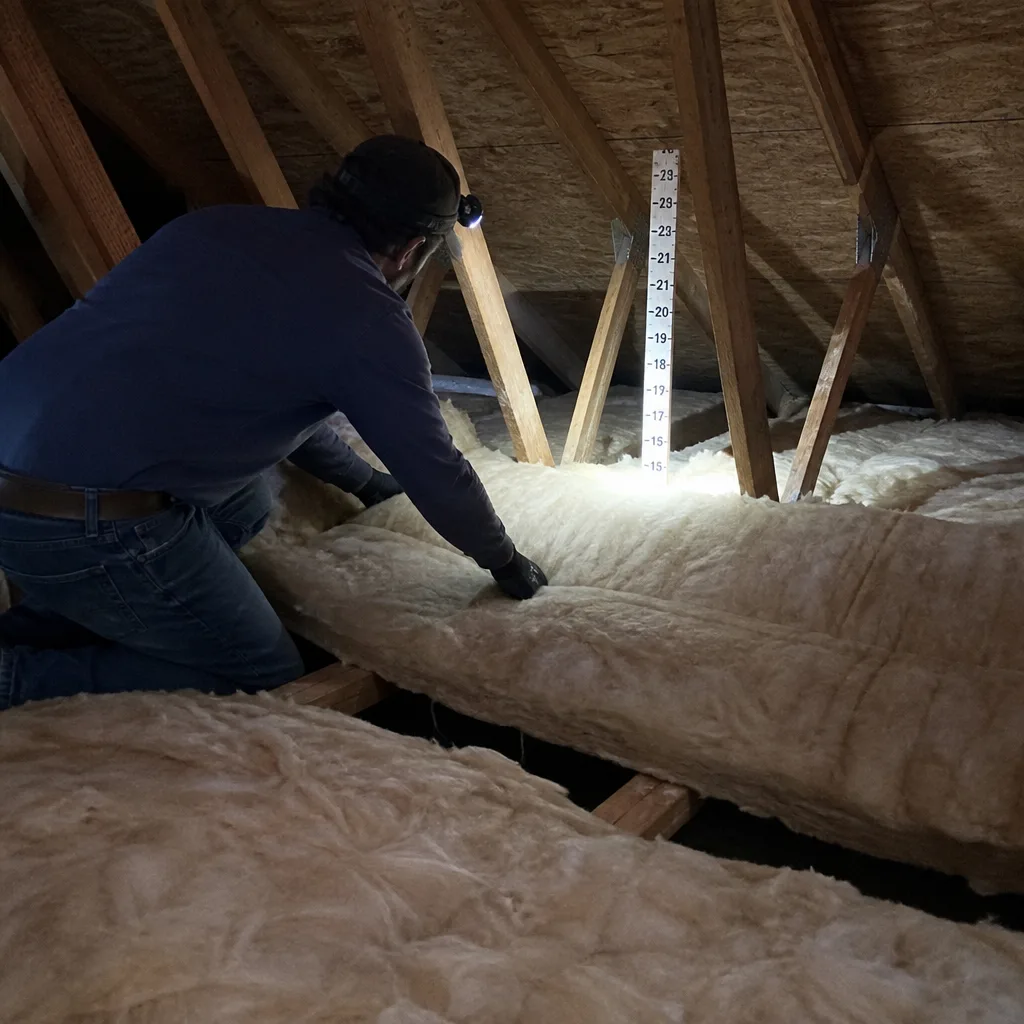
- Uneven room temperatures despite fresh Rockwool. The batt performs at its labeled R-value only when air isn’t washing through it. If your master bedroom stays 6-8°F warmer than the hallway in July, the top plates above that room likely weren’t sealed before insulation went in. We find this in roughly 40% of Schertz homes where insulation was added without a prior blower-door test.
- Dust streaking on ceiling drywall around can lights or HVAC registers. These dark trails are filtered air, pulled from the attic through gaps by the stack effect. The Rockwool isn’t failing; it’s simply not designed to stop airflow. The sealant around the penetration has cracked, shrunk, or was never applied.
- Ice damming or heavy frost on roof sheathing in winter. Warm, moist interior air leaking past failed seals condenses on cold sheathing. In Schertz’s occasional hard freezes, this shows up as icicle formation at the eaves while the attic floor reads dry. The fix is sealing the bypass, not adding more Rockwool.
- Energy bills flat or rising after insulation “upgrade.” A blower-door test we ran last March in a Schertz home near Clemens High School read 3,800 CFM50 after the homeowner’s recent Rockwool installation. After proper air sealing of top plates, wire penetrations, and a chimney chase, it dropped to 2,100. The insulation contractor had blown product over an unsealed attic floor. The homeowner paid for performance they didn’t receive.
- Visible gaps at the top plate or around chases in the attic. Even a 1/16″ crack running the perimeter of a 2,000 square foot attic equals roughly a 4″×4″ hole in the ceiling. Rockwool compresses into gaps but doesn’t seal them. Light streaming through from the floor below is the most obvious tell.
Replacement Cost & What’s Included
Complete attic air sealing for Rockwool-ready homes in Schertz breaks down as follows:
| Scope | Price Range |
|---|---|
| Top-plate seal (acrylic-latex, all walls) | $680-$1,100 |
| Penetration package (can lights, ducts, wires, chases) | $520-$940 |
| Chimney/soffit dam and baffle install | $380-$620 |
| Full assembly, blower-door verified | $1,800-$3,400 |
What drives the range: attic square footage, accessibility (truss vs. stick-framed, decked vs. open), number of can lights and HVAC drops, and whether prior insulation needs partial removal to access the ceiling plane. Every quote under Haven Standard Clause 1 is a flat price with written scope and written warranty before anyone lifts a tool. No hourly surprises.
The price includes materials, labor, and post-work blower-door test with printed results. We also deliver a Documented Photo Record of every sealed penetration and a thermal-imaging summary showing before-and-after surface temperatures. The 365-Day Done Right Promise applies. Materials come from our stocked inventory: acrylic-latex sealants, fire-rated foams, metal flashing for chimney dams, and rigid baffles from Owens Corning, Johns Manville, Knauf, and Rockwool-compatible sources. No proprietary lock-in.
DIY or Call Us?
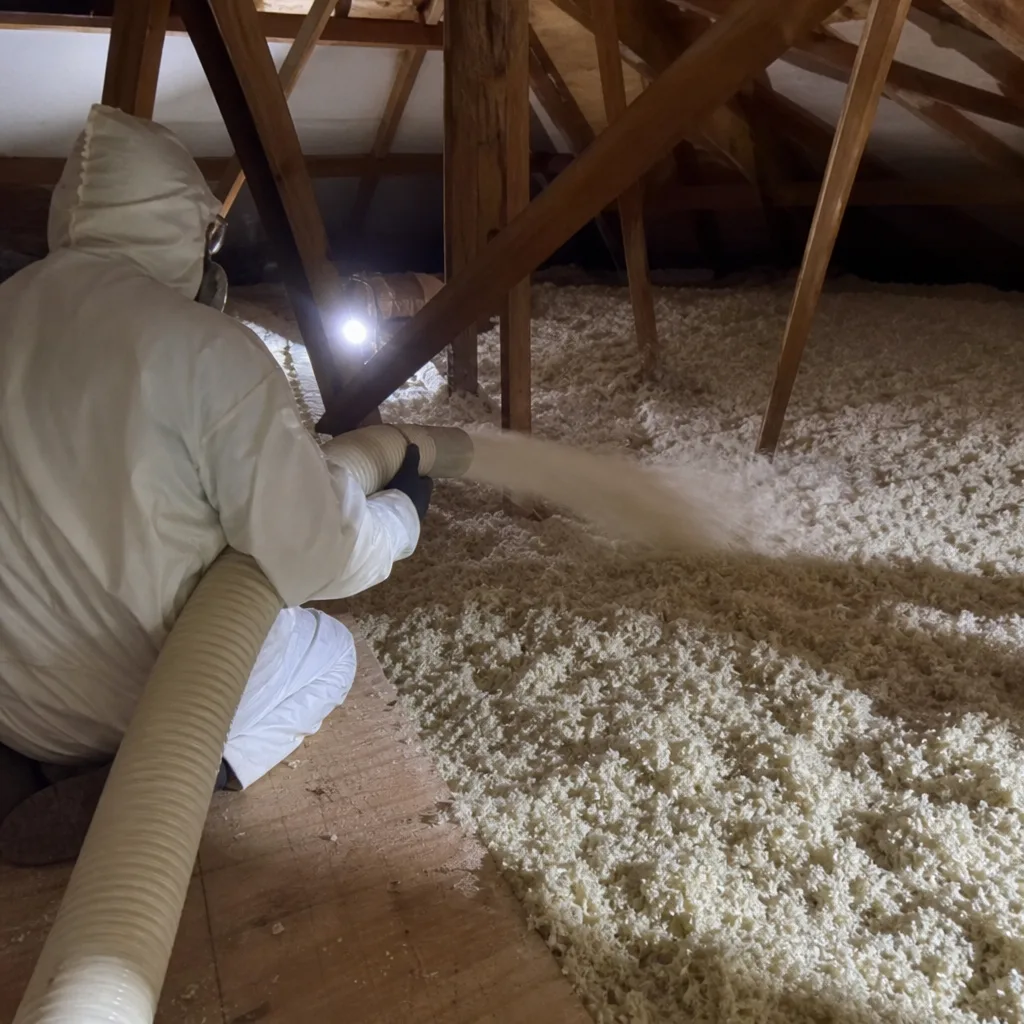
What you can safely check: turn off the attic light, look for daylight at the top plates and around chases. Measure any gaps with a tape. Note the Rockwool product label for sealant compatibility. That’s the extent of safe homeowner diagnosis.
Where DIY goes wrong: attic air sealing requires working at height, often near live electrical, in heat stress conditions. Fire-rated foam around can lights demands proper product selection and depth control. Overspray into the fixture housing creates a fire hazard. Under-application leaves the leak. More critically, without a blower-door test, you cannot verify your work. We’ve re-done homeowner attempts where 60% of the leakage remained because the visible gaps weren’t the largest ones. The thermal camera and manometer find what the eye misses.
We carry full liability and workers’ compensation insurance. Our technicians are background-checked and uniformed. If you want the job documented and verified, call (830) 402-5240. Estimates are free, and we offer a Free Second Opinion on any written estimate you’ve already received.
FAQs
Properly installed acrylic-latex and fire-rated foam seals last 20-25 years in Schertz’s climate, though the extreme attic heat cycling here can shorten that by 3-5 years compared to milder regions. We inspect seal integrity as part of any subsequent insulation service and re-caulk any failed points under our 365-Day Done Right Promise. Call (830) 402-5240 if you suspect degradation.
Partial repair is possible if the original sealant type is compatible with Rockwool and the failure is localized to one or two penetrations. We don’t layer incompatible products. If the prior installer used solvent-based sealant, we remove it entirely before re-sealing. A blower-door test tells us whether spot repair will achieve the target reduction or if full replacement is the honest recommendation. Free estimates at (830) 402-5240.
Most Schertz homes complete in one day: 4-6 hours for a straightforward 1,800 square foot attic with standard penetrations, up to 8 hours for larger or more complex layouts. We schedule the blower-door pre-test for morning, seal through midday, and run the post-test before departure. You receive printed results and the photo record before the crew leaves. Same-day starts are available when we have your Rockwool product spec confirmed.
Yes. Our Schertz-based trucks carry acrylic-latex sealants, fire-rated one-component foams, metal flashing, rigid baffles, and gasket materials compatible with all Rockwool residential product lines. We also stock Reflectix radiant barrier materials for jobs requiring combined air sealing and thermal boundary work. If your attic has an unusual penetration or chase configuration, we confirm material match during the estimate walkthrough.
Written by Wes Okafor, Owner, Topside Attic Insulation Schertz at Topside Attic Insulation Schertz, serving Schertz and nearby areas.