
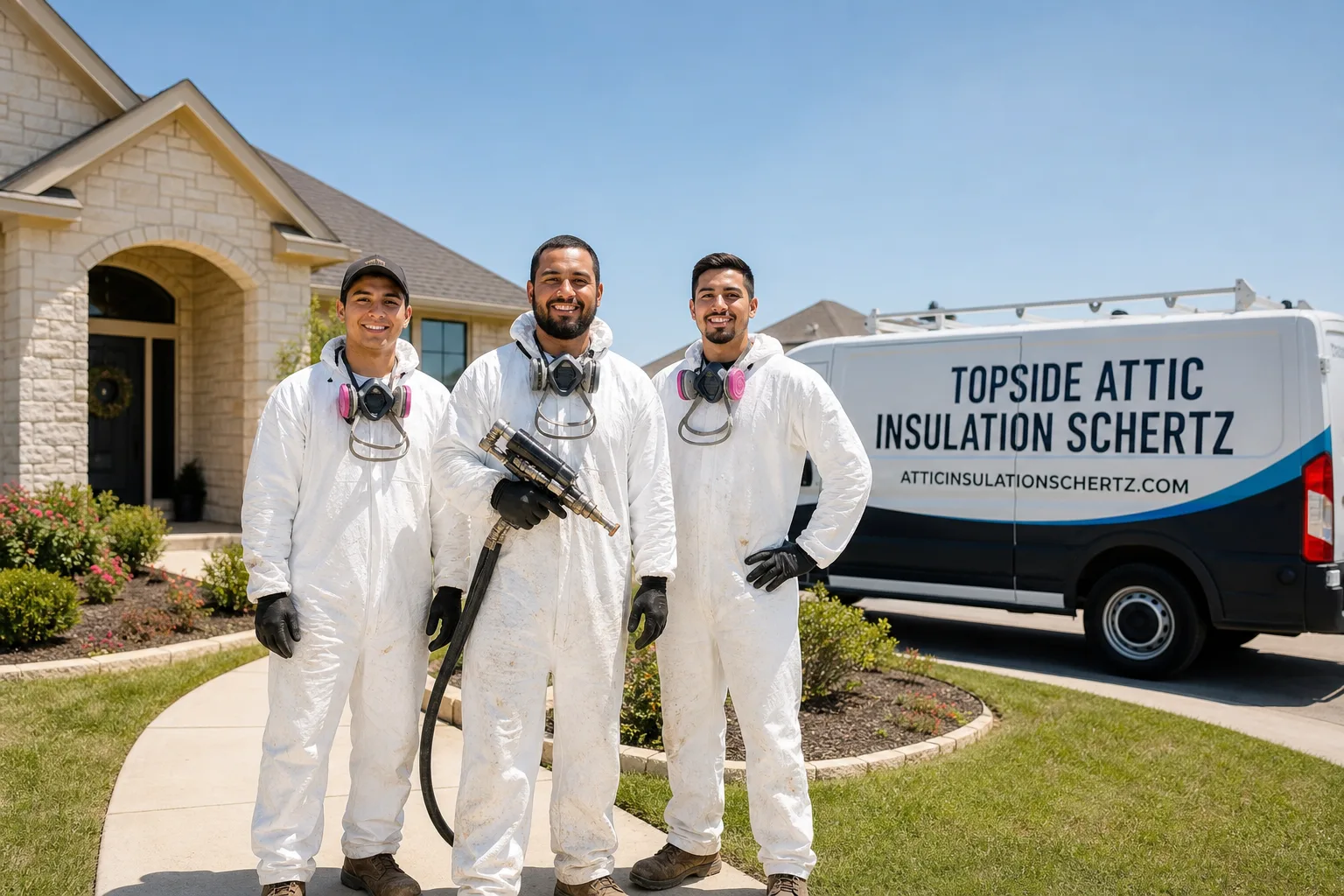
How Much Does Radiant Barrier Installation Cost in Schertz?
Radiant Barrier Installation services in Schertz, TX typically run between $1,400 and $3,200 for a standard single-story home with 1,500 to 2,500 square feet of attic floor space. Most jobs in this market land around $1,800 to $2,400 once you factor in the attic access conditions common to the production-built homes that dominate neighborhoods like Schertz Crossing, Fairways at Scenic Hills, and the Wiederstein Ranch corridor. Same-day or next-day scheduling is usually available for straightforward installs, and every job at Envelope Insulation Co. begins with a written price before anyone sets foot on a ladder.
Radiant Barrier Installation Cost Breakdown (2026)
Radiant barrier cost in Schertz breaks down across a few predictable line items. The table below reflects what Wes Okafor and the Envelope Insulation Co. crew see on actual jobs in Guadalupe County, not a national average padded for a generic audience.
| Line Item | Typical Range (Schertz Market, 2026) | Notes |
|---|---|---|
| Radiant barrier material (foil sheeting) | $0.18 - $0.35 per sq ft of attic floor | Perforated foil preferred in humid South Texas climates to allow vapor diffusion |
| Labor – standard accessible attic | $0.45 - $0.75 per sq ft | Roof pitch of 4:12 to 6:12 with good ridge-to-soffit access |
| Labor – tight or complex attic | $0.75 - $1.20 per sq ft | Steep pitch, cross-braced trusses, or limited access points common in older Schertz homes built before 2005 |
| Staple-and-tape installation (rafter application) | Included in labor above | Stapled to rafter undersides with at least 1-inch air gap to sheathing – critical for performance |
| Existing blown-in removal (if needed) | $350 - $900 additional | Only required when attic floor needs re-access for concurrent air sealing |
| Attic air sealing (top plates, can lights, penetrations) | $400 - $900 additional | Envelope Insulation Co. treats this as a prerequisite, not an optional add-on |
| Complete job – 1,500 sq ft home | $1,400 - $2,100 | Accessible attic, standard pitch, no removal needed |
| Complete job – 2,000 sq ft home | $1,700 - $2,600 | Most common bracket for Schertz Parkway-area builds from 2000 to 2018 |
| Complete job – 2,500 sq ft home | $2,100 - $3,200 | Includes complex trusses or partial removal; two-story homes trend toward the high end |
A few things consistently push jobs toward the top of those ranges in Schertz. Homes built in the mid-2000s along the FM 3009 and Schertz Parkway corridors often have tightly cross-braced engineered trusses that slow a crew down considerably – figure an extra hour to two hours of labor versus a simple attic with clear rafter bays. Homes in the Northcliffe and Ashley Place neighborhoods sometimes have low-slope sections over garages that require extra foil seaming. And any time we find an attic floor buried under 12 or more inches of blown cellulose that needs partial clearing to access top-plate penetrations before the barrier goes up, expect that to add to the base cost.
What keeps jobs at the low end: newer Schertz builds from 2015 onward (especially in Homestead and Parklands) tend to have cleaner attic geometry, better-planned access hatches, and fewer plumbing or electrical penetrations punched through the ceiling plane. Those jobs move faster, and the savings pass through to the written price you get before work starts.
What Affects Radiant Barrier Installation Pricing in Schertz
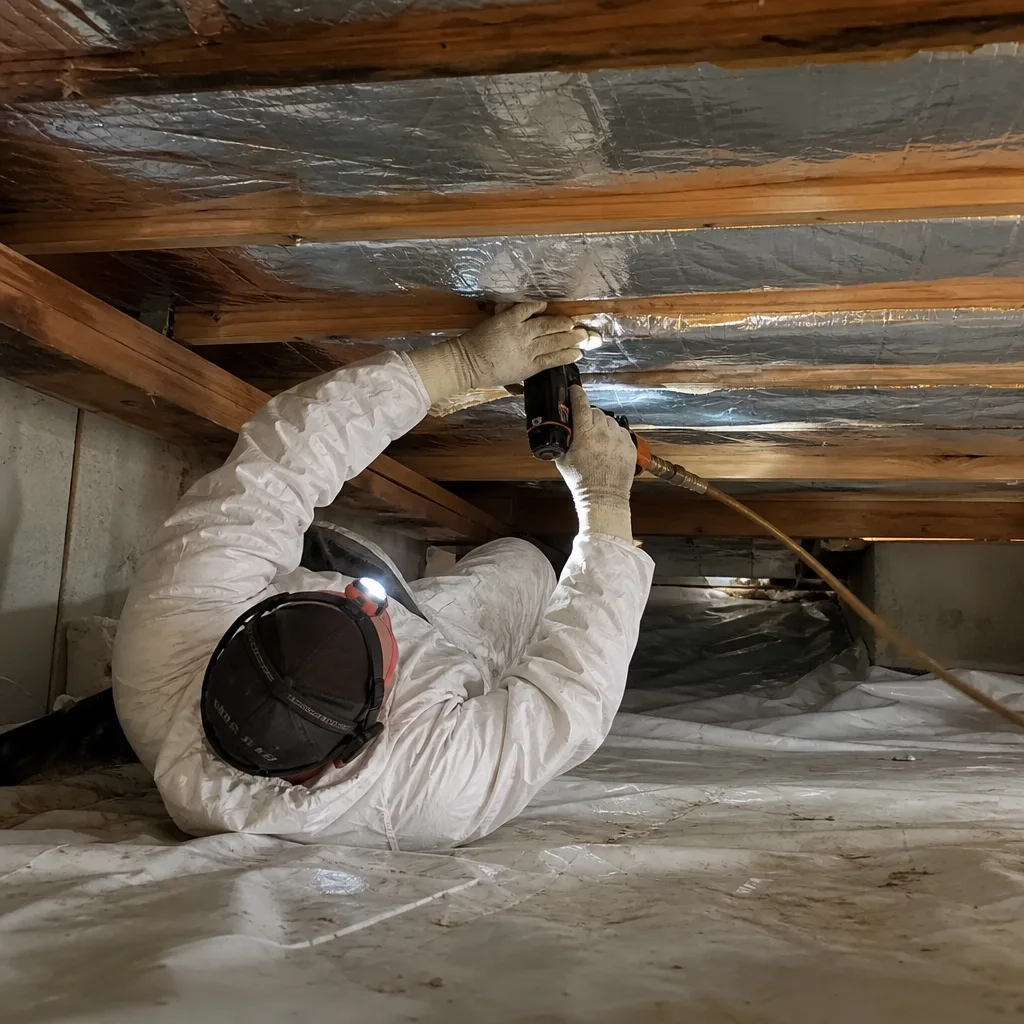
Six factors move the number up or down on nearly every job we quote in Schertz. None of them are guesswork – they show up on the written scope you receive before any work begins.
- Attic square footage and roof geometry: A simple gable roof over a rectangular footprint is the fastest job. Hip roofs, bonus rooms with knee walls, or any attic space that requires a technician to belly-crawl more than 20 feet from the access hatch adds measurable labor time. Most Schertz homes in the 1,800 to 2,200 square foot range take a crew of two about four to six hours on a standard attic.
- Roof pitch: The steep pitches common on two-story homes in Crossvine and Veranda add both physical difficulty and the need for more linear footage of foil to cover the same floor area. Every 2:12 increase in pitch past 6:12 adds roughly 8 to 12 percent to material cost just from geometry.
- Existing insulation depth on the attic floor: Radiant barriers attach to rafter undersides, so the attic floor insulation level doesn’t always matter for the barrier itself. But if we’re pairing the barrier with attic air sealing – which is the correct sequence – and the top plates are buried under 14 inches of blown fiberglass, we may need to temporarily clear sections to seal penetrations properly. That adds time.
- Whether attic air sealing is included: In Schertz’s climate zone 2B heat, a radiant barrier installed over an unsealed attic is leaving a substantial portion of its potential performance on the table. Envelope Insulation Co. air-seals top plates, can lights, and all ceiling penetrations before the barrier goes up – not as an upsell, but because the sequence matters. If you’ve received a competing quote that doesn’t mention air sealing, ask specifically what it includes. A job priced at $900 that skips this step is not the same job priced at $1,600 that doesn’t.
- Foil type – perforated versus solid: Schertz sits in a mixed-humid climate with summer dew points regularly hitting the low 70s. Perforated foil – which allows small amounts of vapor to pass through while still reflecting radiant heat – is the technically correct choice for this market. Solid foil is less expensive per square foot but can trap moisture against the sheathing in South Texas conditions. The price difference between the two is usually $150 to $300 on a typical Schertz job, and the perforated product is worth it.
- Duct configuration in the attic: Homes in older Schertz subdivisions built before 2008 commonly have HVAC ductwork running through the unconditioned attic space. When ducts weave through rafter bays, the foil installation takes longer because each duct drop requires careful foil seaming to maintain continuity. Homes built after 2012 sometimes have ductwork moved to conditioned space or better-organized trunk lines, which speeds the job.
Is Radiant Barrier Worth It in Schertz, TX?
Schertz averages more than 220 days per year with high temperatures above 80°F, and the attic above a typical slab-on-grade home here will hit 140 to 160°F on a July afternoon. That heat radiates downward through your ceiling insulation and into your living space regardless of how thick the insulation is – radiant energy moves differently than conducted heat, and R-value alone doesn’t stop it.
A properly installed perforated foil barrier stapled to rafter undersides with a clear air gap to the roof sheathing reflects 95 to 97 percent of that radiant load before it ever reaches your attic floor insulation. The Department of Energy’s research on climate zones 2 and 3 shows attic temperature reductions of 20 to 30°F on peak days, which translates to measurable reductions in cooling load. In Schertz homes where the air handler sits in the attic – common in the Greenfield Village and Schertz Crossing neighborhoods – that also means the equipment runs in a cooler environment, which extends its service life.
The payback period in this market, based on CPS Energy rates and typical Schertz home sizes, runs about four to seven years when the barrier is installed correctly alongside adequate attic air sealing. The barrier alone without sealed penetrations and top plates underperforms consistently – which is why the sequence matters as much as the product.
For a full picture of what the installation process looks like from start to finish, see our Radiant Barrier Installation in Schertz service page, which covers installation methods, material options, and what to expect on job day.
How to Save on Radiant Barrier Installation in Schertz
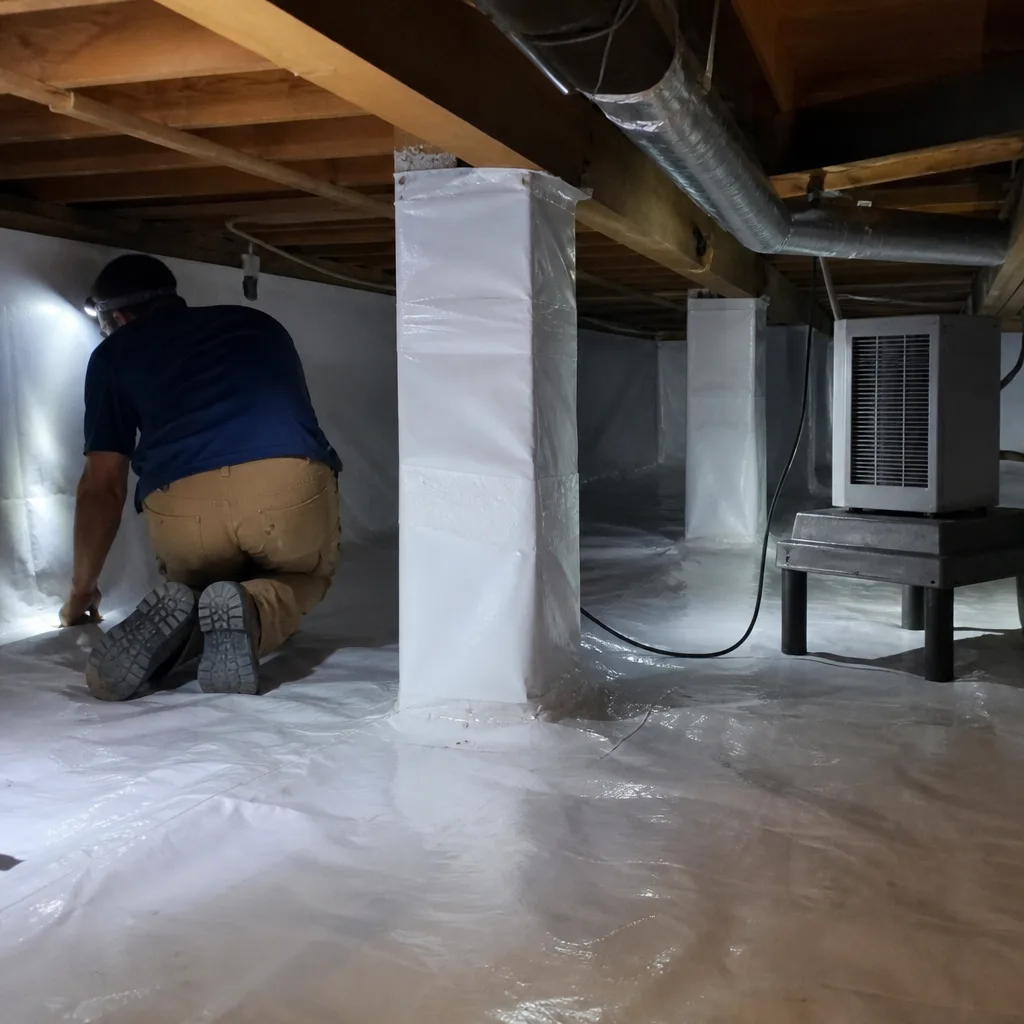
A few approaches actually move the number without cutting corners on the work itself.
- Bundle with attic air sealing rather than booking separately: Mobilization is a real cost. When a crew is already in the attic sealing top plates and can light boots, adding the radiant barrier on the same visit costs less than scheduling two separate jobs. On a 2,000 square foot Schertz home, bundling typically saves $200 to $400 compared to two separate mobilizations. Every quote from Envelope Insulation Co. shows bundled line items so you can see exactly where the savings come from.
- Get a second opinion on any written estimate: If you’ve already received a written quote, bring it to us – Envelope Insulation Co. offers a free second opinion on any written estimate. We’ll read it with you, flag what’s included, and tell you plainly whether the scope is accurate for your home. This isn’t a sales exercise; it’s a check on whether the job described matches what your attic actually needs.
- Check CPS Energy rebates: CPS Energy has periodically offered rebates for qualifying attic improvements in the San Antonio metro area, which includes many Schertz addresses served by the utility. Rebate availability and amounts change, so verify directly with CPS Energy before assuming any particular program is current. Even a modest rebate can shift a $2,200 job into a more comfortable range.
- Time the job outside peak summer scheduling: March through May and September through October tend to have better crew availability in the Schertz market. Booking outside the June-August rush doesn’t guarantee a lower price – Envelope Insulation Co. uses flat written pricing – but it does mean easier scheduling and less attic heat to work in, which sometimes means a faster job completion.
- Make sure your attic has adequate ventilation first: A radiant barrier in a poorly ventilated attic delivers a fraction of its potential. Before spending anything on the barrier, confirm your soffit and ridge vents are clear and functioning. This costs nothing and can be checked visually. If ventilation is inadequate, addressing it first – sometimes as simple as clearing blocked soffit baffles – means the barrier performs as designed from day one.
To request a written price for your specific home, call (830) 402-5240. The estimate is free, the price is written before any work starts, and there’s no pressure to book on the call.
The Envelope Insulation Co. Approach: Sealed First, Then Insulated
Wes Okafor built Envelope Insulation Co. around one principle that most insulation contractors don’t follow: air sealing is a hard prerequisite, not an optional add-on. Since 2016, the company has operated under The Haven Standard, which means every job starts with a written scope and a flat price – no surprises on the invoice because there are no surprises on the quote.
On radiant barrier jobs in Schertz, the sequence always goes the same way. First, a technician documents the attic condition with photos before a single roll of foil is opened. Then, if the attic floor hasn’t been properly air-sealed, top plates, can light boots, and any penetrations get sealed with the correct material – typically two-part foam for large gaps and acoustical sealant for smaller ones. Only after that work is done and documented does the barrier go up. When the job closes, you get a photo record of the completed work and, on applicable jobs, before-and-after blower-door readings that show the air sealing result in a single measurable number.
That’s not a marketing claim. It’s the documented output of every job, and it’s what the 365-Day Done Right Promise covers: if the work isn’t right, we make it right – and the written warranty you receive on day one says exactly what that means.
Across more than 9,000 homes sealed and insulated since 2016, every single one started with a written price and ended with a documented record. That record matters because your home in Schertz is an asset, and work done to its envelope should be traceable – not just remembered.
Radiant Barrier vs. Adding More Attic Insulation: Which One First?
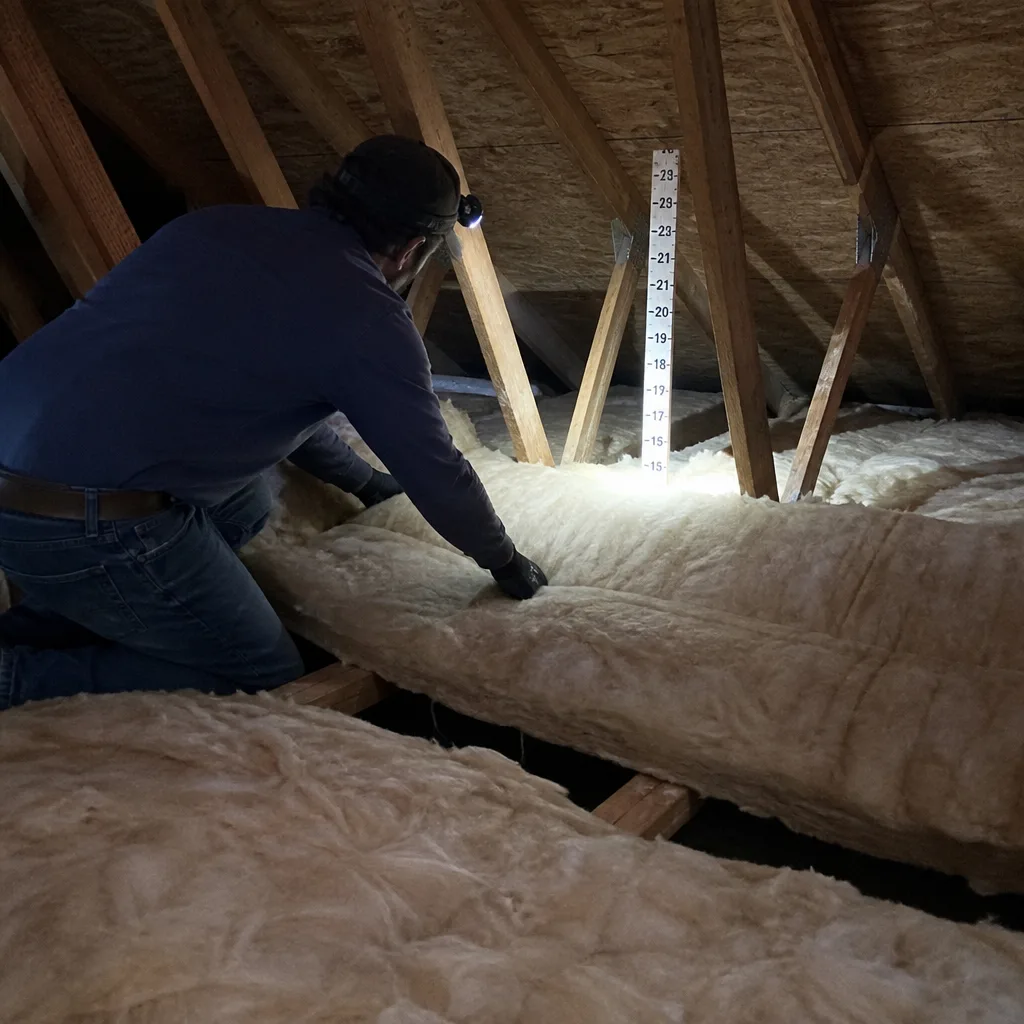
This is one of the most common questions on Schertz jobs, and the answer depends on what your attic currently has. If your existing insulation is below R-30 – roughly 8 to 9 inches of blown fiberglass – adding insulation to reach R-38 or R-49 will typically deliver more measurable cooling-season performance per dollar than adding a radiant barrier to an under-insulated attic. The two are not competing strategies; they address different heat-transfer mechanisms, and both are worth doing.
The practical sequence on most Schertz homes we assess: seal the attic floor penetrations first, then confirm the insulation level meets or exceeds current IECC requirements for climate zone 2, then add the radiant barrier. In homes where the insulation is already at or above R-38, the radiant barrier is the logical next improvement because conducted heat loss through the insulation is already well-managed and the remaining gain is radiant.
From our home page you can see the full list of services Envelope Insulation Co. offers across the building envelope – attic air sealing, blown-in insulation, spray foam, crawl space encapsulation, and more – all of which can be scoped and priced on the same visit if you want a complete picture of your home’s thermal performance in one written document.
What the Installation Process Looks Like
Understanding what actually happens on job day helps you evaluate any quote accurately, including ours.
- Pre-job photo documentation: Before any material goes in, the attic is photographed – current insulation depth, visible penetrations, duct configuration, and access conditions. You get these photos as part of the job record.
- Attic air sealing (if included in scope): Top plates, recessed light housings, plumbing and electrical penetrations, and any other ceiling bypasses are sealed. This step is completed and documented before the foil goes up.
- Foil installation: Perforated foil is stapled to the underside of the rafters, working from the ridge down toward the soffits. Seams are taped. The critical detail is maintaining at least a 1-inch air gap between the foil and the roof sheathing – without that gap, the barrier can’t reflect radiant energy effectively because it needs an air space to function. Any contractor skipping this detail is installing the product incorrectly.
- Post-job documentation: Completed installation is photographed from multiple angles. If a blower-door test was performed for the air sealing portion, you receive the before-and-after numbers.
- Written record delivered: Scope, warranty, and photo record are delivered before the crew leaves. The 365-Day Done Right Promise is in writing on that document.
FAQs – Radiant Barrier Installation Cost in Schertz
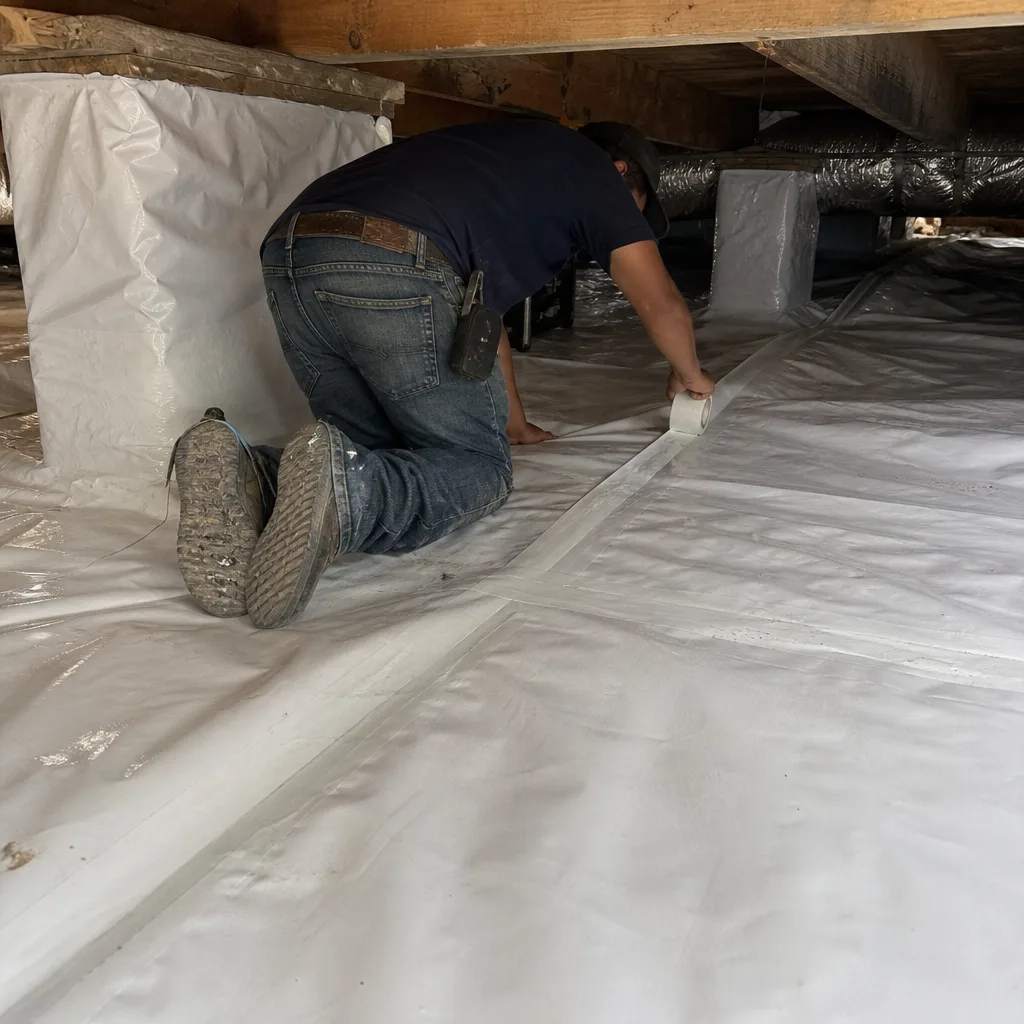
How much does radiant barrier installation cost in Schertz, TX?
Most radiant barrier installations in Schertz run between $1,400 and $3,200, depending on home size, attic complexity, and whether attic air sealing is included. A 2,000 square foot home with a standard accessible attic and basic air sealing typically lands in the $1,900 to $2,600 range. Call (830) 402-5240 for a written price specific to your home – the estimate is free and there’s no obligation.
Is radiant barrier installation worth the cost in Texas?
In Schertz’s climate, yes – with two conditions. The foil must be installed with a clear air gap to the roof sheathing (without it, the barrier doesn’t function), and the attic floor penetrations need to be air-sealed or a significant portion of the potential cooling savings leaks out through ceiling bypasses. Done correctly, most Schertz homeowners see the investment returned in four to seven years through reduced cooling costs. Homes with HVAC equipment in the attic tend toward the shorter end of that range.
How long does radiant barrier installation take in Schertz?
A straightforward 2,000 square foot attic typically takes a two-person crew four to six hours. Attics with complex truss geometry, steep pitches, or significant ductwork threading through rafter bays – common in older Schertz neighborhoods built before 2008 – can run seven to nine hours. Jobs that include attic air sealing before the barrier installation add two to three hours. Your written scope will include a time estimate before any work starts.
Does a radiant barrier require permits in Schertz?
Radiant barrier installation alone does not typically require a building permit in Schertz or under Guadalupe County jurisdiction. However, if the job involves electrical work around recessed light fixtures or any structural attic modification, permit requirements can change. Envelope Insulation Co. confirms permit requirements on every job before work begins – that information is part of the pre-job documentation, not something you find out afterward.
What’s the difference between a radiant barrier and attic insulation?
They address different types of heat transfer. Attic insulation (blown fiberglass, cellulose, or spray foam) resists conducted heat – the slow transfer of heat through a material. A radiant barrier reflects radiant heat – the infrared energy radiating off a 150°F roof deck directly toward your ceiling insulation and living space below. In Schertz’s climate, both matter. R-value alone doesn’t stop radiant heat, which is why a home with R-49 insulation but no radiant barrier can still have attic temperatures that drive up cooling loads on peak summer days.
Can I combine radiant barrier installation with other work to save money?
Yes, and it’s the approach most Schertz homeowners who’ve done their research tend to take. Bundling radiant barrier installation with attic air sealing on a single mobilization saves $200 to $400 on a typical 2,000 square foot home compared to two separate visits. If you’re also considering blown-in insulation top-up or insulation removal and replacement, all three can be scoped in a single written estimate. Call (830) 402-5240 to schedule a free estimate that covers everything your attic needs in one written document.
Key Takeaways
- Radiant barrier installation in Schertz costs $1,400 to $3,200 for most homes; the $1,900 to $2,600 range covers the majority of 2,000 square foot jobs with standard access.
- Perforated foil is the correct product for Schertz’s humid climate – solid foil can trap moisture against the roof sheathing.
- The barrier must have a 1-inch air gap to the roof sheathing to function; without it, it’s installed incorrectly.
- Attic air sealing before the barrier installation is not optional if you want full performance – it’s the correct sequence.
- Bundling air sealing and radiant barrier on one visit saves $200 to $400 versus separate mobilizations.
- Every Envelope Insulation Co. job starts with a written price and ends with a documented photo record – no exceptions under The Haven Standard.
- The 365-Day Done Right Promise is in writing on every completed job scope.
Get a Written Price for Your Schertz Home
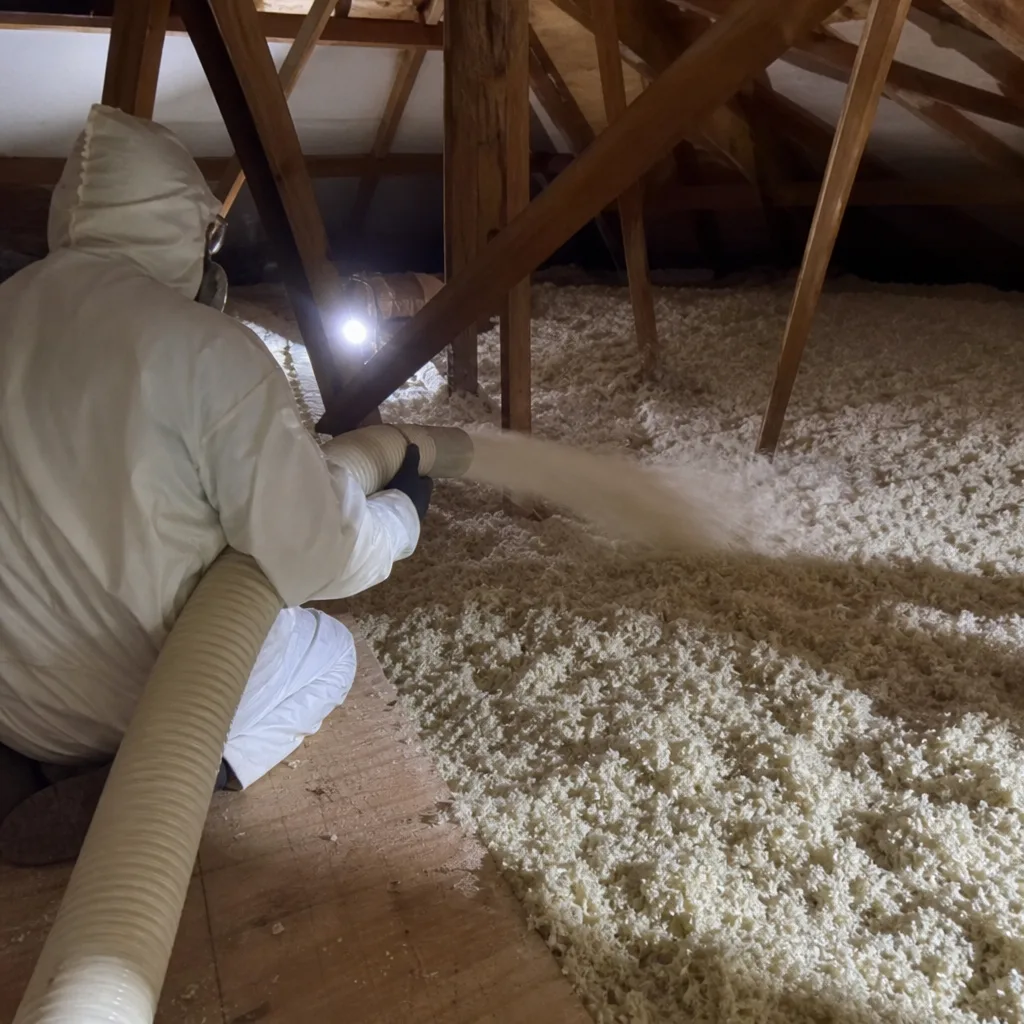
If you’re ready to know what radiant barrier installation will cost for your specific home in Schertz, call (830) 402-5240. Wes Okafor and the Envelope Insulation Co. team will schedule a free estimate, assess your attic conditions directly, and give you a flat written price before any work starts – no ranges, no “it depends,” no callbacks with a revised number after the crew is already on-site. That’s Haven Standard Clause 1, and it applies to every job.
If you’ve already received a written estimate from another contractor, bring it. The free second opinion offer means we’ll read it with you, explain what the scope does and doesn’t include, and let you decide what makes sense. No pressure. Just documentation.
Written by Wes Okafor, Owner at Envelope Insulation Co. (operating as Topside Attic Insulation Schertz), serving Schertz, TX since 2016.
Pricing reflects the Schertz market as of 2026. Topside Attic Insulation Schertz offers free estimates – call (830) 402-5240.
What Our Customers Say
"Two other companies quoted to blow more insulation on top of what was there. These were the only ones who said the existing material had to come out first, and explained why."
- Clifford E."Fixed price, clean work, and they hauled the old material away as agreed."
- Todd M."They photographed rodent damage in the old insulation that we had no idea about, and priced the exclusion work separately so we could decide."
- Harriet N.