
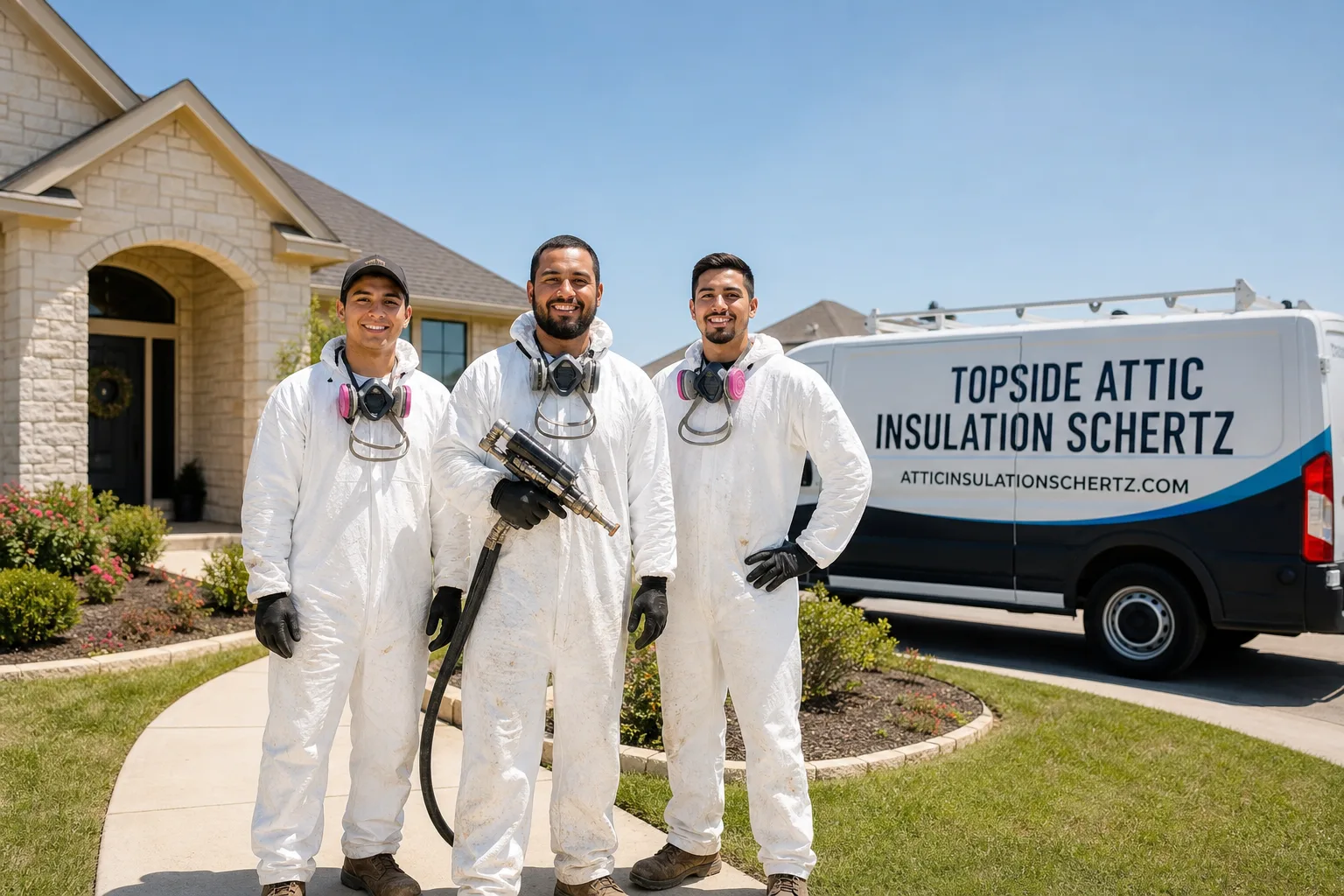
Fast, Reliable Blown-In Insulation Across Converse
Blown-in insulation in Converse typically runs $1.80 to $3.20 per square foot of attic deck, with most complete attic jobs landing between $2,400 and $4,800 depending on whether air sealing is needed first. Most Converse homes we see were built with original insulation now well below current code, and we can usually schedule an assessment within 48 hours. Call (830) 402-5240 for a written price before any work starts.
We know Converse attics. The brick-veneer tract homes off FM 78, the neighborhoods threading up from Kitty Hawk Road, the rental properties near Rolling Meadows - our crews have blown insulation and sealed top plates in all of them. Dispatch runs from our San Antonio office, but the trucks that roll to Converse carry the same blower-door rig, the same cellulose and fiberglass stock, and the same written-scope protocol we use everywhere. The difference is we already know what we’ll find when we pull down the attic ladder in a 2004 build near Woodlake: settled fiberglass, non-airtight cans, and a stack effect pulling conditioned air straight through the ceiling.
Why Topside Attic Insulation Schertz Is Converse’s Preferred Blown-In Insulation Company
We’ve sealed and insulated more than 9,000 homes since 2016, and a disproportionate share of them sit in Converse’s 1990s-2000s construction belt. The reviews we get back from Converse customers - on three-star and five-star entries alike - mention the same thing: the crew showed the blower-door numbers, explained the can-light problem without pushing, and left a photo record and a written warranty. That pattern isn’t accidental. It’s Haven Standard Clause 1: flat price, written scope, written warranty before anyone lifts a tool.
Response time to Converse runs same-day or next-day for assessments, and we don’t use callback windows measured in business days. A live person answers the phone 24/7. When you book, you get a named technician and a text when they’re on the way. No voicemail loops.
Our local knowledge is specific. We know which Converse subdivisions were built with R-19 batts that have settled to R-12 or worse. We know the FM 78 corridor homes where the original builder stuffed fiberglass around non-IC-rated cans and called it done. We know the pipe chases over water heaters in the Kitty Hawk Road tracts that Winter Storm Uri exposed. That knowledge changes what we quote and how we sequence the work - air sealing first, then insulation, in that order.
Our Blown-In Insulation Services in Converse
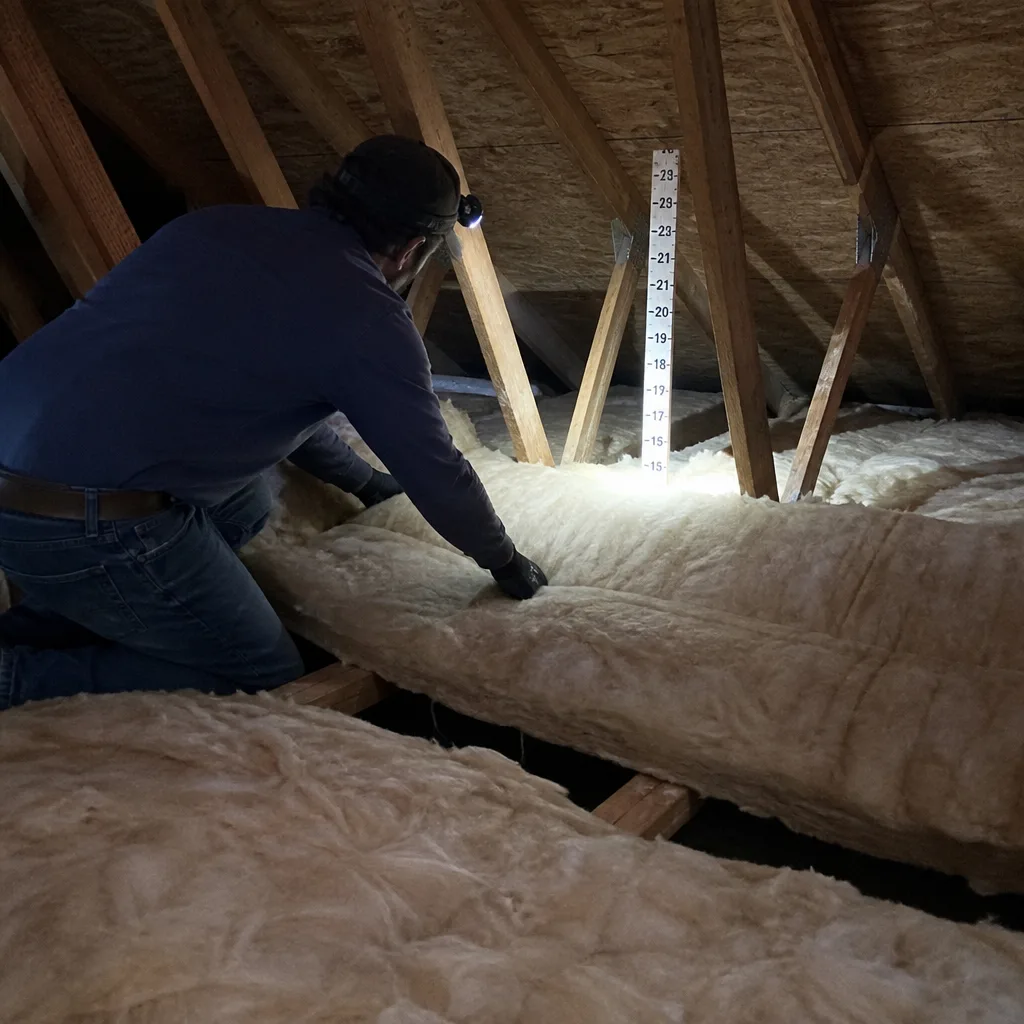
Blown-In Cellulose
We blow GreenFiber cellulose in Converse attics more often than any other material. Cellulose handles the 140°F summer attic temperatures here better than fiberglass when installed to proper density, and it packs well around the irregular framing and HVAC penetrations common in 1990s-2000s tract construction. A typical Converse attic - roughly 1,800 to 2,400 square feet of deck - runs $2,800 to $4,200 for cellulose to R-38 after air sealing. We dense-pack it to 1.5 pounds per cubic foot minimum, which stops settling and wind-washing in the shallow, tight attics these homes were built with.
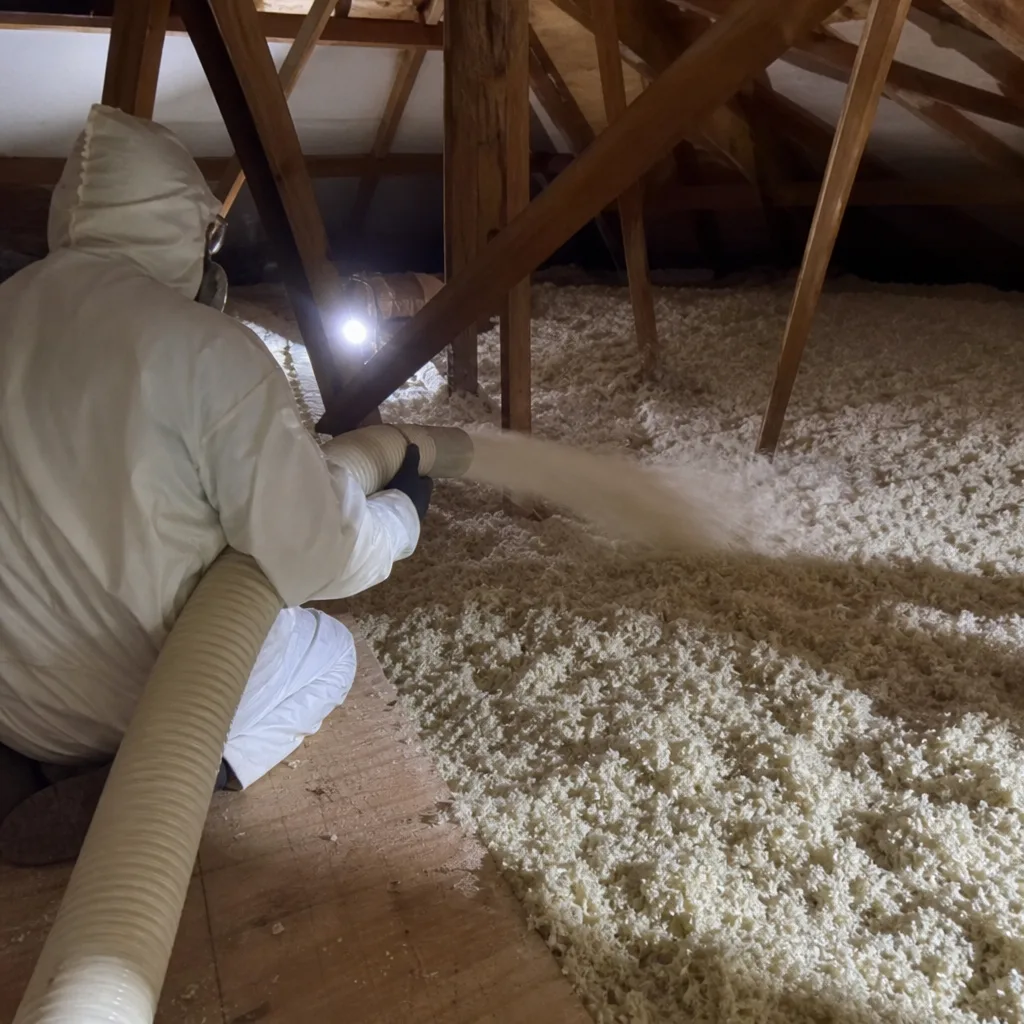
Blown-In Fiberglass
For homeowners who prefer fiberglass, we stock Owens Corning and Johns Manville loose-fill blown to R-38 or R-49 depending on the attic. Fiberglass works well in Converse homes with adequate air sealing already in place, or where moisture history in the attic makes cellulose less suitable. We see this occasionally in homes near the wetter bottomlands toward Salitrillo Creek. Pricing runs comparable to cellulose, sometimes slightly higher depending on the access layout and whether we need to extend hose runs through tight scuttle holes.
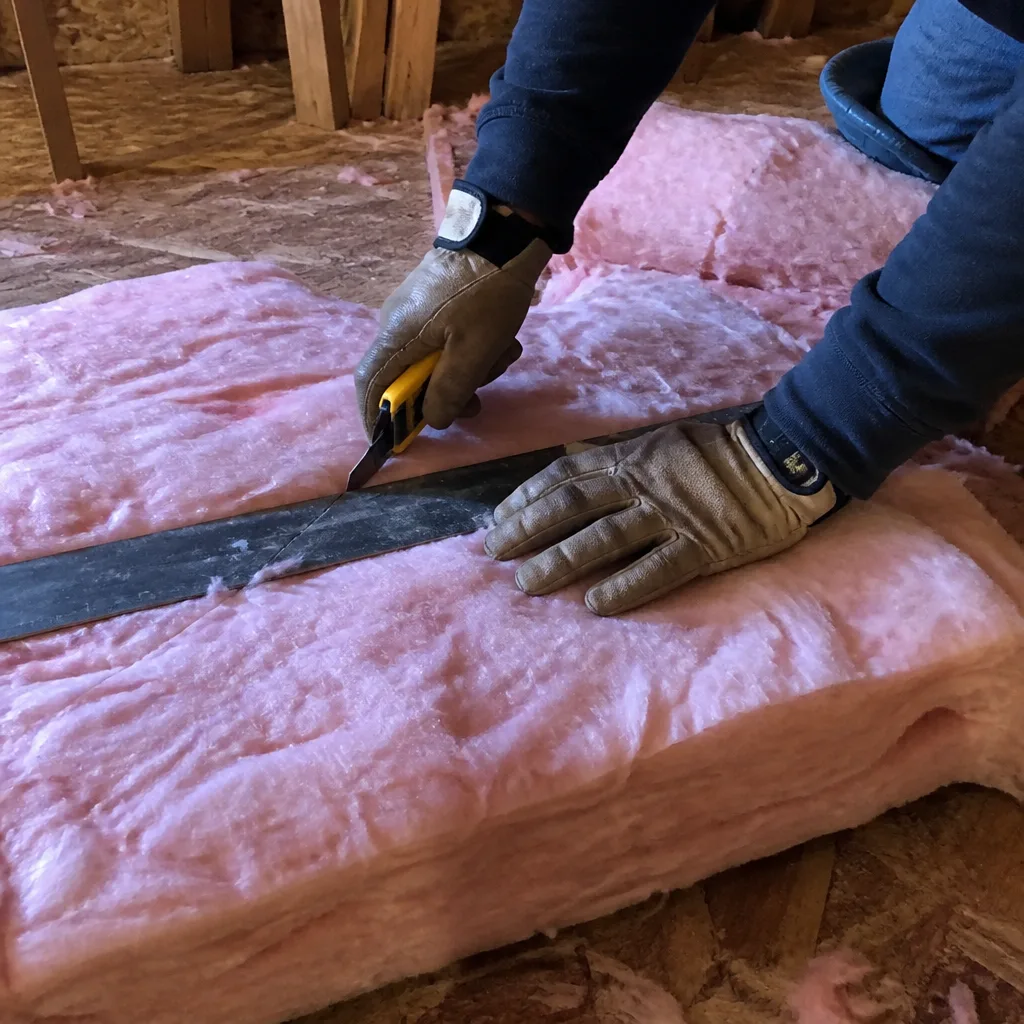
Dense-Pack Wall Insulation
Converse’s 1993-2012 brick-veneer homes were built with empty 2×4 stud cavities in exterior walls - no insulation at all in many cases, or poorly fitted batts that left gaps. We dense-pack those walls with cellulose or fiberglass through exterior access holes, filling the cavity at 3.5 pounds per cubic foot to stop convection loops and cut the thermal bridging that makes west-facing Converse rooms unbearable by August. This is slower work than attic blowing, and it shows in the price: most Converse wall jobs run $3,200 to $5,800 for a full exterior envelope.
Blown-In Top-Up
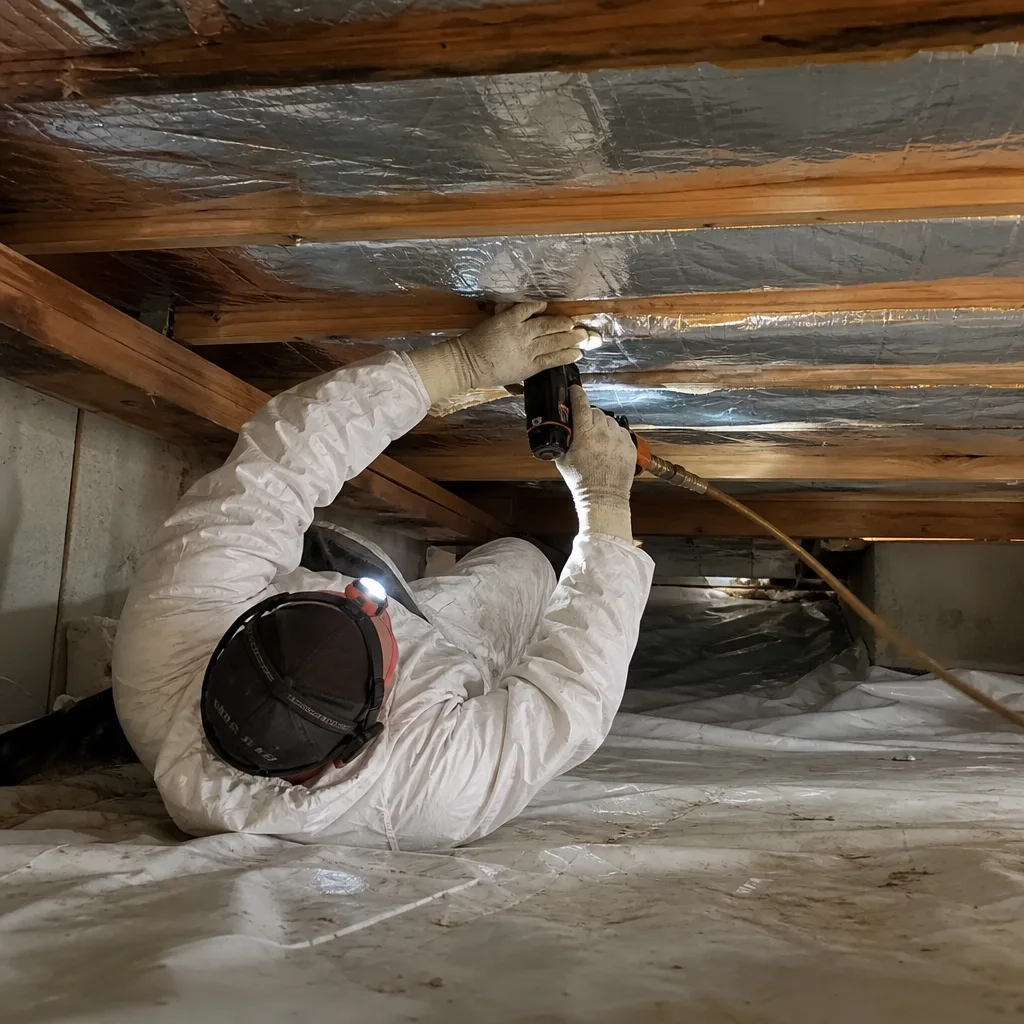
This is the bulk of what we do in Converse. Original blown fiberglass from the 2000s has settled, compressed, and in some cases been disturbed by prior HVAC work or rodent activity. We don’t just blow new material over the old. We inspect, measure what’s left, air-seal the top plates and penetrations, then top up to a uniform R-38 or R-49. Most Converse top-ups after air sealing run $2,400 to $3,800. The key is that “after air sealing” part - our Blown-In Insulation team will not blow over an unsealed attic floor. Sealed first, then insulated. In that order.
What happens when you call
- 1
A real person answersNo phone trees - you reach a local pro.
- 2
You get an upfront price rangeHonest numbers before anyone is dispatched.
- 3
A background-checked tech heads outLicensed & insured, dispatched right away.
- 4
You approve before work beginsNothing starts until you say go.
Trusted Brands We Service in Converse
We source blown-in materials from Owens Corning, Johns Manville, and GreenFiber - no proprietary lock-in, no house-brand substitution. For Converse customers, that means we match the material to the condition of the home, not to a distributor rebate program. Owens Corning ProPink works well in attics with good ventilation and no history of bulk moisture. GreenFiber cellulose, treated with borate for fire and pest resistance, is our default for the dense-pack and top-up work we do most often in Converse’s older tract stock. We keep both in stock locally, so turnaround from written price to scheduled work is typically under a week.
Common Blown-In Insulation Problems We See in Converse Homes
- Settled original fiberglass well below rated R-value. The 1993-2012 construction window means an unusually large share of Converse homes were insulated with blown fiberglass at the same time, using the same installation standards - and that fiberglass has now had 15 to 30 years to settle, compress, and degrade. What was sold as R-30 often measures R-15 or less at the attic hatch.
- Non-airtight recessed can lights acting as thermal chimneys. The tract homes along FM 78 and Kitty Hawk Road were built before air-tight IC-rated cans became standard. A blower-door test on these homes consistently flags the cans as the single largest air-leakage point. Blown-in insulation packed around them without sealing first just filters the conditioned air as it escapes.
- Low spots and voids around HVAC plenums in shallow attics. Converse’s dense tract-home attics often have 6/12 or lower roof pitches with minimal headroom. Crews working fast can miss the sunken areas around flex-duct plenums and pipe chases, leaving thermal bypasses that show up as hot rooms and high bills.
- Insulation voids in pipe chases exposed by the 2021 freeze. February 2021 revealed how many Converse homes had uninsulated or poorly insulated exterior wall cavities and attic pipe chases. Those voids are still there, still conducting heat in summer and cold in winter, still driving the system to short-cycle.
Pricing for Blown-In Insulation in Converse, TX
Here is what blown-in insulation costs in Converse’s market, based on the homes we actually measure:
| Service | Typical Range (Converse) | Notes |
|---|---|---|
| Attic air sealing + blown cellulose to R-38 | $2,800 - $4,200 | Most common scope; includes can-light sealing |
| Attic air sealing + blown fiberglass to R-38 | $3,000 - $4,500 | For homes where cellulose is not suitable |
| Blown-in top-up (existing adequate insulation) | $1,800 - $2,800 | Rare in Converse; most need air sealing first |
| Dense-pack wall insulation (full exterior) | $3,200 - $5,800 | Exterior access holes, patched and painted |
| Attic air sealing only (before insulation) | $800 - $1,600 | Standalone service; included in full jobs above |
What moves the number: attic square footage, current insulation depth and condition, number of recessed cans to seal, accessibility (tight scuttle vs. full stairs), and whether we find active rodent damage requiring remediation first. Every Converse job starts with a written price - flat, itemized, no work starts without it. We also offer a Free Second Opinion on any written estimate from another contractor. Bring us their scope; we’ll read it with you. Call (830) 402-5240 to schedule.
We Also Serve Cities Near Converse
Our crews work daily in Converse and the surrounding northeast San Antonio metro: Universal City to the west, Schertz to the north, Cibolo beyond that, and San Antonio proper to the southwest. The same written-price protocol, same blower-door documentation, and same 365-Day Done Right Promise apply in every city we serve. Dispatch is coordinated from our San Antonio office, but the truck that arrives at your Converse home is stocked and crewed for local work.
Serving Converse, TX - Our Local Coverage Area
We’re based in the Converse area and know this community well. Use the map below to see our service coverage - if you’re nearby, we can almost certainly help.
FAQs - Blown-In Insulation in Converse
It almost certainly needs more than a top-up. The blown fiberglass installed in Converse’s 1993-2012 tract homes was rated at R-19 to R-22 in walls and R-30 in attics, values now well below current Texas energy code targets of R-38 to R-49. After 15 to 30 years of settling, we routinely measure original attic insulation at half its labeled depth or less. Call (830) 402-5240 for a free assessment and written price.
Because they are almost certainly non-airtight cans installed before IC-rated airtight housings became standard, and blower-door tests on FM 78 and Kitty Hawk Road homes consistently identify them as the single largest air-leakage point. Each can is essentially a 6-inch hole pumping conditioned air into a 140°F attic. We seal every can with a fire-rated cover before any insulation goes in. No exceptions.
It exposed widespread voids in pipe chases over water heaters, exterior wall cavities with no insulation, and attic hatches with no weatherstripping - all thermal bypasses that also bleed cooling in summer. Many of those voids remain unaddressed because they are hidden and because military-family rental turnover means deferred maintenance. We document every gap we find with photos and include the repair in the written scope.
It means a higher share of Converse homes are owned by absentee landlords who have deferred energy upgrades across multiple tenant cycles, so retroactive attic re-insulation and air-sealing dominate the local market in a way that is less pronounced in owner-stable suburbs nearby. We work with both owners and tenants - and with property managers - to scope work that transfers value to the building and cuts utility costs for whoever pays the bill.
Air sealing first, then insulation, always. Blown-in material packed over unsealed top plates, can lights, and pipe chases just filters the air as it escapes. We air-seal every penetration, run a blower-door test to verify the reduction, then blow to the specified R-value. The before-and-after blower-door numbers go in your documented record so you can see the performance change you paid for. Call (830) 402-5240 to schedule.
Written by Wes Okafor, Owner at Topside Attic Insulation Schertz, serving Converse since 2016.