
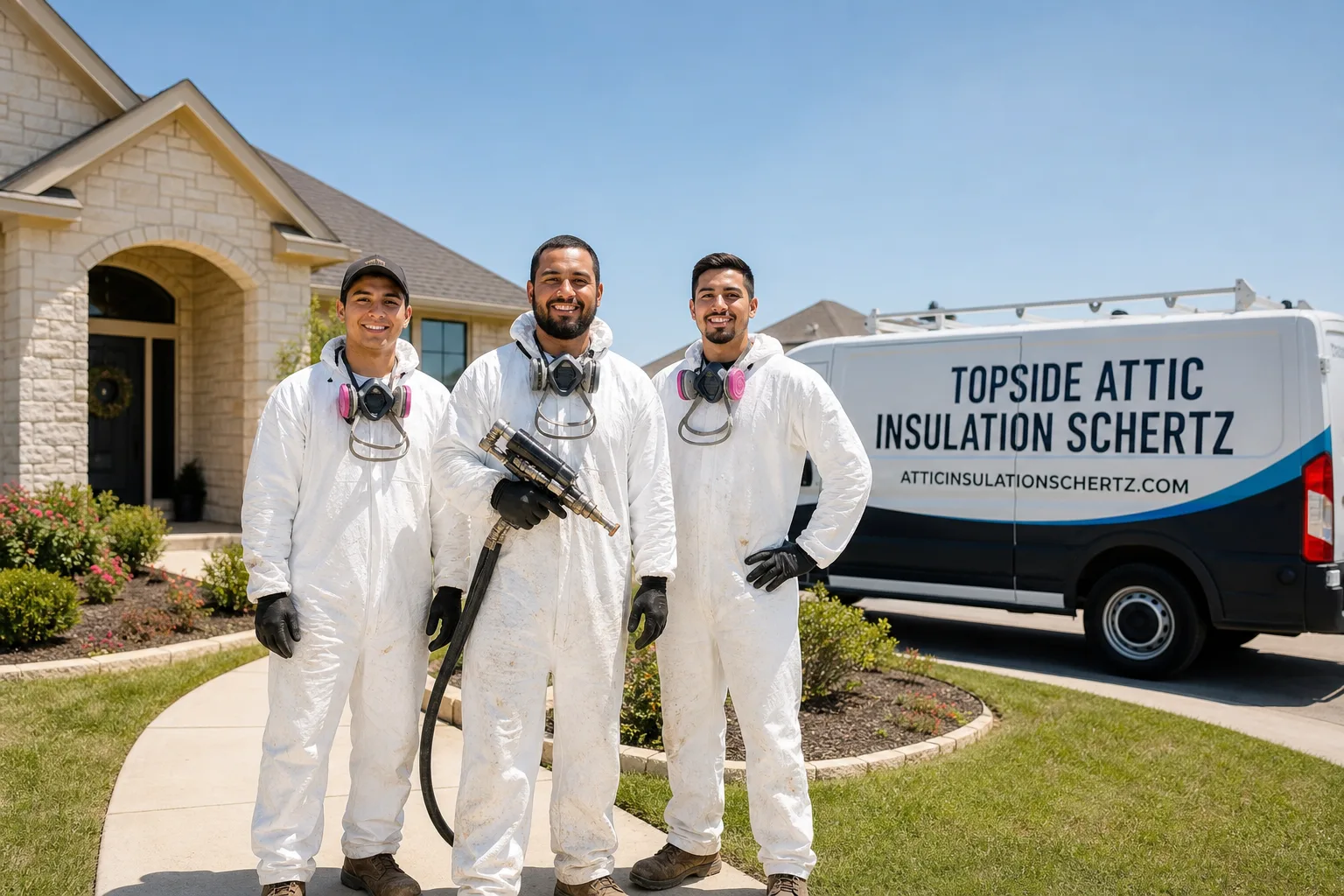
Fast, Reliable Blown-In Insulation Across San Antonio
Blown-in insulation in San Antonio typically runs $1.80 to $3.20 per square foot of attic floor, with most complete attic jobs falling between $2,400 and $5,800 depending on the home’s footprint and the existing insulation condition. Our crews dispatch from the San Antonio office and usually reach homes in the Northside, Stone Oak, or Universal City corridor within 45 minutes of a scheduled arrival window. If you’re seeing $300 summer electric bills on a 1990s tract home or feeling heat radiate through your ceiling by mid-afternoon, the attic is the first place we look. Call (830) 402-5240 and we’ll schedule a free assessment with a written price before any work starts.
Why Topside Attic Insulation Schertz Is San Antonio’s Preferred Blown-In Insulation Company
We’ve sealed and insulated more than 9,000 homes since 2016, and a significant share of those have been in San Antonio’s 1970s-1990s growth corridors where the original blown fiberglass has degraded past the point of usefulness. Our reviews from San Antonio customers consistently mention two things: the blower-door numbers we leave behind, and the fact that we wouldn’t start blowing insulation until the can lights and top plates were sealed. That’s Haven Standard practice, not an upsell.
Response time matters in July when your attic cavity is running 150°F and your AC can’t cycle off. We coordinate dispatch from our San Antonio metro office, so crews are already positioned for same-day or next-day scheduling across the Northside, Northwest Side, and down through the Southside. Calls are answered by a live person 24/7, not a callback queue measured in business days.
Our local knowledge is specific. We know which Stone Oak subdivisions used the same builder-grade recessed can lights that now function as open bypasses into the attic. We’ve documented the settled R-22 fiberglass in Cibolo and Universal City corridor homes enough times to recognize the pattern before we climb the ladder. That familiarity saves time on the assessment and prevents surprises on the job.
Our Blown-In Insulation Services in San Antonio
Blown-In Cellulose
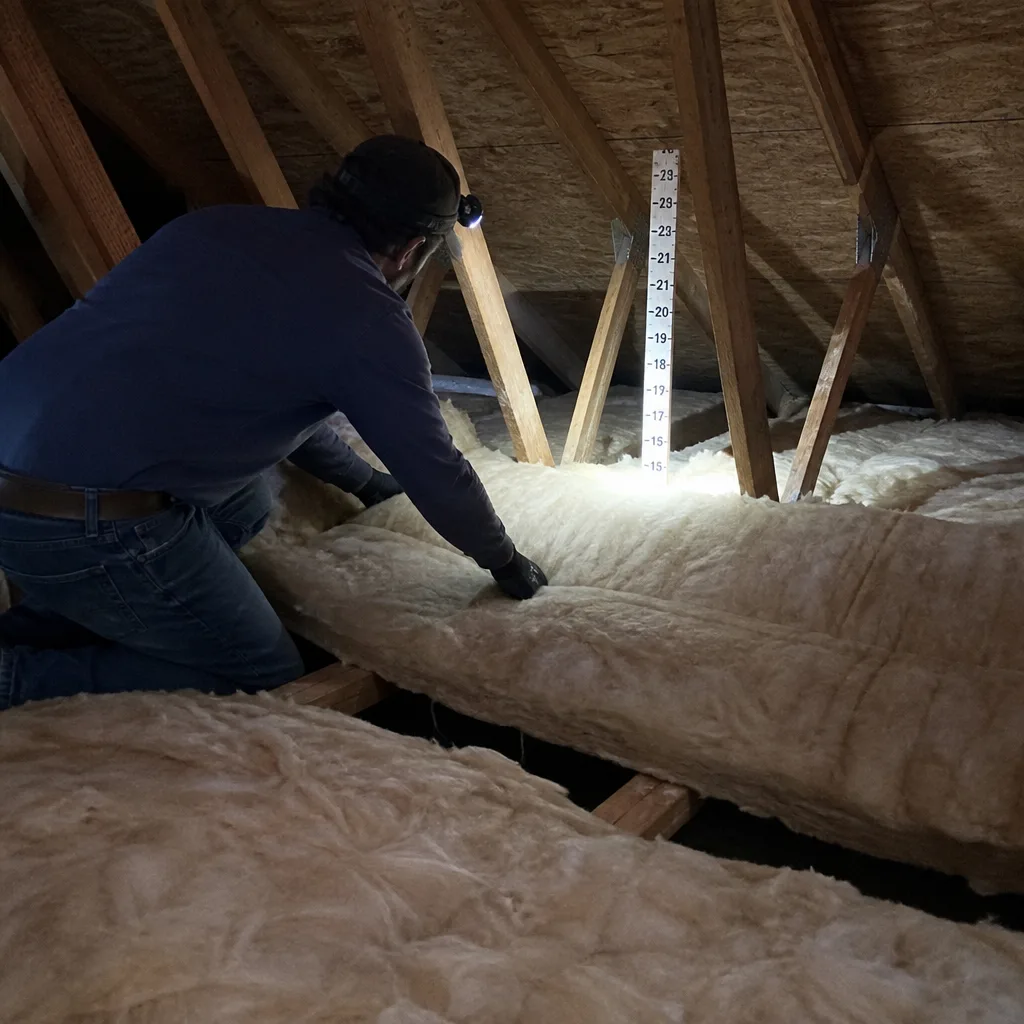
Blown-in cellulose is our standard recommendation for San Antonio attics, especially where the original fiberglass has settled and compacted. We source from GreenFiber, a cellulose product treated with borate fire retardant that also resists pests common in South Texas. In Climate Zone 2, where attic temperatures routinely exceed 150°F for months, cellulose maintains its R-value more consistently than degraded fiberglass and fills irregular joist bays more completely. A typical full-coverage cellulose job in a 2,000-square-foot San Antonio attic runs $2,800 to $4,800, including air sealing of top plates and penetrations.
Blown-In Fiberglass
We install blown-in fiberglass from Owens Corning and Johns Manville for homeowners who prefer synthetic material or have specific moisture concerns. Fiberglass doesn’t absorb water the way cellulose can, which matters in San Antonio’s humid summer months if the attic ventilation is marginal. That said, we won’t blow new fiberglass over old without first testing what’s there. Settled fiberglass from the 1980s and 1990s often compresses to half its labeled R-value, and burying it just buries the problem. We remove the degraded layer, seal the envelope, then install fresh material to Zone 2 code levels.
Dense-Pack Wall Insulation
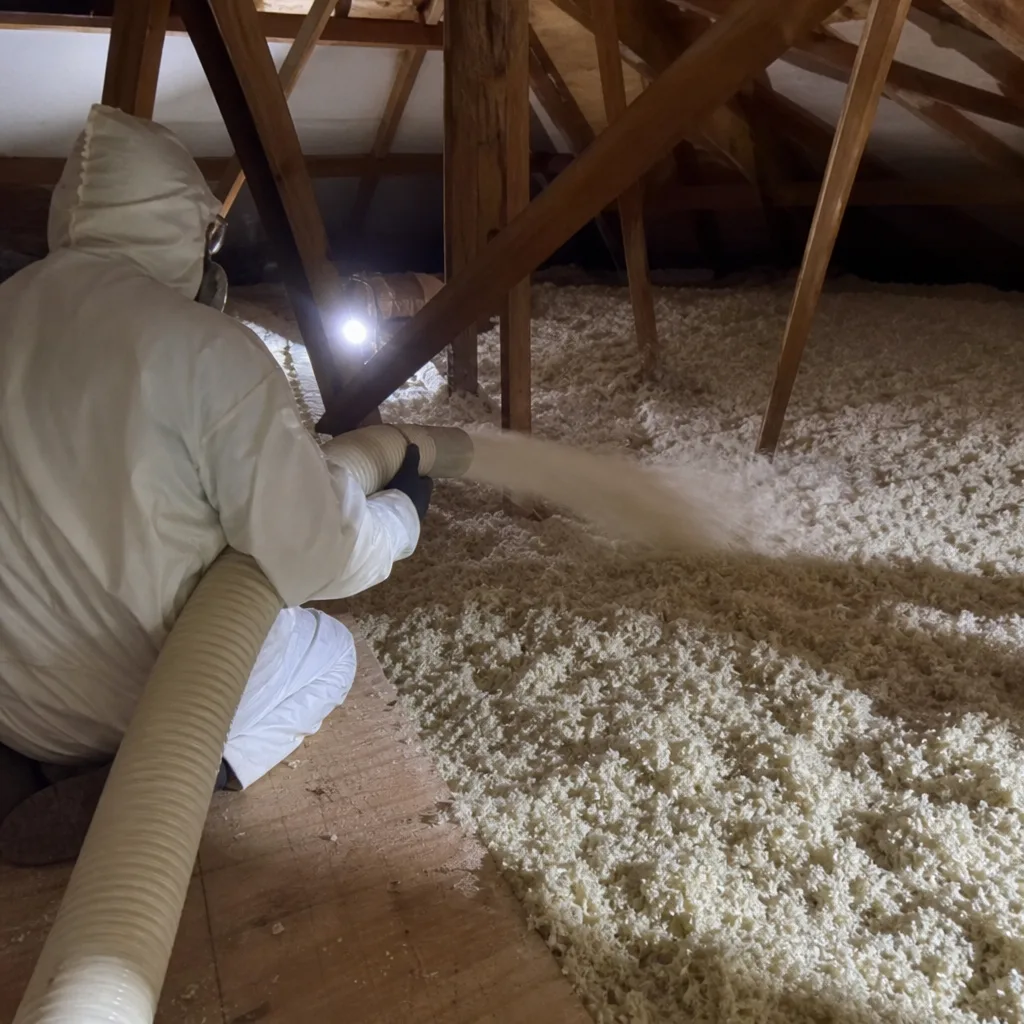
San Antonio’s older Westside and Southside neighborhoods contain pier-and-beam and adobe-influenced vernacular homes built with no wall insulation whatsoever. In those houses, attic insulation alone can’t carry the thermal load. Dense-pack cellulose fills the stud cavities of balloon-framed or platform-framed walls without removing drywall, using a two-hole method that packs the material to 3.5 pounds per cubic foot. This is specialized work. We’ve dense-packed walls in homes near Zarzamora Street and along the Mission Reach where the original construction never included thermal barriers. Typical dense-pack wall jobs in San Antonio run $3,200 to $6,500 depending on wall area and access.
Blown-In Top-Up
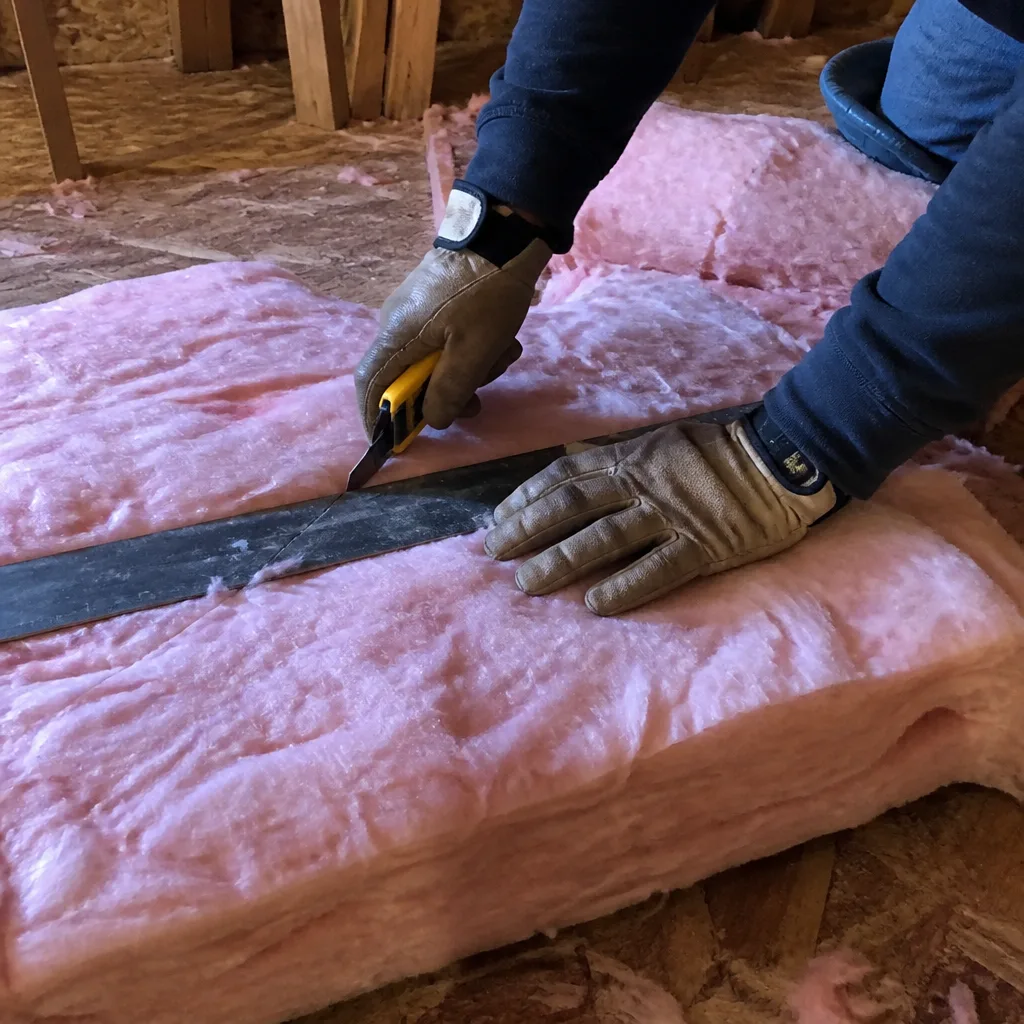
Not every San Antonio attic needs a full replacement. If your existing insulation is in reasonable shape but has settled below current R-38 Zone 2 requirements, a blown-in top-up with air sealing of new bypasses can restore performance for roughly half the cost of a full job. We see this scenario frequently in 2000s-era homes in Alamo Ranch and Cibolo where the original R-30 fiberglass has compressed to R-20 or R-22. A top-up with targeted air sealing typically runs $1,400 to $2,800. We document the before-and-after depth with photos and, on applicable jobs, provide blower-door numbers showing the actual air-leakage reduction.
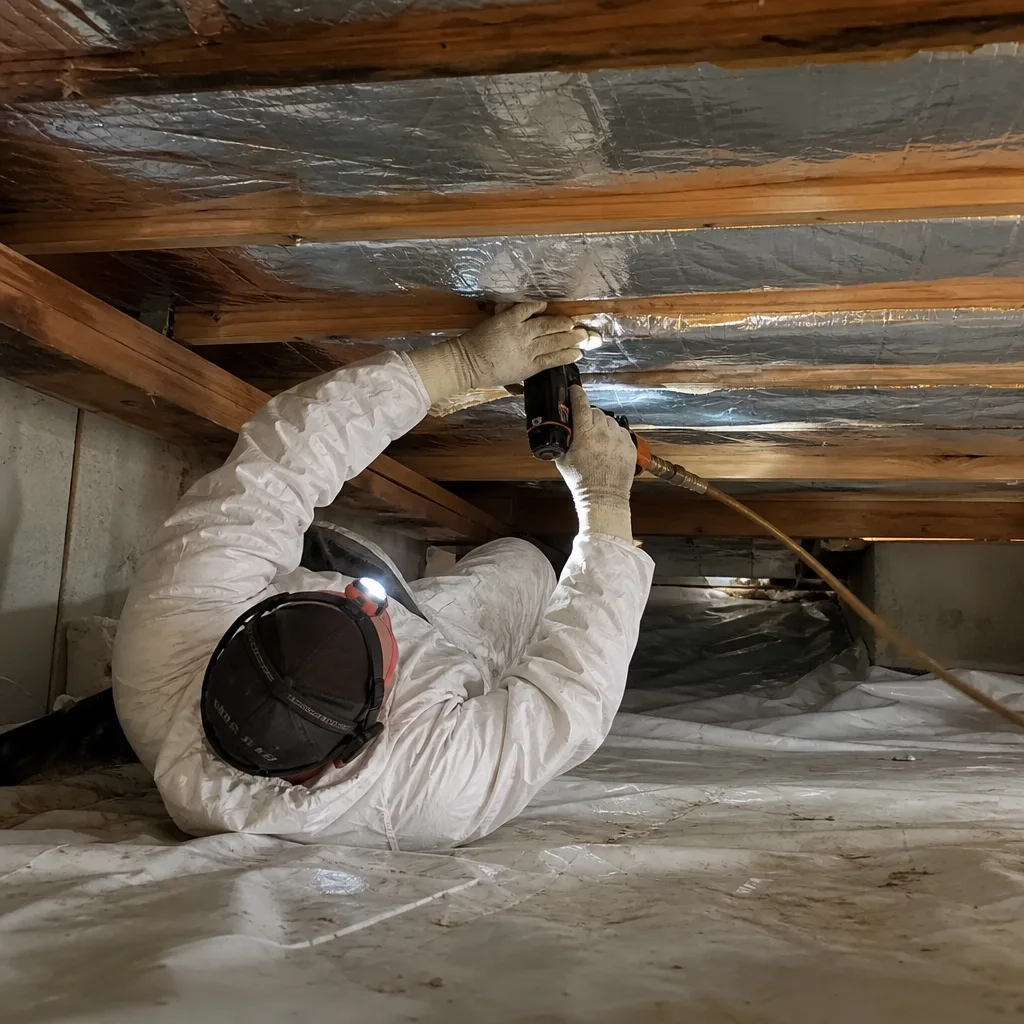
What happens when you call
- 1
A real person answersNo phone trees - you reach a local pro.
- 2
You get an upfront price rangeHonest numbers before anyone is dispatched.
- 3
A background-checked tech heads outLicensed & insured, dispatched right away.
- 4
You approve before work beginsNothing starts until you say go.
Trusted Brands We Service in San Antonio
We source blown-in materials from Owens Corning, Johns Manville, and GreenFiber, with no proprietary lock-in that limits what’s right for your specific house. Our San Antonio warehouse stocks cellulose and fiberglass in common R-values so we’re not waiting on freight before starting your job. For dense-pack wall work, we specify Knauf Jet Stream or equivalent high-density material that fills irregular cavities without settling. Every bag is documented in your written scope, and we note the installed weight and coverage on the final record.
Common Blown-In Insulation Problems We See in San Antonio Homes
- Settled 1980s-1990s blown fiberglass in Northside and Stone Oak tract homes. The original R-22 material compresses to an effective R-9 or R-10 over thirty years, silently gutting the thermal envelope while the homeowner blames the AC unit. We find this on blower-door assessments almost universally in subdivisions off Bulverde Road and north of Loop 1604.
- Builder-grade recessed can lights acting as unsealed attic bypasses. Those 6-inch holes pierce the attic floor with no gasket or cover, so summer attic air pressurizes directly into your conditioned space. In some 1990s homes we’ve tested, heat gain through can-light bypasses matches the insulation deficit itself. Air sealing is non-negotiable before we add any insulation.
- Pier-and-beam and adobe-influenced vernacular homes in older Westside and Southside neighborhoods with no wall insulation. These houses were built for passive cooling through thermal mass, not for modern HVAC loads. Blown-in attic insulation helps, but without addressing the wall cavities or the raised floor, the thermal envelope remains incomplete.
- Moisture intrusion in low-pitched roofs where air sealing was skipped. San Antonio’s combination of 100°F+ surface temperatures, intense solar gain, and high summer humidity creates a specific failure mode: warm, moist attic air hits a cool ceiling plane and condenses. A blown-in job without proper air sealing and ventilation assessment traps that moisture against the drywall.
Pricing for Blown-In Insulation in San Antonio, TX
Here’s what blown-in insulation costs in the San Antonio market, based on jobs we’ve completed across the metro:
| Service | Typical Range | Notes |
|---|---|---|
| Blown-in cellulose, full attic (1,500-2,500 sq ft) | $2,400-$4,800 | Includes air sealing of top plates, can lights, penetrations |
| Blown-in fiberglass, full attic | $2,600-$5,200 | Remove and replace degraded existing layer |
| Blown-in top-up over salvageable insulation | $1,400-$2,800 | Air sealing of new bypasses included |
| Dense-pack wall insulation | $3,200-$6,500 | Per wall square foot; access-dependent |
| Insulation removal + full replacement | $3,800-$7,200 | Contaminated or water-damaged material |
What moves the number: attic square footage, existing insulation condition, accessibility (steep roof pitches or limited hatch access add labor), and whether we’re also addressing ventilation baffles or radiant barrier retrofit. Every job begins with a written price under Haven Standard Clause 1. No work starts without it. We also offer a Free Second Opinion on any written estimate you’ve received. Call (830) 402-5240 to schedule.
We Also Serve Cities Near San Antonio
Our Blown-In Insulation in San Antonio crews regularly work in Converse, Universal City, Schertz, and Cibolo, often on the same 1970s-1990s tract stock with identical insulation failure patterns. Dispatch is coordinated from our San Antonio metro office, so scheduling across these corridors doesn’t add delay.
Serving San Antonio, TX - Our Local Coverage Area
We’re based in the San Antonio area and know this community well. Use the map below to see our service coverage - if you’re nearby, we can almost certainly help.
FAQs - Blown-In Insulation in San Antonio
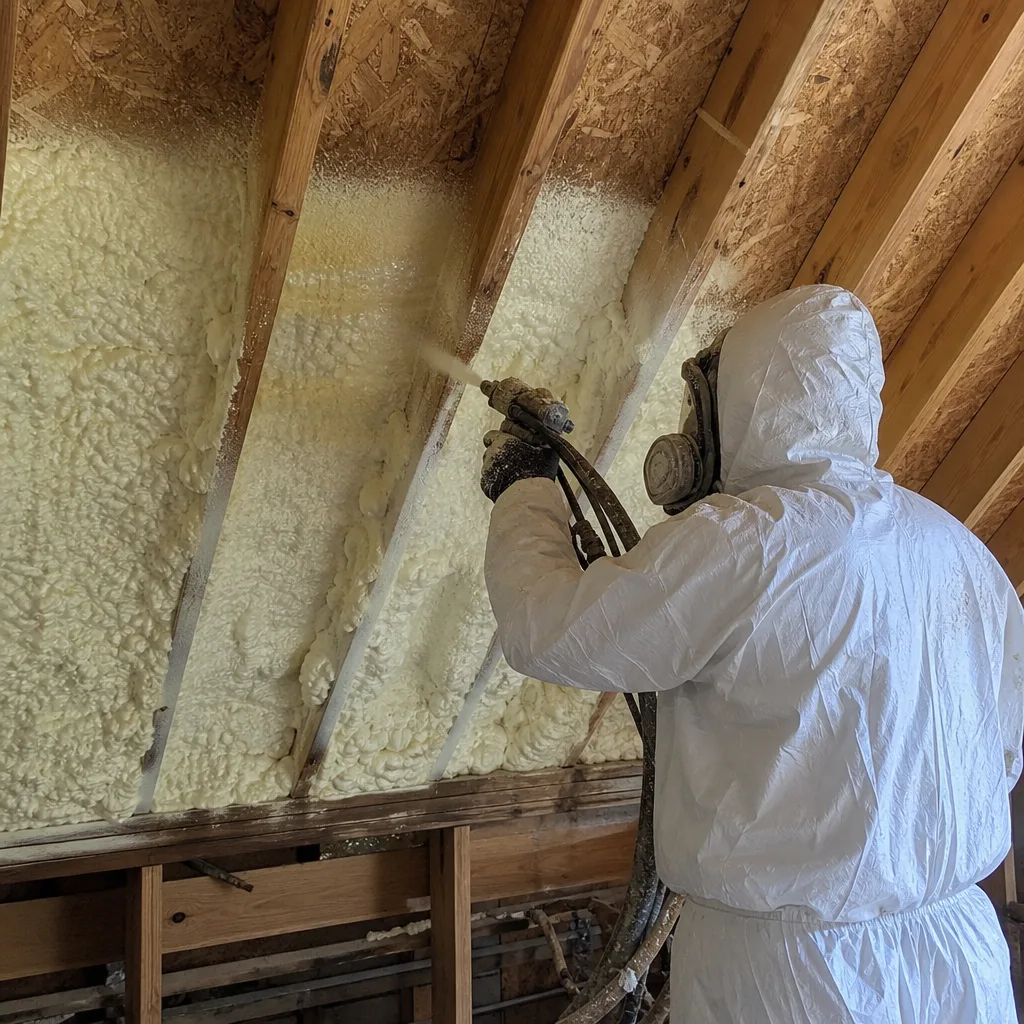
Most 1990s Northside homes need at least partial removal before adding new material, because the original fiberglass has settled from its labeled R-22 to an effective R-9 or R-10, and burying compressed material traps heat and moisture against the ceiling plane. We test depth and density during our free assessment; if the existing layer is salvageable, we’ll recommend a top-up with targeted air sealing, which typically saves $1,000 to $2,000 over a full replacement. Call (830) 402-5240 and we’ll give you a written price for either scenario.
Recessed can lights are unsealed holes in your attic floor, and in San Antonio’s Climate Zone 2, 150°F attic air pressurizes straight through them into your living space, often accounting for as much heat gain as the insulation deficit itself. We seal these penetrations with fire-rated covers or gaskets before any insulation goes in. It’s a Haven Standard requirement, not an upsell.
Yes, but only if the attic is properly air-sealed first. Uri exposed that San Antonio’s cooling-first housing stock had virtually no thermal protection engineered for cold retention; conditioned air leaked out, cold air infiltrated, and pipes in exterior walls froze. Blown-in insulation to Zone 2 R-value, combined with sealed top plates and penetrations, slows both heat loss and cold air intrusion. The blower-door test before and after our work documents the actual reduction in air leakage.
Probably not. Many Westside and Southside vernacular homes were built with no wall insulation and minimal attic insulation, so the thermal envelope has multiple gaps. We typically recommend dense-pack wall insulation alongside attic work for these houses. During our assessment, we’ll test the whole envelope and give you a written scope that addresses both cavities.
It changes the sequencing, not just the material. High summer humidity combined with radiant heat gain on low-pitched roofs means moisture can accumulate in the attic if air sealing is skipped or ventilation is inadequate. We always seal before insulating, and we assess ventilation as part of every job. Cellulose handles minor moisture cycling better than degraded fiberglass, but no material performs well in a humid, leaky attic.
Written by Wes Okafor, Owner at Topside Attic Insulation Schertz, serving San Antonio since 2016.