

Fast, Reliable Spray Foam Insulation Across Castle Hills
Spray foam insulation in Castle Hills typically runs $1,800-$4,500 for attic retrofits, with most ranch homes in this enclave falling between $2,200 and $3,200 for a complete air seal plus open-cell application. We’re usually on-site within 24-48 hours of your call, and every job starts with a written price before anyone lifts a tool. Call (830) 402-5240 for a free estimate with flat, upfront pricing.
Castle Hills is different from anywhere else in the San Antonio metro. This self-governing enclave of roughly 4,000 residents sits completely surrounded by San Antonio but operates its own building department, its own permit process, and its own code enforcement. The housing stock is almost unnervingly uniform: single-story, low-pitched-roof brick ranch homes built between 1950 and 1970, most with original fiberglass batts that have settled to 2-4 inches and no meaningful air sealing at the top plates or can light penetrations. We know these homes because they’re virtually all we work on here. Our crews are dispatched from our Dallas-Fort Worth office, but we serve Castle Hills locally and understand the specific permit path this city requires.
Why Topside Attic Insulation Schertz Is Castle Hills’s Preferred Spray Foam Insulation Company
We’ve sealed and insulated over 9,000 homes since 2016, and a disproportionate share of our repeat calls come from Castle Hills’s tight-knit, long-tenure neighborhoods. Homeowners here research thoroughly before inviting contractors in - they read three-star reviews as carefully as five-star ones, and they want documentation, not promises. We deliver that. Every job closes with a Documented Photo Record and, on applicable work, before-and-after blower-door numbers that show exactly how much conditioned air your home stopped losing.
Our response time to Castle Hills is typically same-day or next-day for estimates, with most attic retrofits scheduled within a week of written approval. We don’t ask you to “call for a quote” - Haven Standard Clause 1 means you get a flat, written price and written scope before any work starts, period.
The operational detail that matters here: Castle Hills City Hall issues its own permits. Contractors who reflexively pull a San Antonio permit create a compliance headache that delays your project. We call Castle Hills directly, every time. It’s a small thing that separates experienced local pros from outsiders who treat this enclave as just another San Antonio address.
Wes Okafor built this practice on documented evidence, not performed enthusiasm. Under The Haven Standard since 2016, every technician is background-checked and uniformed, and a live person answers our phones 24/7 - no voicemail loops, no callback windows measured in business days.
Our Spray Foam Insulation Services in Castle Hills
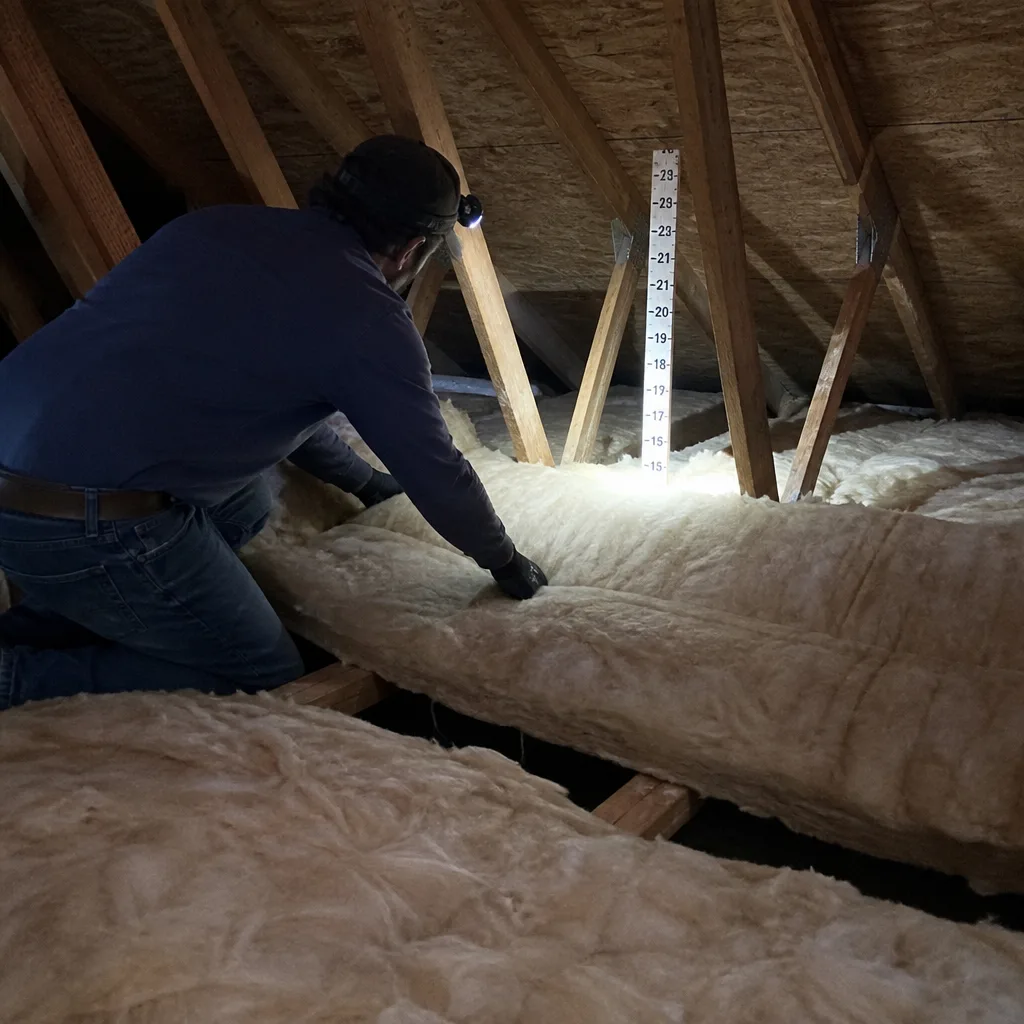
Open-Cell Spray Foam
Open-cell foam is our primary recommendation for Castle Hills attic floor retrofits. We apply it directly to the flat attic deck after sealing all top plates, wiring penetrations, and can light housings - the standard prep for these pre-code 1950s-60s ranch homes. The foam expands to fill irregular cavities and delivers about R-3.5 per inch, which means a typical 5.5-inch application hits R-19 to R-20. In Castle Hills’s IECC climate zone 2A, that’s paired with comprehensive air sealing to address the real problem: conditioned air bleeding into 140-150°F attics through gaps that were never sealed when the house was built. We were called to a low-pitched brick ranch off West Avenue in Castle Hills where the homeowner’s attic hit 148°F by mid-afternoon and the original fiberglass had settled to about three inches. After air-sealing the top plates and wiring penetrations, we sprayed open-cell foam across the flat attic floor deck and closed-cell on the HVAC plenum and rim joist, then verified with a thermal camera. The next week the homeowner reported the second bedroom finally held temperature through the afternoon peak - a common result in these pre-code attics.
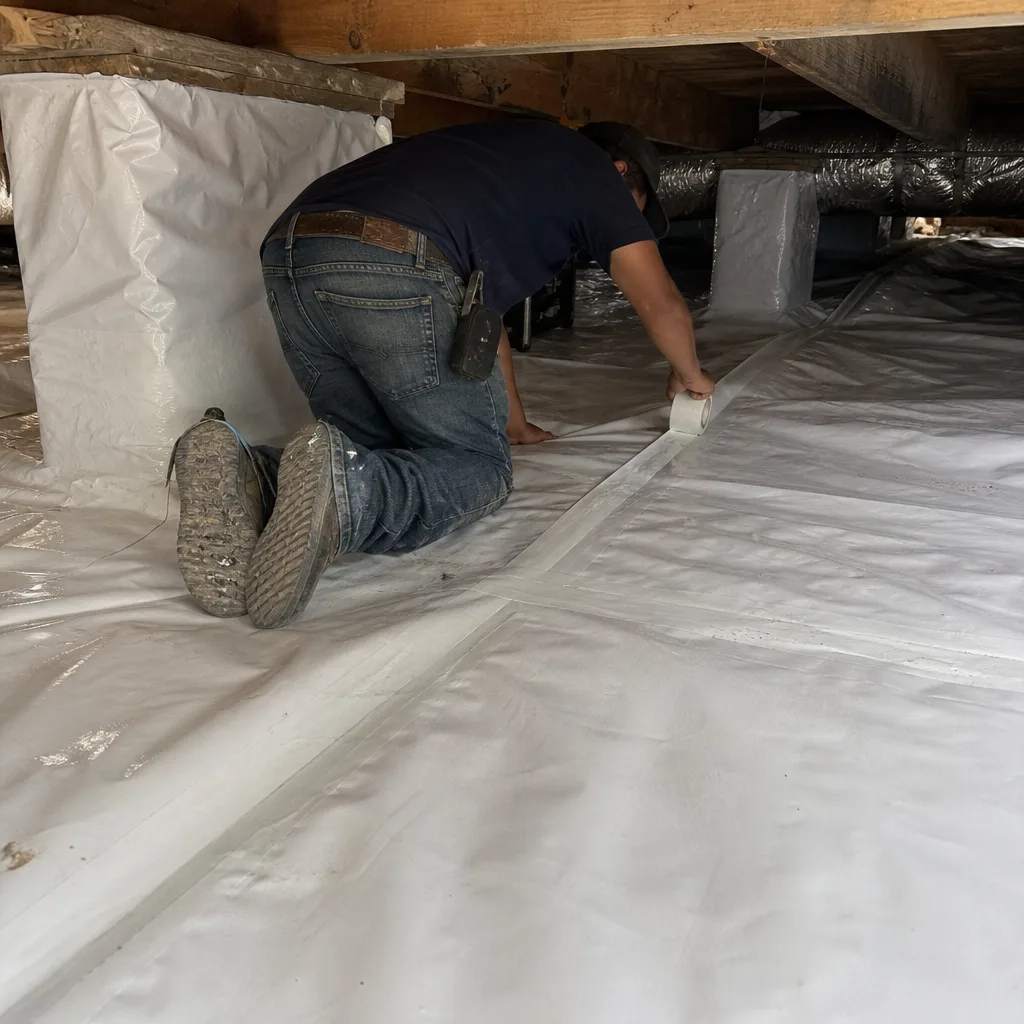
Closed-Cell Spray Foam
Closed-cell foam - denser, at about R-6.5 per inch, and moisture-resistant - is what we use where Castle Hills’s Gulf-driven humidity creates specific risks. We apply it to HVAC plenums, ductwork in unconditioned spaces, and the rim joist assemblies that are riddled with gaps and mortar voids in these brick ranches. One critical note for Castle Hills: open-cell foam applied directly to the underside of low-pitched roof decks here can trap humidity against warm sheathing, risking condensation and shingle-deck moisture if the assembly isn’t detailed for climate zone 2A. When roof deck work is requested, we assess ventilation paths and often specify closed-cell or a hybrid approach with dedicated vapor management. Our Spray Foam Insulation team will walk you through which assembly matches your specific roof geometry and existing ventilation.
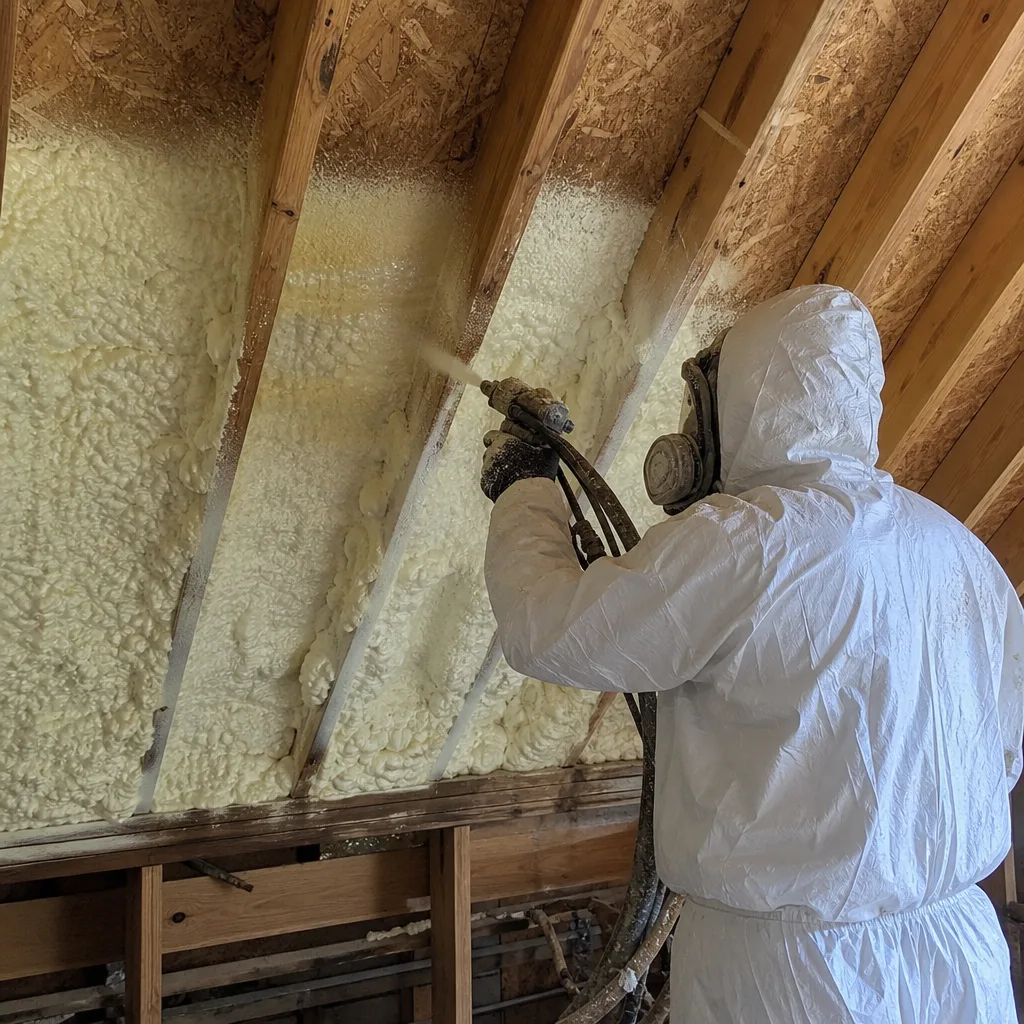
Rim Joist Spray Foam
The rim joists and band boards in Castle Hills’s 1950s-60s brick ranches are full of gaps, mortar voids, and decades of cobbled repairs. Skipping a dedicated closed-cell rim joist pass leaves a continuous infiltration path that undermines the whole attic spray job - we see this constantly on second opinions, where a competitor foamed the attic floor but left the rim joist leaking like a sieve. We access rim joists through the basement or garage wall when possible, or via small, strategic openings that we seal and finish. No finished basement or garage wall needs to come down completely. The closed-cell application here typically runs 2-3 inches, creating both an air barrier and a moisture barrier at the most vulnerable junction of your building envelope.
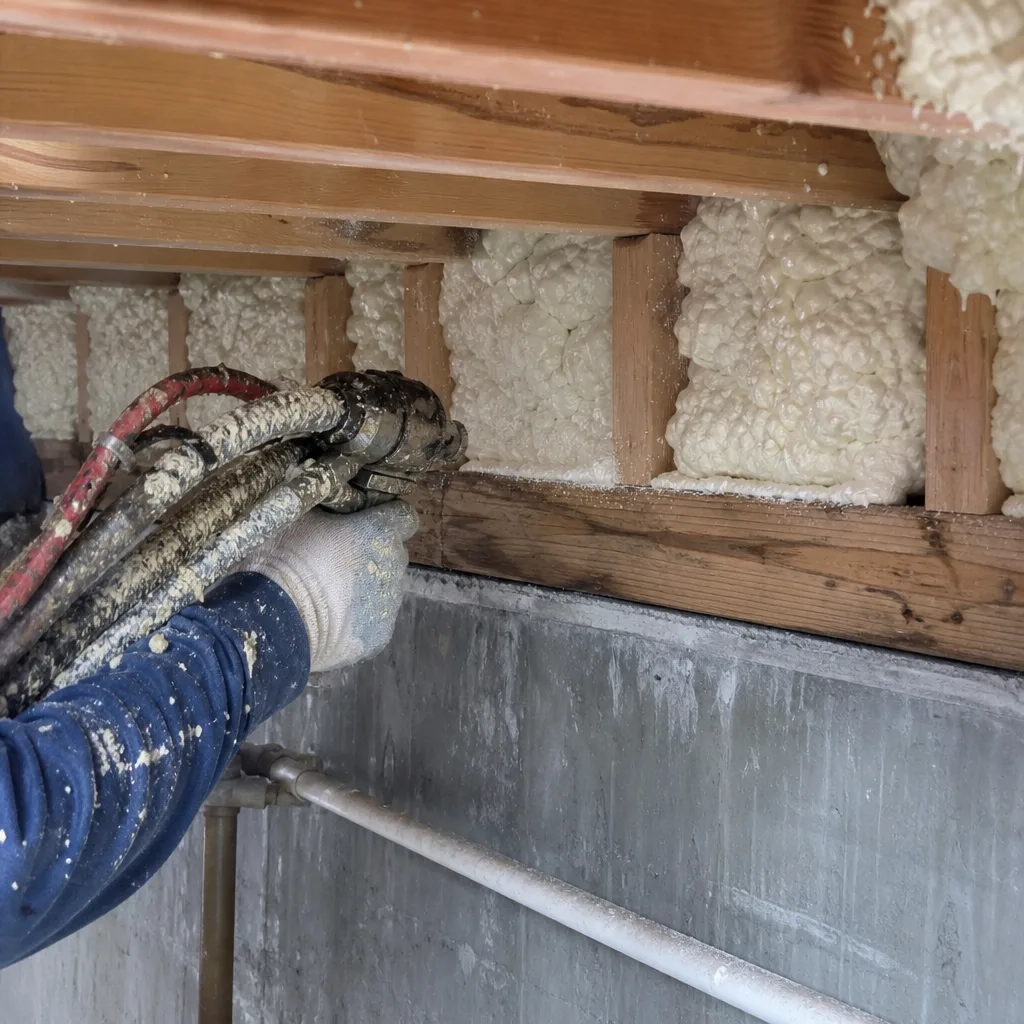
Garage Ceiling Spray Foam
Attached garage ceilings in Castle Hills ranches often separate conditioned bedrooms above from a space that hits 120°F+ in summer. We treat these as part of the thermal envelope, applying open-cell foam to the garage ceiling deck after sealing penetrations for laundry vents, electrical, and any HVAC runs. The improvement in bedroom temperature stability is immediate and measurable - we verify it with thermal imaging before we leave the site.
Spray Foam Roof Deck
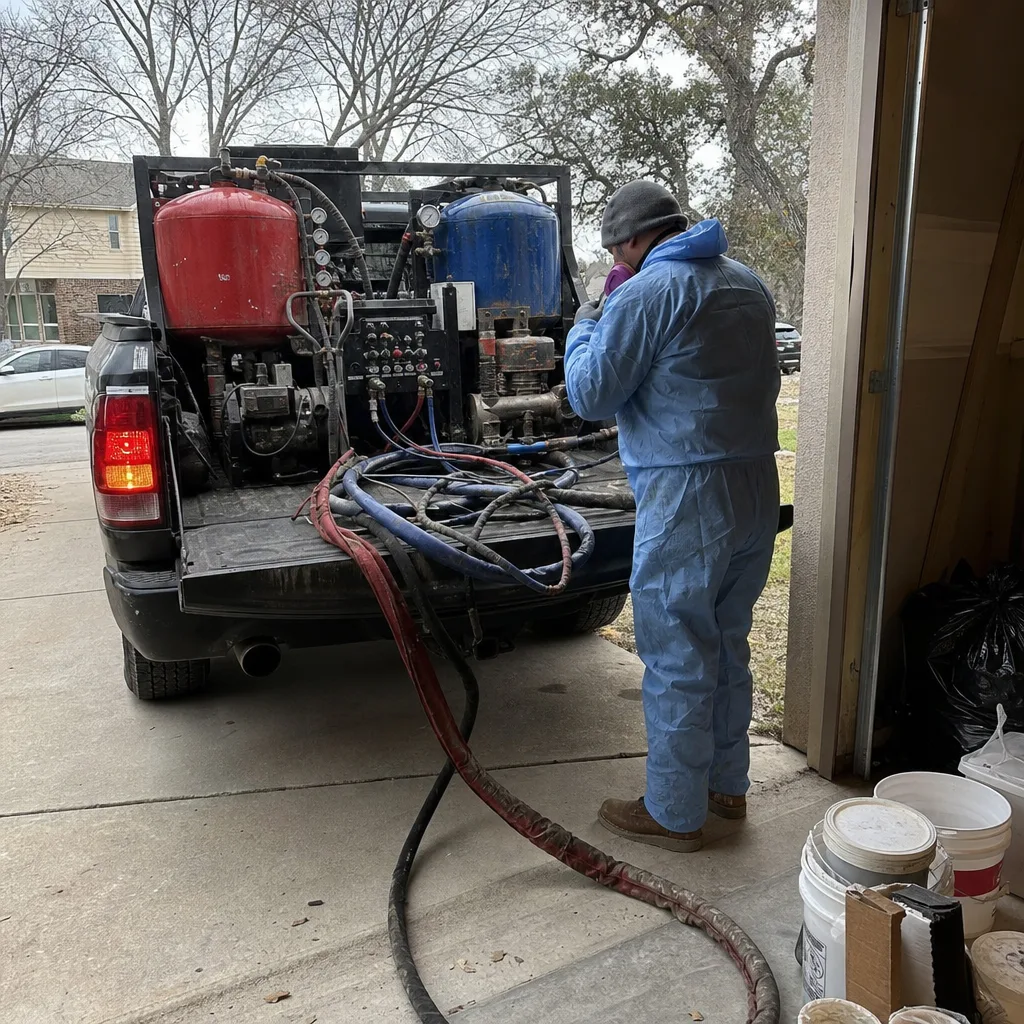
For homeowners converting Castle Hills attics to conditioned space, we spray closed-cell foam to the roof deck underside after verifying that the assembly can be converted to an unvented roof per climate zone 2A requirements. This is not a default recommendation - the existing ventilation strategy, shingle warranty implications, and moisture management all need review. We document our assessment in writing before proposing this scope.
What happens when you call
- 1
A real person answersNo phone trees - you reach a local pro.
- 2
You get an upfront price rangeHonest numbers before anyone is dispatched.
- 3
A background-checked tech heads outLicensed & insured, dispatched right away.
- 4
You approve before work beginsNothing starts until you say go.
Trusted Brands We Service in Castle Hills
We source materials from Owens Corning, Johns Manville, Demilec, and other established manufacturers - no proprietary product lock-in that limits your options or inflates your price. For Castle Hills’s specific climate demands, we typically specify Demilec’s open-cell formulations for attic floor work and Johns Manville closed-cell products for rim joist and moisture-critical applications. We stock common densities and formulations locally, so material lead times don’t delay your project. If you have a preference based on prior research or a competing quote, we’ll source it and install to the same documented standard.
Common Spray Foam Insulation Problems We See in Castle Hills Homes
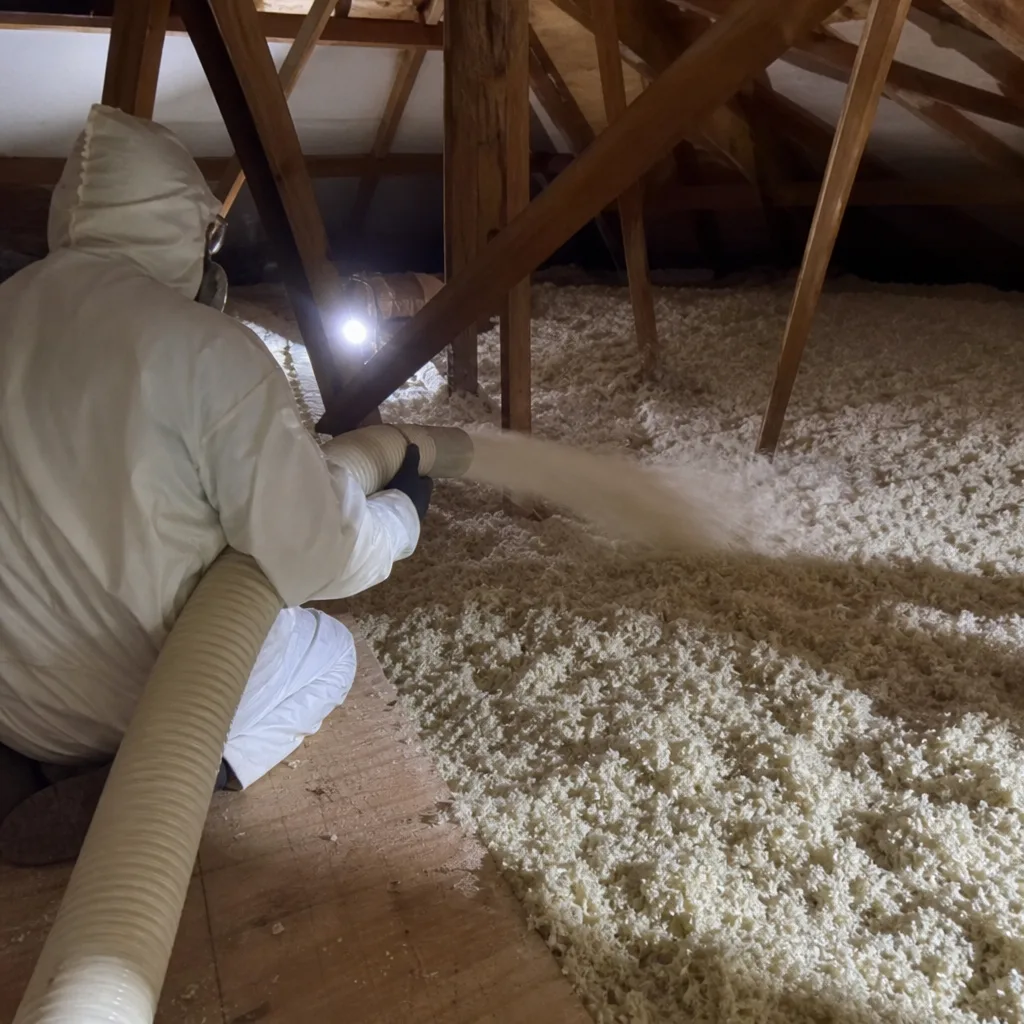
- Settled fiberglass leaving thermal and air bypasses. The original fiberglass batts in Castle Hills’s 1950s-60s attics have compressed to 2-4 inches, leaving top plates and recessed can housings completely unsealed. Conditioned air leaks straight into a 140-150°F attic, and the remaining insulation is doing almost nothing. We remove or bury the old material only after sealing every penetration.
- Humidity-trapped roof deck assemblies. Open-cell foam applied directly to the underside of low-pitched roof decks in Castle Hills traps Gulf-driven humidity against warm sheathing. Without climate-zone-appropriate detailing, this risks condensation and shingle-deck moisture damage. We assess existing ventilation and specify the right assembly for your roof geometry.
- Leaking rim joists undermining attic work. The brick ranch foundation walls in Castle Hills have rim joists full of gaps and mortar voids. A beautiful attic spray job is wasted if the rim joist still pulls unconditioned air into the envelope. We always inspect and treat this junction.
- Permit confusion delaying projects. Because Castle Hills is geographically embedded in San Antonio, contractors frequently pull the wrong permit. A San Antonio permit is not valid here. We call Castle Hills City Hall directly and handle the correct permit path as part of our standard process.
Pricing for Spray Foam Insulation in Castle Hills, TX
Most attic retrofits in Castle Hills run $2,200-$3,200 for a complete scope: removal of settled existing material, air sealing of top plates and penetrations, open-cell spray foam to R-19/R-20 on the attic floor, and closed-cell treatment of the rim joist and any HVAC plenum work. Smaller partial-scope jobs start around $1,800. Full-envelope treatments including roof deck, garage ceiling, and extensive rim joist work can reach $4,000-$4,500.
What moves you within these ranges: attic square footage, accessibility (some Castle Hills ranches have scuttle entries that complicate hose routing), existing material condition, and whether the rim joist is accessible without finished-wall modification. We don’t do “it depends” without numbers - you’ll get a flat, written price before any work starts, with line-item breakdown of each scope element. Bring us a competing written estimate; we’ll provide a Free Second Opinion and read it with you.
Call (830) 402-5240 for your written estimate. Estimates are free, and we typically schedule Castle Hills visits within 24-48 hours.
We Also Serve Cities Near Castle Hills
Our crews work throughout the San Antonio metro corridor, including Castle Hills neighbors in Schertz, Cibolo, Universal City, and Selma. The same Haven Standard - written price before work, documented record after, and live-answer dispatch - applies to every service area. If you’re in one of these nearby cities and found this page while researching, the same pricing structure and process applies.
Serving Castle Hills, TX - Our Local Coverage Area
We’re based in the Castle Hills area and know this community well. Use the map below to see our service coverage - if you’re nearby, we can almost certainly help.
FAQs - Spray Foam Insulation in Castle Hills
You need a Castle Hills permit; a San Antonio permit is not valid in this enclave. Castle Hills operates its own independent building department despite being geographically surrounded by San Antonio, and experienced local contractors know to call Castle Hills City Hall directly. We handle this permit path as standard on every Castle Hills job - no additional fee, no delay. Call (830) 402-5240 and we’ll confirm permit status on your specific scope.
Open-cell on the attic floor is the right starting point for most 1962 Castle Hills ranches, paired with comprehensive air sealing and closed-cell on the rim joist and any HVAC plenum. The original fiberglass has almost certainly settled to 2-4 inches and is doing minimal work. We assess your specific attic geometry and moisture conditions before specifying, and we put that specification in writing as part of your flat price. Call (830) 402-5240 for a free assessment.
Yes - the air sealing component is what matters most. Stopping conditioned air from leaking into a 140-150°F attic reduces your HVAC runtime immediately, and the spray foam’s R-value keeps conducted heat from radiating down into living spaces. We verify this with before-and-after blower-door tests on applicable jobs; typical Castle Hills retrofits show 30-50% reduction in envelope air leakage. Call (830) 402-5240 to schedule a blower-door assessment with your estimate.
In most cases, yes. We access rim joists through existing utility chases, small openings behind baseboards, or from the garage side when the foundation is exposed there. The closed-cell application is typically 2-3 inches in a single pass. If finished walls must be opened, we specify the exact locations in your written scope and price - no surprises. Call (830) 402-5240 and we’ll assess your specific foundation access.
We install Owens Corning, Johns Manville, and Demilec formulations selected for your specific assembly and Castle Hills’s climate zone 2A conditions. Brand matters less than proper specification and installation density, but we avoid proprietary lock-in products that limit your options or inflate price. We document the exact product, density, and application thickness in your written scope. Call (830) 402-5240 with brand-specific questions or to compare a competing quote.
Written by Wes Okafor, Owner at Topside Attic Insulation Schertz, serving Castle Hills since 2016 under The Haven Standard.