
Crawl Space Insulation in Schertz, TX
Crawl space insulation in Schertz typically runs between $1,800 and $4,500 depending on square footage, existing moisture conditions, and whether air sealing is needed first. Most jobs are completed in a single day, and every one starts with a written price before any work begins. If you want a number specific to your home, call (830) 402-5240 – estimates are free and there’s no obligation.
What separates a crawl space insulation job that lasts from one that fails within three years is sequence. At Topside Attic Insulation Schertz, air sealing happens before insulation goes in – every time, no exceptions. We close penetrations, rim joists, and any gap where conditioned air is moving before a single batt or spray foam application touches the floor system above. That order matters in Schertz’s climate, where summer ground temperatures can push moisture upward into the floor assembly if the air boundary isn’t established correctly first.
This work sits under our broader Crawl Space Encapsulation & Vapor Barrier in Schertz service, which covers the full picture – vapor barriers, drainage, humidity control, and structural moisture management. If your crawl space needs both, we scope them together so there’s no overlap and no gap in coverage. If it only needs insulation, that’s what the written price will reflect.
Wes Okafor has led this operation since we opened under The Haven Standard in 2016, and the field standard here is the same on every job: sealed first, documented throughout, warranted in writing when we leave.
When You Need Crawl Space Insulation
Not every crawl space in Schertz needs insulation urgently, but some conditions make it hard to ignore. Here’s what tends to bring homeowners to this conversation:
- Floors that feel cold in winter or warm in summer. Schertz sits in Bexar County’s climate band where winter nights can drop into the mid-20s and summers push past 100°F for weeks at a stretch. An uninsulated floor system lets those extremes move straight into your living space. If the tile in your hallway feels noticeably different from the slab in the garage, the crawl space is usually why.
- HVAC running harder than it should. When the floor assembly is thermally unbroken, your system isn’t fighting the outdoor temperature – it’s fighting the ground. Homes in Schertz’s older subdivisions near FM 1518 and Live Oak Road commonly show this pattern, especially when the original builder-grade insulation was installed before vapor barriers were standard practice.
- Musty smell coming through the floor or HVAC vents. A crawl space that has been holding humidity long enough to grow mold will move that air into the house, particularly through ductwork that runs through the space. If you notice the smell only when the system runs, the duct routing matters.
- Visible deterioration of existing insulation. Fiberglass batts installed between floor joists in Schertz homes built before 2005 frequently show sagging, rodent damage, or moisture staining. Batts that have dropped even partially lose most of their effective R-value because the air gap they create undermines the thermal resistance they’re rated for.
- A recent energy audit flagged the crawl space. Blower-door testing – a pressurization reading that shows, in one number, how much air the building envelope is losing – often points to the floor as a significant bypass zone, especially in pier-and-beam homes or additions built over unconditioned crawl spaces.
- You’re replacing flooring and the subfloor is already exposed. This is the lowest-cost window to address crawl space insulation, because the floor assembly is accessible from above. If you’re pulling up old hardwood or vinyl in a Schertz home, it’s worth having the crawl space assessed before the new floor goes down.
Our Crawl Space Insulation Process
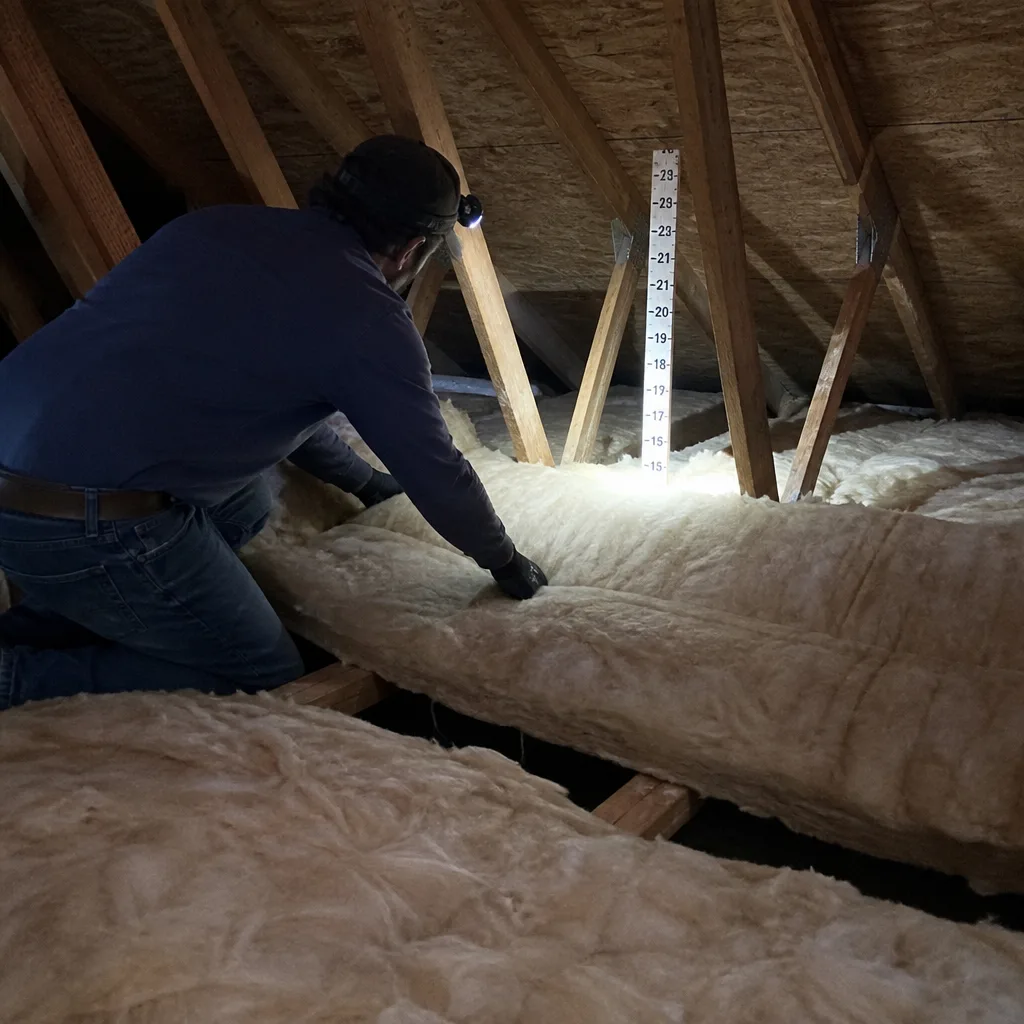
The steps below reflect the sequence we follow on every crawl space insulation job in Schertz. The order isn’t flexible, because skipping or reversing any step produces measurable failures – ones that show up in blower-door numbers and, eventually, in your energy bill.
- Written scope and price before anything starts. Under Haven Standard Clause 1, a flat written price and written scope are delivered before anyone lifts a tool. You’ll see the square footage we’re working with, the R-value target, the materials specified (which may include Owens Corning or Icynene products depending on the application), and the air-sealing work included. No open-ended estimates, no line items that expand after the job begins.
- Crawl space inspection and moisture baseline. Before insulation or air sealing begins, a technician enters the crawl space to document existing conditions – existing insulation (if any), visible moisture, standing water, vapor barrier status, and any pest or structural issues that would affect the installation. Photos are taken at this stage. If we find something that changes the scope, we tell you before we proceed.
- Air sealing of penetrations, rim joists, and bypasses. This step comes before insulation – always. We close top-plate penetrations, pipe chases, rim joists, and any gap in the thermal boundary where air is moving between the conditioned space and the crawl. For applicable jobs, a blower-door reading is taken before this step so the post-sealing number means something. Skipping air sealing and installing insulation over open bypasses is one of the most common installation failures we see when homeowners call us for a second opinion.
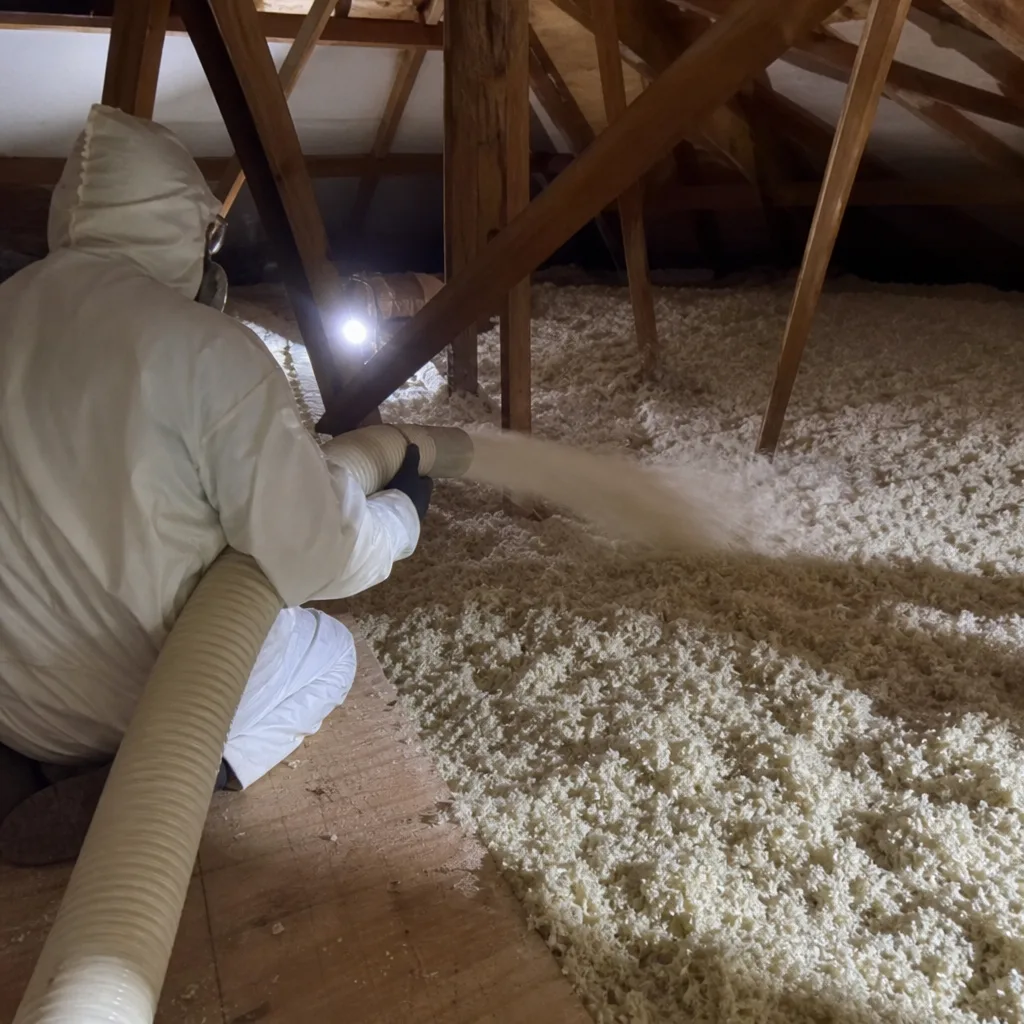
- Insulation installation. Depending on the floor system, access, and R-value requirement, we install spray foam (closed-cell products from Icynene or Demilec are common choices for unvented crawl applications), rigid foam board, or encapsulated fiberglass batts. The choice is documented in the written scope. For vented crawl spaces, batts between joists with proper support are standard. For unvented or encapsulated crawl spaces, spray foam at the perimeter walls is typically the correct application. We explain the reasoning in writing – not because it’s a regulatory requirement, but because you’re paying for it and you should know what you’re getting.
- Post-installation inspection and documentation. When the installation is complete, a technician walks the crawl space again and documents the finished state with photos. On jobs where air sealing was part of the scope, a post-sealing blower-door reading is recorded so the before-and-after numbers travel with the job record. The Documented Photo Record is included on every visit – not available on request.
- Written warranty delivered before we leave. The 365-Day Done Right Promise applies to all completed work. If something isn’t right within the first year, we make it right. The warranty terms are written, not verbal, and you receive them the same day the work is finished.
Crawl Space Insulation Pricing in Schertz
Most crawl space insulation jobs in Schertz fall between $1,800 and $4,500. The range is wide because the variables that drive cost are significant. If you’re wondering how much crawl space encapsulation and vapor barrier cost in Schertz, those are separate line items that also affect the total. Here’s what actually moves the number:
| Factor | Typical Cost Impact |
|---|---|
| Crawl space square footage (under 800 sq ft) | $1,800 – $2,400 |
| Crawl space square footage (800 – 1,500 sq ft) | $2,400 – $3,600 |
| Crawl space square footage (1,500+ sq ft) | $3,600 – $4,500+ |
| Existing insulation removal (if required) | Add $400 – $900 |
| Spray foam (closed-cell) vs. fiberglass batts | Spray foam adds $600 – $1,200 on average |
| Air sealing of rim joists and penetrations | Add $300 – $700 depending on complexity |
| Access difficulty (low clearance, debris, standing moisture) | Add $200 – $500 |
A few things specific to Schertz worth knowing: homes built in the Northcliffe and Woodland Oaks areas in the 1980s and 1990s frequently have pier-and-beam or partial crawl spaces with access heights under 24 inches. That clearance affects labor time and equipment, which is reflected in the estimate. Homes in newer sections near Schertz Parkway tend to have slab foundations and don’t have a crawl space at all – if you’re not sure which you have, the inspection will confirm it.
We don’t publish a single-line price because a single-line price isn’t honest for this type of work. What we do is give you a written flat price before any work starts – no range, no “starting at,” no adjustments after the fact. If the inspection reveals something that changes the scope, you decide whether to proceed before we do anything.
Estimates are free. If you have a written quote from another contractor, bring it. We’ll read it with you under our Free Second Opinion offer and tell you exactly what we see – including if the other number is fair.
FAQs – Crawl Space Insulation in Schertz
What R-value do I need for crawl space insulation in Schertz, TX?
For a vented crawl space in Schertz, the IRC prescribes R-19 minimum between floor joists, though R-30 is the more common specification in this climate zone (Climate Zone 2) and what most energy auditors recommend for homes in the greater Schertz area. For unvented crawl spaces – where insulation goes on the perimeter walls rather than the floor – the wall assembly target is typically R-15 continuous. The written scope we provide will identify which applies to your specific configuration and why. If a previous contractor installed R-11 batts and called it done, that’s worth flagging – the inspection will document what’s actually there.
Should I insulate the crawl space floor or the walls?
It depends on whether the crawl space is vented or unvented (encapsulated). In a vented crawl space – the more common configuration in older Schertz homes – insulation goes between the floor joists, directly below the subfloor. In an encapsulated, unvented crawl space, the vapor barrier seals the ground and the insulation goes on the foundation walls, making the crawl space part of the conditioned building envelope. Doing it the wrong way for your configuration wastes both money and R-value. The inspection determines which approach is correct before the written scope is written. For more context on encapsulation, see our Crawl Space Encapsulation & Vapor Barrier in Schertz page.
How long does crawl space insulation last in Schertz’s climate?
Properly installed, air-sealed, and moisture-managed crawl space insulation should last 20 to 30 years or longer. The failure mode in Schertz isn’t the material degrading on its own – it’s moisture. If a crawl space vapor barrier is inadequate or absent, or if the crawl space venting is insufficient, fiberglass batts absorb moisture, lose R-value, and eventually fall. Spray foam is more resistant to this failure pattern because it doesn’t absorb water, which is part of why it’s specified for unvented crawl applications. Any insulation we install is documented photographically on day one so you have a baseline record if questions come up years later.
Can I add crawl space insulation without replacing the vapor barrier?
Sometimes, but it depends on the condition of what’s already there. A vapor barrier that’s torn, displaced, or has gaps at the edges isn’t doing its job, and adding insulation over it doesn’t fix the moisture problem – it hides it until the insulation fails. That’s why crawl space encapsulation and vapor barrier work is critical to get right before any insulation goes in. The inspection will assess the barrier’s condition and note it in the written scope. If the barrier is intact and properly lapped and secured, we can work around it. If it needs replacement, that gets priced separately and you decide before any work starts. We don’t install insulation over conditions we know are wrong and leave the outcome to chance.
Why Schertz Homeowners Work With Topside Attic Insulation Schertz
Since 2016, we’ve worked through more than 9,000 homes across the region – every one with a written price before work started and a documented photo record when the crew left. The crawl space jobs that call us back for warranty work are rare, and when they happen, the 365-Day Done Right Promise handles it without argument. We think that’s a reasonable standard and we put it in writing.
For crawl space insulation specifically, the thing that matters most is sequence. Insulation installed over an unsealed air bypass is insulation that will underperform from day one. We’ve done second opinions on jobs from other contractors where the blower-door number after installation was indistinguishable from the number before – because the insulation went in without any air sealing. That’s not a small oversight. It’s the whole point of the work.
Background-checked, uniformed technicians handle every job. When you call (830) 402-5240, a live person answers – not a voicemail, not an answering service that takes a message. If you want the number for your specific home in Schertz before committing to anything, that’s a free estimate and it comes with a written scope. You can also bring us a competitor’s written quote; we’ll read it line by line and tell you what it includes and what it doesn’t.
Wes Okafor and the team at Topside Attic Insulation Schertz operate as an independently owned business under The Haven Standard. The foundation of that standard is simple: a written price before any work starts, and documented proof of what was done when we leave. On crawl space jobs, that proof includes photos of the existing conditions, the finished installation, and where applicable, before-and-after blower-door readings so the air-sealing result isn’t just a claim – it’s a number you can verify.
To get a written estimate for crawl space insulation at your Schertz home, call (830) 402-5240. The estimate is free, the price is flat, and the scope is in writing before anyone starts.
Written by Wes Okafor, Owner at Topside Attic Insulation Schertz, serving Schertz since 2016.