
Crawl Space Vapor Barrier in Schertz, TX
A crawl space vapor barrier is a polyethylene sheeting system – typically 12 to 20 mil thick – installed directly on the ground and across the foundation walls of your crawl space to block ground moisture before it can migrate upward into your home’s floor system. In Schertz, where summer humidity regularly runs above 70% and clay-heavy soils hold water long after a rain event, an unprotected crawl space floor is one of the fastest ways to grow mold, rot floor joists, and push that damp, musty smell into your living area. Most Crawl Space Encapsulation & Vapor Barrier services in Schertz take one to two days and run between $1,200 and $3,800 depending on square footage and site conditions – more on that below.
If you’re researching this service, you’re likely already under the broader umbrella of Crawl Space Encapsulation & Vapor Barrier in Schertz – the full system that seals the walls, rim joists, and vents in addition to the ground plane. This page focuses specifically on the vapor barrier component: what it costs, what the installation looks like step by step, and what drives pricing in the Schertz market. Wes Okafor and the team at Topside Attic Insulation Schertz have been doing this work under The Haven Standard since 2016, and every job starts with a written price before anyone touches your crawl space. Call (830) 402-5240 if you’d rather talk through your situation before reading further – a live person picks up every time.
When You Need a Crawl Space Vapor Barrier
Some of these signs show up slowly; others are hard to ignore. Any one of them is worth taking seriously, because crawl space moisture problems get more expensive the longer they sit.
- Musty odor that moves with the HVAC system. When your air handler is located in or draws air from the crawl space – common in older Schertz homes built before 2000 – mold spores and damp air from a bare dirt floor get distributed through every register in the house. If the smell is worst right after the AC kicks on, the crawl space floor is the likely source.
- High interior humidity despite a working AC system. Ground vapor doesn’t need a crack to get into the house; it diffuses through subfloor materials. Homeowners in the Northcliffe and Schertz-Cibolo area sometimes report hygrometers reading 65% or higher indoors even with the system running correctly, and a bare crawl space is often the explanation.
- Soft spots, squeaking floors, or visible joist staining. Chronic moisture exposure degrades the wood fiber in floor joists and subfloor sheathing. If you’re noticing floor flex in rooms above the crawl space, or dark staining on the joists when you look up with a flashlight, the problem has likely been building for more than one season.
- Standing water or saturated soil after rain. Schertz sits on expansive clay soils that shed water slowly. After a significant rain event, crawl spaces in lower-lying neighborhoods near Cibolo Creek can hold moisture against the soil for days. If water is pooling, vapor barrier installation needs to be paired with drainage correction – we flag that at inspection.
- Pest activity traced to the crawl space. Damp soil attracts termites, wood-boring beetles, and rodents. If a pest inspector has flagged crawl space moisture as a contributing factor, a vapor barrier is typically one of the remediation steps they recommend before re-treatment.
- Energy bills that don’t match the square footage. A crawl space that’s continuously introducing humid air into the building envelope forces the air conditioner to work harder to pull that latent heat out. If your utility bills don’t match what neighbors in similar-sized homes are paying, it’s worth checking the crawl space first.
Our Crawl Space Vapor Barrier Process
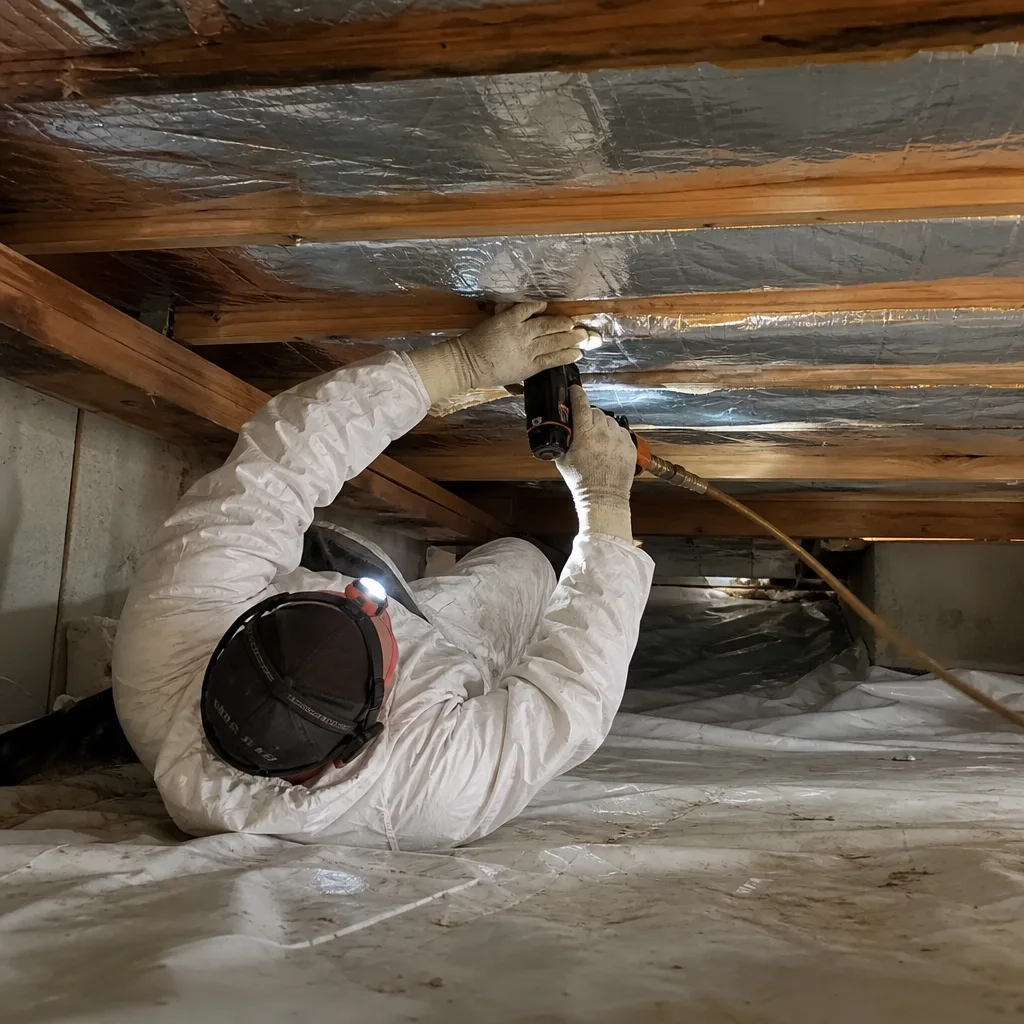
Below is the exact sequence we follow on every job. Nothing starts until you have a written scope and a flat price in hand – Haven Standard Clause 1, no exceptions.
- Crawl space inspection and documentation. Before any material goes in, we photograph the existing conditions: soil moisture level, joist condition, any standing water, existing vapor retarder if one is present, and pest evidence. You receive this photo record regardless of whether you proceed with the work – it’s included on every visit under the Haven Standard. We also note the dimensions and any unusual site conditions (pipes, HVAC equipment, piers) that will affect labor and material quantities.
- Debris removal and substrate preparation. Rocks, wood scraps, old deteriorated sheeting, and organic debris all create puncture risk and uneven coverage. We clear the floor before any new barrier goes down. If we find standing water or saturated zones, we document them and discuss correction options with you before proceeding – installing a vapor barrier over a drainage problem doesn’t solve the drainage problem.
- Barrier installation on the ground plane. We install heavy-duty polyethylene sheeting – typically 12 mil minimum, and up to 20 mil on jobs where foot traffic or mechanical equipment is present – directly on the soil. Panels are overlapped a minimum of 12 inches at seams and sealed with foil tape rated for below-grade conditions. The barrier runs up the foundation wall face and is mechanically fastened with masonry anchors, not just taped. This wall termination is what separates a properly installed vapor barrier from the thin black plastic sheets that peel away within a year or two.
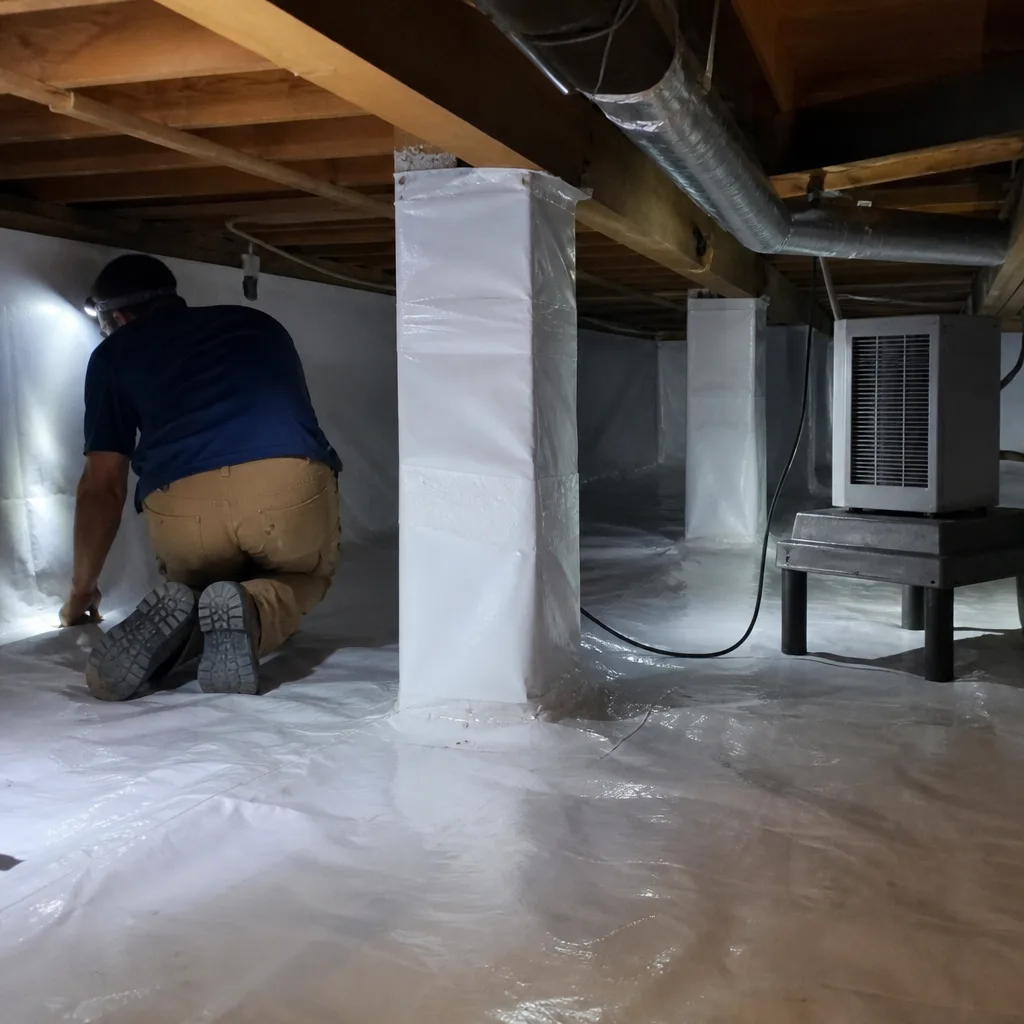
- Penetration sealing around pipes, piers, and columns. Every pipe, support column, and structural pier that passes through the barrier plane gets cut and fitted individually, then taped and sealed. These penetrations are where cheap installations fail first – a gap around a 3-inch drain pipe is enough to vent ground moisture directly into the space above the barrier. We treat every penetration as a separate task, not an afterthought.
- Perimeter and wall sealing. If the scope includes partial or full encapsulation (closing foundation vents and sealing rim joists), that work is completed before the barrier is finalized so the two systems integrate cleanly. On vapor-barrier-only jobs, we still seal the wall termination line and document the condition of vents and rim joists in the photo record so you have a baseline.
- Final inspection, photo documentation, and written closeout. When the crew is done, Wes Okafor’s team does a walkthrough of the finished crawl space with photos taken at consistent reference points – the same angles as the before shots, so the comparison is direct. You receive the complete photo set and a written record of what was installed: material spec, mil thickness, seam treatment, and warranty terms. The 365-Day Done Right Promise is noted in writing. If anything looks wrong within that window, we make it right.
Crawl Space Vapor Barrier Pricing in Schertz
Most crawl space vapor barrier installations in Schertz run between $1,200 and $3,800 for the ground-plane barrier and wall termination. See How Much Does Crawl Space Encapsulation & Vapor Barrier Cost? (2026 Price Guide) - Schertz, TX for full details. Full encapsulation – which adds closed-cell spray foam on the rim joists, vent sealing, and sometimes a conditioned air supply or dehumidifier – adds to that range. Here’s how the numbers break down by scenario:
| Scope | Typical Schertz Price Range |
|---|---|
| Ground barrier only, 12 mil, under 1,000 sq ft | $1,200 – $1,700 |
| Ground barrier + wall termination, 1,000 – 1,800 sq ft | $1,700 – $2,600 |
| 20 mil barrier, debris removal, heavy penetration count | $2,400 – $3,200 |
| Full encapsulation (barrier + rim joist + vent sealing) | $3,000 – $5,500+ |
Four things move the number up or down in the Schertz market specifically:
- Crawl space height. A 24-inch clearance is slow, physical work. A 36-inch or taller crawl space takes less labor time per square foot. Low-clearance spaces under older homes in established Schertz neighborhoods add to the labor cost.
- Existing moisture damage. If joists need treatment or partial replacement, or if old deteriorated barrier needs to be removed and disposed of, that’s additional scope. We document what we find before quoting.
- Penetration count. A crawl space with four support piers and two drain pipes is a different job than one with twelve piers, a central HVAC unit, and a tangle of plumbing. Each penetration is sealed individually – the count matters.
- Material spec. A 12-mil barrier is appropriate for most residential applications in Schertz. For spaces that will see periodic foot traffic for HVAC access, we often recommend 16 or 20 mil. The thicker material costs more per square foot but holds up significantly better over time.
Every price we give is written down before any work starts. That’s not a sales tactic; it’s how we operate. Call (830) 402-5240 and we’ll schedule an inspection, take photos, and give you a flat written number – no range, no “it depends on what we find once we’re in there.” If you’ve already received a written estimate from another contractor, we’ll read it with you under our Free Second Opinion offer.
FAQs – Crawl Space Vapor Barrier
How thick does a crawl space vapor barrier need to be in Schertz?
For most Schertz residential crawl spaces, a 12-mil polyethylene barrier meets code and performs well under normal conditions, though pairing it with Crawl Space Insulation improves overall efficiency. If the space will see regular access for HVAC equipment or if the soil stays wet for extended periods – common near drainage easements in the Cibolo Creek corridor – we typically recommend stepping up to 16 or 20 mil. Thicker material resists puncture from rocks and piers, holds its seams better over time, and handles the clay soil movement that’s common in Guadalupe County without tearing at the wall termination points. The mil spec is written into your quote so you know exactly what’s going in. Call (830) 402-5240 for a no-cost inspection.
What’s the difference between a vapor barrier and full crawl space encapsulation?
A vapor barrier covers the ground plane and terminates up the foundation walls – it blocks moisture vapor rising from the soil. Full encapsulation goes further: it also seals foundation vents (converting the space from vented to unvented), adds closed-cell spray foam or rigid board insulation to the rim joists, and sometimes includes a dehumidifier or conditioned air supply to control humidity inside the now-sealed space. The vapor barrier is the foundation of an encapsulation system; encapsulation builds on top of it. For homes in Schertz where crawl space humidity is the primary issue, a barrier alone is often sufficient. For homes where the goal is also to improve energy performance or eliminate vent-driven moisture swings, full encapsulation is the more complete answer. Our Crawl Space Encapsulation & Vapor Barrier in Schertz page covers both paths.
Can a vapor barrier fix a crawl space that has standing water?
No – and we won’t install one over standing water or chronically saturated soil without addressing the drainage issue first. A vapor barrier is designed to block moisture vapor diffusion, not to redirect liquid water. Installing sheeting over a drainage problem traps the water underneath, accelerates joist and sill plate decay, and creates conditions where the barrier fails much faster than it should. If we find standing water or saturated zones during inspection, we document it and talk through drainage options – French drains, sump pump installation, or grading corrections – before quoting the barrier. Skipping that step would make the finished job look done while the underlying problem kept getting worse, and that’s not how we work.
How long does a crawl space vapor barrier last in Schertz’s climate?
A properly installed 12-mil or heavier barrier, with sealed seams and mechanically fastened wall terminations, typically lasts 15 to 25 years in Central Texas conditions. Schertz’s heat doesn’t degrade polyethylene the way UV exposure does above grade – the crawl space environment is actually relatively stable for the material. What shortens barrier life is mechanical damage (foot traffic on thin sheeting, pest intrusion that tears the film, or debris left under the barrier at installation) and failed seams that were taped but not overlapped adequately. Our installation spec includes a 12-inch minimum overlap at all seams and foil tape rated for below-grade conditions, which is why our installs hold up through years of Schertz summer heat and the soil movement that comes with it. The 365-Day Done Right Promise is written into your closeout paperwork, and we document the install thoroughly enough that if something does come up, we can reference exactly what was installed and where.
Key Takeaways
- Crawl space vapor barrier installation in Schertz typically runs $1,200 to $3,800 depending on square footage, mil thickness, and penetration count.
- Schertz’s clay soils and high summer humidity make vapor barrier performance a real variable – the right mil spec and proper seam treatment matter more here than in drier climates.
- A vapor barrier addresses moisture vapor; if there’s standing water or active drainage problems, that gets corrected first.
- Every job starts with a written price and closes with a documented photo record – no work starts without a flat number in writing, under Haven Standard Clause 1.
- The 365-Day Done Right Promise is in writing when we leave, not a verbal assurance.
- Wes Okafor’s team has been installing vapor barriers and full encapsulation systems in Schertz since 2016 – more than 9,000 homes sealed and documented since then.
Get a Written Price Before Any Work Starts
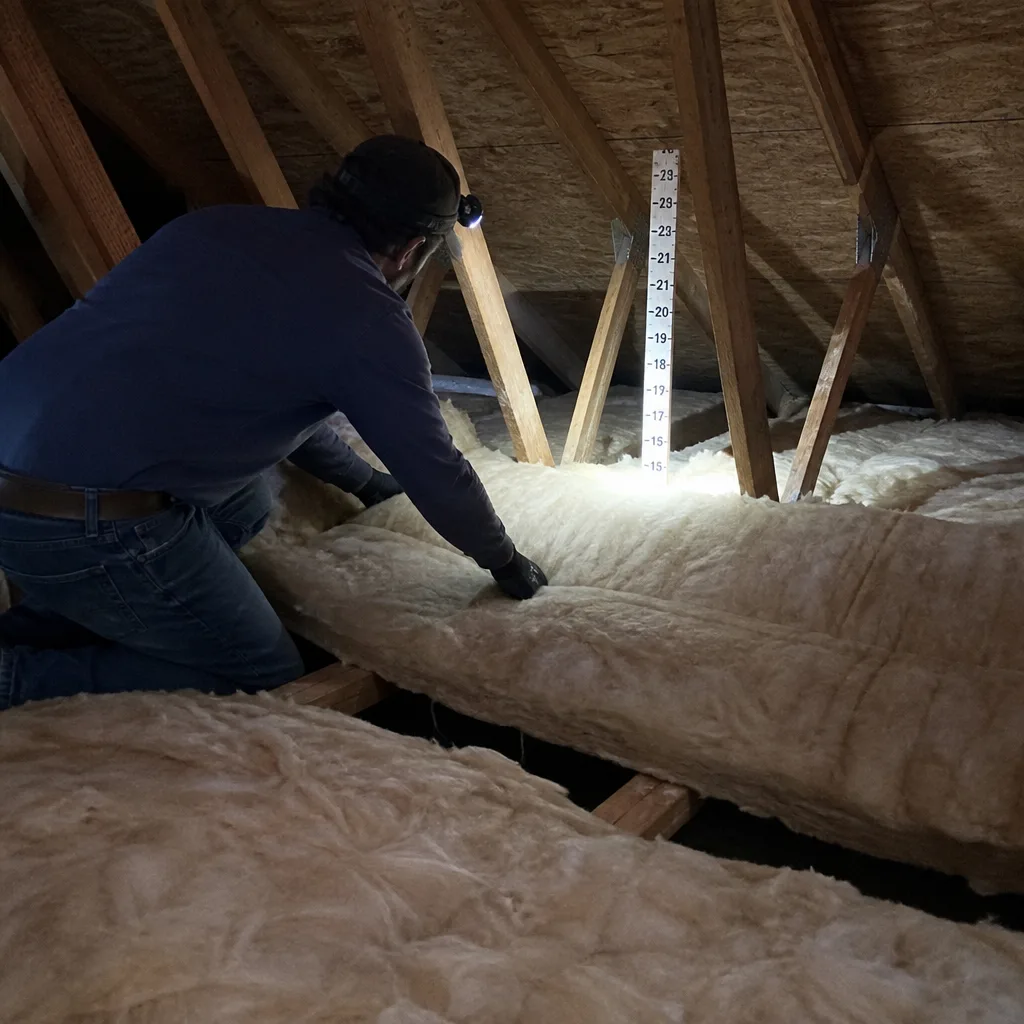
If your crawl space is showing any of the signs listed above – or if you’ve simply never had it inspected – the next step is a documented on-site assessment. We’ll photograph the existing conditions, measure the space, note any drainage or joist concerns, and give you a flat written price before we schedule any work. No estimates that shift when the crew shows up. No upsells added after the scope is agreed on.
Topside Attic Insulation Schertz serves homeowners throughout Schertz, the surrounding Guadalupe County area, and nearby communities. Call (830) 402-5240 – a live person answers every call – or reach out online to schedule your crawl space inspection. If you’ve already received a competing written estimate, bring it and we’ll read through it with you at no charge under our Free Second Opinion offer. The written price you walk away with from that conversation is the price the job costs, full stop.
Written by Wes Okafor, Owner at Topside Attic Insulation Schertz, serving Schertz since 2016.