

Fast, Reliable Spray Foam Insulation Across Live Oak
Spray foam insulation in Live Oak, TX typically runs $1.80-$3.20 per board foot for open-cell and $3.50-$5.50 for closed-cell, with most complete attic retrofits falling between $4,200 and $8,800 depending on assembly type and whether we’re working over existing insulation or stripping back to the deck. Our crews are in Live Oak neighborhoods three to four days a week, dispatching from our San Antonio office, and we answer calls live at (830) 402-5240 around the clock. If you’re in a 1960s-1980s brick-veneer tract home near Joint Base San Antonio-Randolph - which describes most of Live Oak’s housing stock - your original attic insulation is almost certainly R-11 to R-13 batt that’s collapsed or compressed below its labeled value, and your attic is hitting 150°F+ through July and August.
We’ve worked the same housing vintage block by block here. The shallow attic cavities, duct systems routed through superheated attic space, and slab-on-grade construction with unfoamed rim joists create a predictable set of problems that we’ve documented across hundreds of Live Oak jobs. Our Spray Foam Insulation team treats air sealing as mandatory, not optional, and we publish before-and-after blower-door numbers on every job so you can verify the performance change.
Why Topside Attic Insulation Schertz Is Live Oak’s Preferred Spray Foam Insulation Company
We’ve sealed and insulated over 9,000 homes since 2016, and a significant concentration of that work has been in Live Oak’s Randolph AFB-era subdivisions - Live Oak Village, areas off Toepperwein Road, and the neighborhoods bracketing Judson Road between Loop 1604 and I-35. Our reviews from Live Oak customers consistently cite two things: the written price they received before anyone started work, and the blower-door printout they got afterward showing the actual air-leakage reduction.
Response time to Live Oak is typically same-day or next-day for estimates, with most spray foam jobs scheduled within a week of approval. We know the local permit requirements for Bexar County unincorporated areas versus Live Oak’s city limits, and we pre-qualify every customer for the CPS Energy attic insulation rebate - handling the paperwork in-house rather than handing you a form and hoping you follow through. That rebate, paid per square foot for reaching R-38, is a genuine closing tool here because so many Live Oak homeowners are active-duty or retired military on fixed utility budgets.
Under The Haven Standard, every job begins with a written scope, flat price, and written warranty before any crew lifts a tool. Our 365-Day Done Right Promise applies to all completed work, and you’ll receive a Documented Photo Record when we leave - not available on request, included on every visit.
Our Spray Foam Insulation Services in Live Oak
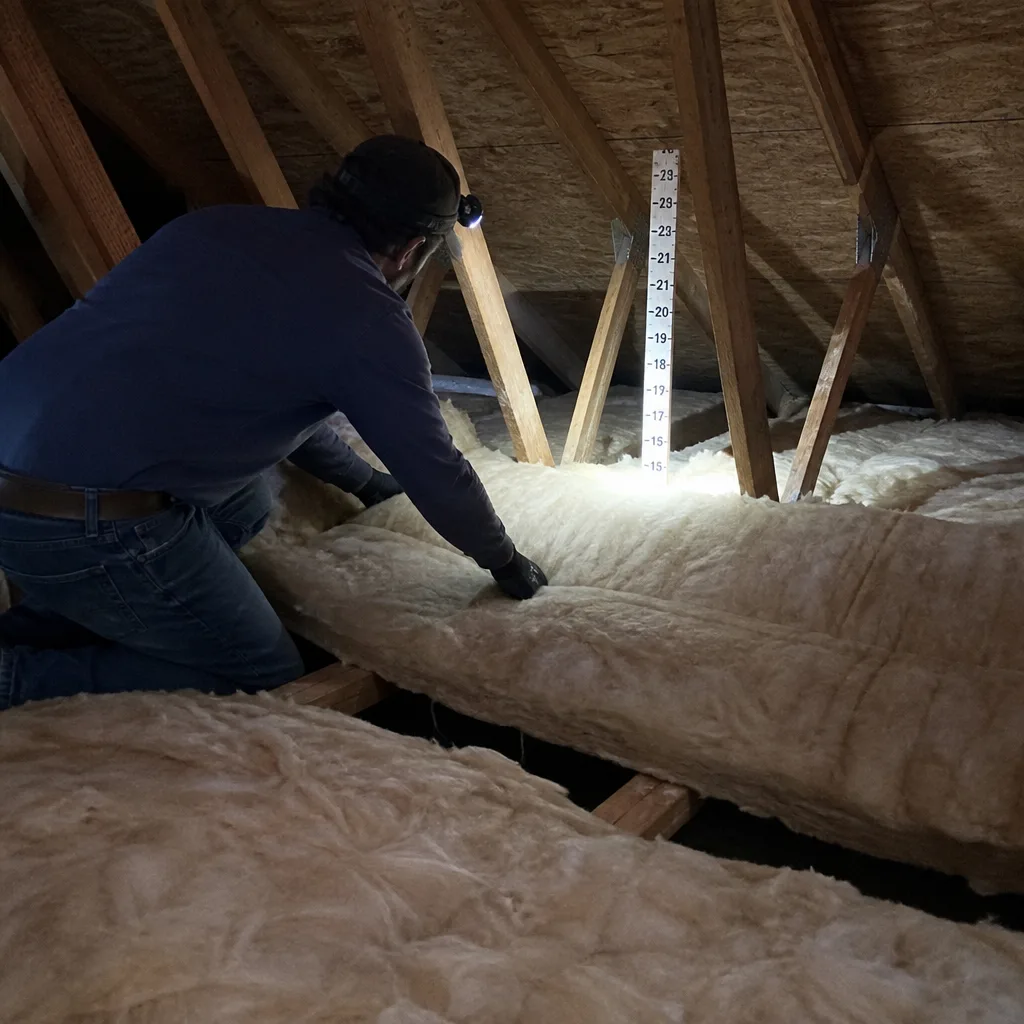
Open-Cell Spray Foam
Open-cell is the workhorse for Live Oak attic encapsulations. We spray it directly against the roof deck and gable ends, converting a vented attic into a conditioned space and dropping attic temperatures from 150°F+ to within 10-15 degrees of the living space below. In a typical 1970s Live Oak brick-veneer home with a shallow 4:12 pitch, four inches of open-cell at roughly R-3.6 per inch gets you to R-14 on the roofline - but because we’re air-sealing simultaneously and eliminating duct leakage to the outside, the effective performance gain is substantially higher than the nominal R-value suggests.
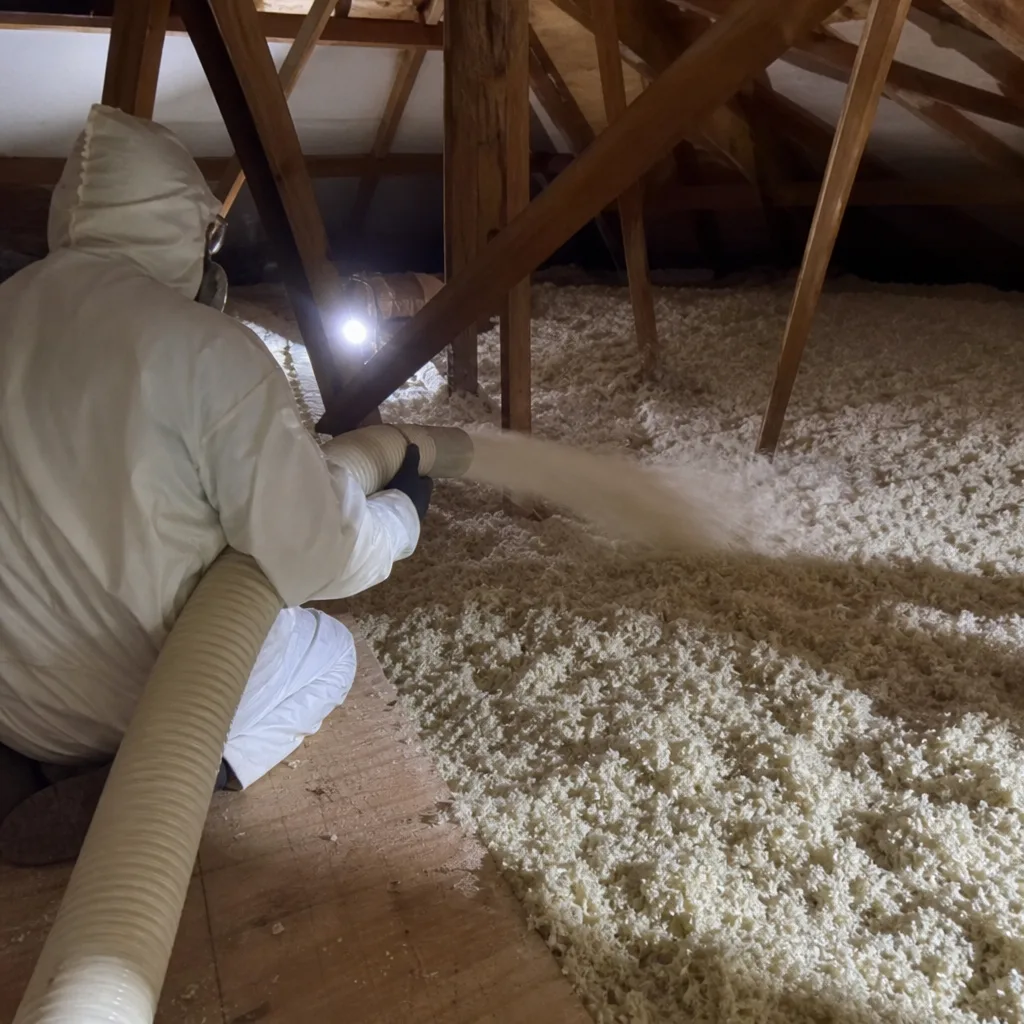
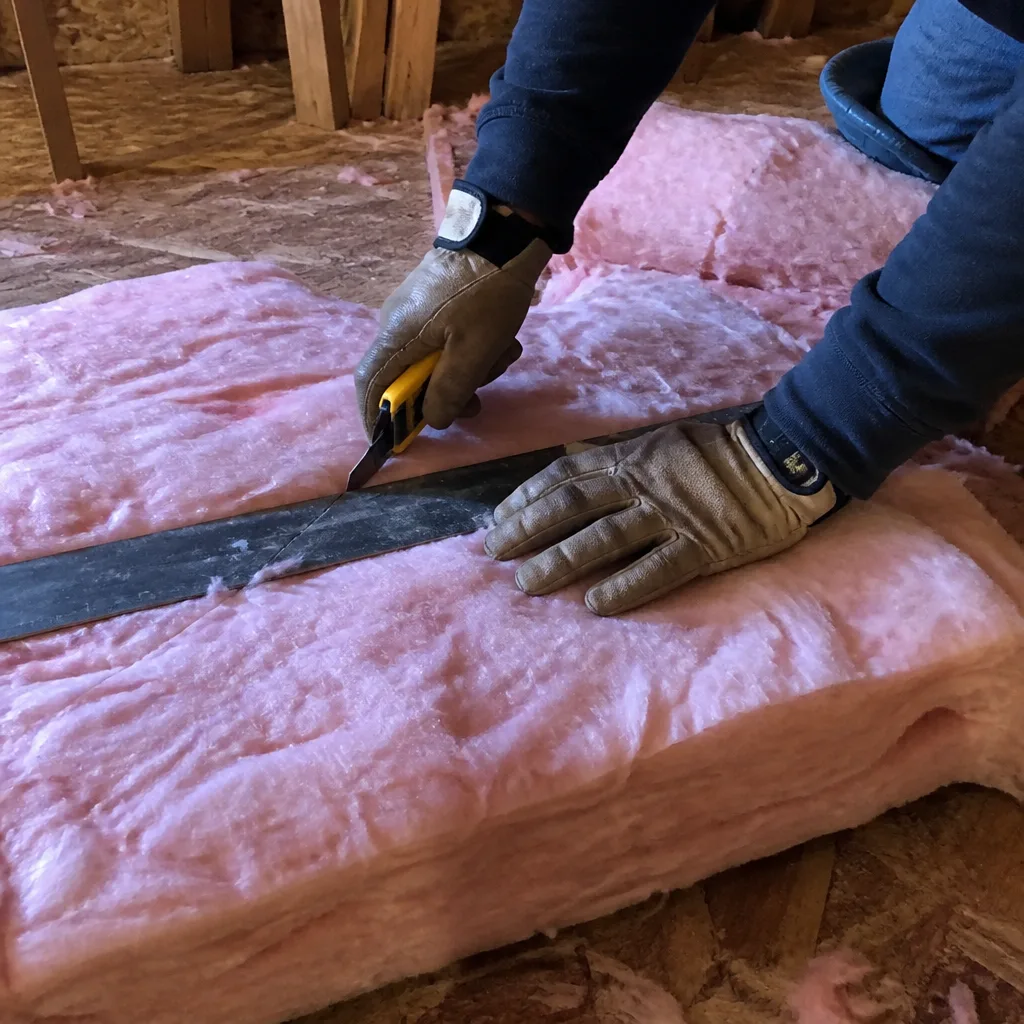
Here’s the critical local detail: open-cell spray foam in Live Oak almost always pairs with a rebate math calculation. CPS Energy pays per square foot for reaching R-38 equivalent performance. If we’re spraying open-cell on the roof deck, we may need to supplement with blown cellulose over the existing attic floor (a flash-and-batt hybrid) or specify a thicker open-cell application to hit the rebate threshold. We calculate this during the estimate and specify it in the written scope so there’s no ambiguity about what you’re getting paid back.
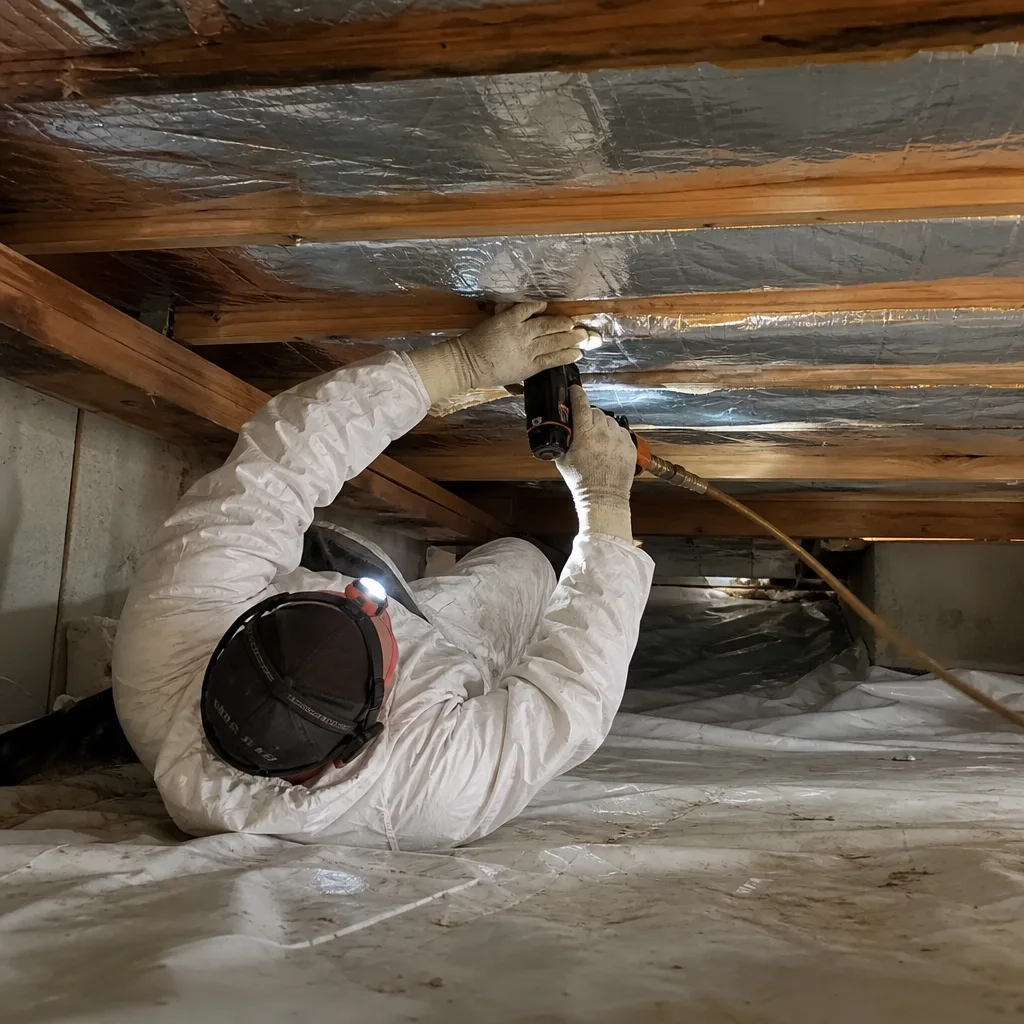
Closed-Cell Spray Foam
Closed-cell at R-6.5 per inch is rarely the primary attic solution in Live Oak’s residential stock - it’s overkill for most roof decks and costs nearly double per board foot. Where we do specify it: garage ceiling applications where you’re creating a conditioned buffer above a water heater closet, or in limited-band applications at rim joists where structural rigidity matters. We don’t sell closed-cell for attic rooflines unless there’s a specific structural or moisture-drive condition that warrants it, and we’ll explain why in the written scope if we do.
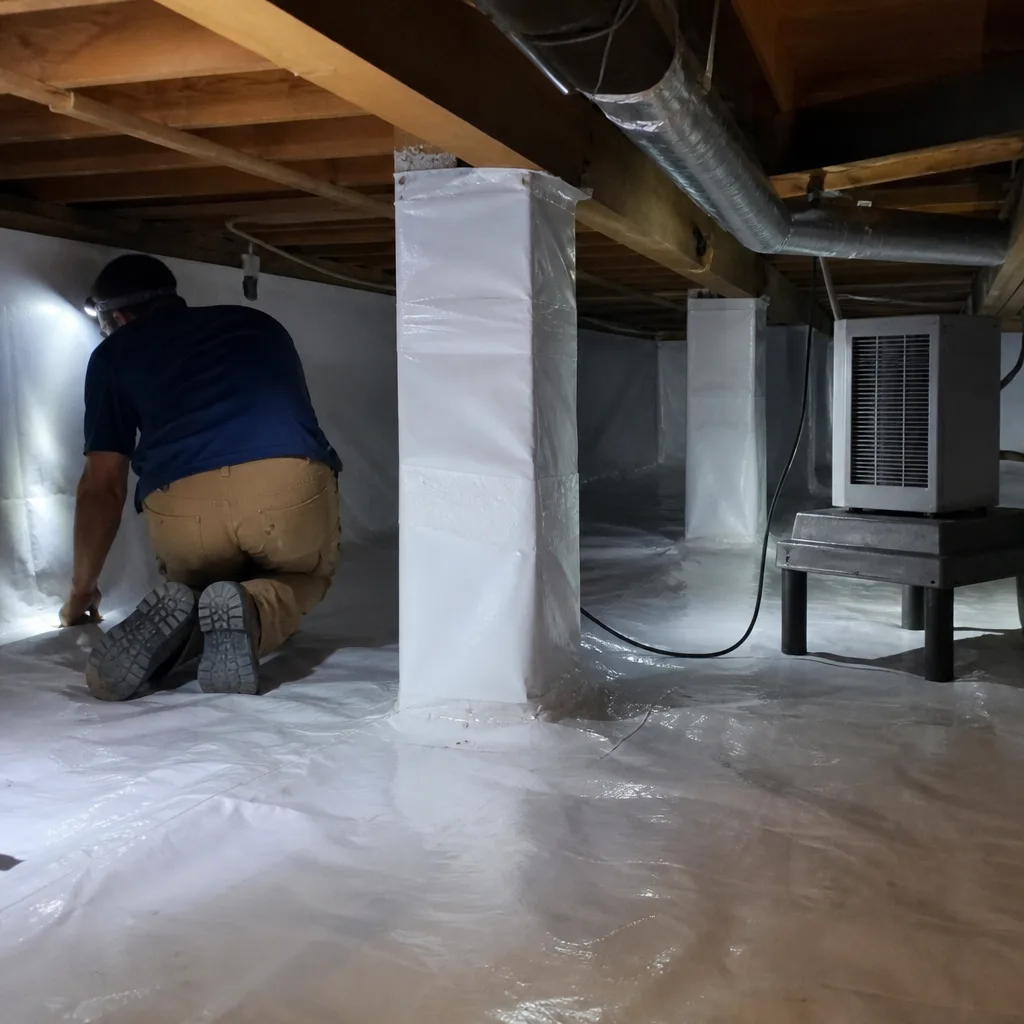
Rim Joist Spray Foam
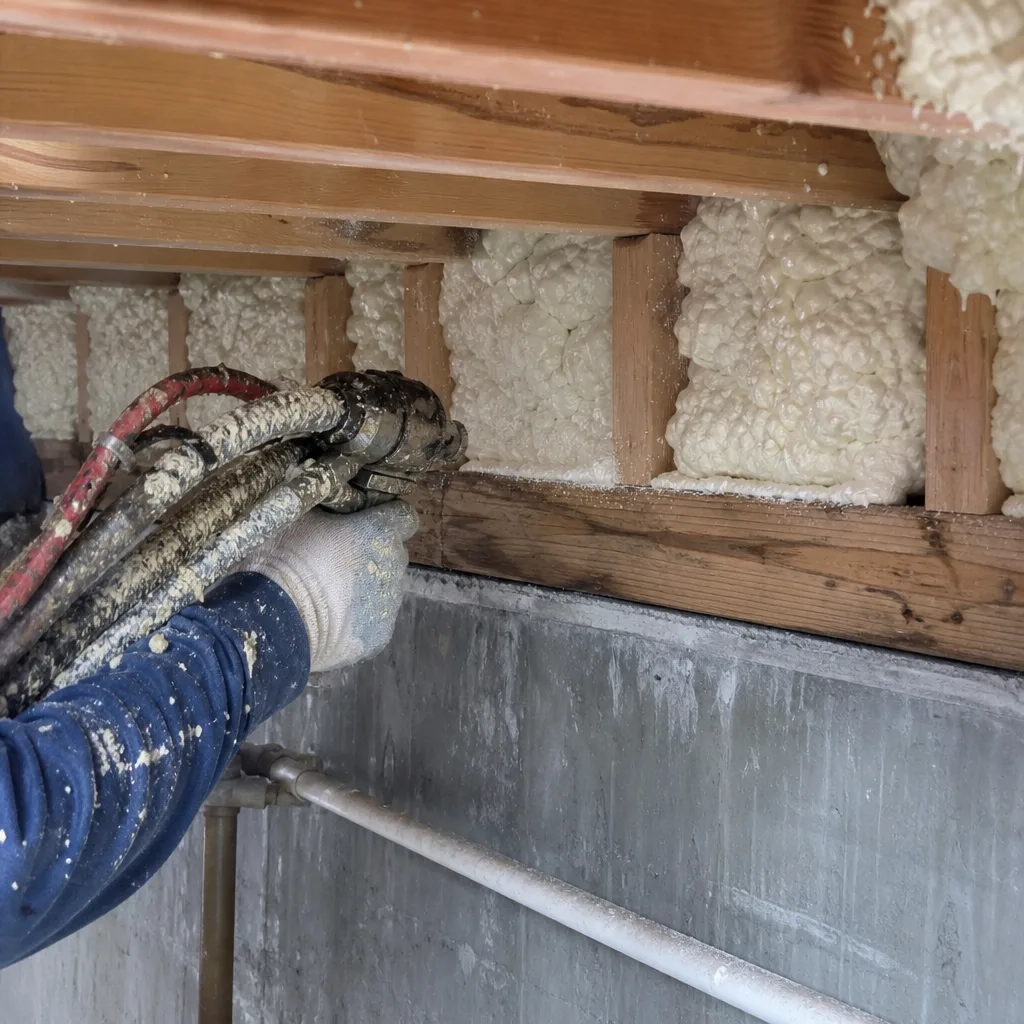
Live Oak’s slab-on-grade construction leaves rim joists - the perimeter band where the exterior walls meet the foundation - completely exposed to outside air and ground moisture. In Winter Storm Uri, February 2021, these uninsulated rim joists were a primary freeze path into homes, particularly in garage water heater closets and behind exterior hose bibs. We spray two inches of closed-cell foam across the entire rim joist perimeter, creating both an air barrier and a moisture barrier. This is often the highest-ROI spray foam application in a Live Oak home, and we regularly return to do rim joists after homeowners see their attic results.
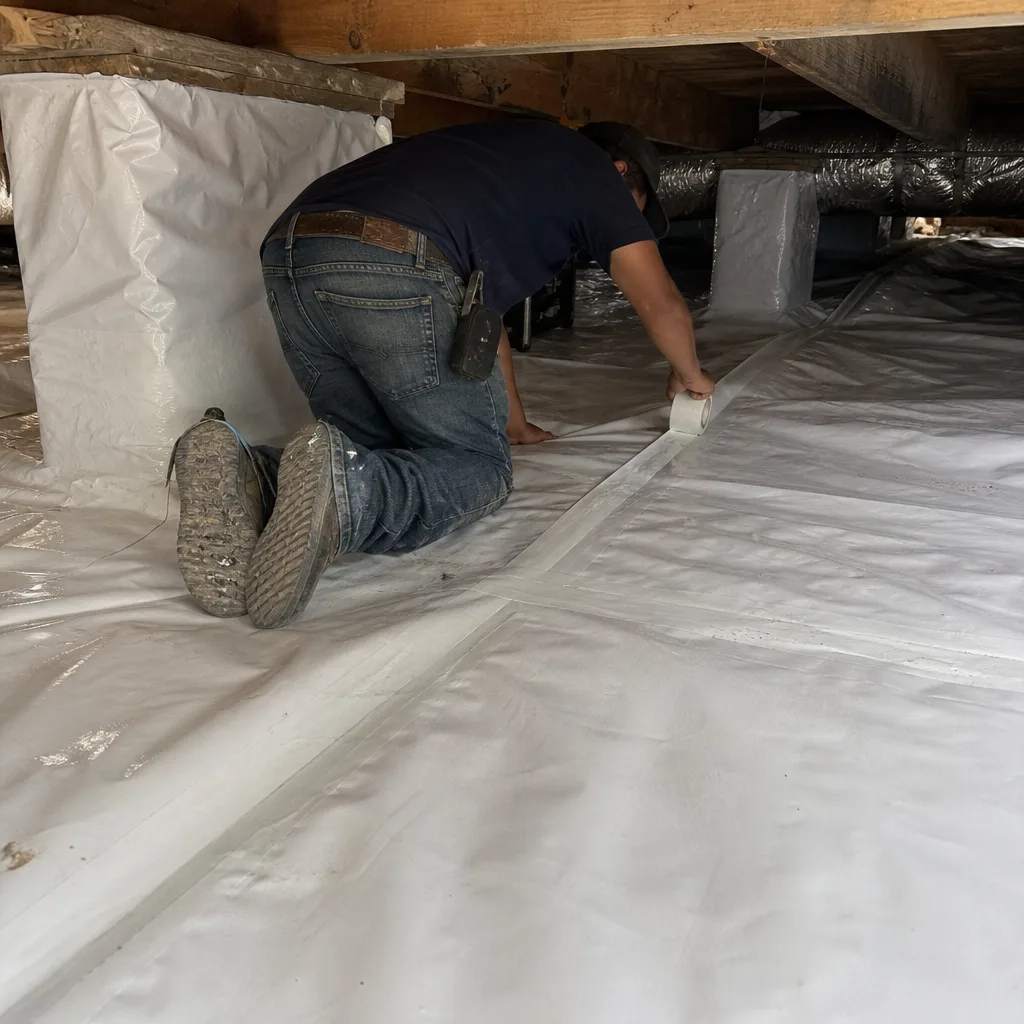
Garage Ceiling Spray Foam
Garage ceiling spray foam in Live Oak serves two purposes: it buffers the living space above from a superheated garage in summer, and it protects plumbing runs and water heater closets from freeze in winter. The 1978 home we foamed in Live Oak Village had a garage ceiling that was nothing but 2×10 joists with R-11 batts falling out - the homeowner’s washer supply lines had frozen twice. We sprayed three inches of open-cell across the garage ceiling, sealed the rim joist band, and dropped the garage’s summer peak from 118°F to 89°F. For seasonal residents who leave Live Oak homes empty June through September, this application also reduces the thermal load your AC faces when you return and power everything back up.
Spray Foam Roof Deck
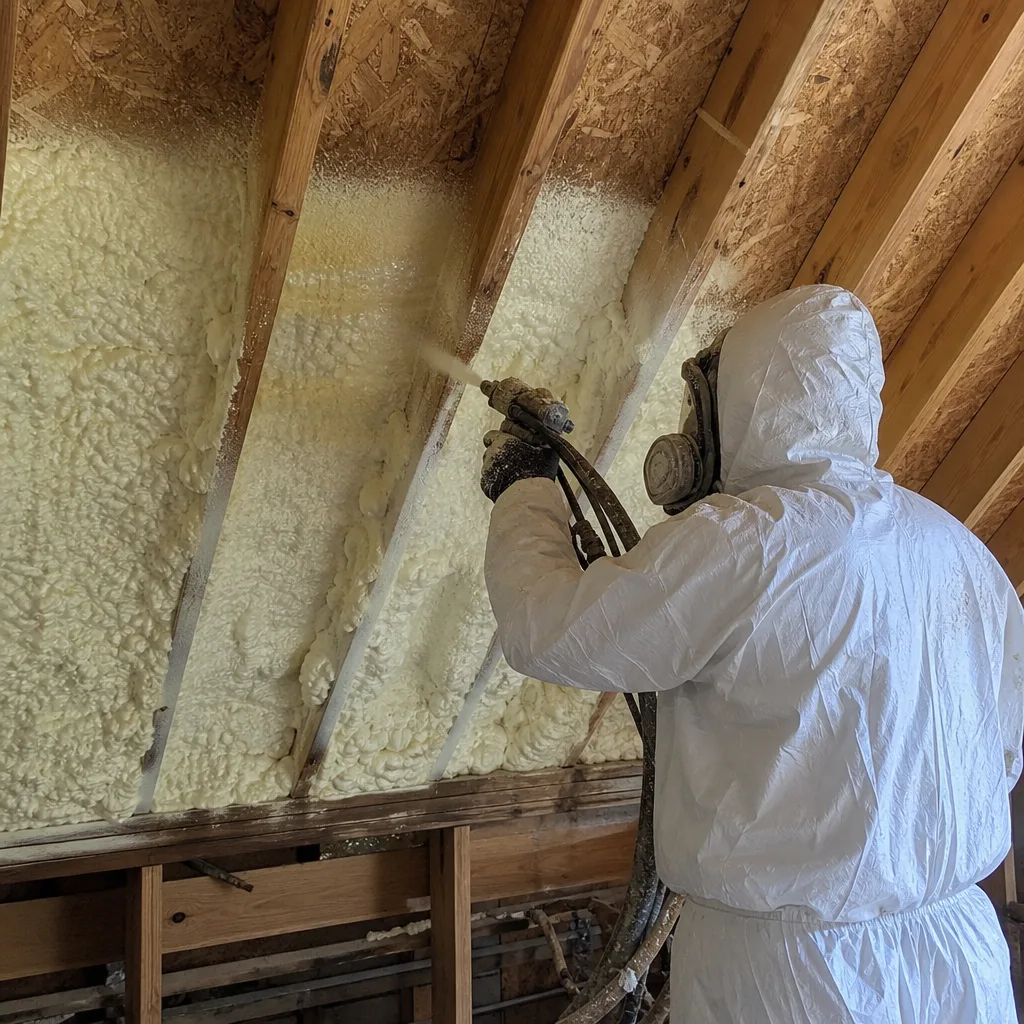
The roof deck application is what most Live Oak homeowners picture when they call about spray foam. We remove or work over existing insulation depending on condition, air-seal all top plates and penetrations first, then spray the underside of the roof deck and gable ends. Every roof deck job includes blower-door verification - we measure before air sealing, after air sealing, and after foam application so you can see the step-by-step improvement. The final number is what matters: we aim for 0.35 ACH50 or better in retrofits, and we document where we land.
What happens when you call
- 1
A real person answersNo phone trees - you reach a local pro.
- 2
You get an upfront price rangeHonest numbers before anyone is dispatched.
- 3
A background-checked tech heads outLicensed & insured, dispatched right away.
- 4
You approve before work beginsNothing starts until you say go.
Trusted Brands We Service in Live Oak
We source spray foam materials from Demilec, Johns Manville, and Owens Corning among others - no proprietary lock-in, so we specify the right product for your assembly rather than whatever our supplier needs to move. For Live Oak’s climate zone (IECC Zone 2A, hot-humid), we typically specify Demilec’s open-cell water-blown formulations or Johns Manville’s Corbond III closed-cell for rim joist and garage applications. We maintain local inventory for faster turnaround, and our rigs are self-contained so we’re not waiting on a third-party foam supplier to show up on pour day.
Common Spray Foam Insulation Problems We See in Live Oak Homes
- Open-cell foam sprayed against a vented attic floor without air-sealing the top plates first. In Live Oak’s 1960s-1980s brick-veneer homes, the wall cavity behind the brick is vented to the attic. Moisture wicks into the foam from that cavity, and within two summers the foam sags off the deck in sheets. We see this on competitor jobs regularly - the fix is stripping it back, sealing the plates, and respraying.
- A tightly foamed attic with an HVAC system that was never downsized or dehumidified. The attic’s now inside the envelope, which means your AC is trying to cool a smaller load in a tighter box. If the unit doesn’t run long enough to pull humidity, you get short-cycling and musty smells. We flag this during the estimate and coordinate with your HVAC contractor if needed - or specify a dehumidification strategy in the written scope.
- Rim joists and garage ceilings left unfoamed after a roof deck encapsulation. The attic’s protected now, but the freeze path through the slab perimeter and garage ceiling is still wide open. Winter Storm Uri proved this failure mode across Live Oak. We always inspect and quote these areas, and we document if you decline so there’s no confusion about what’s protected and what isn’t.
- Blown-in fiberglass left in place under a new open-cell roof deck, creating a double vapor barrier. In Live Oak’s humid climate, this traps moisture between the layers. We either remove the old insulation or specify a vented assembly that allows drying - never both barriers without a drying path.
Pricing for Spray Foam Insulation in Live Oak, TX
| Application | Typical Range | Notes |
|---|---|---|
| Open-cell attic roof deck (complete) | $4,200 - $7,800 | Based on 1,200-2,400 sq ft attic footprint; includes air sealing, top plates, penetrations |
| Flash-and-batt hybrid (open-cell + blown cellulose) | $3,800 - $6,400 | Often optimal for CPS rebate math in Live Oak’s shallow attics |
| Closed-cell rim joist (perimeter band) | $1,800 - $3,200 | Typical 1,600 sq ft slab home; includes prep and cleanup |
| Garage ceiling open-cell | $2,400 - $4,600 | Varies with garage size and whether rim joist is included |
| Closed-cell garage ceiling / water heater closet | $3,200 - $5,800 | Higher per-board-foot; specified only where moisture drive or structure demands |
What moves the number: attic accessibility (some Live Oak homes have scuttle holes too small for a crew member with gear), existing insulation condition (stripping adds labor), and whether we’re coordinating with electrical or HVAC modifications. Every estimate includes a flat written price before any work starts - Haven Standard Clause 1 - and we offer a Free Second Opinion on any competing written estimate. Call (830) 402-5240 for a free estimate; we’ll measure your attic, run the CPS rebate math, and leave you with a written scope you can compare.
We Also Serve Cities Near Live Oak
Our crews work Spray Foam Insulation in Live Oak and surrounding communities weekly: Schertz to the northeast, Cibolo beyond that, Universal City to the southwest, and Selma to the northwest. Same written-price standard, same blower-door documentation, same live-answer scheduling at (830) 402-5240. Dispatch and scheduling are coordinated from our San Antonio office; crews serve Live Oak locally.
Serving Live Oak, TX - Our Local Coverage Area
We’re based in the Live Oak area and know this community well. Use the map below to see our service coverage - if you’re nearby, we can almost certainly help.
FAQs - Spray Foam Insulation in Live Oak
Open-cell spray foam qualifies for the CPS Energy rebate in Live Oak as long as the total assembly reaches R-38 equivalent performance - which may require combining open-cell on the roof deck with blown cellulose or additional open-cell thickness, depending on your attic geometry. We calculate the exact assembly during your estimate and specify it in the written scope so the rebate amount is locked before we start. Call (830) 402-5240 and we’ll run the math for your specific roof pitch and square footage - estimates are free.
No, existing blown-in fiberglass doesn’t void the rebate, but leaving it in place under a new open-cell roof deck can create a moisture trap in Live Oak’s humid climate. We typically remove degraded existing insulation and specify a clean assembly that qualifies for the full rebate - the rebate is based on final R-value and installation quality, not on what was there before. We’ll photograph the before condition and document the removal in your photo record. Call (830) 402-5240 for a free estimate with the rebate pre-qualified.
Spray foam is particularly suitable for seasonal absences because it dramatically reduces the thermal mass your AC must overcome when you return and power the system back up. In a 1974 Live Oak home with original R-11 batts, the attic hits 150°F+ and radiates that heat into your duct system all day; after open-cell roof deck encapsulation, the attic stays near indoor temperature and your startup load drops significantly. We also recommend foaming the garage ceiling if you have a water heater closet or washer lines that could freeze during a winter vacancy. Call (830) 402-5240 and we’ll specify a scope that protects the house year-round.
A foamed attic reduces your cooling load, which can make an oversized AC short-cycle and fail to dehumidify properly - this is a real callback we’ve seen in Live Oak homes where the HVAC was never evaluated after envelope tightening. We measure your current system capacity against the projected post-foam load during the estimate, and if there’s a mismatch, we flag it in the written scope and can coordinate with your HVAC contractor or recommend a dehumidification strategy. The blower-door test we perform after foaming gives your HVAC tech the hard numbers they need to right-size or adjust. Call (830) 402-5240 and we’ll include this evaluation in your free estimate.
Closed-cell is rarely necessary for Live Oak garage ceilings unless you’re creating a conditioned space with specific moisture-drive concerns or need the structural rigidity; open-cell at proper thickness provides sufficient R-value and cost-effectiveness for most garage ceiling applications. Where we do specify closed-cell: garage water heater closets with direct exterior wall contact, or rim joist bands where the freeze path is most severe. We’ll inspect your specific garage layout and specify the appropriate product in the written scope - never a generic recommendation. Call (830) 402-5240 for a free estimate with product specification included.
Written by Wes Okafor, Owner at Envelope Insulation Co., serving Live Oak since 2016 under The Haven Standard.