
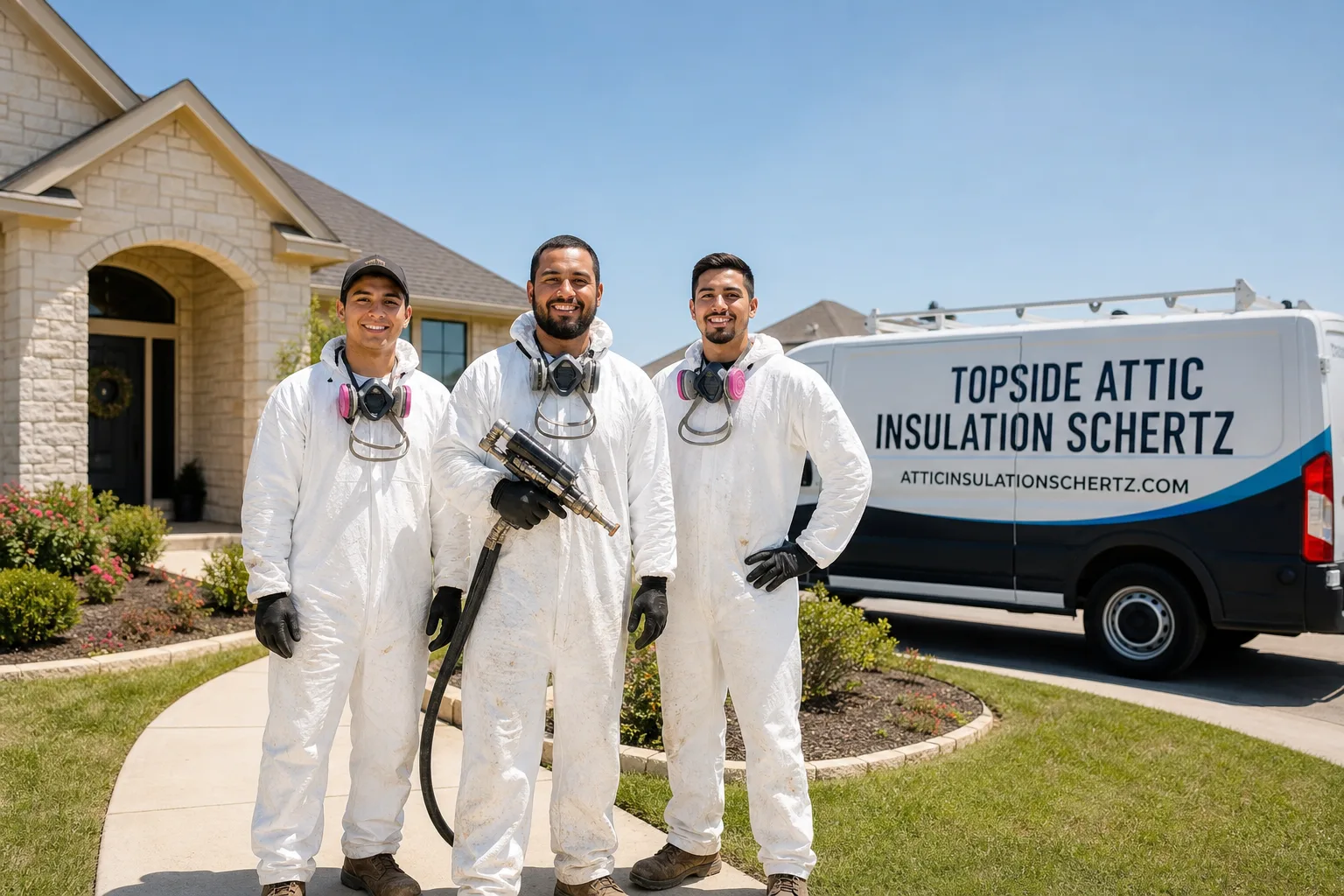
Fast, Reliable Blown-In Insulation Across Live Oak
Blown-in insulation in Live Oak, TX typically runs $1.80-$3.20 per square foot for attic applications, with most complete retrofits on 1,200-1,800 square foot ranch homes falling between $2,400 and $5,800. Most jobs are completed in a single day, and crews can usually be on-site within 24-48 hours of your call.
We know Live Oak’s housing stock because we work it weekly. The 1960s-1980s brick-veneer ranches off Toepperwein Road, the Live Oak Village cluster, the streets threading toward Randolph AFB - these aren’t abstract neighborhoods to our crews. They’re attics with shallow cavities, original R-11 batts compressed under decades of duct traffic, and supply lines baking through 150°F summer heat. Dispatch and scheduling run from our San Antonio office, but the trucks that roll to Live Oak carry local knowledge: which subdivisions have the shallow joist bays, where the 1972 builds hide unsealed return chases, and why air-sealing always comes first. Call (830) 402-5240 - a live person answers, 24/7.
Why Topside Attic Insulation Schertz Is Live Oak’s Preferred Blown-In Insulation Company
We’ve sealed and insulated over 9,000 homes since 2016, and a disproportionate share cluster in Live Oak’s Randolph-AFB-era neighborhoods. The reviews we get from Live Oak homeowners - many active-duty or retired military - tend to mention the same things: the written price that showed up before anyone lifted a tool, the blower-door printout they could read at their kitchen table, and the CPS rebate paperwork handled without them chasing forms.
Response time to Live Oak averages same-day or next-day, depending on blower-door test scheduling. We don’t subcontract the air-sealing phase. The same crew that measures your leakage at 4,200 CFM50 seals your top plates and duct boots, then blows insulation the following morning. No handoffs between trades, no “the other guy handles that.”
Our local knowledge runs specific. We know which Live Oak subdivisions built in the 1973-1978 window used smaller joist spacing that limits blown-in depth. We know the 1980s builds near Universal City Boulevard added shallow vaulted sections that trap heat differently. And we know that a 55+ homeowner snowbirding through August needs a different moisture-management conversation than a year-round family.
Our Blown-In Insulation Services in Live Oak
Blown-In Cellulose
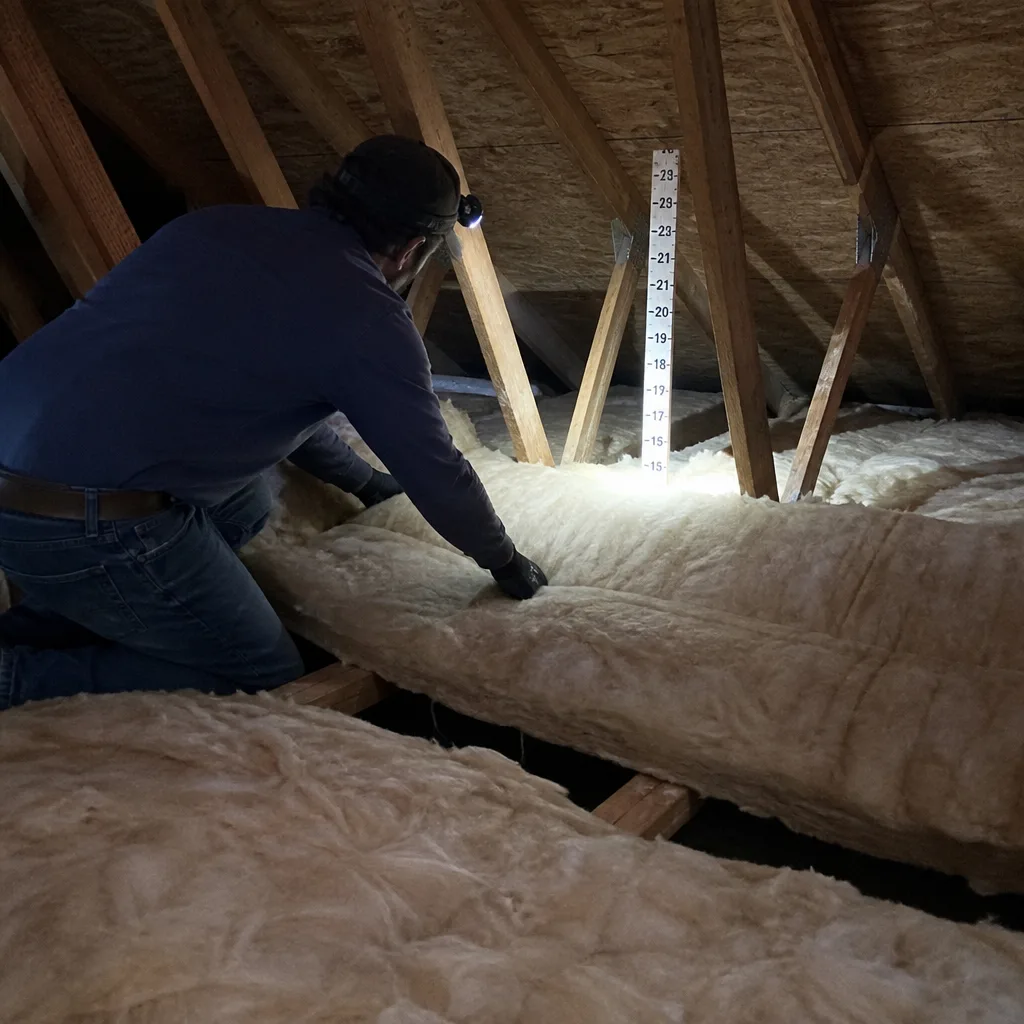
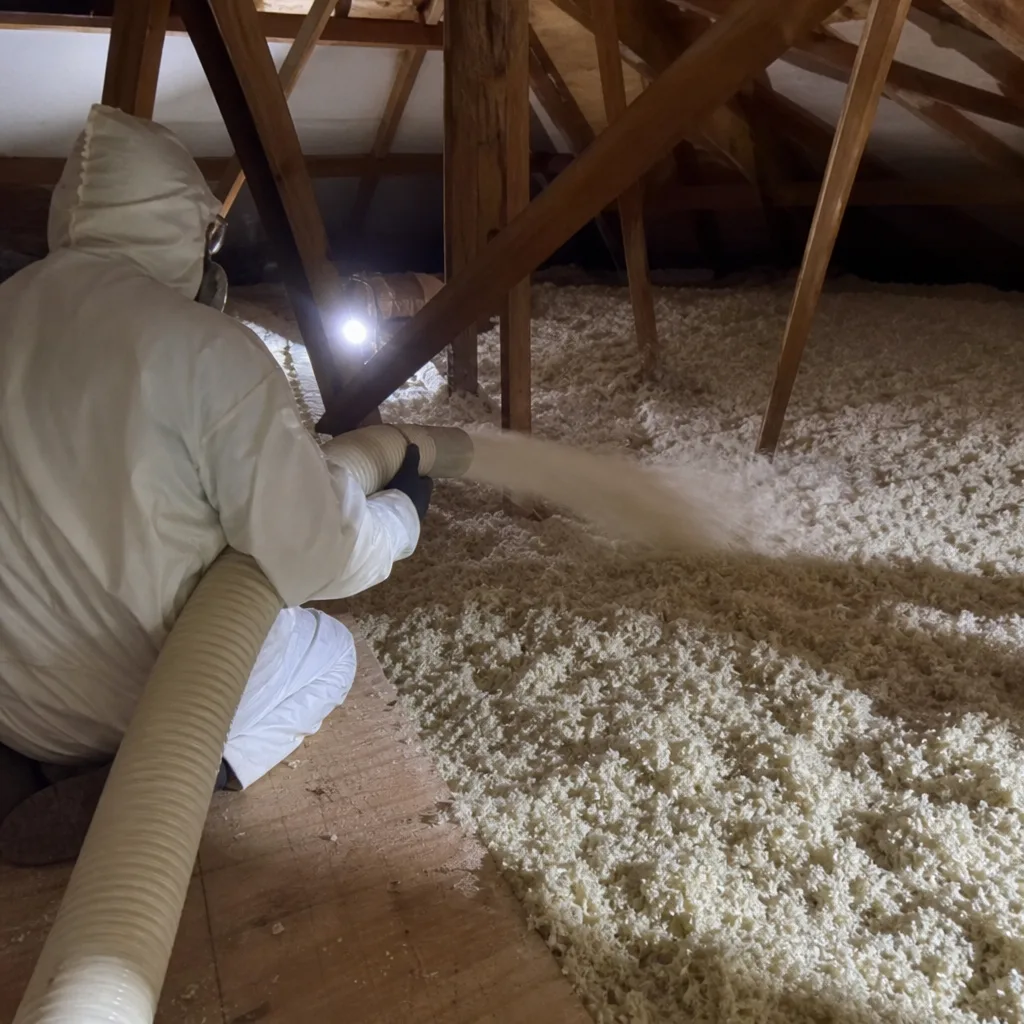
Live Oak’s upgrade path runs through cellulose more often than not. The original R-11 fiberglass batts in these 1960s-1980s attics are typically compressed, shifted, or blown entirely off joists by ductwork traffic. We remove or bury them only after air-sealing - top plates, can lights, pipe penetrations, duct boots - then blow GreenFiber cellulose to R-38, which is what CPS Energy’s rebate program currently pays toward. Cellulose handles Live Oak’s heat island better than old fiberglass; it doesn’t slump at 150°F attic temps the way degraded batts do. And for snowbirds leaving homes empty, cellulose’s density slows air movement through the envelope during freeze events - a real consideration after February 2021.
Blown-In Fiberglass
Fiberglass still has its place in Live Oak, particularly in newer builds or where moisture history makes cellulose a harder sell. We stock Owens Corning blown fiberglass for homeowners who want the material they’re familiar with, and we install it with the same air-sealing prerequisite: no insulation over an unsealed attic floor, period. In Live Oak’s older stock, we rarely recommend fiberglass as a standalone retrofit - the shallow cavities and existing compressed batts don’t give it enough depth to perform - but it’s effective as a cap over properly sealed decks in homes with adequate existing depth.
Dense-Pack Wall Insulation
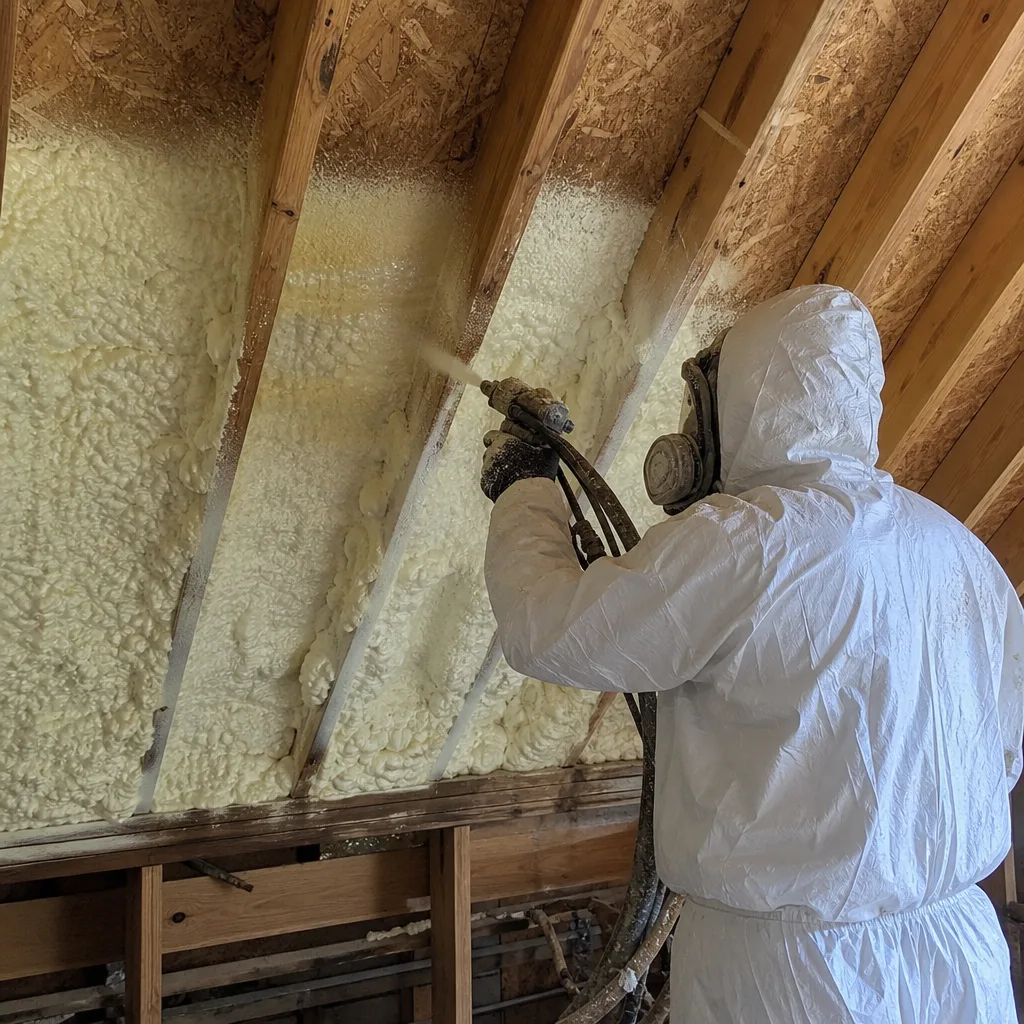
Live Oak’s brick-veneer slab homes present a specific wall-insulation challenge. The cavity between brick veneer and interior drywall is typically empty in 1960s-1980s construction - no insulation at all. Dense-pack cellulose fills that cavity through drilled access holes, blown at pressure to settle into every gap without removing interior drywall or exterior brick. For Live Oak homeowners dealing with west-facing wall heat gain or February pipe-freeze anxiety, this is often the only practical retrofit that doesn’t involve gutting rooms. We document the fill density with pressure readings and photos, included in your job record.
Blown-In Top-Up
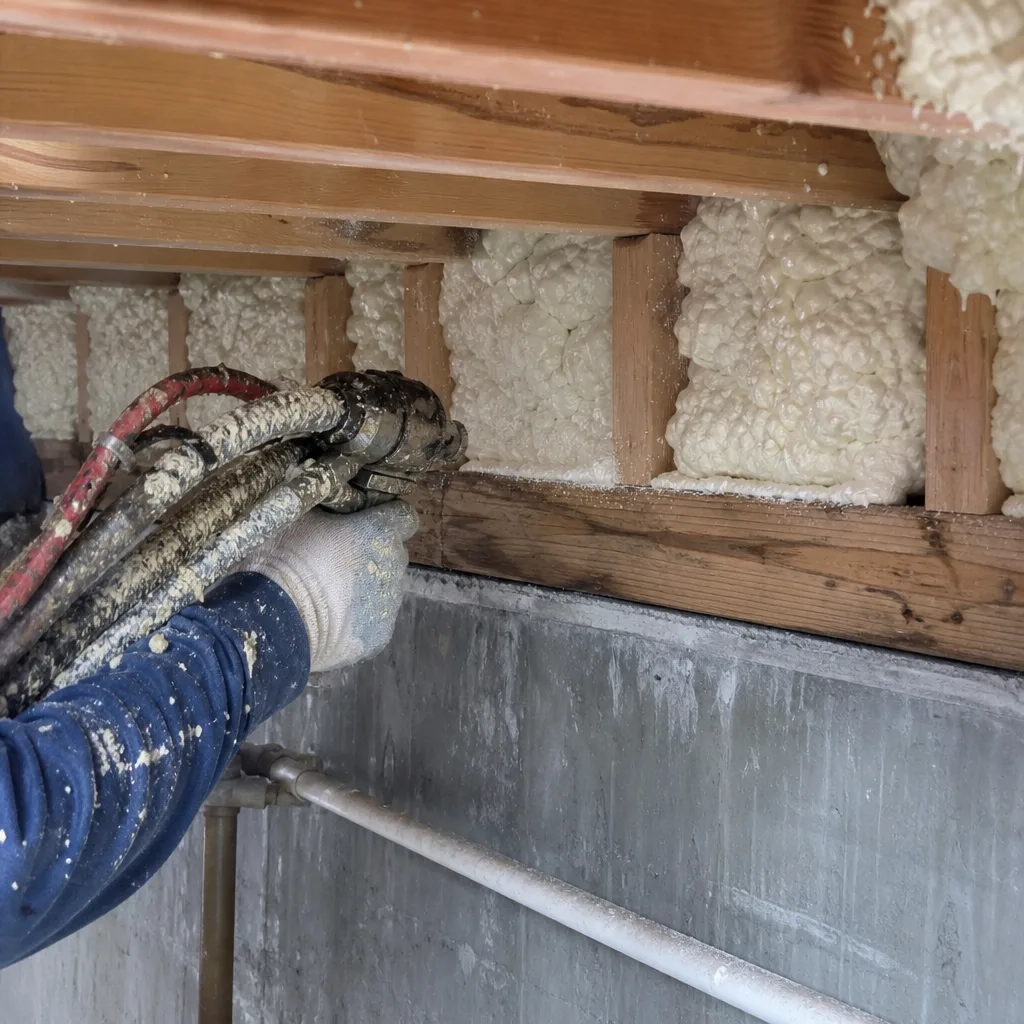
This is Live Oak’s most requested service, and the one most often done wrong. A top-up - adding blown insulation over existing material - only works if the attic floor is sealed first. In the Live Oak Village area off Toepperwein Road, our crew opened a 1972 brick-veneer ranch and found original R-11 batts collapsed over the garage bay and the return chase sucking hot attic air. We air-sealed the top plates and duct boots, then blew GreenFiber cellulose to R-38 and set the thermostat schedule back to a 55+ household rhythm. The homeowner called back two weeks later about a smaller CPS bill - and asked whether the pipes would fare better in a freeze this time, which is exactly the conversation we want to be having before the next Uri. A top-up without sealing is just burying the problem. We don’t do it.
What happens when you call
- 1
A real person answersNo phone trees - you reach a local pro.
- 2
You get an upfront price rangeHonest numbers before anyone is dispatched.
- 3
A background-checked tech heads outLicensed & insured, dispatched right away.
- 4
You approve before work beginsNothing starts until you say go.
Trusted Brands We Service in Live Oak
We source blown-in materials from Owens Corning, GreenFiber, Johns Manville, and Knauf - no proprietary lock-in, so we match material to house rather than pushing what we happen to stock. For Live Oak’s 150°F summer attics, we typically specify GreenFiber cellulose for its stability under sustained heat load and its treatment against pests, which matters in attics where snowbirds miss early rodent signs. Owens Corning blown fiberglass is available for homeowners who prefer it, and we carry it on Live Oak trucks for same-day starts. Every bag is documented in your written scope, so you know exactly what went in.
Common Blown-In Insulation Problems We See in Live Oak Homes
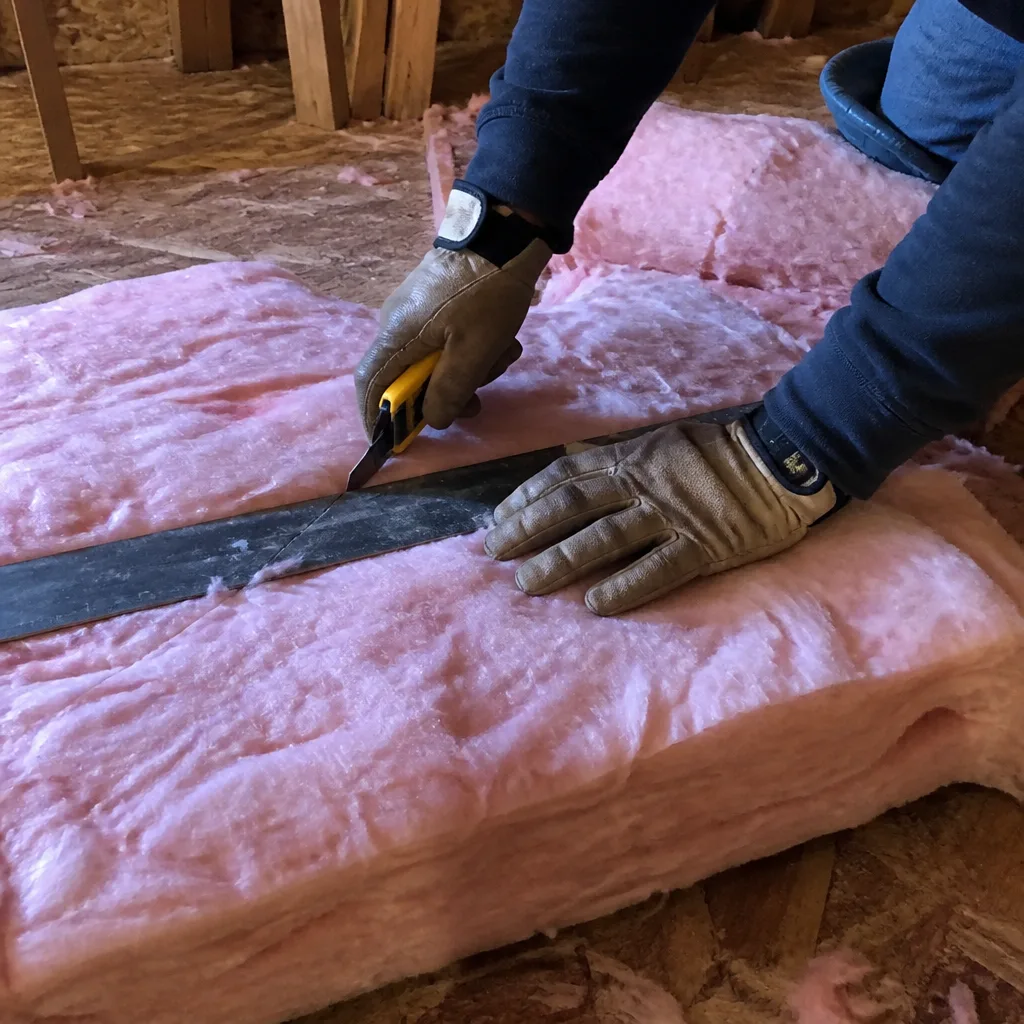
- Original R-11 batts compressed or displaced by duct runs. Live Oak’s shallow attics route HVAC supply and return lines directly over joists, and decades of foot traffic, vibration, and summer heat have flattened original batts into ineffective pads. Blowing new insulation over the top without removing or addressing these creates a lumpy, leaky thermal boundary.
- Supply ducts sweating into fresh cellulose. When 55°F conditioned air runs through flex duct in a 150°F Live Oak attic, condensation forms on the exterior. If ducts aren’t sealed and insulated first, that moisture migrates into new blown-in material. By the next cooling season, you’re looking at clumped, degraded insulation and a callback.
- Unsealed return chases pulling attic air into living space. Live Oak’s 1970s ranches commonly use joist bays and stud cavities as return air pathways. These are open to the attic at multiple points, meaning your HVAC system actively circulates superheated, dusty attic air every time the blower runs. Sealing these before insulation is non-negotiable.
- Snowbird homes compromised through undetected attic issues. Live Oak’s seasonal residents leave for months, missing early signs: rodent disturbance in insulation, condensation staining, or freeze-thaw damage to the envelope. By the time they return, the attic has cycled through multiple moisture events and the insulation performance is shot.
Pricing for Blown-In Insulation in Live Oak, TX
Most complete attic retrofits in Live Oak run $2,400-$5,800 for 1,200-1,800 square foot homes, with blown-in cellulose to R-38 landing at the higher end due to material volume and the mandatory air-sealing phase. Blown-in top-ups over existing insulation, after proper sealing, typically range $1,400-$2,800. Dense-pack wall insulation runs $2.00-$3.50 per square foot of wall area, with most Live Oak ranch homes seeing $3,200-$6,400 for full perimeter treatment.
| Service | Typical Range (Live Oak) |
|---|---|
| Attic cellulose to R-38 (with air sealing) | $2,400 - $5,800 |
| Blown-in top-up over existing (with sealing) | $1,400 - $2,800 |
| Dense-pack wall insulation | $2.00 - $3.50/sq ft |
| Attic air sealing only (blower-door verified) | $900 - $1,800 |
What moves the number: attic accessibility, existing insulation condition, duct routing complexity, and whether we need to build storage platforms or light fixtures. Every job gets a Written Price Before Any Work Starts - flat, itemized, no add-ons after signature. We also offer a Free Second Opinion on any written estimate from another contractor. Call (830) 402-5240 for exact pricing on your home - estimates are free, and we carry the CPS Energy rebate forms.
We Also Serve Cities Near Live Oak
Our crews work the full northeast Bexar County corridor: Live Oak, Schertz, Cibolo, Universal City, and Selma. The same trucks, same materials, same Haven Standard documentation. If you’re near the boundary - say, the Cibolo Creek side of town - we’ll confirm response time when you call.
Serving Live Oak, TX - Our Local Coverage Area
We’re based in the Live Oak area and know this community well. Use the map below to see our service coverage - if you’re nearby, we can almost certainly help.
FAQs - Blown-In Insulation in Live Oak
Your home was built to 1970s code, which specified R-11 or R-13 for attic insulation in this climate zone, and most Live Oak builders used the minimum. R-38 became the practical target after energy codes tightened and CPS Energy began structuring rebates around it. The upgrade path is straightforward: remove or bury the degraded batts after air-sealing, then blow to depth. Call (830) 402-5240 and we’ll measure your current R-value and leakage rate during the estimate - both numbers go in writing before we start.
Yes - CPS Energy’s rebate program currently pays per square foot for attic insulation upgrades that reach R-38, and we handle the pre-qualification and submission in-house. For Live Oak’s active-duty and retired military households on fixed utility budgets, this is often the deciding factor between doing the job now or deferring it. We document the pre- and post-work R-value and square footage; you sign the rebate form; we submit it. The credit typically appears on your CPS bill within 6-8 weeks.
Cellulose performs better than old fiberglass in an unconditioned attic over a vacant house, provided the air-sealing was done first. The risk in Live Oak isn’t the cellulose itself; it’s unsealed penetrations that let humid attic air migrate, or duct leaks that pressurize the cavity. We seal everything before blowing, document the blower-door result, and leave you with photos of the completed work. Snowbirds should also consider a smart thermostat set to 85°F with dehumidification to keep attic-house differential pressure minimal. Call (830) 402-5240 and we’ll walk through the specific settings that work for seasonal vacancy.
For attic retrofits in Live Oak’s 1960s-1980s stock, blown cellulose to R-38 is usually the right value: lower material cost than open-cell spray foam, easier to verify depth and coverage, and qualifies for CPS rebates that foam doesn’t always match. Open-cell spray foam makes sense when the attic is also conditioned space or when ductwork is being relocated. We stock Icynene and Demilec for foam jobs, but we don’t upsell to it - we price both, explain the blower-door difference, and let the numbers decide.
Yes - dense-pack cellulose fills the wall cavity through small drilled holes, typically at the mortar joint line, which are then patched to match. Interior drywall stays intact; exterior brick stays in place. The limitation is cavity condition: if we find blocked bays, fire stops, or extensive rodent damage during the pre-inspection camera scope, we’ll show you the photos and adjust the scope before drilling. Most Live Oak brick-veneer ranches from the 1970s have clean, open cavities that take dense-pack well. Written price before any holes are drilled - Haven Standard Clause 1.
Ready to see what your attic is actually leaking? Call (830) 402-5240 - a live person answers, 24/7 - and we’ll schedule your free estimate with written pricing, blower-door testing where applicable, and full CPS rebate handling. Every job closes with a Documented Photo Record and, on air-sealing work, before-and-after pressurization numbers you can keep.
Written by Wes Okafor, Owner at Topside Attic Insulation Schertz, serving Live Oak since 2016 under The Haven Standard.