
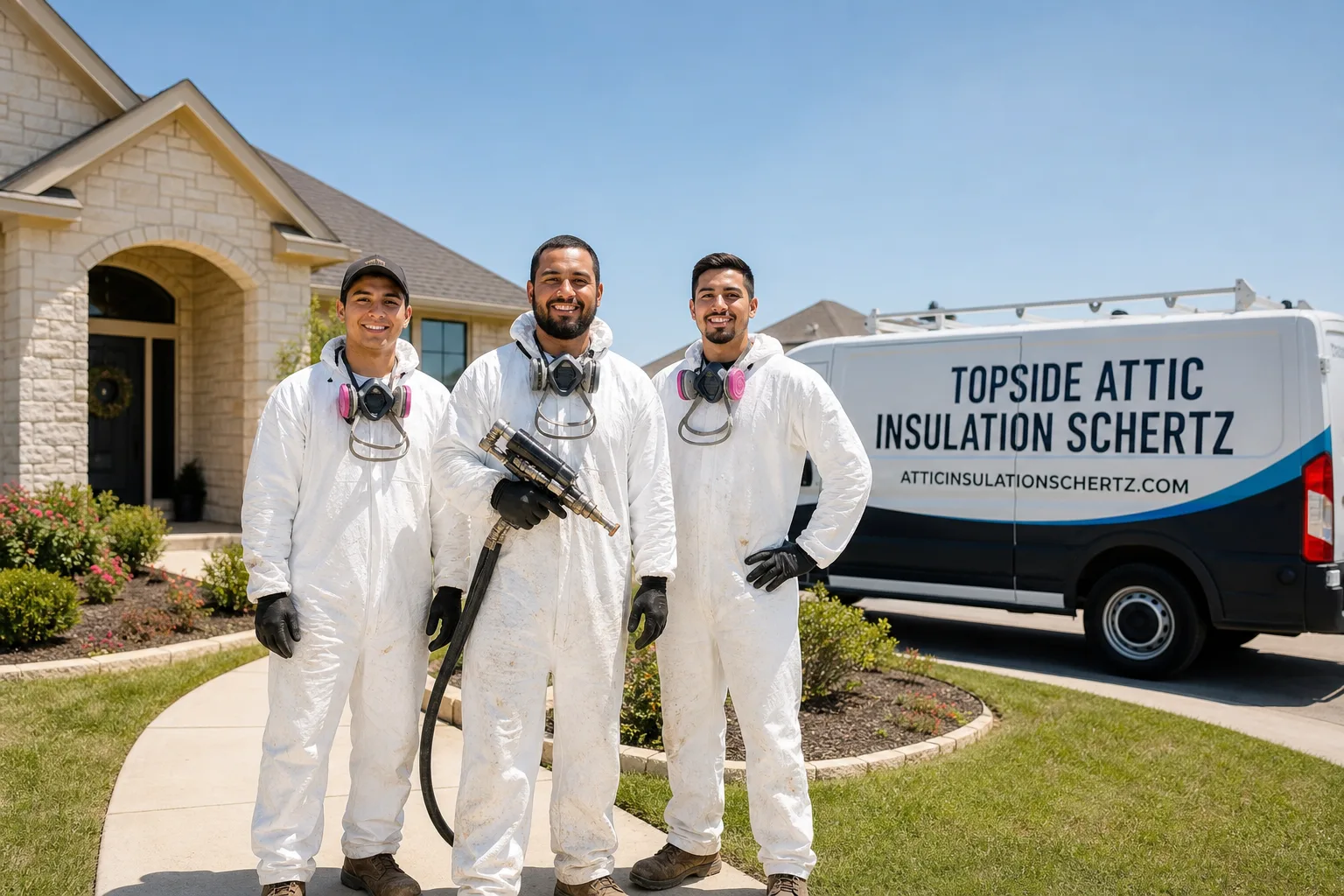
Fast, Reliable Blown-In Insulation Across Windcrest
Most blown-in insulation jobs in Windcrest run $1,800-$3,400 for a full attic, and our crews can typically inspect and quote same-day. We dispatch from our San Antonio office and carry reduced-profile blowing equipment specifically sized for the shallow eave clearances you’ll find on Windcrest’s 1950s-1970s ranch homes. Call (830) 402-5240 and we’ll schedule a free estimate with a written price before anyone lifts a tool.
We’ve worked enough Windcrest Drive ranches and Midcrown-area homes to know the pattern: original 2-3 inch blown fiberglass settled to dust, R-11 batts compressed under decades of Texas heat, and maybe 20 inches of headroom at the eaves if you’re lucky. That’s not a generic attic. That’s a specific geometry that demands specific equipment and a crew that doesn’t waste your morning figuring out why the batt truck won’t work here.
Why Topside Attic Insulation Schertz Is Windcrest’s Preferred Blown-In Insulation Company
We’ve sealed and insulated over 9,000 homes since 2016, and enough of them have been in Windcrest that we keep dedicated reduced-profile hoses and eave baffles stocked for this city’s rooflines. Our Blown-In Insulation team knows the difference between a Windcrest ranch and a Cibolo new-build before we open the attic hatch.
Windcrest customers leave reviews mentioning the same things: the technician showed up in a marked van, texted when they were en route, and explained why their shallow attic needed blown-in rather than batts without talking down to them. Our 365-Day Done Right Promise applies to every job in Windcrest, backed by a written scope and written warranty delivered before work starts. Under Haven Standard Clause 1, you get a flat price in writing. No exceptions.
Calls are answered by a live person 24/7. No voicemail loops. No callback windows measured in business days.
Our Blown-In Insulation Services in Windcrest
Blown-In Cellulose
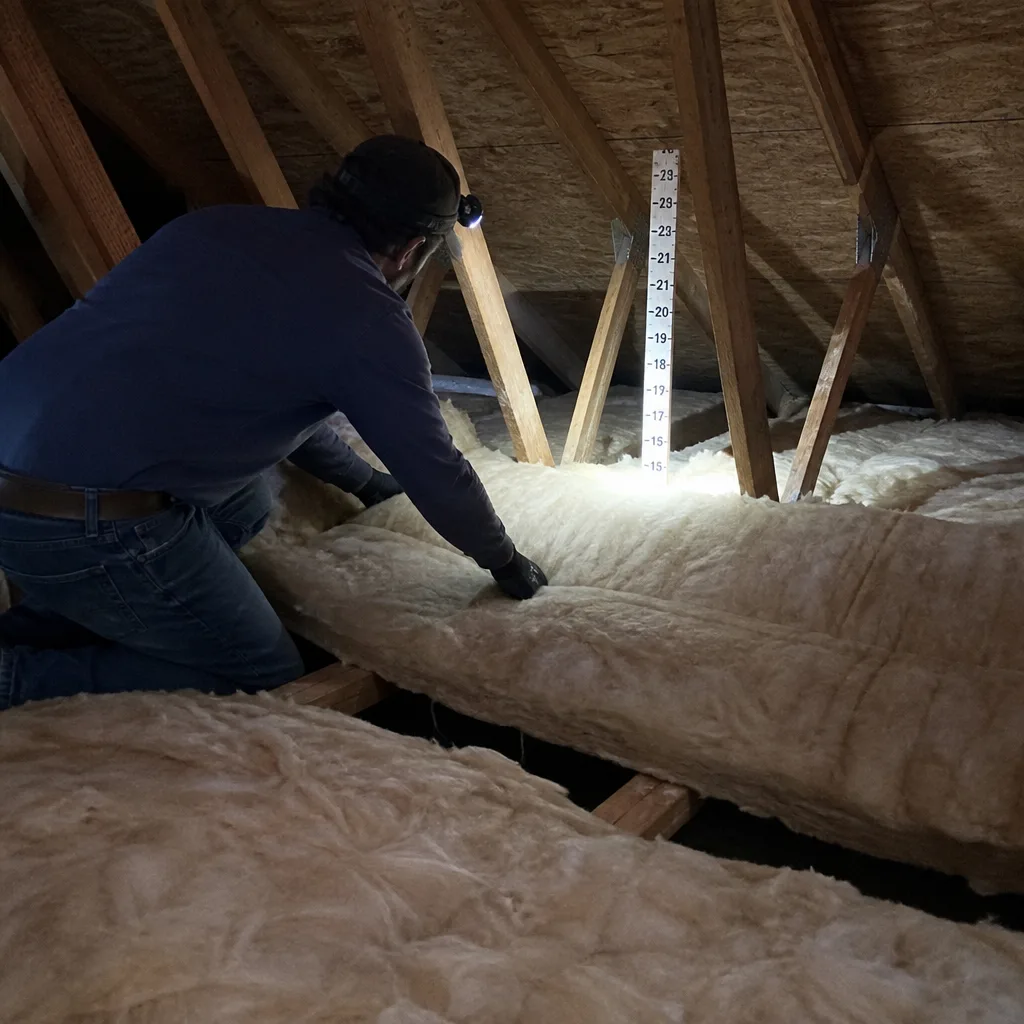
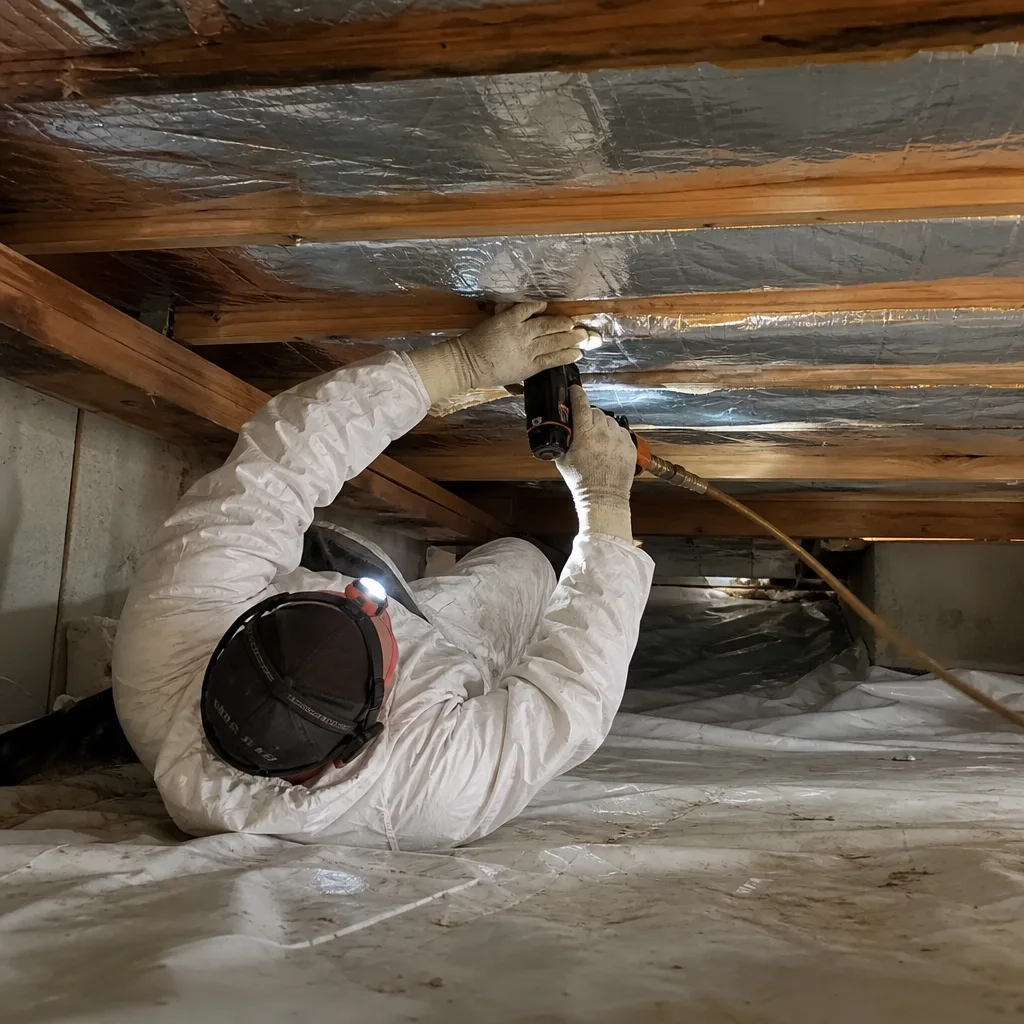
We install GreenFiber blown-in cellulose in Windcrest attics where the 18-24 inch eave clearance makes batts impractical. Cellulose packs to R-3.2-R-3.8 per inch, so we can hit R-38 to R-49 in the available depth without compressing the material. On a low-slung ranch off Windcrest Drive, our crew found the original 2-3 inch blown fiberglass settled to a thin dust layer over compressed R-11 batts, with only about 20 inches of clearance at the eaves. We ran GreenFiber blown-in cellulose to a deep, level blanket through a reduced-profile hose and baffled the eave line first so the new depth didn’t block the soffit vents. The homeowner’s summer attic temps had been pegging past 150°F; after the top-up, the house finally held a setpoint through the afternoon.
Blown-In Fiberglass
For Windcrest homeowners who prefer fiberglass, we source Owens Corning ProPink and Johns Manville Climate Pro in loose-fill form. These materials don’t settle as aggressively as older fiberglass products, which matters in a city where the original 1960s blown-in has compressed to half its labeled depth. We blow to a uniform density and mark target depths on the rafters so you can verify the job yourself with a yardstick.
Dense-Pack Wall Insulation
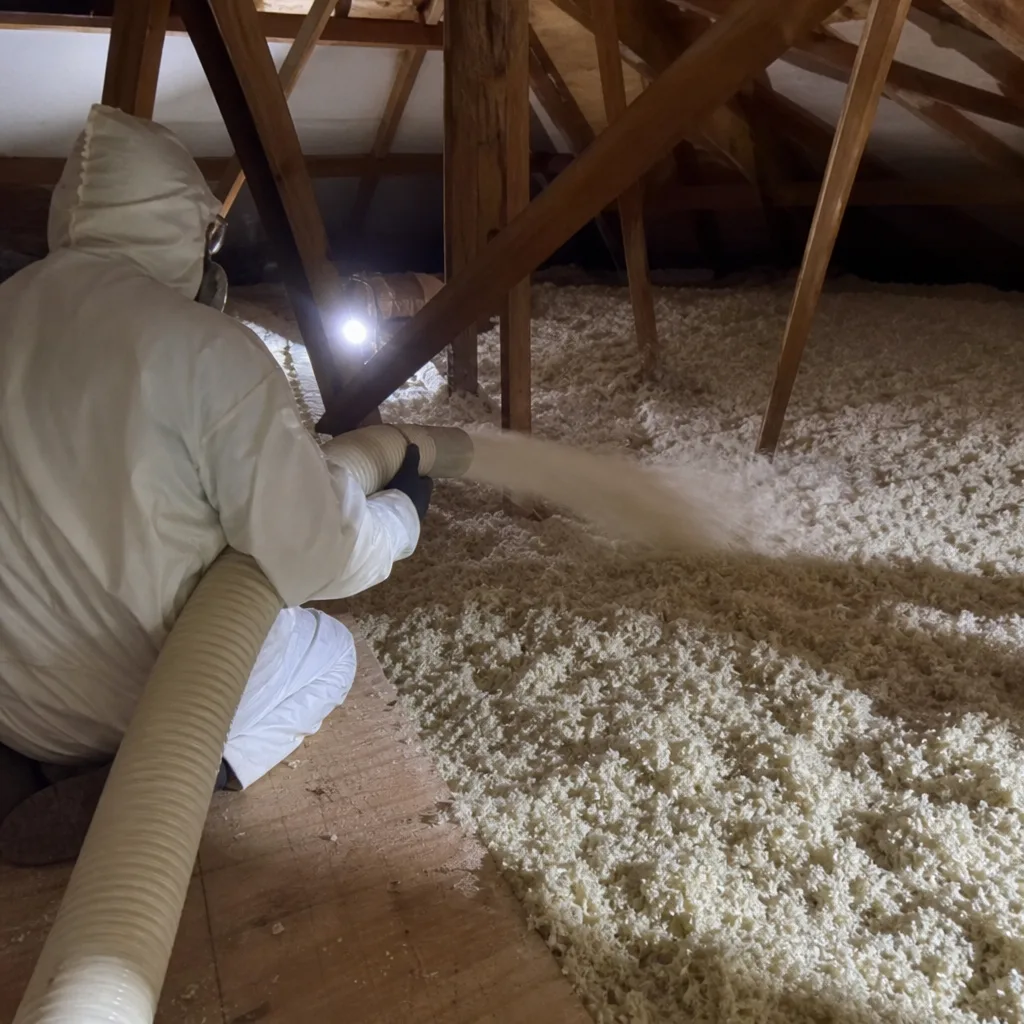
Windcrest’s slab-on-grade ranches typically have empty exterior wall cavities. No insulation at all. A blown-in attic top-up helps the roof, but the walls still bleed conditioned air. We dense-pack cellulose or fiberglass into wall cavities through exterior or interior access points, usually completing attic and walls in the same trip. After Winter Storm Uri, we’ve seen more Windcrest homeowners pair these scopes. A house with a sealed attic and uninsulated walls still freezes pipes when the hard freeze hits.
Blown-In Top-Up
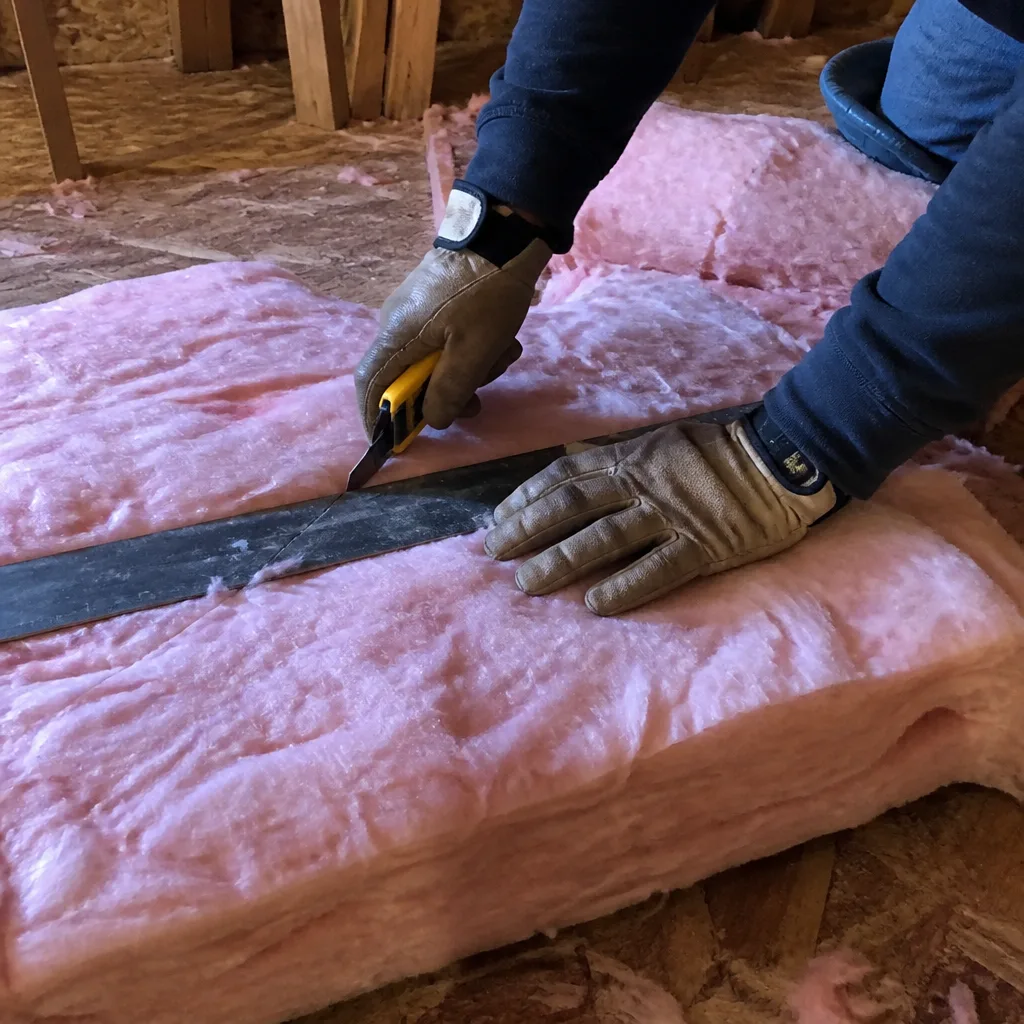
This is our most common Windcrest call. The attic has some insulation, probably original to the house, and the homeowner suspects it’s not enough. We’re usually right. We remove the settled debris, air-seal top plates and can lights, then blow new material to full depth. Every top-up includes a Documented Photo Record and, on applicable jobs, before-and-after blower-door readings so you can see the performance change in a single figure.
What happens when you call
- 1
A real person answersNo phone trees - you reach a local pro.
- 2
You get an upfront price rangeHonest numbers before anyone is dispatched.
- 3
A background-checked tech heads outLicensed & insured, dispatched right away.
- 4
You approve before work beginsNothing starts until you say go.
Trusted Brands We Service in Windcrest
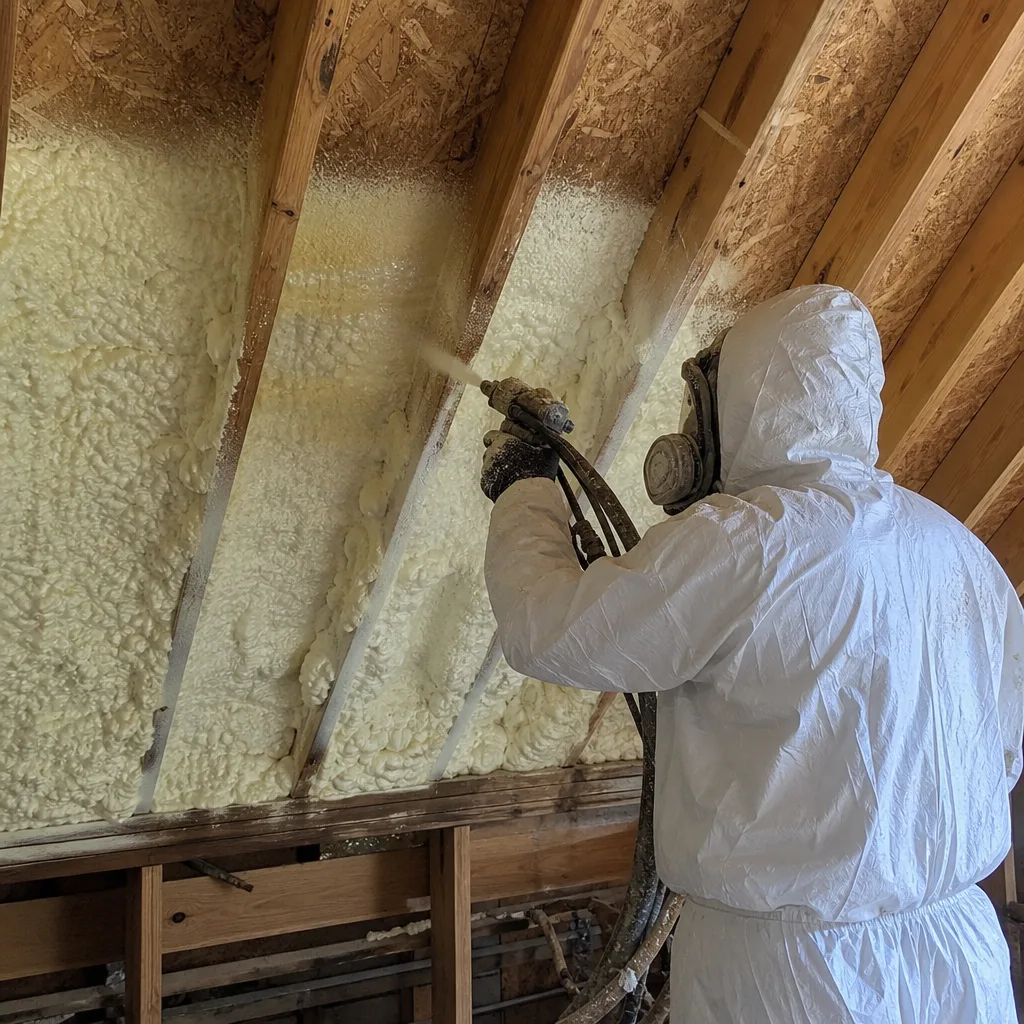
We stock GreenFiber cellulose, Owens Corning fiberglass, and Johns Manville loose-fill from our San Antonio warehouse, with same-day availability for most Windcrest jobs. No proprietary product lock-in. If your home has existing Demilec spray foam that needs tying into a blown-in scope, we can handle that transition. We don’t push one material over another. We specify what fits the geometry and the budget, and we put that specification in writing before anyone starts.
Common Blown-In Insulation Problems We See in Windcrest Homes
- Eave clearance of 18-24 inches makes standard batt runs impossible. Crews who show up with batts either compress them into the gap, which kills their R-value, or leave the outer bays bare. Blown-in is the only method that fills those shallow corners to full depth without damaging the material.
- Original 2-3 inch blown fiberglass has settled and compacted over 50-60 years. The center of the attic might read acceptable on a depth stick, but the far corners are essentially uninsulated. We map the entire floor before quoting, not just the easy-to-reach hatch area.
- Uninsulated exterior wall cavities and garage ceilings turn any blown-in attic top-up into a partial fix. These slab-on-grade ranches lose heat through the walls faster than through the roof in winter. We flag this during inspection and quote dense-pack walls alongside the attic scope when it makes sense.
- Soffit vent blockage is a constant risk in shallow Windcrest attics. New blown-in material, properly installed, is deep. Without baffles at the eave line, that depth blocks intake airflow and creates moisture problems. We install baffles as standard, not as an upsell.
Pricing for Blown-In Insulation in Windcrest, TX
A typical blown-in attic top-up in Windcrest runs $1,200-$2,200. Full removal of degraded material plus new blown-in to R-38 or R-49: $2,400-$3,800. Dense-pack wall insulation, when paired with attic work: $1,800-$3,200 depending on linear footage and access method. These ranges reflect Windcrest’s consistent ranch footprint - most homes fall within a narrow square-footage band, so our quotes are unusually precise here compared to mixed-era San Antonio neighborhoods.
What moves the number: current insulation condition, accessibility, whether air sealing is needed before blowing, and whether walls are included. We don’t guess. We inspect, measure, and deliver a written price. Free Second Opinion on any written estimate from another contractor. Call (830) 402-5240 for an exact quote - estimates are free.
We Also Serve Cities Near Windcrest
Our crews work Windcrest regularly and also handle blown-in insulation calls from Schertz, Cibolo, Universal City, and Selma. Same equipment, same written-price standard, same 365-Day Done Right Promise. Dispatch and scheduling are coordinated from our San Antonio office.
Serving Windcrest, TX - Our Local Coverage Area
We’re based in the Windcrest area and know this community well. Use the map below to see our service coverage - if you’re nearby, we can almost certainly help.
FAQs - Blown-In Insulation in Windcrest
No. The 18-24 inch eave clearance on Windcrest’s 1950s-1970s ranch rooflines makes batt installation physically impossible without compressing the material or leaving outer bays empty. We use blown-in cellulose or fiberglass specifically because it fills irregular shallow cavities to full depth. Call (830) 402-5240 and we’ll show you the geometry on your own attic floor plan.
Because the original material has likely settled to half its labeled depth or less after 50-60 years of heat cycling. We regularly find 2-3 inch original blown fiberglass compressed to a thin layer over degraded batts. A top-up removes the debris, seals the air leaks, and blows new material to the full depth your roofline can accommodate. Call (830) 402-5240 for a free inspection and written price.
Not completely. The attic helps, but Windcrest’s slab-on-grade ranches typically have uninsulated exterior walls and garage ceilings that were the primary failure points in February 2021. We recommend pairing blown-in attic work with dense-pack wall insulation for full protection. We’ll scope both and give you a written price for each option so you can decide. Call (830) 402-5240.
We install eave baffles before blowing any material. The baffle maintains a clear airway from soffit to ridge vent even as we pack cellulose or fiberglass to full depth against it. This is standard on every Windcrest job. We document the baffle installation in your photo record. Call (830) 402-5240 for specifics on your roofline.
We typically use GreenFiber blown-in cellulose for Windcrest top-ups because it packs well in shallow cavities and resists settling better than older fiberglass products. Owens Corning ProPink is available if you prefer fiberglass. We specify the material in your written scope before work starts, and we source from our San Antonio warehouse for fast turnaround. Call (830) 402-5240 for a free estimate.
Written by Wes Okafor, Owner at Topside Attic Insulation Schertz, serving Windcrest since 2016.