
Last updated September 24, 2026
Insulation Warning Signs: A Schertz Homeowner’s Reference Guide
A $400 electricity bill in July is not an insulation problem. It’s the result of an insulation problem that started at least one cooling season earlier, when the physical evidence was already visible in your attic and silent inside your living space. Schertz sits at the edge of Texas Hill Country where summer highs push past 100°F and winter lows dip into the 20s; that temperature swing places extraordinary demand on building envelopes that were never designed for it. Most homes in Schertz neighborhoods like The Crossvine, Willow Grove, and Live Oak were built between 1995 and 2015 with code-minimum insulation that degrades measurably within a decade. In The Complete Guide to Insulation in Schertz, we’ll show you how to read the warning signs yourself, what each one costs you in performance, and when a professional assessment with documented blower-door numbers becomes worth the call.
Quick Answer
The most reliable insulation warning signs in Schertz homes are visible attic conditions (compressed, settled, or channeled insulation), interior thermal anomalies (cold outlets, thermal striping on ceilings, winter humidity above 60% RH), and HVAC runtime patterns that increase year-over-year without equipment changes. These symptoms precede utility bill spikes by 12 to 18 months and can be verified with a $20 digital thermometer and a visual attic inspection, as detailed in our Attic Insulation Maintenance Checklist for Schertz Homeowners.
Table of Contents
- Visual Attic Evidence: What Degraded Insulation Actually Looks Like
- Interior Warning Signs You Can Detect Without Entering the Attic
- The Digital Thermometer Protocol for Finding Hidden Voids
- Three HVAC Symptoms That Point to Insulation Failure, Not Equipment Failure
- What a Rising Blower-Door Number Means Physically
- Schertz-Specific Risks: Climate, Code, and Construction Era
- Common Mistakes to Avoid
- When to Call a Professional
- Frequently Asked Questions
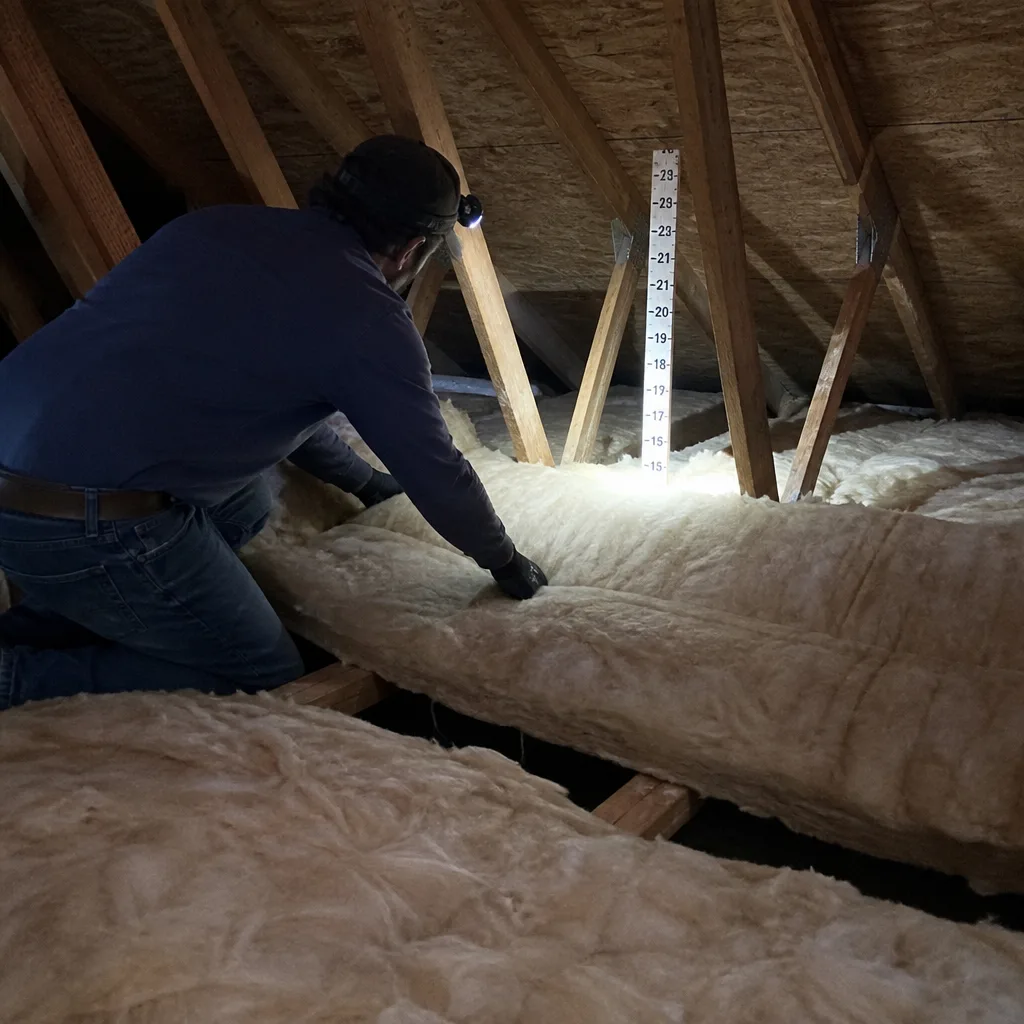
Visual Attic Evidence: What Degraded Insulation Actually Looks Like
The attic tells the truth. Every insulation failure leaves physical evidence that persists long before the thermostat becomes unreliable or the bill climbs. In Schertz, where attics regularly reach 140°F in August, three distinct failure modes dominate, and each carries a specific R-value penalty you can estimate visually.
Compressed Fiberglass Batts
Fiberglass batts installed between 1995 and 2010 in Schertz subdivisions were typically R-30, rated for 10 inches of loft. When compressed by storage boxes, walking boards, or the weight of subsequent blown material, R-value drops proportionally to thickness. A batt compressed from 10 inches to 5 inches performs at roughly R-15, half its rated value. The visual signature is unmistakable: the batt has lost its fluffy, springy texture and appears matted, with visible fiber densification. You can press your finger into a healthy batt and feel resistance; a compressed batt feels like dense packing material.
In Schertz’s older neighborhoods near FM 3009 and Schertz Parkway, we regularly find batts compressed to 3 to 4 inches by homeowners who stored holiday decorations directly on the insulation surface. The R-value penalty in these cases often exceeds 60%, meaning the home effectively has R-12 to R-15 in a climate zone where the Department of Energy recommends R-38 to R-60 for attics.
Settled Cellulose
Cellulose insulation, including products from GreenFiber, settles over time. The installed density of 1.5 to 2.0 lbs per cubic foot gradually increases as fibers compact under their own weight and attic vibration. Properly installed cellulose with adequate density and wall-to-wall coverage settles predictably, about 20% in the first two years. Improperly installed material, or material installed over uneven surfaces, settles unevenly and creates voids.
The warning sign: you can see the tops of ceiling joists poking through the insulation layer, or you find areas where the cellulose has pulled back from the eaves by 12 to 24 inches. In Schertz homes with crawl space encapsulation work done by others, we sometimes find cellulose that settled after the home’s moisture dynamics changed, the material having been installed at borderline density for the original conditions.
The R-value penalty for settled cellulose depends on the void percentage. A 20% uniform settlement reduces average R-value by roughly that proportion. Patchy settlement with visible joists creates thermal bridging at the framing members, where wood conducts heat at roughly R-1 per inch, effectively creating a radiator into your attic in summer and out of your home in winter.
Channeled Blown Material Near Soffit Vents
Blown fiberglass or cellulose near soffit vents is vulnerable to wind washing, the movement of air through the insulation layer that carries fibers toward the vent opening. The visual result is a channel, a trough of depleted insulation leading directly to the vent. We’ve measured channels 3 feet long and 6 inches deep in Schertz homes near the Cibolo Creek watershed, where afternoon breezes pressurize attic spaces more aggressively than inland locations.
The R-value penalty here is total at the channel location: zero effective insulation where the material has been stripped away. A single 6-inch-wide channel running the length of a soffit vent can represent 5 to 10 square feet of uninsulated ceiling, equivalent to leaving a window cracked year-round.
Staining and Discoloration
Dark gray or black staining on insulation surface indicates air filtration, conditioned air leaking through the ceiling and depositing dust and particulate matter. In Schertz, where caliche soil creates fine dust, this staining is often pronounced. The insulation isn’t dirty; it’s acting as a filter. The location of staining reveals the leak path: around can lights, bathroom exhaust fans, or drywall joints.
Stained insulation is compromised insulation. The deposited material adds negligible R-value but can increase moisture retention and, in cellulose, create conditions for mold growth. More importantly, staining proves air movement that bypasses the insulation entirely, thermal leakage that no amount of additional R-value will stop without attic air sealing first.
Interior Warning Signs You Can Detect Without Entering the Attic
Not every homeowner wants to climb through a scuttle hole in July. These interior indicators reveal attic insulation failure from the living space, and several require only observation or a $20 digital thermometer.
Thermal Striping on Ceilings
Thermal striping appears as faint parallel lines on painted ceilings, typically 16 or 24 inches apart, matching stud spacing. The pattern occurs because insulation batts or blown material were installed flush with the top of the joist, leaving the joist itself as a thermal bridge. In summer, the joist area runs cooler; in winter, warmer. Over years, this temperature differential drives subtle paint discoloration that becomes visible in raking light.
In Schertz homes with textured ceilings, thermal striping is harder to see but often detectable with a digital thermometer. Scan the ceiling in early afternoon on a sunny day: a 3°F or greater difference between the apparent “stripes” indicates missing or compressed insulation at the framing members.
Cold Electrical Outlets on Exterior Walls
Electrical boxes in exterior walls are penetration points. Without proper air sealing and insulation behind the box, they become thermal conduits. In winter, the faceplate may feel cold to the touch; in summer, it may weep condensation in high-humidity conditions. A digital thermometer reading of the faceplate more than 5°F different from the room air temperature indicates significant leakage.
The fix is not more wall insulation; it’s air sealing at the box and proper insulation placement behind it. In Schertz’s 1990s-era construction, we find this condition in roughly 70% of homes we assess, the result of electricians who sealed boxes for fire safety but not for air tightness.
Winter Indoor Humidity Above 60% RH
This sign surprises homeowners. High winter humidity suggests the building envelope is too loose, not too tight. Warm, moist interior air escapes through insulation gaps, carrying moisture into wall cavities and attic spaces. The home’s humidity drops as fast as the occupant adds it. But when the envelope is properly sealed and insulated, moisture generated by cooking, bathing, and respiration accumulates indoors.
In Schertz, where winter outdoor humidity can swing from 90% during rain events to 30% during dry cold fronts, a home with failed insulation and air sealing may show humidity readings that track outdoor conditions rather than maintaining stable indoor levels. A humidity reading above 60% RH in January, with normal occupancy and no humidifier running, suggests the envelope is performing poorly in the other direction, too loose to maintain any conditioning.
Uneven Room Temperatures With Open Floor Plans
Open floor plans depend on a tight envelope to maintain temperature uniformity. When insulation fails, thermal zones reassert themselves. The room with the most exterior wall and ceiling area becomes the most difficult to condition. In Schertz’s popular one-story ranch designs, the master bedroom at the home’s corner, with two exterior walls and a large attic footprint above, is typically the first to show symptoms, a pattern covered in our Seasonal Insulation Care for Schertz: Year-Round Homeowner’s Guide.
The Digital Thermometer Protocol for Finding Hidden Voids
A non-contact infrared thermometer, available at any hardware store for $15 to $30, can locate insulation voids in finished attics where visual inspection is impossible. This protocol works for cathedral ceilings, kneewall spaces, and any area where drywall conceals the insulation layer.
- Choose the right conditions. For attic insulation assessment, test on a sunny summer afternoon between 2 and 5 PM, when attic temperatures peak and temperature differentials are most pronounced. For winter testing, early morning after a clear night produces the strongest signals.
- Establish a baseline. Measure a known-good area first, typically a central hallway ceiling with confirmed insulation above. Record this temperature. In Schertz in July, a well-insulated ceiling surface typically reads 78°F to 82°F when the attic above is 130°F to 140°F.
- Scan in a grid pattern. Move the thermometer in overlapping passes, approximately 12 inches apart, across the ceiling surface. Hold the device perpendicular to the surface at a consistent distance, typically 12 to 18 inches.
- Interpret the readings. A temperature reading 5°F or more above the baseline indicates reduced or missing insulation. A reading 10°F or more above baseline almost certainly indicates a void or severe compression. In our Schertz assessments, we flag any differential exceeding 8°F for physical verification.
- Account for false positives. Ceiling fixtures, HVAC supply vents, and areas directly below ductwork will read differently. Mark these locations and scan around them. A void caused by missing insulation typically appears as a diffuse area 2 to 4 feet across; a duct influence is sharper and localized.
- Map and photograph. Sketch the ceiling layout, note the anomalous temperatures, and photograph the thermometer display against the ceiling surface. This documentation becomes valuable if you engage a contractor for follow-up.
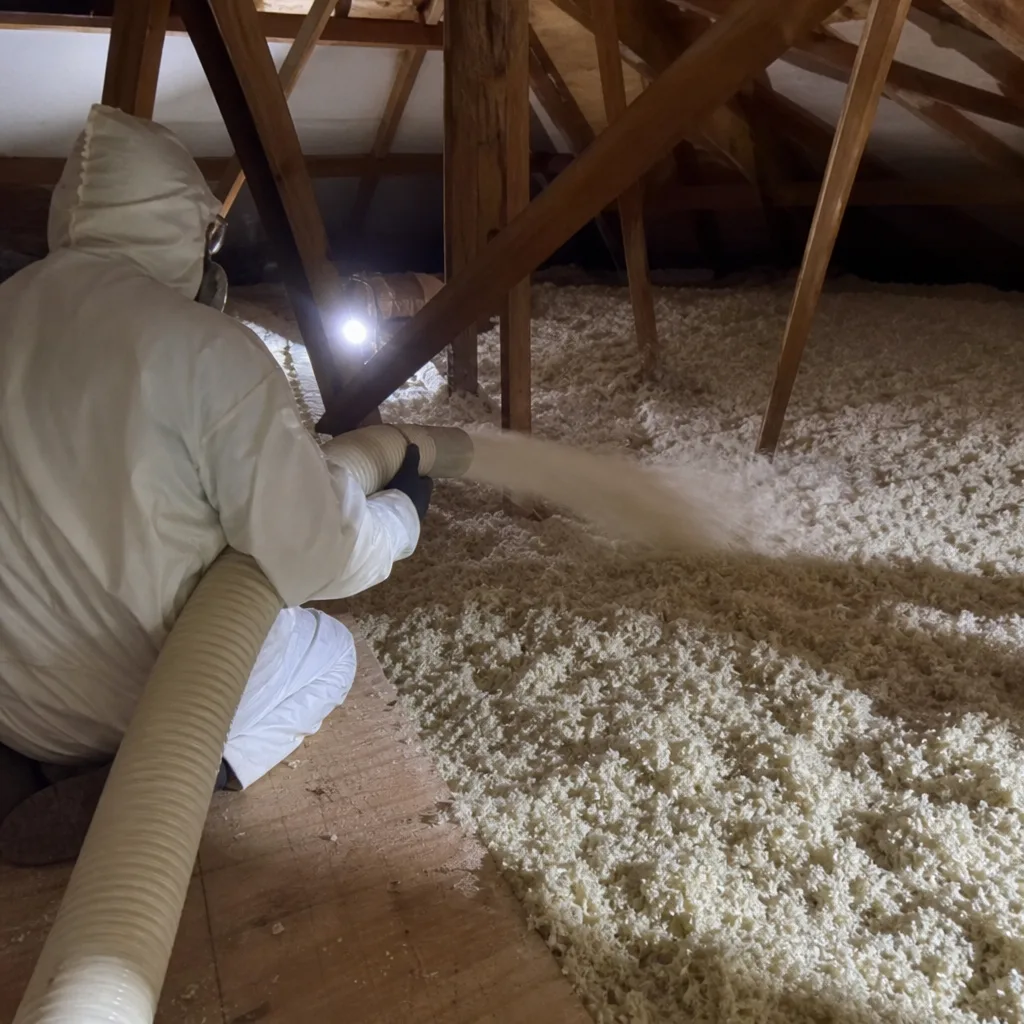
When readings are ambiguous, within 3°F to 5°F of baseline, the condition is typically uneven insulation rather than a complete void. This is common in Schertz homes where blown material was installed before air sealing, the insulation having been disturbed by air movement into attic spaces over years. The spray foam insulation we install in some Schertz applications eliminates this ambiguity by adhering directly to the substrate and creating a monolithic thermal barrier.
Three HVAC Symptoms That Point to Insulation Failure, Not Equipment Failure
Schertz homeowners often replace perfectly functional HVAC systems when the real problem is envelope degradation. These three symptoms, evaluated together, distinguish insulation failure from equipment problems with high reliability.
Symptom 1: Runtime That Has Increased Year-Over-Year on the Same System
Modern thermostats and smart home systems record runtime data. Compare July runtimes for the current year against two or three years prior, adjusted for temperature using degree-day data. If the system runs 20% to 40% longer to maintain the same setpoint during comparable weather, and the equipment has been serviced normally, the building envelope has degraded.
Equipment problems tend to show as failure to reach setpoint, short cycling, or unusual noise. Insulation problems show as longer, quieter operation that still achieves temperature, just with more labor. In Schertz, where July cooling degree days average 600+, a 25% runtime increase translates directly to a 25% electricity increase for the cooling portion of the bill.
Symptom 2: Supply Temperatures Match Spec, But Rooms Don’t Cool
Measure the air temperature at a supply register with a standard thermometer. A properly functioning system delivers supply air 15°F to 20°F below return air temperature. If this differential is correct, the equipment is doing its job. The problem is thermal loss between the conditioned space and outdoors, which insulation failure accelerates.
In Schertz’s afternoon peak, a home with failed attic insulation can gain 8,000 to 12,000 BTU per hour through the ceiling alone. The HVAC system produces sufficient cooling, but the thermal load overwhelms the delivery. Rooms with the most ceiling exposure, typically those with southern or western orientation, show the worst performance.
Symptom 3: Humidity Control Loss
Air conditioning dehumidifies by cooling air below its dew point. When runtime drops due to thermostat satisfaction, dehumidification suffers. But when runtime increases due to insulation failure, the system should dehumidify more, not less. The exception: when insulation failure creates duct leakage or thermal bridging that causes localized condensation.
More commonly, humidity control loss with adequate runtime indicates that the building envelope is too loose, allowing humid outdoor air to infiltrate faster than the system can dehumidify. In Schertz, where Gulf moisture pushes north through the I-35 corridor, this pattern is common in homes with failed attic air sealing, the stack effect drawing humid air through ceiling penetrations continuously.
The diagnostic rule: if supply temperature is correct, runtime has increased, and humidity is uncontrolled, suspect envelope failure before calling an HVAC contractor for equipment replacement.
What a Rising Blower-Door Number Means Physically
A blower-door test, a pressurization reading that shows in one number how much air your building envelope is losing, is the most definitive assessment of envelope performance. The measurement, expressed in CFM50 (cubic feet per minute at 50 Pascals of pressure), provides a baseline that can be tracked over time.
When a Schertz homeowner has a prior blower-door result, a rising number on retest tells a specific physical story. Here’s how to interpret the change.
A 10% to 20% Increase: Likely Duct Leakage or Service Penetrations
Modest increases typically indicate new leakage paths in the thermal boundary. In Schertz, the most common cause is homeowner modifications: recessed can lights installed without airtight housings, bathroom exhaust fans upgraded without sealed penetrations, or cable and internet wiring run through top plates without sealing. Each penetration, if unsealed, adds 50 to 150 CFM50 depending on size and attic pressure conditions.
A 20% to 40% Increase: Insulation Degradation at Top Plates and Penetrations
Larger increases suggest that insulation has shifted, settled, or been disturbed, exposing previously covered leakage paths. Blown fiberglass near eaves is particularly vulnerable; the material migrates over years, revealing top plates and drywall edges that were previously buried. In Schertz’s wind-exposed locations, we’ve measured migration rates of 2 to 4 inches per year in poorly installed material.
The physical connection: insulation does not stop air movement. It slows heat transfer. When insulation moves, the air sealing beneath it, if any existed, is exposed. If that air sealing was incomplete, as is standard in production construction, the leakage path becomes active. A blower-door number that rises 30% often correlates with visual evidence of channeled or migrated insulation in the attic.
A 40%+ Increase: Structural Opening or Major Failure
Dramatic increases indicate a new hole in the envelope: a disconnected duct, a removed access panel, or structural damage. In Schertz, we occasionally find this pattern after roof repairs where the contractor removed decking and failed to restore the air barrier, or after rodent activity that created entry paths through soffit vents into conditioned space.
At Envelope Insulation Co., we publish before-and-after blower-door numbers on every applicable job. A Schertz homeowner who received a reading of 3,200 CFM50 before work and 1,800 CFM50 after can retest in five years and know, with certainty, whether the envelope has remained intact; see our more guides & resources for additional tracking methods. Without that baseline, a rising number is just a guess.
Schertz-Specific Risks: Climate, Code, and Construction Era
Schertz occupies a unique position in the Texas Hill Country transition zone, and that geography creates insulation failure patterns distinct from both coastal and pure Hill Country locations.
The Cibolo Creek Watershed and Humidity Dynamics
Homes east of I-35 in Schertz, particularly in neighborhoods draining toward Cibolo Creek, experience higher sustained humidity than the city average. The creek corridor creates a microclimate with slower overnight cooling and higher morning dewpoints. Attic ventilation in these homes works harder to expel moisture, and insulation that has absorbed humidity through air leakage loses R-value temporarily and can sustain mold growth permanently.
We regularly find compressed fiberglass in these areas that weighs 20% to 30% above specification, water weight that adds thermal conductivity without adding performance. The warning sign is a musty attic odor detectable at the access hatch, or insulation that feels damp to the touch even on dry days.
Caliche Soil and Foundation Movement
Schertz’s caliche substrate expands and contracts with moisture, creating subtle foundation movement that cracks drywall and opens wall-to-ceiling joints. These cracks become air leakage paths that bypass insulation entirely. A hairline crack at the ceiling perimeter can leak as much air as a 4-inch square hole when pressurized by the stack effect.
Homes in newer Schertz developments with post-tension slab foundations show fewer of these cracks, but older homes in original Schertz, near Main Street and the historic district, require periodic inspection of ceiling perimeters and wall joints as part of envelope maintenance.
Code Evolution and the Pre-2012 Gap
Texas adopted IECC 2009 with significant amendments in 2011, and IECC 2012 in 2013. Schertz homes built before 2012 were not required to have blower-door testing, verified air sealing, or insulation installation grading. The practical result: a 2008-built home in Willow Grove may have R-30 batts labeled as R-38, installed with compression at electrical cables and without air sealing at top plates, and still pass inspection.
Homes built 2012 to 2018 have better baseline performance but often lack the continuous air barrier that modern best practice requires. The warning signs in these homes are subtler: not missing insulation, but incomplete air sealing that renders the insulation partially ineffective.
The Solar Heat Gain Factor
Schertz’s latitude and clear-sky percentage create intense radiant heat gain through roofing materials. Dark shingles in direct sun can reach 170°F surface temperature. Without adequate attic insulation and radiant barrier, this heat radiates into the attic space and down through the ceiling. The warning sign: second-story rooms or single-story rooms with direct sun exposure that become uninhabitable by 4 PM despite adequate HVAC capacity.
Radiant barrier installation, which we perform using Owens Corning and Johns Manville products, addresses this specific Schertz condition by reflecting radiant heat rather than absorbing it. The performance improvement is measurable in attic air temperature reduction of 20°F to 30°F during peak conditions.
Common Mistakes to Avoid
- Adding insulation over unsealed air leaks. This is the most expensive mistake a Schertz homeowner can make. Blown fiberglass or cellulose over a leaky attic floor simply filters the escaping air, creating stained insulation and no performance gain. Air sealing must precede insulation, every time.
- Trusting depth markers alone. Depth markers installed during blown insulation work indicate thickness at that specific point, not density or coverage uniformity. A marker reading R-38 in a 12-inch depth means nothing if the material is channeled near the eaves or compressed under walking boards.
- Ignoring soffit vent baffles. Cardboard or foam baffles that maintain insulation clearance over soffit vents collapse, shift, or are removed by rodents. Without them, insulation blocks intake ventilation, creating moisture problems and reducing the effective R-value of the entire attic by allowing heat buildup.
- DIY spray foam in occupied spaces. Two-component spray foam kits available at home centers produce foam with unpredictable expansion and, in some formulations, hazardous off-gassing if not properly mixed. In Schertz’s tight, energy-efficient new construction, we’ve been called to remove improperly installed DIY foam that created VOC levels requiring temporary evacuation.
- Replacing HVAC before assessing the envelope. A $8,000 system replacement that addresses a $2,000 insulation problem is poor economics. The diagnostic sequence should always be: verify equipment function, assess envelope performance, then size any replacement to the improved load.
- Assuming new construction is correct. Schertz’s building boom 2015 to 2022 produced thousands of homes with insulation installed by subcontractor crews paid by the square foot, not by the quality of installation. We find grade defects in roughly 40% of new homes we assess, typically compression at wiring and incomplete coverage at attic hatches.
- Neglecting the access hatch. The attic access is a hole in the envelope. An uninsulated, unsealed hatch in a conditioned hallway leaks as much air as a 6-inch diameter hole, continuously. The fix costs under $50 in materials and 30 minutes of labor, yet we find it ignored in 80% of Schertz homes.
When to Call a Professional
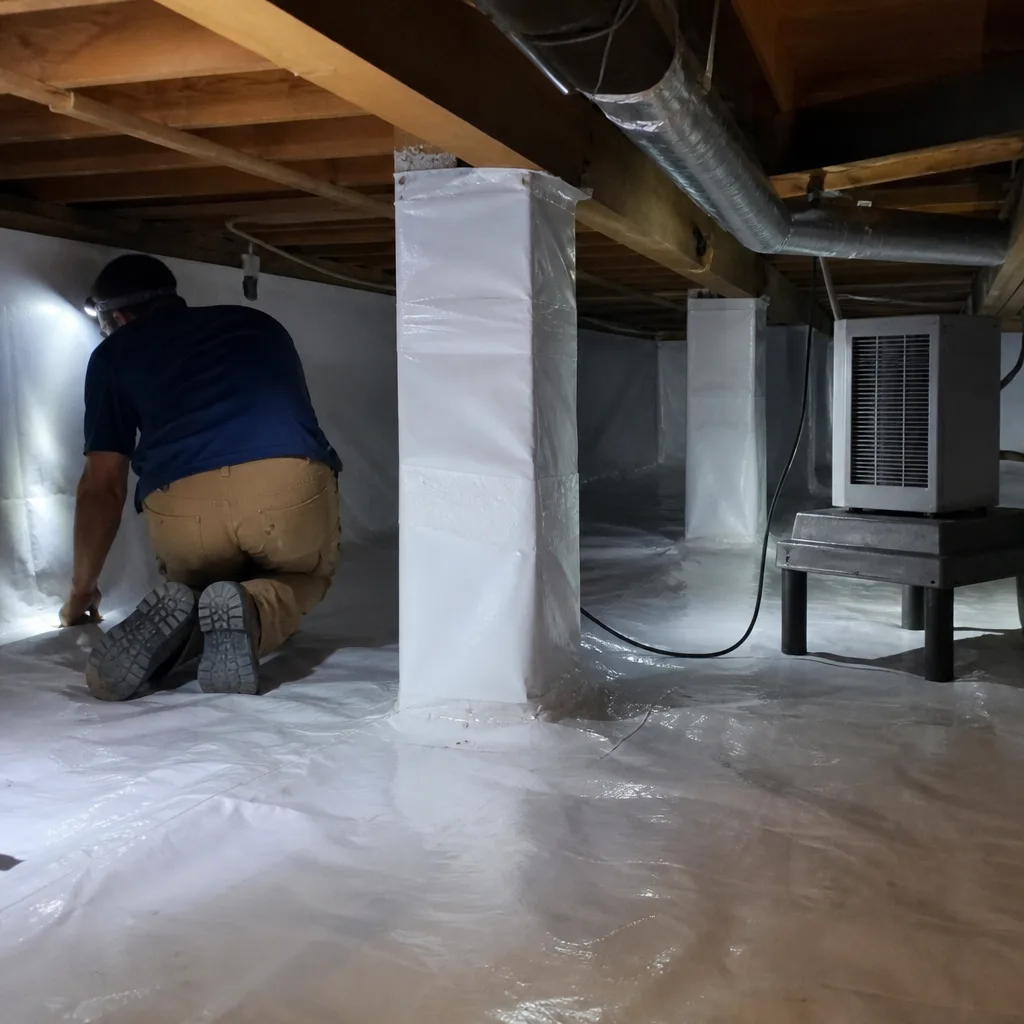
Call for assessment when you observe multiple warning signs together, when your July electricity bill has increased 20% or more year-over-year without rate changes, or when you’re considering any HVAC equipment replacement. A professional assessment with blower-door testing, thermal imaging, and a documented photo record provides the evidence base for decisions that affect your home for decades.
Topside Attic Insulation Schertz offers free estimates in Schertz and surrounding communities. Every assessment includes a written scope and written price before any work starts, under Haven Standard Clause 1. We bring documented blower-door numbers on applicable jobs so you can verify the performance change you paid for. Call (830) 402-5240 to schedule, or bring us a competing written estimate for a free second opinion.
Frequently Asked Questions
Most complete attic insulation replacements in Schertz homes of 1,800 to 2,400 square feet run between $2,800 and $5,500, depending on existing material removal needs, air sealing requirements, and insulation type selected. Blown fiberglass typically falls at the lower end of this range; spray foam at the higher end. This price includes removal of degraded material, air sealing of top plates and penetrations, and installation of new insulation to current code-plus standards. Call (830) 402-5240 for a written price specific to your home, estimates are free.
You can, but you shouldn’t, not until the attic floor is air sealed. Adding blown material over unsealed leaks creates a filter, not a thermal barrier. The new insulation will stain and compress within two years, and you’ll have spent money without improving performance. The correct sequence, which we follow on every job, is seal first, then insulate. We document the air sealing with blower-door numbers so you can see the leakage reduction before any insulation is added.
Vermiculite insulation, a pebble-like gray material installed primarily before 1990, is the primary asbestos concern in residential attics. Fiberglass batts, cellulose, and modern blown materials do not contain asbestos. If your Schertz home was built before 1990 and has loose-fill insulation that resembles gravel, assume it contains asbestos until tested. Do not disturb it. We can arrange certified testing and, if necessary, abatement referral through our documented assessment process.
In Schertz’s climate, this pattern typically indicates attic insulation failure combined with duct leakage or inadequate air sealing at the ceiling plane. The attic above a second story reaches 140°F to 150°F in July. Without adequate insulation and a continuous air barrier, that heat radiates through the ceiling and overwhelms the cooling system. A digital thermometer scan of the ceiling, following the protocol in this guide, will reveal whether the temperature differential supports this diagnosis. If the ceiling surface reads more than 5°F above the room air temperature, the attic is the problem.
Properly installed, undisturbed insulation can maintain rated performance for 50 years or more. However, “properly installed” is the critical condition. In Schertz’s actual housing stock, we find significant degradation in 15 to 25 years due to compression, settlement, moisture exposure, and disturbance by homeowners or service contractors. The 1995 to 2010 construction era, which represents much of Schertz’s housing inventory, is particularly vulnerable due to code-minimum installation practices and the prevalence of fiberglass batts vulnerable to compression.
A blower-door test is a pressurization measurement that shows, in a single figure, how much conditioned air your building envelope is losing. A large fan mounts in an exterior door, depressurizes the house to 50 Pascals, and measures the airflow required to maintain that pressure. The result, in CFM50, allows comparison against standards and against your own prior results. You need one if you’re considering insulation work, if your energy bills have increased without explanation, or if you want documented proof of performance improvement. At Envelope Insulation Co., we provide before-and-after blower-door numbers on every applicable job as part of our standard documentation.
The Bottom Line
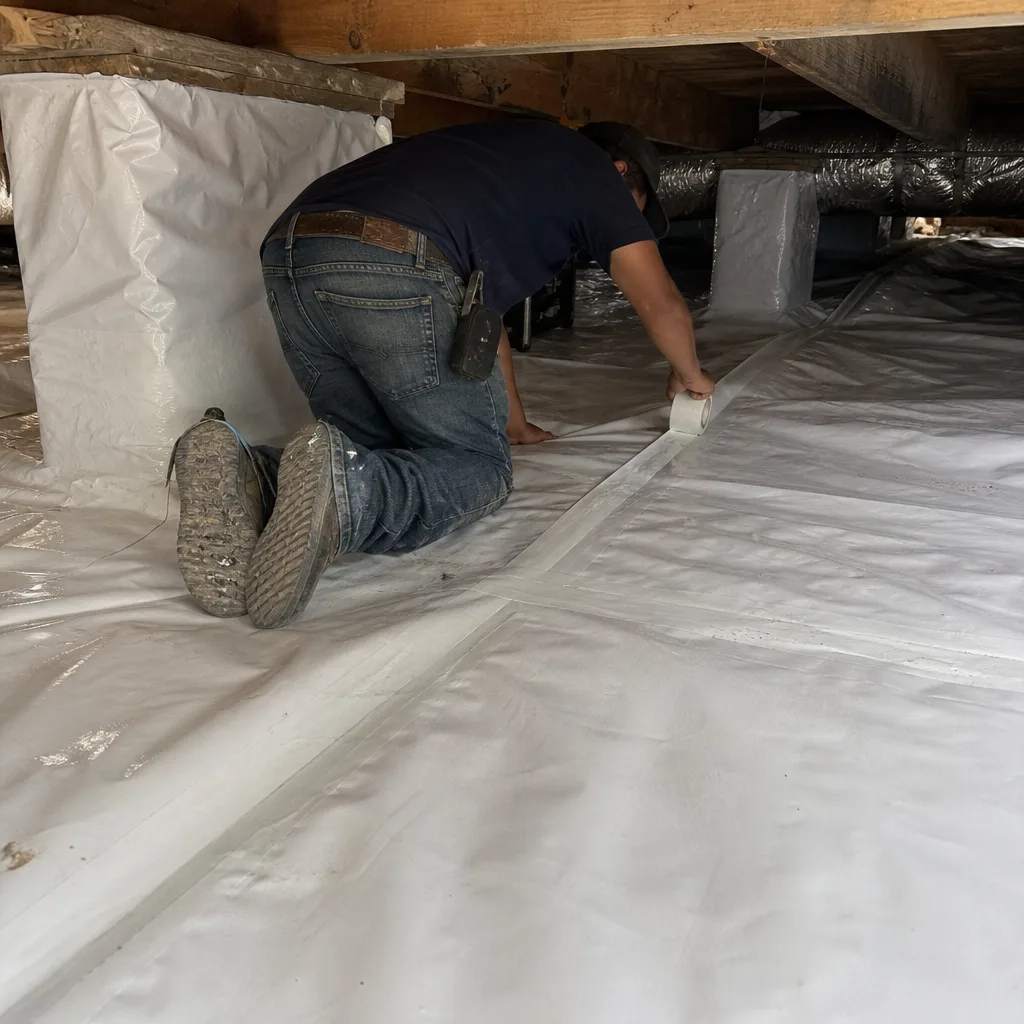
Insulation failure in Schertz announces itself months before the utility bill spikes. The signs are visible in the attic, readable on the ceiling with a $20 thermometer, and audible in the longer runtime of your HVAC system. Compressed batts, settled cellulose, channeled blown material, thermal striping, cold outlets, and humidity that won’t stabilize are not separate problems. They are the same problem, the gradual degradation of a building envelope under climate stress that exceeds its original design.
The correct response is assessment before action, documentation before commitment, and air sealing before insulation. Every time. Under The Haven Standard, that’s the only sequence we offer.
Written by Wes Okafor, Owner at Topside Attic Insulation Schertz, serving Schertz since 2016.