
Last updated September 24, 2026
Seasonal Insulation Care for Schertz: Year-Round Homeowner’s Guide
In June, water vapor pushes inward through a Schertz attic assembly from the hot exterior toward the air-conditioned interior. By January, that drive reverses. An insulation layer installed without accounting for both directions will trap moisture in one of the two - and the damage shows up in the other season. Schertz sits in IECC Climate Zone 2A, a mixed-humid designation that doesn’t reward the four-season maintenance calendar you’ll find on generic home blogs. What works in Denver or Minneapolis will mislead you here. This guide - alongside our Complete Guide to Insulation in Schertz - maps the two actual moisture-drive seasons that govern insulation performance in Schertz homes, the specific inspection tasks that belong to each, and the documentation that tells you when a professional needs to see the assembly.
Quick Answer
Schertz’s Zone 2A climate creates two insulation seasons, not four: a seven-month cooling season (May through November) when vapor drives inward, and a five-month heating season (December through April) when it drives outward. The only safe window for attic work is October, when temperatures and humidity drop enough to enter the space without heat stress or active condensation. Year-round care - detailed in our Attic Insulation Maintenance Checklist for Schertz Homeowners - means checking attic ventilation airflow before summer peak load, verifying duct seams and insulation depth, then shifting to hatch sealing and bath fan termination checks before winter reversal - with a written log tracking interior humidity, HVAC runtime, and any visible staining that crosses a threshold.
Table of Contents
- The Two Moisture-Drive Seasons in Schertz’s Zone 2A Climate
- Pre-Summer Inspection: Attic Ventilation, Duct Seams, and Insulation Depth
- Pre-Winter Inspection: Hatch Sealing, Bath Fan Termination, and Condensate Risk
- The Fall Transition Window: Why October Is the Only Practical Month for Attic Work
- What Your Seasonal Log Should Record (And When to Call Us)
- How Schertz’s Climate Affects Insulation Material Choice
- When a Blower-Door Test Changes Your Maintenance Plan
- Common Mistakes to Avoid
- When to Call a Professional
- Frequently Asked Questions
- The Bottom Line
The Two Moisture-Drive Seasons in Schertz’s Zone 2A Climate
Most homeowner guides divide the year into four equal quarters. That model fails in Schertz because our moisture drive doesn’t follow the calendar - it follows the temperature and vapor pressure differential across the building envelope.
The seven-month cooling season runs roughly May through November. During this period, the attic can reach 140°F while the living space below stays at 75°F. The absolute humidity outside is high, and the vapor pressure pushes water molecules from the hot, humid exterior toward the cooler, drier interior. This inward drive is the dominant moisture risk for Schertz attics. If your insulation layer lacks a vapor retarder on the correct side, or if your attic ventilation is insufficient, that moisture accumulates at the first cold surface it encounters - typically the underside of the roof deck or the top of the insulation layer.
The five-month heating season runs December through April. Now the interior is warmer and often more humid than the dry winter air outside. The vapor drive reverses, pushing from the living space up through the ceiling assembly toward the attic. This is when poorly sealed top plates, can light penetrations, and attic hatches become the critical failure points. Warm, moist air hits the cold roof deck and condenses. Because Schertz’s freezing events are brief and intermittent - typically 15-25 nights below 32°F - ice dam risk is lower than in northern climates, but the condensation still wets insulation, degrades its R-value, and creates the conditions for mold growth that becomes visible the following spring.
The practical implication: your maintenance tasks must match the direction of vapor drive. Summer preparation addresses the exterior-to-interior path. Winter preparation addresses the interior-to-exterior path. Treating both the same way means missing one of them.
Pre-Summer Inspection: Attic Ventilation, Duct Seams, and Insulation Depth
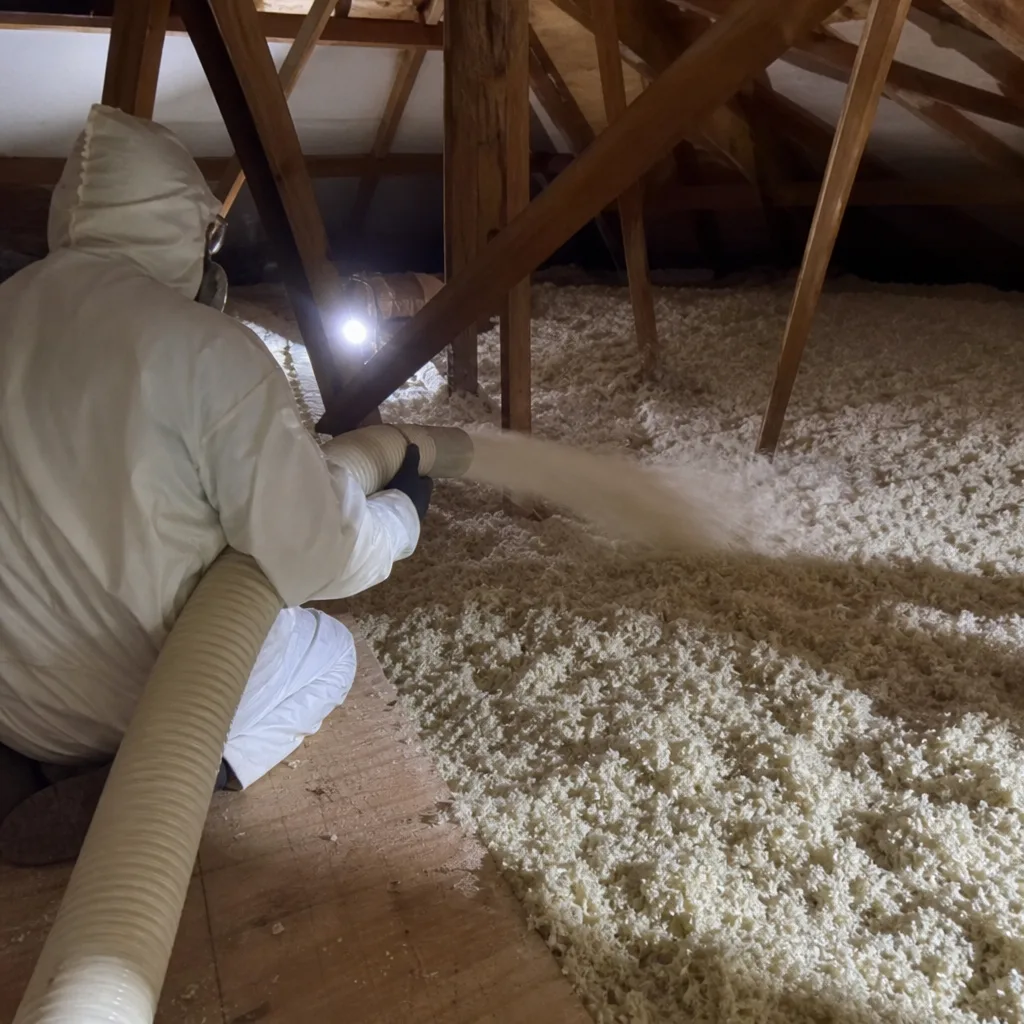
We start every pre-summer assessment with the same three tasks, in order. Each one addresses a specific failure mode we’ve documented in Schertz homes since 2016.
1. Attic Ventilation Airflow Check
Ventilation in a Zone 2A attic has one job during cooling season: remove heat and humidity before it can drive inward through the assembly. The IRC specifies 1:150 ratio of net free vent area to attic floor area for unconditioned attics, or 1:300 with proper balance between intake and exhaust. In Schertz, we treat that as a minimum, not a target.
Here’s what to verify:
- Measure intake vent area at soffits or eaves. Look for blocked or painted-over vents, which reduce net free area by 30-50%.
- Verify exhaust vent function at ridge, gable, or powered vents. Ridge vents with inadequate intake create negative pressure that pulls conditioned air upward through ceiling penetrations.
- Check for uniform airflow across the attic floor. Hot spots near the center indicate dead zones where moisture accumulates.
In neighborhoods like The Crossvine and Willow Grove, we’ve found that builders often installed adequate exhaust but restricted intake with decorative soffit covers that halved the free area. The attic overheats, the insulation layer sees sustained high temperature, and the effective R-value drops because fiberglass and cellulose performance degrades above 100°F.
2. Duct Seam Audit
Schertz homes built between 1995 and 2010 - a significant portion of our housing stock - typically have flex duct runs in the attic. Every seam, every connection to the plenum, and every support contact point is a potential leak. During cooling season, those leaks do double damage: they lose conditioned air to the attic, and they create localized cold surfaces where humid attic air condenses.
What we look for:
- Disconnected or sagging flex duct, especially at bends over 90 degrees
- Gaps at plenum connections visible with a flashlight
- Water staining on duct exterior or surrounding insulation, indicating past condensation
- Insulation jacket damage that exposes the vapor barrier beneath
A blower-door test - the pressurization reading we perform on every applicable job - will quantify duct leakage as a portion of total building leakage. But a visual inspection catches the obvious failures before you schedule that test.
3. Insulation Depth Verification
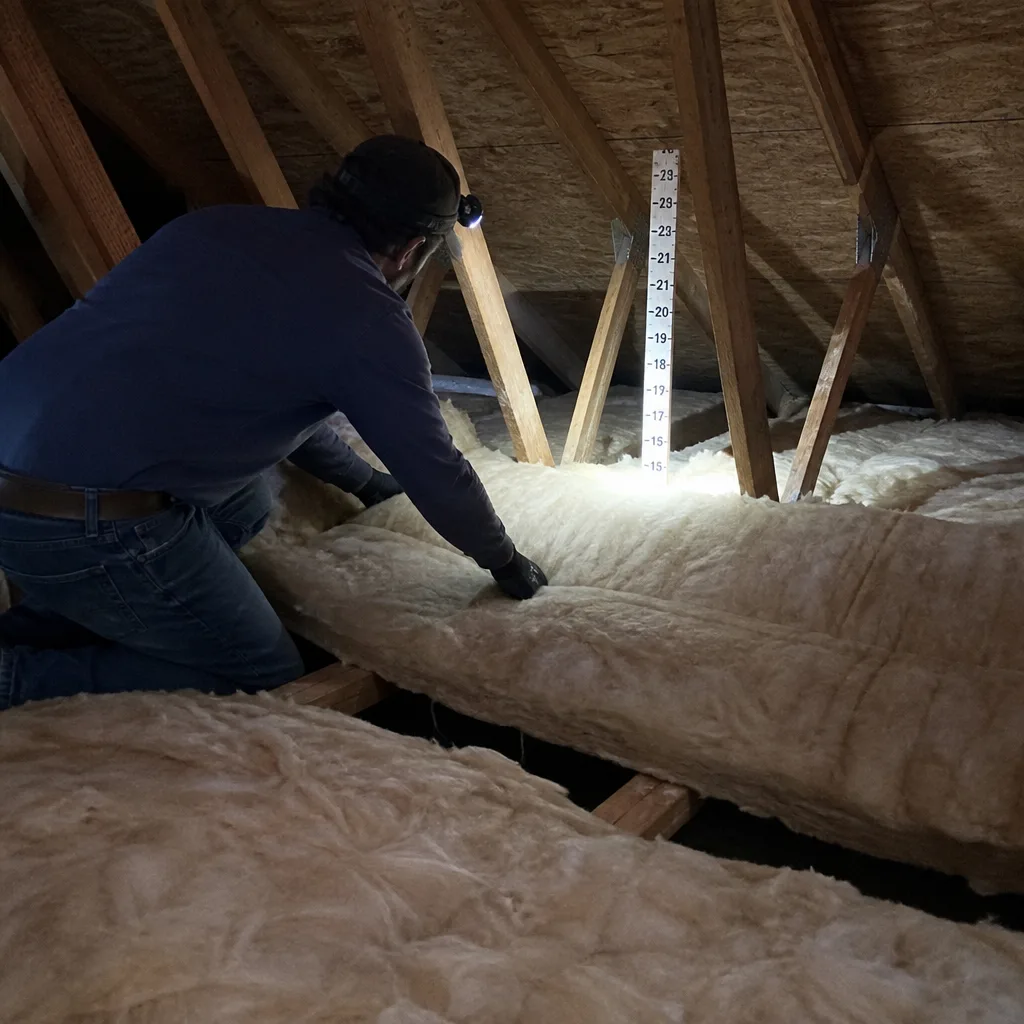
The IECC 2021 code for Zone 2A calls for R-38 to R-49 in attics, depending on construction type. In practice, that means 12-15 inches of blown fiberglass or 10-12 inches of cellulose. But depth alone doesn’t tell the whole story.
We measure depth at multiple points, avoiding the eaves where wind washing reduces settled density. We also note compression from storage boards, recessed light housings, or homeowner traffic paths. Compressed insulation performs at its compressed thickness, not its original loft. A 14-inch layer compressed to 6 inches under a plywood storage platform performs like R-19, not R-38.
Finally, we check for gaps and voids - especially around chimney chases, dropped soffits, and interior wall intersections. These are the paths that let conditioned air bypass the insulation layer entirely.
Pre-Winter Inspection: Hatch Sealing, Bath Fan Termination, and Condensate Risk
When the vapor drive reverses in December, the leaks that were minor annoyances in summer become moisture injection points. The warm, humid air from your living space finds every path upward.
Attic Hatch Sealing
The attic hatch is the largest unsealed penetration in most Schertz ceilings. A 22-by-30-inch opening with no weatherstripping leaks as much air as a four-inch hole in the wall, continuously. In winter, that warm air hits the cold roof deck within inches of the hatch and condenses.
What proper sealing looks like:
- Compressible weatherstripping on the hatch frame, not the hatch itself, so closing compresses the seal
- Insulation attached to the hatch top - typically a rigid foam board cut to fit and sealed at edges
- Latches or bolts that pull the hatch tight against the weatherstripping, not gravity alone
We’ve documented hatches in Schertz with visible mold on the surrounding drywall within two winters of installation, solely from this leakage path. The repair costs more than proper sealing would have.
Bath Fan Duct Termination Check
Bath fans move 50-110 CFM of humid air. If that air terminates in the attic rather than through the roof or gable wall to exterior, it deposits moisture directly onto the insulation layer. Even properly ducted fans fail when the flex duct sags, creating low points where condensate collects and drips back down.
Verify three things:
- Duct terminates to exterior, not into attic space or onto a nearby rafter
- Duct is insulated if it runs more than a few feet through the attic (uninsulated metal duct in a cold attic condenses internally)
- No sagging or dips that create condensate traps
In Schertz’s older neighborhoods like Schertz Parkway and parts of Live Oak, we’ve found original bath fan ducts that terminate under roof vent screens, blowing humid air directly back into the attic. The homeowners discovered the problem when insulation staining became visible through the attic hatch.
Condensate and Short Freezing Events
Schertz’s winter lows typically range from the mid-30s to low 40s, with brief excursions below freezing. These short events don’t create sustained ice dam conditions, but they do create freeze-thaw cycles on the roof deck. Any condensation that formed during the prior week freezes, then thaws and drips when temperatures rise. The drip point is often at a fastener or seam, and the water lands on insulation below.
Watch for:
- New staining on ceiling drywall after cold snaps
- Musty odors in closets or rooms below attic penetrations
- Insulation that appears darkened or matted in isolated patches
These are threshold events. Log them, as described in the next section, and call when the pattern repeats.
The Fall Transition Window: Why October Is the Only Practical Month for Attic Work
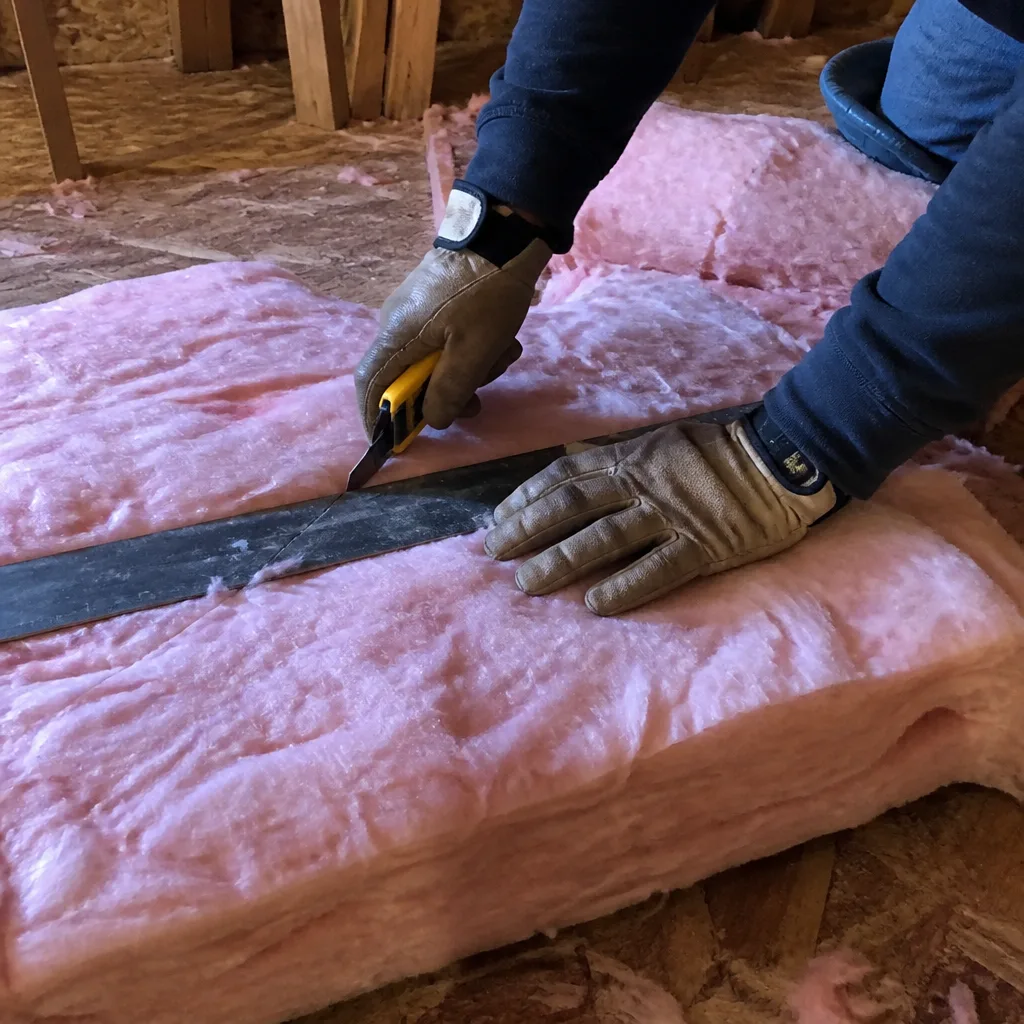
October is the narrow corridor when Schertz attics can be safely entered, assessed, and modified. Here’s why the timing matters for every type of work.
Temperature. By mid-October, attic temperatures have dropped from summer peaks to the 80s and low 90s. Crews can work a full day without heat exhaustion risk. More importantly, the roof deck has cooled enough that contact with warm interior air won’t create immediate condensation during the work.
Humidity. October relative humidity in Schertz averages 65-70%, down from summer peaks above 75%. The absolute moisture content in the attic air is low enough that disturbing insulation - which releases stored moisture - won’t create a temporary humidity spike that triggers mold growth.
Moisture drive neutrality. For a brief period in late October, indoor and outdoor conditions approach equilibrium. The vapor drive is weak in both directions. This is the only time you can open the attic, remove insulation, expose the ceiling drywall, and not have moisture moving aggressively through the assembly while it’s unprotected.
Scheduling reality. Every insulation contractor in the San Antonio metro area knows this window. Wait until November, and you’re competing with homeowners who noticed their first heating bill spike and are weighing DIY vs professional insulation options. Schedule in October, and you get thorough work with proper cure times for spray foam or sealants.
What we schedule in October:
- Full attic insulation additions or replacements
- Spray foam applications - Spray Foam Insulation in Schertz requires specific temperature and humidity ranges for proper adhesion and expansion
- Air sealing work at top plates, electrical penetrations, and can lights
- Blower-door testing with before-and-after readings, which requires stable conditions for accurate comparison
We’ve tried scheduling major attic work in August. The roof deck reaches 160°F. Sealants skin before they cure. Foam boards warp. Crews work shortened days. The result is compromised installation quality that shows up in the blower-door numbers. We won’t do it, and we advise homeowners not to ask any contractor to.
What Your Seasonal Log Should Record (And When to Call Us)
Documentation is the difference between catching a problem early and discovering it when the ceiling stains spread. We recommend a simple log, digital or paper, updated monthly and reviewed seasonally.
Required Readings
Interior humidity. Measure with a calibrated hygrometer in the living space, not the attic. Record the reading and the outdoor temperature at the time. Threshold: sustained readings above 60% relative humidity in winter indicate excessive moisture generation or inadequate ventilation. Sustained readings below 30% in summer indicate overcooling or duct leakage that’s dehumidifying the space excessively.
HVAC runtime. Note whether the system cycles normally, runs continuously during peak hours, or short-cycles. A change from prior years - same thermostat setting, longer runtime - suggests insulation or air sealing degradation. Compare your current electric bills to the same month prior year; a 15% increase without rate changes warrants investigation.
Visual attic inspection. Quarterly, look through the hatch with a flashlight. Record:
- Any new staining on roof deck, rafters, or insulation surface
- Insulation displacement from wind or animal activity
- Duct condition changes: new sags, detached sections, insulation jacket damage
- Odor: musty, sweet, or sharp chemical smells
Threshold Values That Trigger Professional Inspection
| Indicator | Normal Range | Call Threshold |
|---|---|---|
| Winter interior RH | 30-50% | >60% for 3+ days |
| Summer interior RH | 45-55% | >65% with AC running |
| Attic staining | None visible | Any new staining in 30 days |
| HVAC runtime vs. prior year | Within 10% | >15% increase, same setpoint |
| Insulation depth (blown) | 12-15 inches | <10 inches or uneven >3 inches |
| Bath fan duct termination | Direct to exterior | Any attic termination or visible sag |
When two or more thresholds cross simultaneously, the interaction is worse than either alone. High humidity plus new staining plus increased runtime means active moisture injection with degraded insulation performance. That’s the point where a Topside Attic Insulation Schertz home assessment with blower-door testing will identify the source and quantify the leak.
How Schertz’s Climate Affects Insulation Material Choice
The two moisture-drive seasons create specific demands on insulation materials that don’t exist in drier or colder climates.
Blown fiberglass and cellulose. These remain the standard for attic floor applications in Schertz. Cellulose, treated with borate for fire and pest resistance, handles moderate moisture cycling better than untreat fiberglass when vapor control is imperfect. However, cellulose settles 15-20% over time, requiring depth verification every three to five years. Fiberglass doesn’t settle but is more vulnerable to wind washing at eaves. In Schertz’s open, windy terrain - especially on the north and east sides of town - we often specify baffles at every rafter bay to protect fiberglass from convective heat loss.
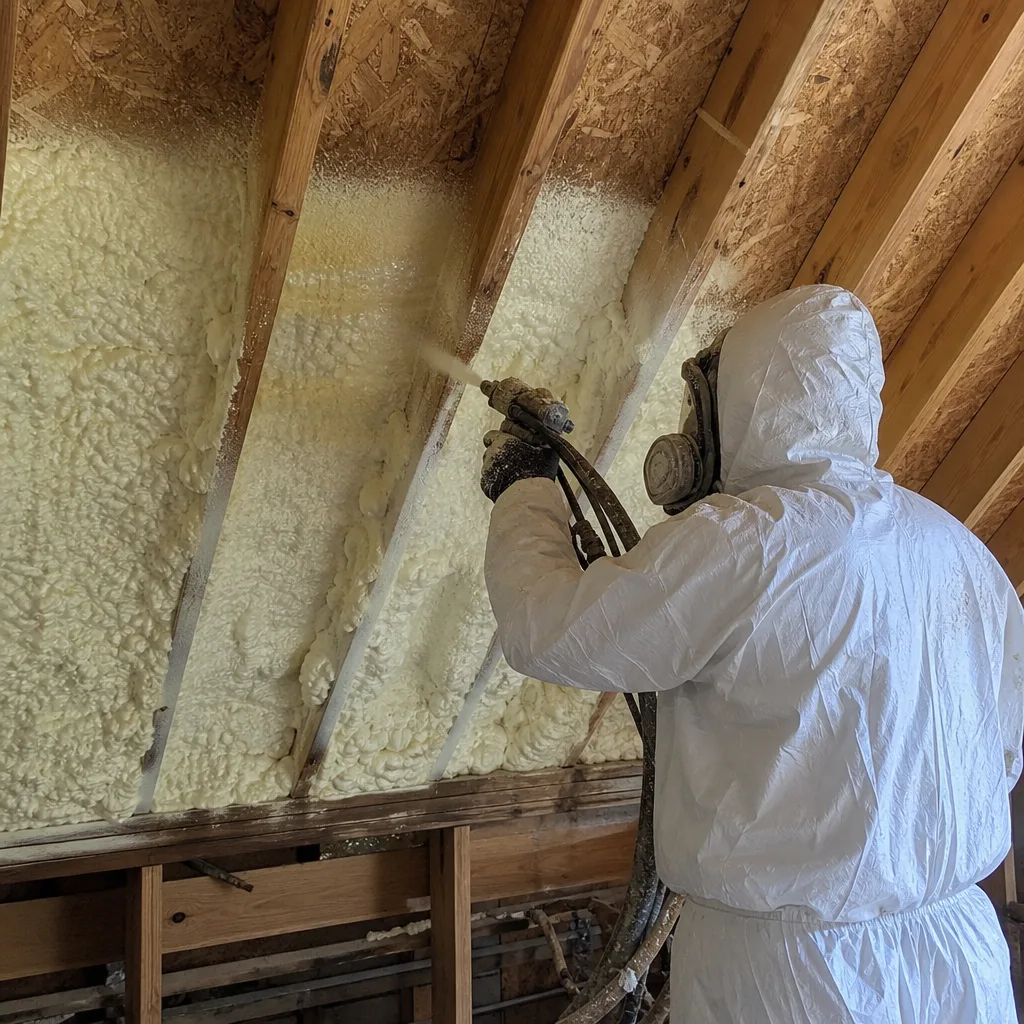
Spray foam. Open-cell spray foam, like products from Icynene or Demilec, provides air sealing and insulation in one application. In Schertz’s cooling-dominated climate, it performs well against the inward vapor drive of summer when applied to the roof deck in an unvented attic assembly. The critical detail: thickness. Open-cell foam must be thick enough to prevent condensation on its interior surface during winter reversal, typically 5.5-6 inches for R-38 equivalent. Thinner applications risk surface condensation when interior humidity rises.
Radiant barriers. These address radiant heat gain, not conductive loss, and are most effective in Schertz’s long cooling season. A properly installed radiant barrier - stapled to rafters with proper air gap, not laid on the attic floor - can reduce attic temperatures 20-30°F. But it does nothing for winter heat loss and can actually reduce beneficial solar gain in January if installed sloppily. We specify radiant barriers for homes with significant cooling load and existing adequate insulation, not as a substitute for it.
GreenFiber cellulose and Owens Corning fiberglass are the products we most commonly specify for Schertz attic floors, chosen based on the specific assembly conditions and homeowner priorities. We don’t lock into proprietary systems; the material serves the assembly, not the other way around.
When a Blower-Door Test Changes Your Maintenance Plan
A seasonal inspection checklist catches visible problems. A blower-door test - the pressurization measurement that shows, in one number, how much air your building envelope is losing - reveals the problems you can’t see.
We perform blower-door testing on every applicable job at Attic Insulation in Schertz. The test depressurizes the house to 50 Pascals and measures airflow in CFM50. A typical Schertz home of 2,000 square feet built between 1990 and 2010 will test at 3,500-5,000 CFM50 before air sealing. After proper sealing of top plates, penetrations, and the attic hatch, that drops to 2,000-2,800 CFM50. The difference is conditioned air you’re no longer heating and cooling for the neighborhood.
Here’s how blower-door results change your maintenance priorities:
- Above 4,500 CFM50: Air sealing is urgent and should precede any insulation addition. Blowing insulation over an unsealed attic floor - the practice we refuse - buries the leaks and makes them harder to find later.
- 2,500-4,500 CFM50: Targeted sealing at the largest leaks, typically attic hatch, duct plenum, and interior wall top plates, followed by insulation depth correction.
- Below 2,500 CFM50: The envelope is tight; maintenance focuses on mechanical ventilation adequacy and humidity control to prevent moisture buildup in the tight structure.
We publish before-and-after numbers on every job so homeowners can verify the result. A seasonal log with blower-door baseline gives you a reference point for future comparison. If your home tested at 2,800 CFM50 in 2020 and you’re seeing humidity thresholds cross now, a retest will tell you whether the envelope has degraded or the mechanical systems have changed.
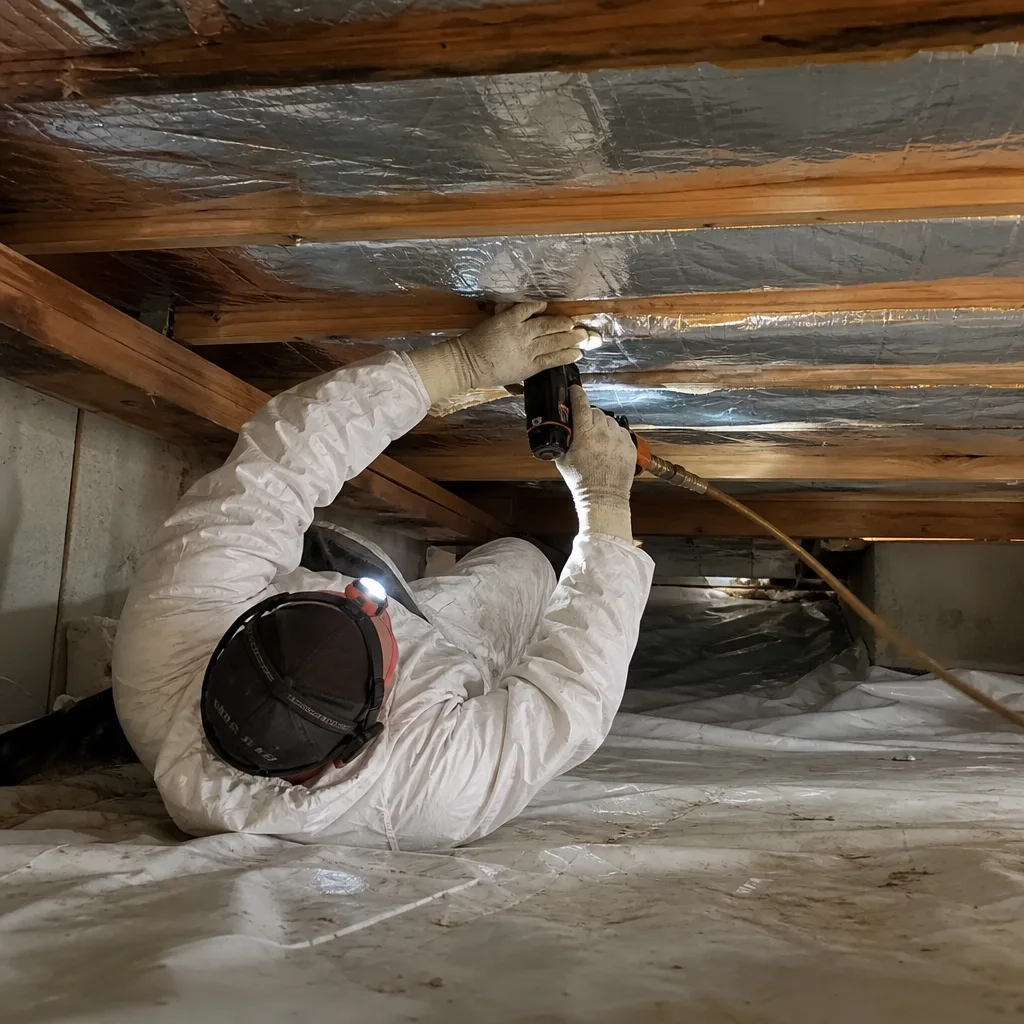
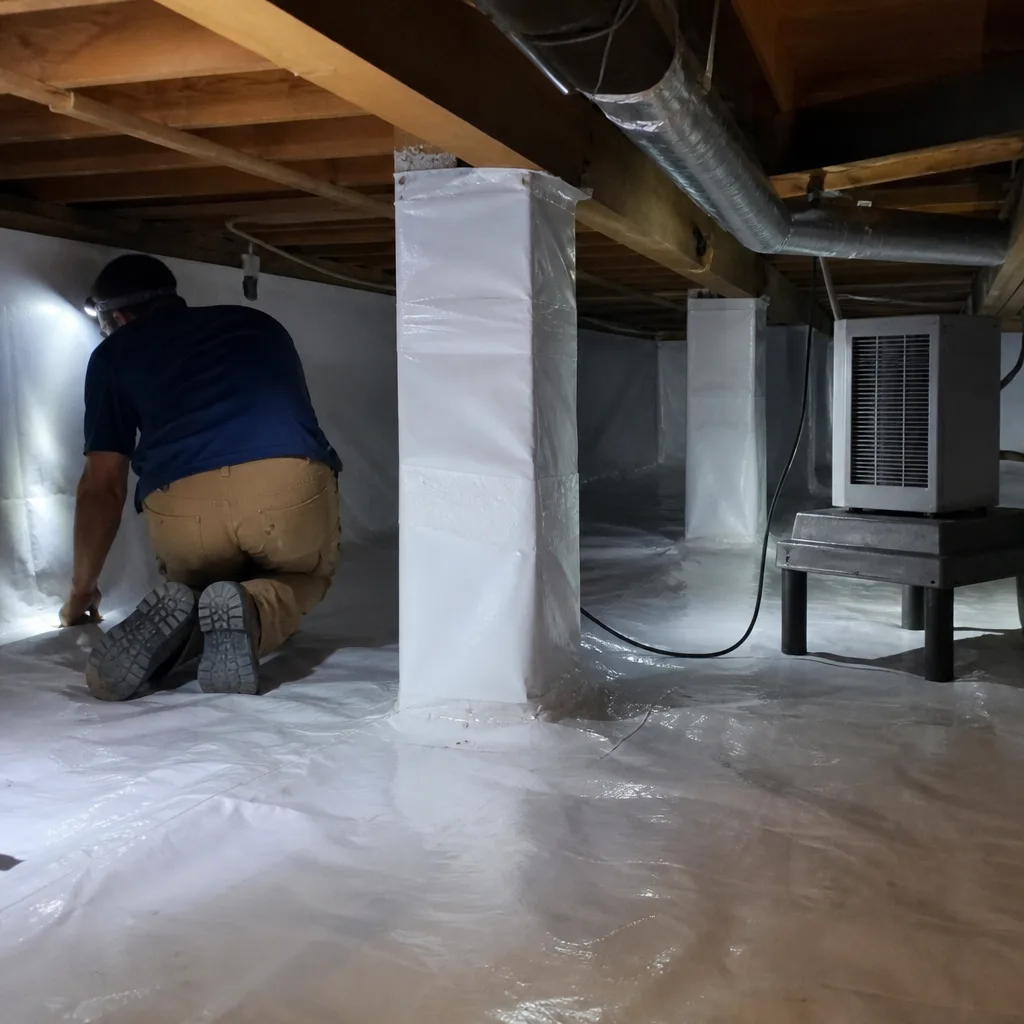
For homes with crawl space moisture issues, the same documentation approach applies to Crawl Space Encapsulation & Vapor Barrier in Schertz, where seasonal groundwater and vapor drive create parallel risks below the living space.
Common Mistakes to Avoid
- Adding insulation without air sealing first. In Schertz’s humid climate, this traps moisture in the assembly. We’ve removed insulation that was wet at the bottom and appeared dry at the top, hiding damage for years.
- Blocking soffit vents with insulation. Well-meaning homeowners or installers push insulation to the eaves and cover the intake vents. Attic ventilation fails, summer temperatures spike, and the insulation you just paid for performs at half its rating.
- Ignoring the attic hatch. It’s the largest leak and the easiest fix. A $30 weatherstripping kit and rigid foam board outperform expensive insulation upgrades if the hatch remains unsealed.
- Scheduling attic work in summer. Crews rush. Materials fail. And you can’t verify proper installation quality when the roof deck is 150°F. Wait for October.
- Assuming new construction is correct. Schertz’s building boom from 2015-2022 produced homes with visible insulation but incomplete air sealing. We’ve found top plates unsealed in houses still under builder warranty. The insulation looks right; the performance isn’t.
- Using interior humidity “feel” instead of measurement. Human perception of humidity is poor. A hygrometer costs $15 and provides the data that tells you whether your envelope is working.
- Neglecting the seasonal log. Without recorded baselines, you can’t distinguish gradual degradation from normal variation. The log is the tool that makes maintenance proactive instead of reactive.
When to Call a Professional
Call when your log shows threshold crossings that persist, when you smell musty odor from the attic or ceiling, or when your energy bills increase without explanation. Call before October if you’re considering insulation work - scheduling then ensures proper conditions and thorough documentation. Call if your home has never had a blower-door test and was built before 2015; the baseline will change how you prioritize maintenance. For ongoing guidance, explore more guides & resources on our blog.
Topside Attic Insulation Schertz offers free estimates in Schertz. Every estimate includes a written scope and written price before any work starts, under Haven Standard Clause 1. We also provide free second opinions on any written estimate from another contractor - bring us their scope, and we’ll review it with you. Call (830) 402-5240 to schedule. A live person answers 24/7.
Frequently Asked Questions
Most attic insulation jobs in Schertz run between $1.80 and $3.50 per square foot for blown fiberglass or cellulose, depending on existing depth, accessibility, and whether air sealing is required first. Spray foam applied to roof decks ranges from $4.50 to $7.00 per square foot for open-cell, with thickness determined by the specific assembly. We provide a written price before any work starts, always. Call (830) 402-5240 for an exact quote - estimates are free.
We don’t recommend it. Attic temperatures in Schertz exceed 140°F from June through September, which compromises material performance and installer safety. Sealants skin before curing. Foam boards warp. Crews work shortened days. October is the practical window for quality installation. If you’re experiencing acute comfort issues, we can assess the home and recommend temporary measures until fall.
Check for uniform airflow across the entire attic floor, intake vents that aren’t blocked or painted over, and exhaust vents that function without obstruction. In Schertz, inadequate ventilation shows up as overheated attic air - above 120°F on a 95°F day - or visible moisture staining on the roof deck underside. A proper assessment measures net free vent area against attic square footage. If you’re unsure, we include ventilation evaluation in every estimate.
Air sealing stops air movement through gaps and penetrations; insulation slows heat transfer through solid materials. They’re complementary but not interchangeable. In Schertz’s climate, air sealing must come first - we will never blow insulation over an unsealed attic floor. The blower-door test quantifies air sealing success in a single number; insulation depth alone cannot.
Inspect quarterly through the hatch with a flashlight, looking for staining, displacement, or odor. Verify depth annually before summer. Perform a full assessment - ventilation, ducts, hatch seal, humidity readings - before each major season change. Update your seasonal log with each observation. Professional assessment with blower-door testing every 5-7 years, or after any major renovation, keeps your baseline current.
Schertz’s specific position in Zone 2A, with higher humidity than El Paso or Amarillo and less extreme cold than Dallas, creates the two-season moisture drive pattern this guide describes. The material specifications are similar to other Zone 2A locations, but the maintenance priorities - summer ventilation focus, winter reversal preparation - are particular to mixed-humid climates with long cooling seasons. Our recommendations are calibrated to Schertz’s actual conditions, not generic Texas guidance.
The Bottom Line
Schertz’s Zone 2A climate doesn’t divide into four equal insulation seasons. It divides into two: seven months of inward vapor drive when ventilation and duct integrity matter most, and five months of outward drive when hatch sealing and penetration integrity prevent moisture injection. October is the only safe month for attic work. A seasonal log with measured humidity, runtime, and visual observations gives you the data to act before damage spreads. And every maintenance plan should start with a baseline - a blower-door test that tells you whether your envelope is tight enough for the insulation to do its job.
We’ve sealed and insulated over 9,000 homes since 2016. Every one began with a written price and ended with a documented record. Under the Haven Standard, we don’t guess, and we don’t ask you to.
Written by Wes Okafor, Owner at Topside Attic Insulation Schertz, serving Schertz since 2016.