
Last updated September 24, 2026
The Complete Guide to Insulation in Schertz
Schertz sits in IECC Climate Zone 2A, a hot-humid designation that sees more cooling load hours per year than any zone north of San Antonio. Yet most insulation bids we review in neighborhoods like The Crossvine, Willow Grove, and Pecan Grove Estates spec the same R-38 attic package that contractors install in Houston or Dallas and call it sufficient. It isn’t. Zone 2A’s moisture drive runs inward for eight months of the year, and the attic floor is the single highest-leverage insulation decision in the house. This guide maps every assembly type to the zone’s actual thermal and moisture demands so you can read a bid and know whether the numbers on it are right. For more guides & resources on Schertz home performance, see our blog.
Quick Answer
Insulation in Schertz must be designed for IECC Climate Zone 2A’s hot-humid conditions, which means R-49 minimum in attics, R-13 in framed walls, and R-19 in crawlspace floors, with air sealing completed before any insulation is installed. The attic floor is the priority assembly because it separates conditioned space from a ventilated attic that regularly reaches 140°F in July. Any bid that skips blower-door verified air sealing, omits installed-depth photos, or treats R-38 as adequate for Schertz is underspecifying the job.
Table of Contents
- IECC Climate Zone 2A Requirements for Schertz Homes
- Why the Attic Floor Is the Priority Assembly
- The Air-Sealing Prerequisite
- Blown Fiberglass, Cellulose, and Open-Cell Spray Foam: Honest Tradeoffs
- Five Assemblies Where Insulation Choice Interacts with Moisture Drive
- Documentation You Should Receive After Any Insulation Job
- How to Read a Schertz Insulation Bid
- Common Mistakes to Avoid
- When to Call a Professional
- Frequently Asked Questions
- The Bottom Line
IECC Climate Zone 2A Requirements for Schertz Homes
Schertz falls under the 2021 IECC Climate Zone 2A, the southernmost designation in Texas before you reach the true tropical zone of the Rio Grande Valley. The “A” means humid, and the “2” means hot. This combination creates a specific set of thermal and moisture rules that differ materially from Dallas-Fort Worth (Zone 3A) and Austin (Zone 2A but with different local amendments).
The current code minimums for new construction and substantial renovations in Schertz are:
| Assembly | IECC Zone 2A Minimum R-Value | Why It Matters Locally |
|---|---|---|
| Attic, vented | R-49 | Attic temperatures in Schertz regularly exceed 130°F June through September; every R-value below 49 increases cooling load disproportionately |
| Attic, unvented (conditioned) | R-30 (continuous insulation at roofline) | Rare in existing homes; requires full roofline treatment with spray foam or rigid board |
| Wood-framed wall | R-13 cavity + R-5 continuous, or R-20 cavity | Most Schertz homes built 2015-2025 meet R-13 cavity; continuous insulation is often omitted in production builds |
| Floor over unconditioned crawlspace | R-19 | Crawlspaces in Schertz stay humid year-round; floor insulation without vapor management fails |
| Slab edge (if heated) | R-10 for 2 feet vertical | Relevant for homes with in-slab heating; rare in Schertz but required if present |
| Basement wall | R-15 continuous or R-19 cavity | Basements are uncommon in Schertz due to clay soils and high water tables |
These are minimums, not recommendations. In our experience across Schertz neighborhoods from Falcon Ridge to Turnberry, homes insulated to exactly R-49 in the attic and R-13 in walls perform acceptably but not optimally. The cost delta to exceed code by one R-value step in the attic, typically R-60 blown insulation, pays back in 3-5 years given CPS Energy rates and the cooling-degree-day load here.
Local amendments matter. Schertz adopts the IECC through Guadalupe County and the city building department, with no significant weakening amendments. However, the enforcement emphasis is on new construction. Existing homes receiving insulation upgrades are not typically re-inspected for code compliance unless the work triggers a permit, which attic insulation alone usually does not. This creates a market where contractors can, and do, install below-code insulation without consequence. The homeowner bears the risk.
Why the Attic Floor Is the Priority Assembly
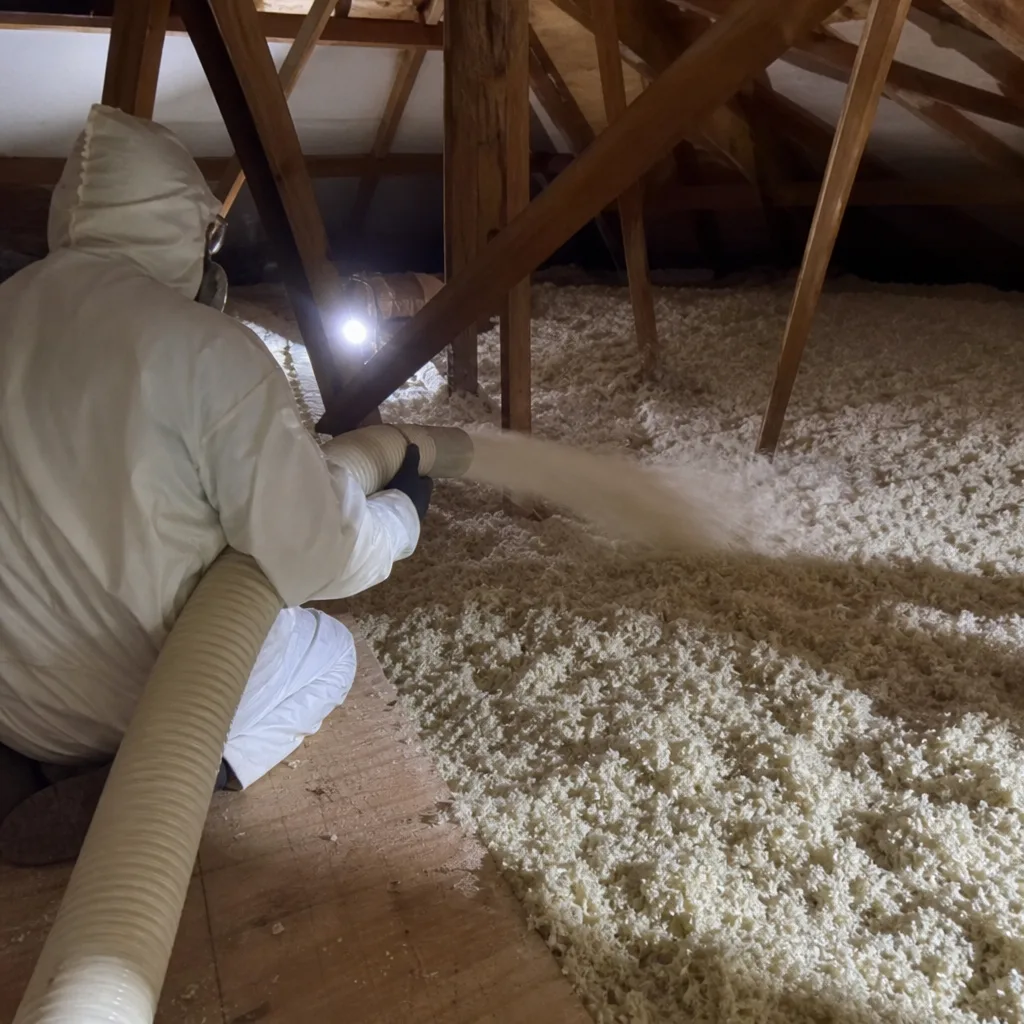
In Zone 2A, the attic floor is the thermal boundary that matters most. Here’s the physics: Schertz sees roughly 2,800 cooling degree days annually, and the roof surface absorbs solar radiation that pushes attic air temperatures to 140°F or higher on July afternoons. The temperature difference between your conditioned space at 75°F and that attic air is 65°F or more. No other assembly in the house faces a delta that large.
The second factor is stack effect. In cooling-dominated climates, warm air rises and escapes through the attic, pulling hot, humid outdoor air in through lower leaks. This reverse stack effect during the cooling season means air leakage at the attic floor is actively pulling moisture into the building envelope. Insulation without air sealing at this boundary doesn’t stop that moisture transport; it just slows the heat flow while the humidity keeps moving.
We prioritize the attic floor in Schertz homes for three reasons:
- Highest return on investment. Attic insulation in Schertz typically runs $2.80-$4.50 per square foot installed for blown fiberglass or cellulose to R-49, including air sealing. The annual cooling savings in a 2,000-square-foot home with existing R-19 or less is $380-$520 by our measurement. No other single insulation upgrade delivers that magnitude of reduction.
- Accessibility. The attic floor is reachable without disturbing finished interior spaces. Wall insulation requires drilling, removal of siding, or interior drywall repair. Crawlspace work is often constrained by height and moisture conditions.
- Correctability. Attic floor insulation can be inspected, measured, and supplemented. We regularly find homes in Schertz with uneven insulation depths, compressed batts, or gaps around light fixtures that are straightforward to remediate.
The neighborhoods we work in most, The Crossvine and Willow Grove, have a high concentration of homes built 2016-2020 with R-30 blown insulation that settled to R-22 or less. The original install met code at rough-in but not after settlement. This is common and rarely disclosed at resale.
Attic Insulation in Schertz covers our specific process for assessment, air sealing, and installation.
The Air-Sealing Prerequisite
Blowing insulation over an unsealed attic floor is the most common error we correct in Schertz. The practice is fast, profitable for the contractor, and leaves the homeowner with a product that performs at roughly 60% of its labeled R-value because air moves freely through the insulation layer.
Here’s what happens when you skip air sealing in Zone 2A. The attic is ventilated, meaning outdoor air enters through soffit vents and exits through ridge or gable vents. That air is hot and humid for most of the year. Every penetration in the attic floor, top plates, electrical boxes, can lights, plumbing stacks, and duct chases, becomes a pathway for that air to enter the conditioned space or for conditioned air to escape. Insulation batts or loose fill placed over these leaks does not seal them. Air goes around, through, and under the insulation.
The specific leaks we address on every Schertz attic job:
- Top plates. The horizontal framing member where interior walls meet the ceiling drywall. In platform-framed homes, this is a continuous gap running the length of every wall. Unsealed, it’s a major air pathway.
- Can lights and electrical boxes. Recessed fixtures rated for contact with insulation (IC-rated) still leak air through the housing seams. Non-IC fixtures must be boxed or replaced. We document which type is present.
- Plumbing and HVAC penetrations. Holes cut for pipes and ducts are typically 1-2 inches oversized. Foam sealant or fire-rated caulk closes these.
- Chimney and flue chases. Metal chimneys require fire-rated sealant and proper clearance. We don’t touch these without verifying flue type and clearance.
- Duct boots and platform edges. The connection between flex duct and ceiling drywall is rarely sealed at installation. Conditioned air leaks into the attic before it reaches the room.
Our protocol, established under The Haven Standard since 2016, is air sealing first, then insulation. No exceptions. The blower-door test, a pressurization reading that shows in one number how much air the building envelope is losing, is run before any sealing work and again after insulation is complete. The pre/post numbers are published on every applicable job. In Schertz, we typically see starting readings of 3,500-5,500 CFM50 on homes built 2000-2015, and we target 50% reduction or better through air sealing and insulation together.
Blowing insulation over unsealed leaks does something worse than wasting money. It locks the moisture pathways in place. The insulation becomes a filter, trapping dust and organic material where humid air continues to flow. We’ve removed insulation in Schertz attics where the top surface was clean and the bottom, against the drywall, showed mold staining at every leak location. The homeowner saw a fresh attic and didn’t know the condition beneath.
Blown Fiberglass, Cellulose, and Open-Cell Spray Foam: Honest Tradeoffs
Three materials dominate attic insulation in Schertz. Each has legitimate applications and real limitations in Zone 2A’s hot-humid climate. We install all three, sourced from Owens Corning, Johns Manville, Knauf, and others, with no proprietary lock-in. The right choice depends on the attic condition, budget, and whether the roofline or floor is being treated; see our DIY vs Professional Insulation: The Schertz Homeowner’s Decision Guide for help deciding whether to tackle this yourself.
Blown Fiberglass
Loose-fill fiberglass, typically Owens Corning AttiCat or Knauf Jet Stream, is the most common attic insulation in Schertz retrofits. It doesn’t settle significantly if installed to proper density, doesn’t support mold growth, and is the lowest-cost option per R-value.
The tradeoff is air permeability. Fiberglass is a filter, not a barrier. In an attic with incomplete air sealing, air moves through blown fiberglass almost as readily as through no insulation. This is why we require air sealing before installation. In Zone 2A, fiberglass also performs poorly at extreme temperature differentials; its R-value degrades slightly at the 130°F+ temperatures common in Schertz attics, though the effect is modest for most homes.
Installed cost in Schertz: $2.80-$3.80 per square foot to R-49, including air sealing.
Blown Cellulose
Cellulose, typically GreenFiber or similar, is treated with borate fire retardant and pest deterrent. It has slightly better resistance to air movement than fiberglass due to higher density, and it fills irregular cavities more completely. The borate treatment is genuinely effective against the paper wasps and silverfish we see in Schertz attics.
The concern in Zone 2A is moisture. Cellulose is hygroscopic, meaning it absorbs water vapor. In a ventilated attic with uncontrolled air leakage, cellulose can accumulate moisture at the attic floor interface, particularly if the home is heavily air-conditioned and the attic ventilation is marginal. We use cellulose in Schertz homes where the blower-door result is strong, below 3,000 CFM50 post-sealing, and where attic ventilation is verified adequate. In older homes with persistent humidity issues, we steer toward fiberglass or foam.
Installed cost in Schertz: $3.20-$4.20 per square foot to R-49, including air sealing.
Open-Cell Spray Foam
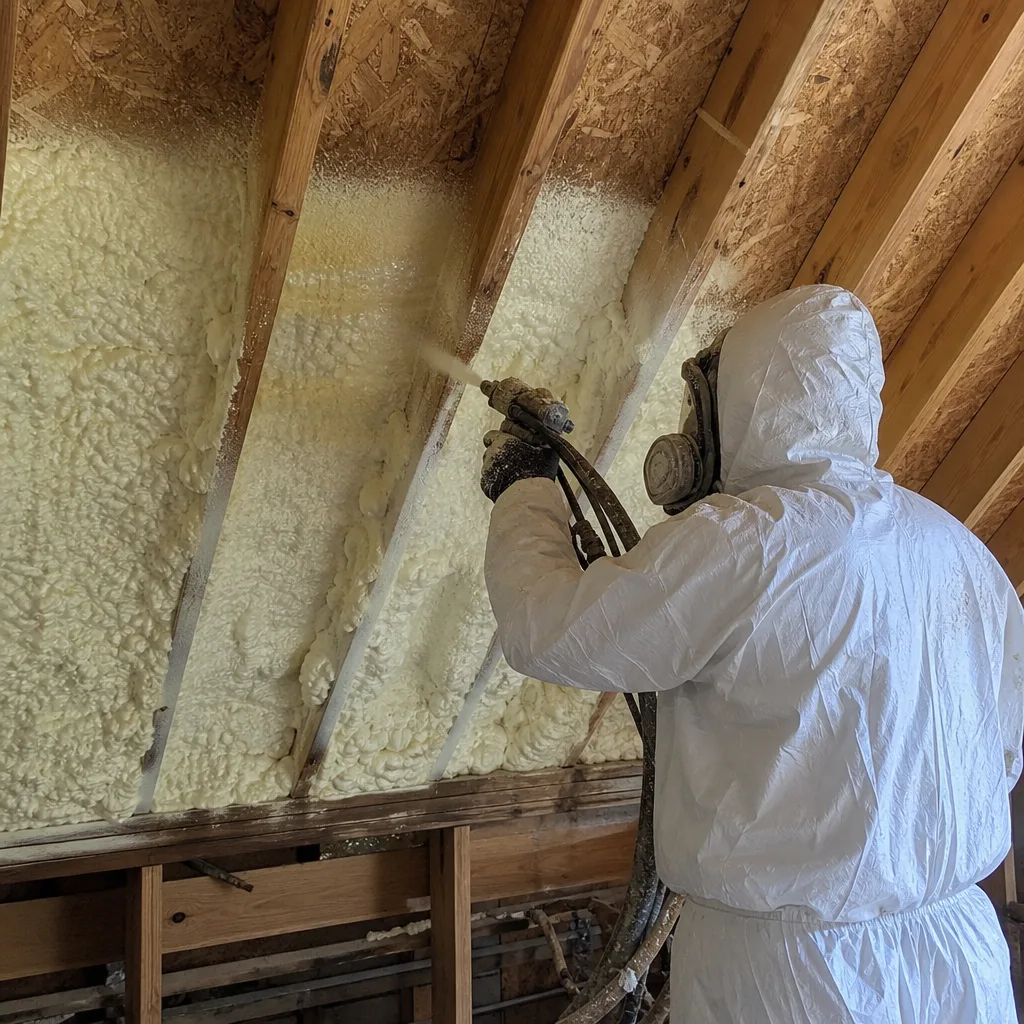
Open-cell spray foam, such as Icynene or Demilec products, is applied directly to the roof deck in an unvented, conditioned attic assembly. This moves the thermal boundary from the attic floor to the roofline, converting the attic to conditioned space. The primary benefit is ductwork and air handlers located in the attic now operate in a 75°F environment rather than 140°F, dramatically improving HVAC efficiency.
The tradeoff is moisture management. In Zone 2A, open-cell foam is vapor-permeable. Moisture can migrate through the foam and condense on the roof deck’s underside if the interior humidity is high and the foam thickness is insufficient. The IRC requires R-20 minimum for this assembly in Climate Zone 2A, which at open-cell’s typical R-3.6 per inch means 5.5 inches minimum. We specify 6-7 inches to provide margin, and we require mechanical dehumidification in homes that don’t maintain 55% relative humidity or below.
Installed cost in Schertz: $5.50-$8.00 per square foot of roof deck area, including any necessary ventilation modifications and dehumidifier recommendations.
Spray Foam Insulation in Schertz details our roofline application process and moisture verification protocol.
Five Assemblies Where Insulation Choice Interacts with Moisture Drive
In Zone 2A, the moisture drive direction is predominantly inward, from hot humid outdoors to cool dry indoors, for roughly eight months of the year. This reverses briefly in winter when heating runs, but the annual load is cooling-dominated. Five assemblies in Schertz homes require insulation choices that account for this moisture direction.
- Vented attic with floor insulation. The assembly we described above. The insulation is cold in summer because the air-conditioned ceiling below is 75°F and the attic above is 130°F. Any air leakage brings humid outdoor air to a cold surface. Air sealing is the primary defense; vapor retarders on the interior are not recommended in Zone 2A because they trap moisture in summer.
- Unvented attic with roofline foam. As described, open-cell foam requires sufficient thickness and interior humidity control. Closed-cell foam is vapor-impermeable and avoids this concern but costs 40-60% more and is rarely necessary in this climate. We use open-cell with verified thickness and humidity management.
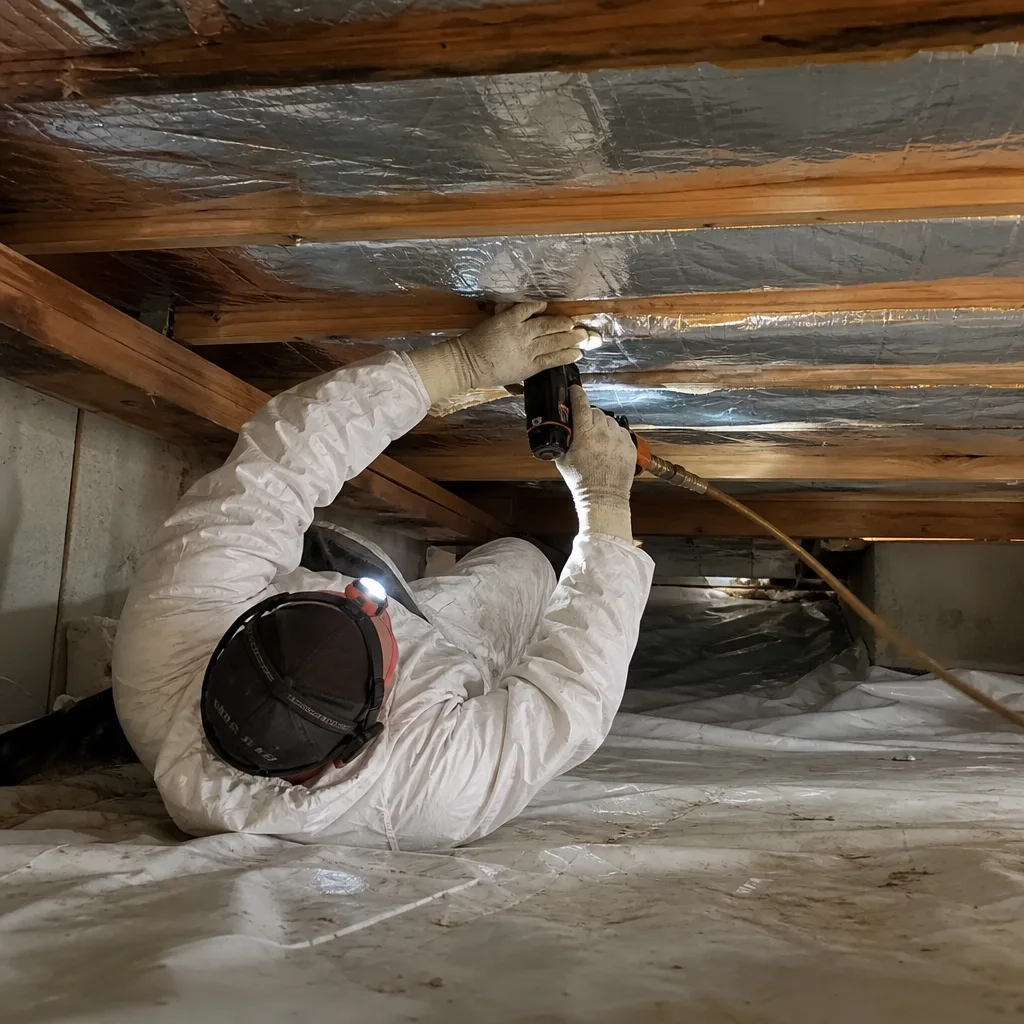
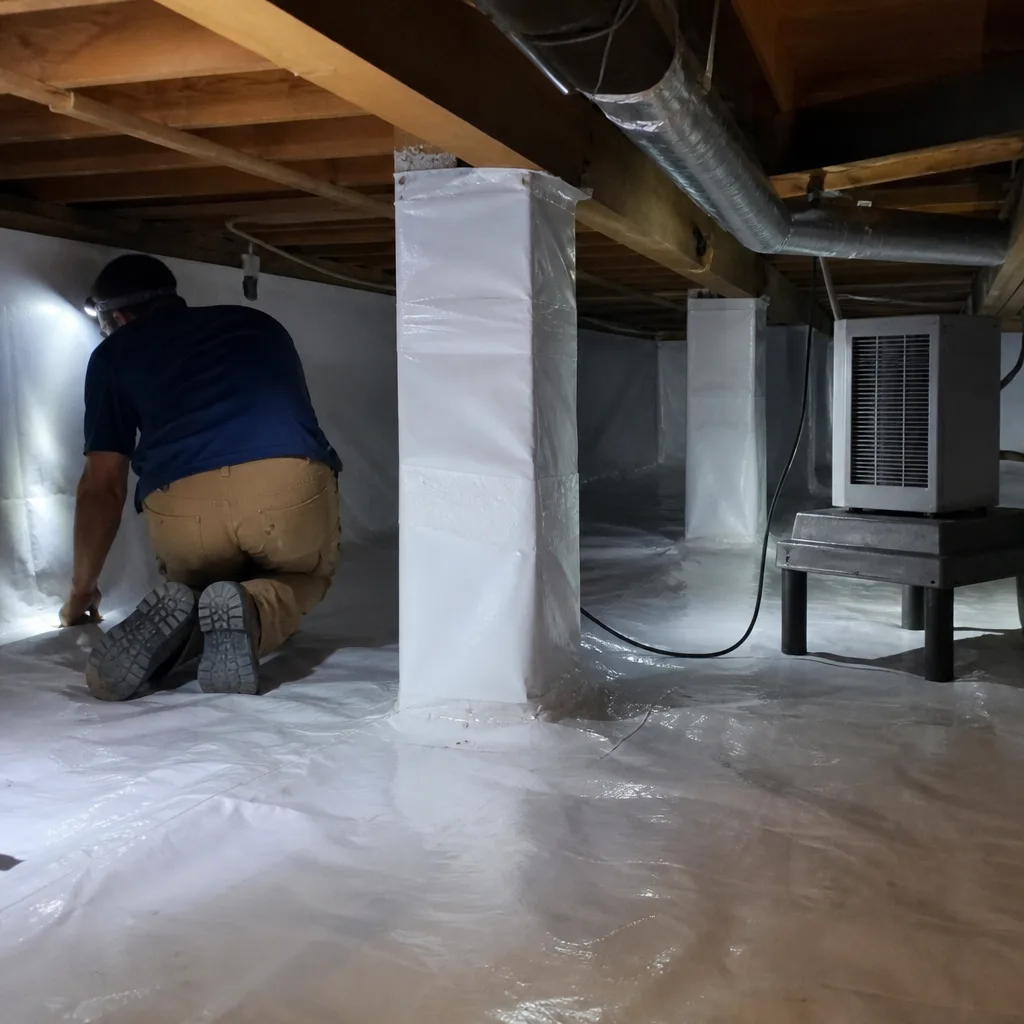
- Crawlspace floor. Schertz crawlspaces are typically vented to outdoors, which in Zone 2A means they admit humid air year-round. Insulating the floor above with batts or loose fill, without addressing crawlspace humidity, leads to moisture accumulation on the insulation’s top surface and eventual mold on the subfloor. We recommend Crawl Space Encapsulation & Vapor Barrier in Schertz as the primary solution, converting the crawlspace to conditioned space and moving the thermal boundary to the foundation walls.
- Exterior walls with cavity insulation. Schertz homes with vinyl or fiber-cement siding over housewrap and R-13 batts perform adequately if the interior humidity is controlled. Problems arise when interior vapor retarder paint or polyethylene is added, trapping summer moisture in the cavity. We do not recommend interior vapor retarders in Zone 2A.
- Slab-on-grade with carpet or wood flooring. The slab edge is rarely insulated in Schertz homes, and the slab itself is a thermal bridge to the ground. In summer, the slab is cooler than the dew point of humid outdoor air. Flooring with impermeable layers, vinyl over concrete without a vapor barrier, can trap condensation. This isn’t strictly an insulation issue but interacts with the home’s overall thermal and moisture control.
The principle across all five: in Zone 2A, you manage moisture by stopping air leakage and controlling interior humidity, not by adding interior vapor barriers that work against the dominant moisture direction.
Documentation You Should Receive After Any Insulation Job
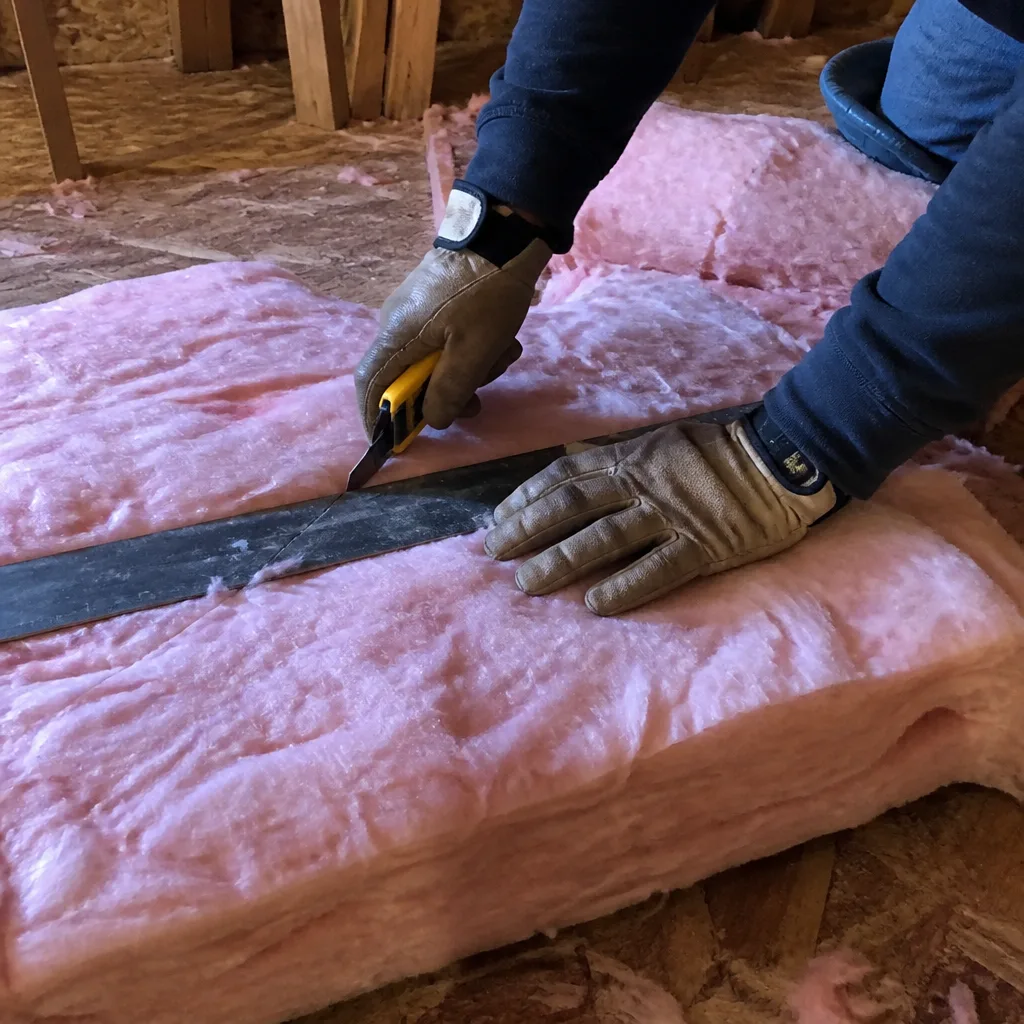
Every insulation contractor in Schertz will promise quality. Few deliver the documentation that proves it. Under The Haven Standard, we provide specific records on every job so the homeowner knows what was done and can verify performance. You should demand the same from any contractor.
The documentation we deliver:
- Written scope and written price, signed before work starts. Haven Standard Clause 1. No work begins without a fixed price and explicit description of materials, depths, and assemblies. This is not an estimate; it’s a binding written price.
- Before-and-after blower-door numbers. On applicable jobs, the pre-sealing CFM50 reading and the post-completion reading, with the percentage reduction calculated. This single number proves the air-sealing result.
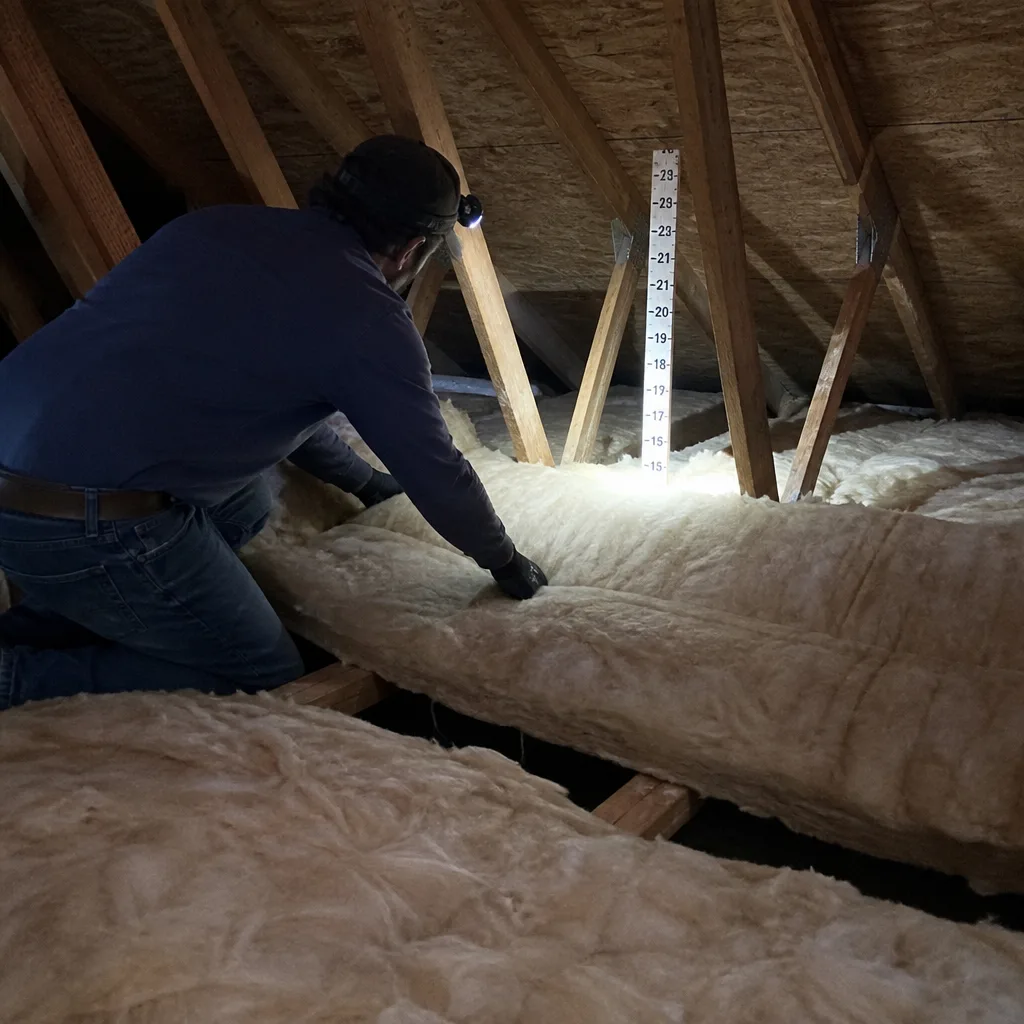
- Installed-depth photos. Photos of the attic showing ruler measurements of insulation depth at multiple locations, with identifying features visible. Not photos of bags or equipment, photos of the actual installed product.
- R-value attestation. A written statement of the installed R-value based on material type, settled depth, and coverage area. For blown insulation, this accounts for settled density, not just bag count.
- Documented Photo Record. Included on every job, not available on request. The full set of before, during, and after photos from your specific home.
- Written warranty. The 365-Day Done Right Promise, in writing, before anyone lifts a tool.
Why this matters in Schertz specifically: the resale market here is active, with homes in Pecan Grove Estates and Turnberry turning over every 5-7 years. Documented insulation upgrades with blower-door numbers add verifiable value. We’ve had Schertz homeowners use our documentation in negotiations to justify asking price or to demonstrate energy improvements to buyers.
A contractor who won’t put the scope, price, and warranty in writing before starting won’t put the performance numbers in writing after finishing. This is a reliable filter.
How to Read a Schertz Insulation Bid
Most homeowners receive two or three bids and compare on price per square foot. This misses the factors that determine actual performance. Our How to Hire a Insulation Contractor in Schertz: A Step-by-Step Guide explains what to look for, and here’s how to evaluate a Schertz insulation bid against Zone 2A requirements.
| Line Item | What to Look For | Red Flag |
|---|---|---|
| Attic R-value | R-49 minimum, R-60 specified as option | R-38 or “up to R-38” |
| Air sealing | Explicit line item for top plates, penetrations, can lights, duct boots | “Air sealing included” with no specifics, or omitted entirely |
| Blower-door test | Pre/post numbers with target reduction percentage | No mention of blower door, or “we’ll check it if needed” |
| Material specification | Brand name, product line, and installed density or depth | “Premium insulation” or “industry-standard fiberglass” |
| Vapor management | Explanation of why interior vapor retarder is not used in Zone 2A | Specification of interior vapor barrier or “moisture barrier” on attic floor |
| Warranty | Written, with duration and coverage explicit | “Satisfaction guaranteed” with no written terms |
| Documentation | List of what customer receives: photos, readings, attestation | “We’ll give you a receipt” |
We offer a Free Second Opinion on any written estimate. Bring us a competing bid and we will read it with you, line by line, and flag the underspecifications. No charge, no obligation. This service exists because we’ve seen too many Schertz homeowners pay for insulation that doesn’t perform because the bid was written to win on price, not to deliver results.
Typical pricing we see in the Schertz market for complete attic insulation with air sealing:
- R-49 blown fiberglass, 2,000 sq ft attic: $5,600-$7,600
- R-49 blown cellulose, same footprint: $6,400-$8,400
- Open-cell spray foam, roofline, same footprint: $11,000-$16,000
- Air sealing only, no insulation addition: $1,800-$3,200
Prices vary with attic accessibility, existing insulation removal needs, and the number of penetrations to seal. Any bid significantly below these ranges should be scrutinized for omitted air sealing, lower R-value, or unverified material.
Common Mistakes to Avoid
- Accepting R-38 as sufficient. R-38 is code minimum for Zone 3, not Zone 2A. In Schertz, it leaves performance on the table and costs more in cooling bills over the life of the home than the incremental install cost of R-49 or R-60.
- Skipping air sealing to save money. We’ve removed and reinstalled insulation in Schertz homes where the original contractor blew material over unsealed top plates. The homeowner paid twice. Air sealing is not an upsell; it’s the foundation of the assembly.
- Installing interior vapor retarders in Zone 2A. Polyethylene sheeting or vapor-retarder paint on the interior side of walls or ceilings traps summer moisture in the cavity. The dominant moisture drive here is inward, eight months a year.
- Ignoring crawlspace humidity. Insulating a crawlspace floor without addressing the humidity source below is temporary. In Schertz’s clay soils, crawlspace moisture is persistent. Encapsulation with a vapor barrier is the durable solution.
- Trusting bag count over installed depth. A bid that specifies “30 bags of insulation” without stating installed depth and settled density doesn’t guarantee R-value. Demand depth verification with photos.
- Neglecting to verify attic ventilation after insulation. Blown insulation can block soffit vents if baffles aren’t installed or maintained. Reduced ventilation raises attic humidity and can degrade the insulation over time.
- Choosing spray foam based on R-value alone. Open-cell spray foam at the roofline in Zone 2A requires thickness verification and humidity control. A bid that sells on R-value without addressing moisture management is incomplete.
When to Call a Professional
Call a professional when your attic insulation is below R-30, when you feel temperature variation between rooms with no ductwork explanation, when your summer electric bills exceed $0.14 per conditioned square foot, or when you see visible gaps, compressed batts, or stained insulation in the attic. These are symptoms of an underperforming thermal boundary that air sealing and proper insulation will correct.
Topside Attic Insulation Schertz offers free estimates in Schertz and surrounding areas. Every estimate includes a written price before any work starts, a documented photo record, and on applicable jobs, before-and-after blower-door numbers so you can verify the result. Call (830) 402-5240 to schedule. A live person answers 24/7.
Frequently Asked Questions
Most complete attic insulation jobs in Schertz run $5,600-$8,400 for a 2,000-square-foot footprint, depending on material and whether existing insulation must be removed. This includes air sealing of top plates, penetrations, and can lights, plus installed-depth verification photos. Call (830) 402-5240 for a written price on your specific home, estimates are free.
No. R-38 is the code minimum for Climate Zone 3, which includes Dallas-Fort Worth. Schertz is in Zone 2A, which requires R-49 in vented attics. The additional R-value pays back in 3-5 years given local cooling loads and electricity rates.
Sometimes. If the existing insulation is dry, uncompressed, and free of pest debris or mold, we can add new material over it after air sealing. If it’s wet, compressed below half its original thickness, or contaminated, removal is necessary. We document the condition with photos before recommending either approach.
The only verification method is a blower-door test, a pressurization reading that shows in one number how much air your building envelope is losing. We run this test before and after air sealing on every applicable job. A Schertz home built 2000-2015 typically starts at 3,500-5,500 CFM50; we target 50% reduction or better.
For vented attics with proper air sealing, blown fiberglass or blown cellulose both perform well. Cellulose has better pest resistance due to borate treatment but requires tighter air control because it’s moisture-absorbent. For conditioned attics with roofline foam, open-cell spray foam works with sufficient thickness and interior humidity control. We specify based on the home’s air leakage, ventilation, and humidity conditions, not a one-material-fits-all approach.
Most Schertz attic jobs complete in one day: morning for air sealing and blower-door pre-test, afternoon for insulation installation and post-test. Homes requiring insulation removal, extensive electrical work, or multiple attic spaces may extend to two days. We provide a written schedule with the price.
Yes, if the attic is the dominant thermal weakness. In Schertz, attic insulation upgrades from R-19 or below to R-49 typically reduce cooling costs 15-25%, with greater savings in homes with ductwork in the attic. The exact savings depend on HVAC efficiency, thermostat settings, and other envelope conditions. We measure and document the air-sealing improvement so you can verify the building performance change.
The Bottom Line
Insulation in Schertz must be designed for IECC Climate Zone 2A’s hot-humid reality, not for a generic Texas climate that doesn’t exist. The attic floor is the priority assembly. Air sealing comes before insulation, always. The material choice, fiberglass, cellulose, or spray foam, depends on the specific assembly and moisture conditions, not on contractor preference or inventory. And every job should end with documentation: blower-door numbers, installed-depth photos, and a written R-value attestation that proves what you paid for.
We’ve sealed and insulated over 9,000 homes since 2016, every one with a written price before work started and a documented record when the crew left. The 365-Day Done Right Promise applies to all completed work. If you’re reading bids and aren’t sure whether the numbers are right for Schertz, bring them to us. We’ll read them with you.
Written by Wes Okafor, Owner at Topside Attic Insulation Schertz, serving Schertz since 2016.