
Last updated September 24, 2026
How to Hire a Insulation Contractor in Schertz: A Step-by-Step Guide
Ask any three Schertz insulation contractors how they handle attic air sealing and you will get three different answers: “we do it,” “we include the basics,” and a quote that doesn’t mention it at all. Only one of those answers comes with a blower-door number to prove it happened. In Schertz’s climate - where summer attic temperatures regularly exceed 140°F and winter cold fronts drop below freezing - a padded attic without a sealed envelope is just a slower way to lose money. This guide gives you a hiring script built around the single checkpoint that separates performing jobs from cosmetic ones: whether air sealing is included, documented, and verified before any insulation goes in. For insulation warning signs every Schertz homeowner should watch for, see our companion reference.
Quick Answer
The right insulation contractor in Schertz provides a written scope with itemized air-sealing locations and installed R-value targets, verifies pre-work air leakage with a blower-door test, and delivers post-job documentation including before-and-after pressurization readings and timestamped installation photos. Anyone who skips these steps is selling you material, not performance.
Table of Contents
- Why Air Sealing First Is the Non-Negotiable Step
- The Four Questions to Ask on Your First Call
- What a Written Scope of Work Must Contain Before You Sign
- How to Verify Licensing and Insurance in Texas
- Red Flags in a Schertz Insulation Bid
- What Post-Job Documentation Actually Proves
- What Insulation Costs in Schertz
- Common Mistakes to Avoid
- When to Call a Professional
- Frequently Asked Questions
Why Air Sealing First Is the Non-Negotiable Step
Schertz sits in Bexar County’s transitional climate zone, which means your attic faces both extreme heat gain and significant winter heat loss. The 2021 International Energy Conservation Code, adopted by reference in Schertz’s building standards, recognizes this by requiring continuous air barriers in thermal envelopes. But code minimum and job quality are not the same thing.
Here’s what happens when insulation goes in over an unsealed attic floor. Blown fiberglass or cellulose fills the joist bays, but conditioned air still escapes through top plates, plumbing and electrical penetrations, can-light housings, and the framing gaps around chimneys and duct chases. The insulation performs its labeled R-value in a lab, not in your actual building. We’ve measured this repeatedly in Schertz homes: a post-insulation attic with unsealed penetrations can still leak at rates that defeat the energy savings the homeowner was sold.
A blower-door test - a pressurization reading that shows, in one number, how much air your building envelope is losing - exposes this gap between material and performance. The measurement is reported in CFM50 (cubic feet per minute at 50 pascals of pressure) or ACH50 (air changes per hour at 50 pascals). A typical 1980s Schertz ranch home in the Willow Grove or Live Oak area might read 4,500 CFM50 before any work. After proper air sealing of top plates, can lights, and penetrations, that same home often drops to 2,200-2,800 CFM50. Only then does added insulation deliver its rated performance.
At Topside Attic Insulation Schertz home, we seal first, then insulate - in that order. We will never blow insulation over an unsealed attic floor. Air sealing of top plates, can lights, and penetrations is completed before any insulation is added, and we publish before-and-after blower-door numbers on every applicable job so homeowners can see the performance change they actually paid for.
The contractors who skip this step are not necessarily dishonest. Many simply do not own blower-door equipment or have not trained crews in pressure diagnostics. But the result is the same: you pay for R-38 in the attic and get R-38’s theoretical performance, not its actual performance in your leaking envelope.
The Four Questions to Ask on Your First Call
Use this script on every contractor you contact in Schertz. The answers will sort qualified operators from material installers in about four minutes.
Question 1: “What is your pre-install blower-door ACH50 number procedure?”
A qualified answer sounds like this: “We run a blower-door test before any work starts to establish your baseline CFM50 or ACH50, then we target a specific reduction through air sealing, and we test again after insulation to verify.” A deflection sounds like: “We check for leaks visually” or “Our crews know what to look for” or “We include air sealing in every job.” The second group has no measurement protocol. They cannot prove they improved anything.
ACH50 - air changes per hour at 50 pascals - is the more useful residential metric because it normalizes for house size. A 2,500-square-foot Schertz home and a 3,800-square-foot home might have similar CFM50 readings but very different leakage rates relative to their volume. Ask for ACH50 specifically.
Question 2: “Will my written scope itemize every air-sealing location by assembly?”
The answer must be yes, with specifics: linear feet of top-plate sealing, count of can-light enclosures, count of electrical and plumbing penetrations, chimney and flue chase detailing, duct chase and soffit sealing. “Air sealing included” as a single line item is not a scope. It is a placeholder for whatever the crew remembers to do that day.
Question 3: “What documentation do I receive when the crew leaves?”
A qualified contractor describes a packet: installed-depth photographs with timestamps and job address visible, blower-door report with before-and-after readings, signed R-value attestation on company letterhead, and written warranty. A deflection is “We’ll email you the invoice” or “The crew chief will walk you through it.”
Question 4: “What is your installed R-value target and how do you verify depth?”
Schertz’s climate zone calls for attic insulation at R-30 to R-60 depending on existing conditions and fuel type. But R-value is depth-dependent for blown materials. A contractor should specify target settled depth (not blown depth, which settles 10-20%) and verify with depth markers or thermal imaging. Per-bag pricing with no depth specification is a pricing structure designed to obscure what you are actually buying.
Under Haven Standard: Have it in writing - every job begins with a written price and ends with a documented record, no exceptions. At Envelope Insulation Co., we’ve sealed and insulated over 9,000 homes since 2016, every one with a written price before work started and a documented record when the crew left.
What a Written Scope of Work Must Contain Before You Sign
The written scope is your only enforceable record of what was promised. In Schertz’s competitive insulation market, we’ve reviewed competitor quotes that run two pages of marketing and half a page of actual scope. Here is what belongs in your document before anyone lifts a tool.
Itemized Air-Sealing Locations by Assembly
The scope must list:
- Linear feet of top-plate sealing (the horizontal framing member where walls meet ceiling)
- Count and type of recessed can-light enclosures or replacements
- Count of electrical penetrations, plumbing vent stacks, and HVAC penetrations
- Chimney and flue chase framing gaps, with fire-rated sealant specification
- Duct chases, soffits, and kneewall framing details
- Attic access hatch or door weatherstripping and insulation
Each item should carry a unit price or be included in a total with clear description. “Seal attic” is not an item.
Installed R-Value Target with Material Specification
The scope must state:
- Target settled R-value (not just “R-38 blown”)
- Material type: fiberglass, cellulose, mineral wool, or spray foam
- Brand or product line if specified - we use materials sourced from Owens Corning, Johns Manville, Knauf, Rockwool, CertainTeed, Icynene, Demilec, and GreenFiber, with no proprietary product lock-in
- Target settled depth in inches
- Method of depth verification (markers, thermal imaging, or photographic)
Documentation Format at Job Close
The scope should specify what you receive:
- Before-and-after blower-door report with ACH50 or CFM50 readings
- Installed-depth photographs, timestamped, with job address visible
- Signed R-value attestation on company letterhead
- Written warranty terms and duration
Haven Standard Clause 1: flat price, written scope, written warranty before anyone lifts a tool. We deliver this on every job. If a contractor will not put these elements in writing before work starts, that is information. They are telling you what the dispute resolution process will look like.
How to Verify Licensing and Insurance in Texas
Texas does not require a state-level insulation contractor license. The regulatory floor is lower than many homeowners assume, which makes verification more important, not less.
TDLR Registration
The Texas Department of Licensing and Regulation registers contractors in related trades, and many legitimate Schertz insulation contractors hold TDLR registration as air conditioning contractors or home improvement contractors. Verify at tdlr.texas.gov using the business name or owner’s name. The search takes under two minutes.
General Liability Insurance
Request a certificate of insurance (COI) showing general liability coverage. The minimum acceptable for residential envelope work is $1 million per occurrence. The COI should name your property address if work is already scheduled, or show continuous coverage if you are still comparing bids. Call the insurance carrier listed on the COI to verify the policy is active. This takes under five minutes.
Workers’ Compensation
Texas does not mandate workers’ comp for most private employers, but a contractor without it exposes you to liability if a crew member is injured on your property. Verify workers’ comp coverage through the Texas Department of Insurance at tdi.texas.gov or request a COI directly from the contractor. If they do not carry workers’ comp, ask whether they are a statutory non-subscriber and what alternative injury coverage they provide.
Local Registration
Schertz requires building permits for insulation work that involves structural modification or spray foam application in occupied spaces. A contractor who says “we don’t pull permits for this” is either misinformed or avoiding inspection. The Schertz Building Department at City Hall can confirm whether your scope requires permitting. For a deeper look at local rules, see Insulation Permits, Codes & Inspections in TX: What You Need to Know. Permit avoidance is not a convenience; it removes the third-party verification that insulation depth and fire-blocking were actually inspected.
Under Haven Standard: Arrive on schedule, you get a named technician and a text when they are on the way. Background-checked, uniformed technicians and calls answered by a live person, 24/7 - no voicemail loops, no callback windows measured in business days.
Red Flags in a Schertz Insulation Bid
These patterns appear repeatedly in Schertz-area bids we’ve reviewed during our Free Second Opinion on Any Written Estimate service. Each is a signal to pause and ask harder questions.
Per-Bag Pricing with No Depth Specification
A quote that reads “$X per bag of cellulose, estimated 30 bags” tells you nothing about performance. Thirty bags at what density? To what settled depth? Over what square footage? This pricing structure incentivizes the contractor to use fewer bags than estimated and leaves you with no specification to enforce. Demand a fixed price for a fixed R-value at verified depth.
No Mention of Attic Penetrations
If the bid contains no line items for top plates, can lights, plumbing vents, or electrical penetrations, air sealing is not in scope. The crew may run a bead of caulk around visible gaps and call it done. In Schertz’s older neighborhoods like Schertz Parkway and Oak Creek, where 1970s and 1980s construction often has minimal original air sealing, this omission virtually guarantees continued energy loss.
Single-Line “Air Sealing Included”
This phrase is the most common deflection in the industry. Included how? To what standard? With what verification? Without itemized locations and a blower-door target, “included” means “whatever the crew has time for after the insulation is blown.” It is not a scope; it is a marketing phrase.
Spray Foam Quotes Without Ignition Barrier or Thermal Barrier Specification
In Texas, spray foam in attics and crawl spaces requires an ignition barrier or thermal barrier depending on access and occupancy classification. A bid that specifies “open-cell spray foam, 5 inches” but does not mention barrier coating or intumescent paint is incomplete. The work cannot pass inspection, and the contractor is either unaware of code or hoping you won’t ask.
Pressure to Sign Same-Day
Any contractor who offers a “today only” discount or suggests that pricing expires before you can compare bids is applying urgency theater, not service. Under Haven Standard, we provide written prices with no expiration pressure. The price is the price. Take the time to verify credentials and compare scopes.
What Post-Job Documentation Actually Proves
The documentation you receive when the crew leaves is your only evidence that the scope was executed. In Schertz’s resale market, this documentation also becomes a transferable asset that can support energy-efficiency claims to future buyers. Here’s what matters and why.
Before-and-After Blower-Door Report
The report should show:
- Pre-work CFM50 or ACH50 reading with date, time, and outdoor temperature
- Post-air-sealing reading (before insulation, if insulation follows sealing)
- Post-insulation reading (if the insulation type affects envelope tightness, as spray foam does)
- Equipment calibration date or certificate number
A 50% reduction in ACH50 is a strong result for air sealing alone. In spray foam jobs, the reduction is often 60-80% because the foam itself becomes an air barrier. The report should explain which reading reflects which phase of work.
Installed-Depth Photographs, Timestamped by Job Address
Photographs should show:
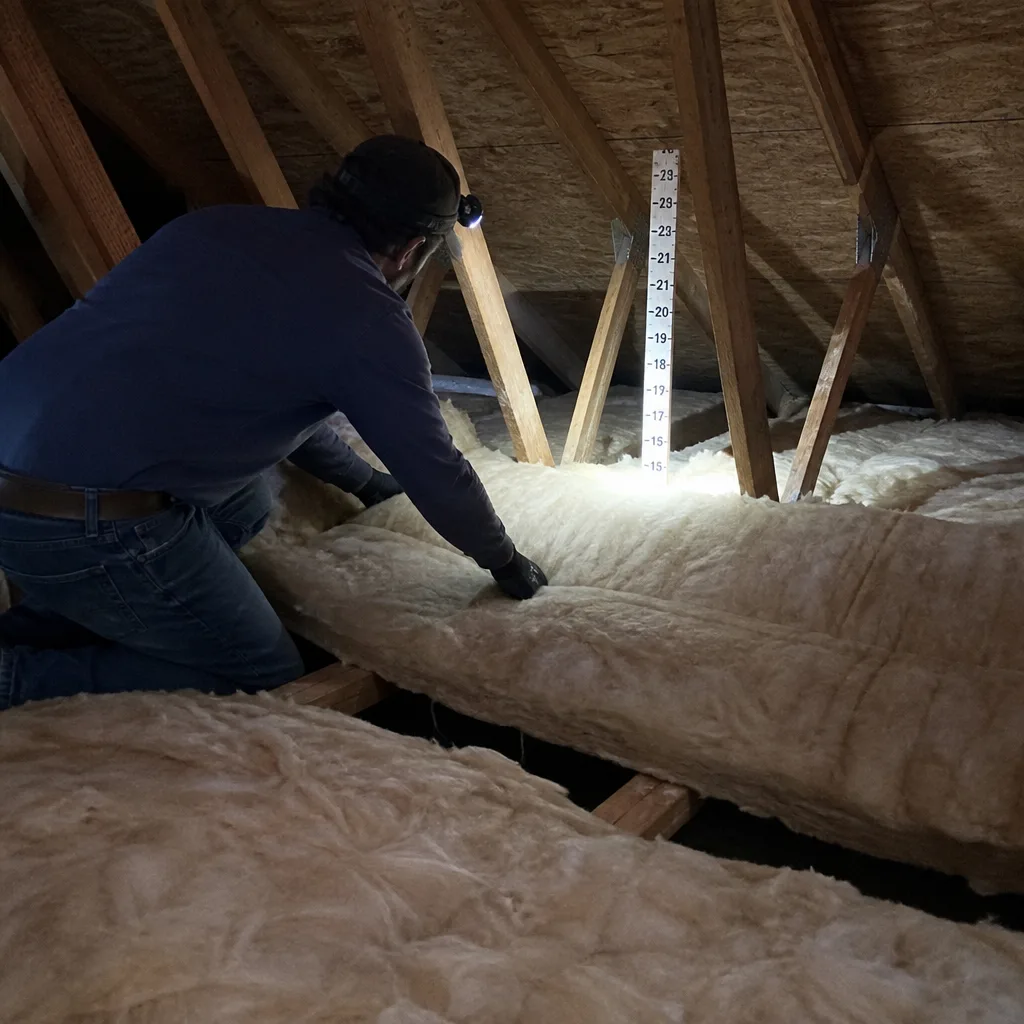
- Depth markers or rulers visible in insulation, with readable depth
- Job address visible in frame or geotagged in metadata
- Timestamp from camera or documentation system
- Multiple locations across the attic, not a single representative shot
We include a Documented Photo Record on every visit, included on every job, not available on request. The photos are taken by the crew chief and uploaded to your project record before the crew leaves the site.
Signed R-Value Attestation on Company Letterhead
This document states the installed R-value, the material used, the verified depth, and the date of installation. It is signed by a company representative with authority to warrant the work. In Schertz, where summer cooling loads dominate energy bills, this attestation supports any future claims about insulation performance or equipment sizing.
Written Warranty Terms
The 365-Day Done Right Promise - if it’s not done right, we make it right - is backed by a written scope and written warranty delivered before anyone starts. Read the warranty for exclusions: settling beyond specified tolerance, damage from subsequent trades, or moisture intrusion from roof leaks. A warranty that covers everything except the actual failure modes is not a warranty.
What Insulation Costs in Schertz
Homeowners researching Attic Insulation in Schertz need price context that reflects actual market conditions, not national averages that include Minnesota or Maine. These ranges reflect 2024-2025 Schertz-area pricing for typical residential work, based on our review of competing bids and our own project history.
| Scope | Typical Range | What Affects Price |
|---|---|---|
| Attic air sealing only (blower-door verified) | $1,200 - $2,800 | Attic square footage, penetrations count, access difficulty |
| Blown fiberglass or cellulose, R-38 (air sealing included) | $2,400 - $4,500 | Existing insulation removal, attic square footage, access type |
| Blown fiberglass or cellulose, R-49 to R-60 | $3,200 - $5,800 | Depth required, platform or storage deck modifications |
| Open-cell spray foam, roofline, 5-6 inches | $4,500 - $8,500 | Roof pitch, square footage, ignition barrier requirements |
| Closed-cell spray foam, crawl space walls | $3,800 - $7,200 | Crawl space height, moisture remediation prep, access |
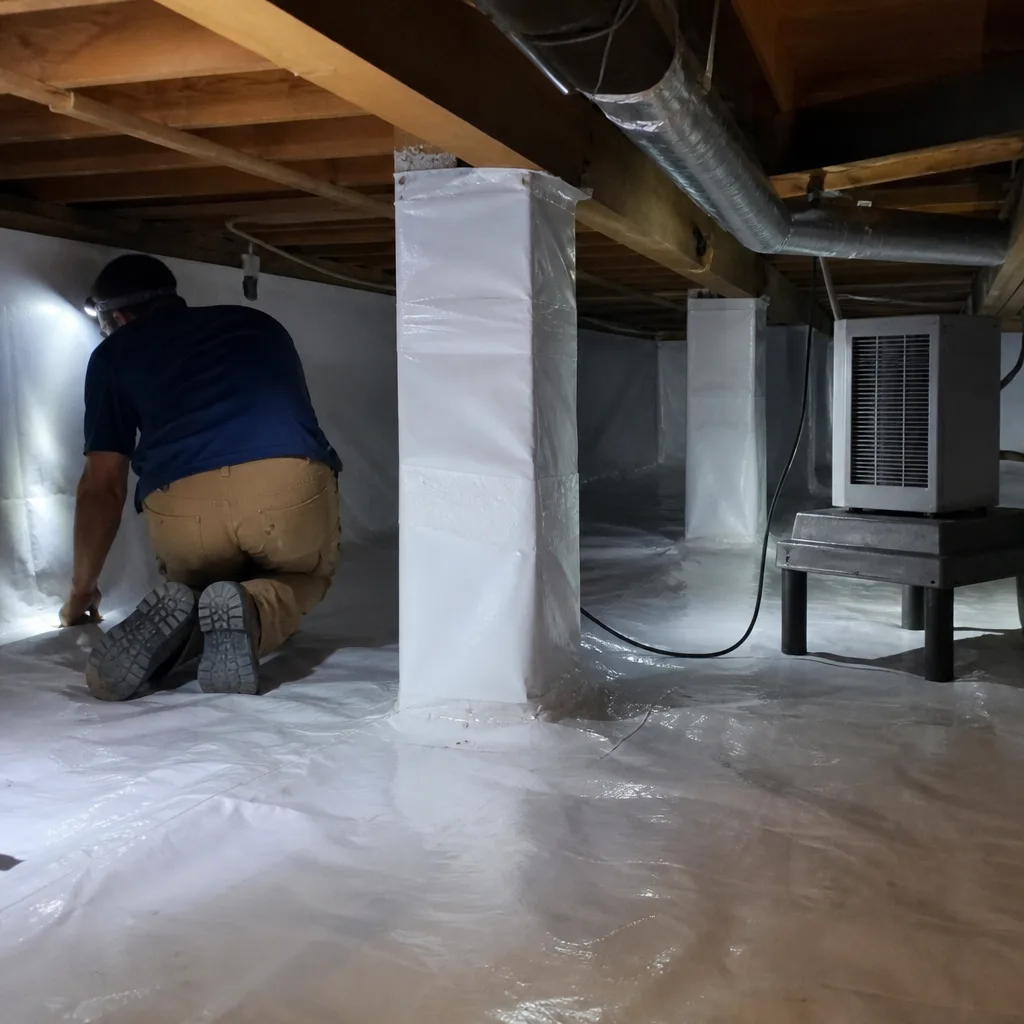
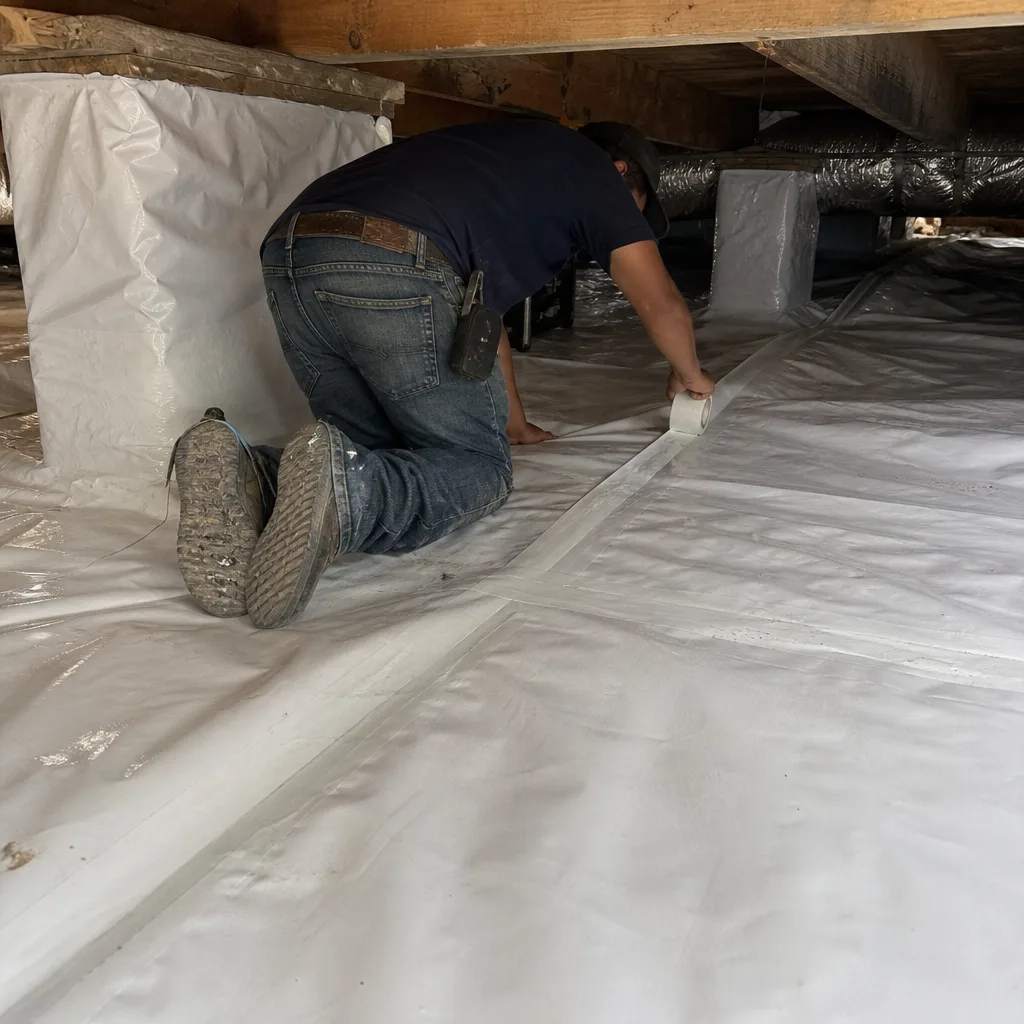
| Crawl space encapsulation with vapor barrier | $4,000 - $9,500 | Linear footage, dehumidifier sizing, foundation vent sealing |
These are installed prices with itemized scope, written warranty, and documentation included. For a detailed breakdown of what to expect, see Insulation Cost Breakdown: The Schertz Homeowner’s Reference for 2026. Prices below these ranges often indicate omitted air sealing, unverified depth, or no post-job documentation. Prices significantly above should include complex access, extensive remediation, or premium materials with specific performance claims.
For Crawl Space Encapsulation & Vapor Barrier in Schertz, the vapor barrier material matters: 6-mil polyethylene is minimum code; 12-20 mil reinforced polyethylene with sealed seams and mechanical fastening is what performs in Schertz’s clay soils, which expand and contract seasonally and can tear thinner materials.
Spray Foam Insulation in Schertz pricing varies significantly by product density and whether the application is open-cell (vapor permeable, lower R-value per inch) or closed-cell (vapor barrier, higher R-value, structural rigidity). We use Icynene and Demilec open-cell products and CertainTeed closed-cell formulations where appropriate, selected by application need rather than single-brand preference.
Common Mistakes to Avoid
- Comparing bids by total price without comparing scope depth. A $2,800 bid with no air sealing and per-bag pricing is not cheaper than a $4,200 bid with itemized sealing, blower-door verification, and fixed R-value. It is a different product entirely.
- Assuming all fiberglass or all cellulose is equivalent. Blown fiberglass at 0.5 pounds per cubic foot density performs differently than at 1.0 pounds per cubic foot. The scope should specify density or settled depth target, not just material type.
- Ignoring the attic access hatch. In Schertz, a leaky pull-down stair or uninsulated scuttle hole can undo 30% of attic insulation performance. A bid that does not address the access is incomplete.
- Skipping the pre-work blower-door test to save money. Some contractors offer a lower price by eliminating baseline measurement. Without a baseline, there is no verification that air sealing improved anything. The test is not an upsell; it is quality control.
- Hiring based on online reviews alone. Read the three-star reviews carefully. They often reveal communication patterns, scope disputes, or documentation failures that five-star reviews suppress. Then verify the reviewer’s project matches your scope.
- Allowing insulation over known roof leaks. In Schertz’s spring storm season, water intrusion must be resolved before insulation goes in. Wet insulation compresses, molds, and requires complete removal. A contractor who proceeds without moisture assessment is creating future liability.
- Accepting verbal promises about warranty or follow-up. The 365-Day Done Right Promise only matters if it is in writing, with clear trigger conditions and response timeframes. Verbal warranties are not enforceable.
When to Call a Professional
Call a qualified insulation contractor when your energy bills spike without rate increases, when rooms have persistent temperature stratification, when attic insulation appears disturbed or compressed, or when you are planning HVAC replacement and want right-sized equipment. In Schertz’s climate, envelope improvements often allow smaller, more efficient equipment - but only if the load calculation reflects actual post-improvement conditions.
Topside Attic Insulation Schertz offers free estimates in Schertz - call (830) 402-5240. We will review your existing conditions, run a blower-door test if indicated, and provide a written scope with fixed pricing before any work starts. Bring us a competing quote; we will read it with you as part of our Free Second Opinion on Any Written Estimate.
Frequently Asked Questions
Most attic insulation jobs in Schertz homes between 1,800 and 2,800 square feet run between $2,400 and $5,800 depending on target R-value, air-sealing scope, and whether existing insulation must be removed. Call (830) 402-5240 for an exact quote - estimates are free.
Old insulation must be removed if it is wet, mold-contaminated, or infested with rodents; if it is merely compressed or under-spec, new material can often be added on top after air sealing. We assess this during our initial inspection and include the determination in your written scope.
A typical Schertz attic with air sealing and blown insulation takes one day; spray foam rooflines or crawl space encapsulation may take two to three days including cure time and barrier coating. We provide a specific schedule in your written scope before work starts.
A blower-door test is a pressurization reading that shows, in one number, how much air your building envelope is losing. You need one before work to establish baseline leakage and after work to verify improvement. Without it, you are buying material, not verified performance.
Spray foam is worth the premium when applied to rooflines or crawl space walls where it simultaneously insulates and air-seals, or where framing constraints prevent adequate depth of blown material. For open attics with adequate depth available, blown fiberglass or cellulose with proper air sealing often delivers comparable performance at lower cost.
Building permits are required for spray foam application in occupied spaces and for any structural modification; blown insulation in existing attics typically does not require permitting unless the attic is being converted to conditioned space. We handle permit applications as part of scope when required.
The Bottom Line
Hiring an insulation contractor in Schertz comes down to one checkpoint: whether air sealing is included, itemized, and verified with a blower-door number before any insulation goes in. Everything else - price, material brand, warranty language - is secondary to that sequence. Demand a written scope with itemized sealing locations, installed R-value targets, and specified documentation format. Verify TDLR registration, general liability, and workers’ comp in under ten minutes online. Reject per-bag pricing, single-line air sealing, and any pressure to sign before you have compared scopes. The contractor who measures before, improves measurably, and documents after is the contractor who sells performance, not just bags in an attic.
Written by Wes Okafor, Owner at Topside Attic Insulation Schertz, serving Schertz since 2016.