
Last updated September 24, 2026
Insulation Cost Breakdown: The Schertz Homeowner’s Reference for 2026
The lowest insulation bid you receive for your Schertz attic is probably priced correctly for what it includes, which is insulation material, labor to blow it, and nothing else. The question is whether the scope it excludes, air sealing, blower-door testing, and documented post-job performance, is the part that determines whether the job actually works. In 2026, we’ve reviewed competitor quotes across Schertz neighborhoods from Selma to Live Oak that span $1,200 to $4,800 for the same attic square footage, and the difference is almost never the brand of fiberglass or cellulose. It’s whether the contractor treats the building envelope as a system or as a volume to fill with material. This guide breaks down what each line item costs in the Schertz market, how to read a quote for what’s missing, and what documentation you should walk away with. For more guides & resources on home performance, see our blog.
Quick Answer
A complete attic insulation job in Schertz in 2026 runs between $2,800 and $4,800 for a typical 1,800-square-foot home when air sealing, a blower-door test, and documented results are included. The same square footage can be quoted at $1,200 to $2,200 if the scope is limited to blowing insulation over an unsealed attic floor with no performance verification. The payback difference is measured in years, not months, because unsealed insulation performs at a fraction of its rated R-value.
Table of Contents
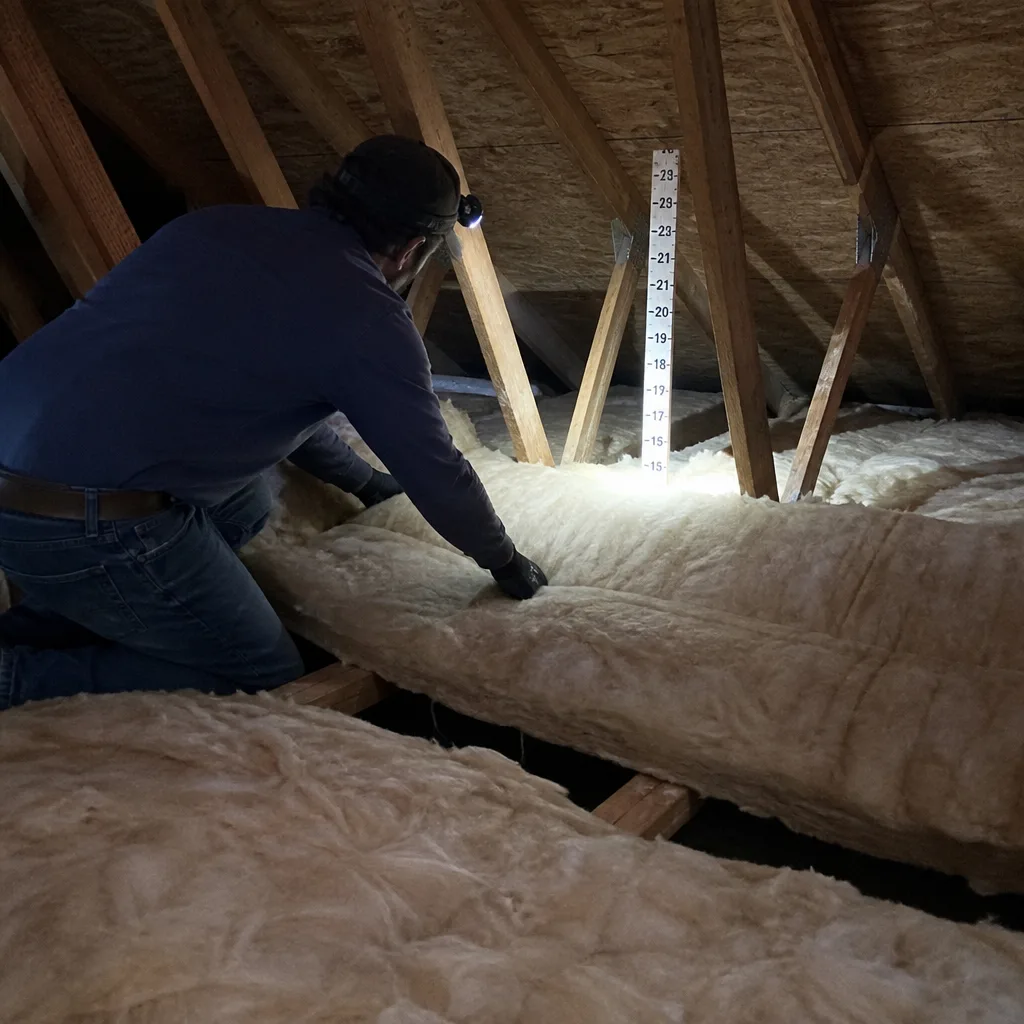
- Why Schertz Insulation Bids Vary by Thousands for the Same Attic
- Line-Item Cost Breakdown: What Each Component Costs in 2026
- The Cost-per-ACH50 Framework: What You’re Actually Buying
- Three Scope Items That Explain Most Price Spreads
- Payback Math for Attic Air Sealing in Schertz’s Climate
- Warranty and Documentation: The Hidden Value in Higher Bids
- Common Mistakes to Avoid
- When to Call a Professional
- Frequently Asked Questions
- The Bottom Line
Why Schertz Insulation Bids Vary by Thousands for the Same Attic
Homeowners in Schertz often collect three quotes and assume the middle one is safest. We’ve found the spread has less to do with contractor margin and more to do with scope definition, specifically whether the quote treats the attic as a surface to cover or a system to seal and insulate.
The Schertz market sits in a unique position. We’re close enough to San Antonio that some contractors commute from Bexar County with San Antonio pricing models, while others work exclusively within Guadalupe and Comal counties. Labor rates vary accordingly. Material costs are more stable, Owens Corning, Johns Manville, and Knauf distribute through similar channels across the I-35 corridor. The real variable is preparation and verification.
A low bid typically assumes:
- No pre-install blower-door test to establish baseline leakage
- No air sealing of top plates, can lights, or plumbing penetrations
- No hatch replacement or weatherstripping upgrade
- No post-install blower-door test to verify improvement
- No photo documentation or written performance record
A full-scope bid from a contractor operating under documented standards includes all of these. The homeowner who chooses the low bid often pays twice, once for the initial work, and again for the remediation when the house still drafts, rooms stay uneven, and energy bills don’t move.
We’ve worked in Schertz subdivisions built from the 1970s through the 2020s. The 1980s and 1990s stock in areas like Schertz Parkway and Cibolo Valley Ranch consistently shows the widest gap between quoted price and actual need, because these homes were built to codes that didn’t require continuous air barriers or sealed attic hatches. A contractor who doesn’t test can’t know what they’re leaving behind.
Line-Item Cost Breakdown: What Each Component Costs in 2026
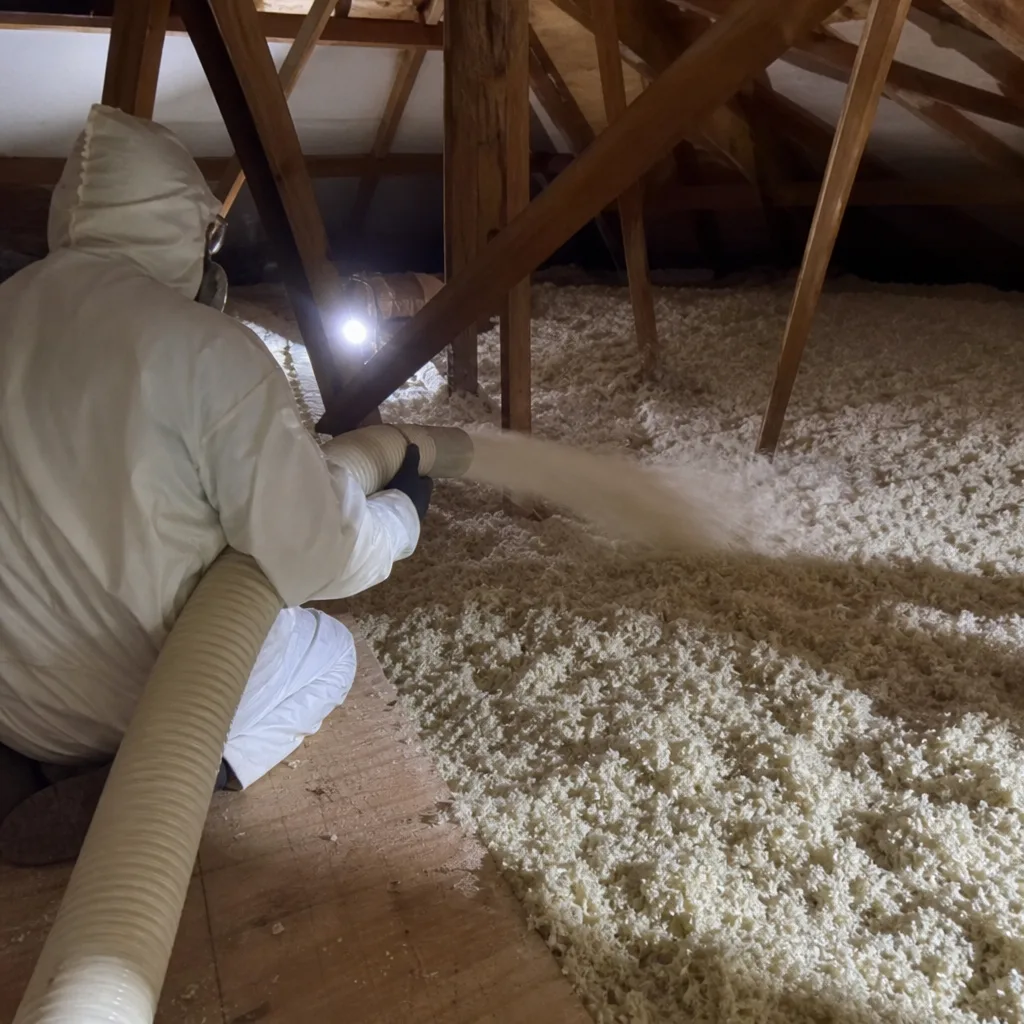
Every full-scope attic job we complete in Schertz follows the same sequence. Below are the 2026 market ranges we see and charge, based on a typical 1,800-square-foot single-story home with approximately 1,200 square feet of attic floor.
| Line Item | Description | 2026 Schertz Range |
|---|---|---|
| Pre-install blower-door test | Pressurization reading to establish baseline air leakage in CFM50 | $250-$400 |
| Attic air sealing labor and material | Sealing top plates, can lights, plumbing/electrical penetrations, chimney chases, dropped soffits with caulk, foam, and rigid barriers | $800-$1,600 |
| Attic hatch replacement or weatherstripping | New insulated hatch assembly or gasket and latch upgrade to existing | $200-$650 |
| Blown insulation material and labor | Fiberglass or cellulose to achieve target R-value, typically R-38 to R-49 in Schertz’s climate zone | $1,100-$1,800 |
| Post-install blower-door test | Pressurization reading to verify air-sealing improvement | $150-$250 |
| Documentation package | Written scope, before-and-after blower-door report, photo record, warranty documents | $150-$300 |
| Total Full-Scope Job | $2,650-$5,000 |
These ranges reflect what we charge and what we’ve verified from competitor quotes in the Schertz market. The blower-door test alone, a pressurization reading that shows in one number how much conditioned air your building envelope is losing, costs most contractors $250-$400 to perform correctly because it requires calibrated equipment and roughly 90 minutes of setup and testing time. Some contractors skip it entirely and absorb the savings into a lower bid.
Air sealing labor varies with attic complexity. A Schertz home with a simple gable roof, open attic, and minimal penetrations sits at the low end. Homes in older neighborhoods like Schertz Estates with multiple dormers, recessed can lights, and furnace platforms in the attic require significantly more linear footage of sealing and more material.
Insulation material costs have stabilized in 2026 after the volatility of 2021-2023. Blown fiberglass from Owens Corning or Johns Manville runs roughly $0.60-$0.85 per square foot installed at R-38 depth. GreenFiber cellulose, a recycled-content option we use when homeowners prioritize embodied carbon reduction, runs slightly higher in material cost but comparable installed due to different blowing characteristics.
The documentation package is where many bids diverge invisibly. A written scope, photo record, blower-door report, and warranty documents take office time to produce. Contractors who don’t deliver these save overhead. The homeowner receives a verbal promise and a receipt. Under Haven Standard Clause 1, we deliver flat price, written scope, and written warranty before anyone lifts a tool. The documentation cost is embedded in our pricing because it’s inseparable from the work.
The Cost-per-ACH50 Framework: What You’re Actually Buying
When you pay for air sealing, you’re buying a measurable reduction in air changes per hour at 50 Pascals of pressure, abbreviated ACH50. This is the metric that matters, and most Schertz homeowners have never seen it on a quote.
Here’s how to think about it. A blower-door test depressurizes your home to 50 Pascals, simulating a 20 mph wind on all sides simultaneously. The resulting CFM50 reading converts to ACH50 by dividing by your home’s volume. A 1980s Schertz home typically tests at 8-15 ACH50. New construction under current IECC codes must hit 3-5 ACH50. A well-sealed retrofit target is 5-7 ACH50 for our climate zone.
The cost-per-ACH50 framework asks: how much did you pay for each point of leakage reduction? If your pre-test was 12 ACH50, your post-test is 6 ACH50, and your air sealing line item was $1,200, your cost was $200 per ACH50 point. That’s a useful comparison between bids. A contractor who quotes $800 for air sealing but only drops you from 12 to 10 ACH50 costs $400 per point and leaves significant leakage unaddressed.
We’ve published before-and-after blower-door numbers on every applicable job since 2016. In Schertz’s climate, the difference between 12 and 6 ACH50 translates to roughly 15-25% reduction in heating and cooling load. That’s not a feeling of thoroughness. It’s a pressurization measurement that shows, in a single figure, how much conditioned air the home was losing before and after the work.
The framework also exposes scope gaps. A bid that includes “air sealing” without a pre-test and post-test cannot calculate cost-per-ACH50. The homeowner has no way to verify what was delivered. We’ve reviewed competitor quotes in Schertz that list “attic air sealing” as a $400 line item with no testing protocol. Without measurement, it’s a labor charge for activity, not a performance charge for results.
Three Scope Items That Explain Most Price Spreads
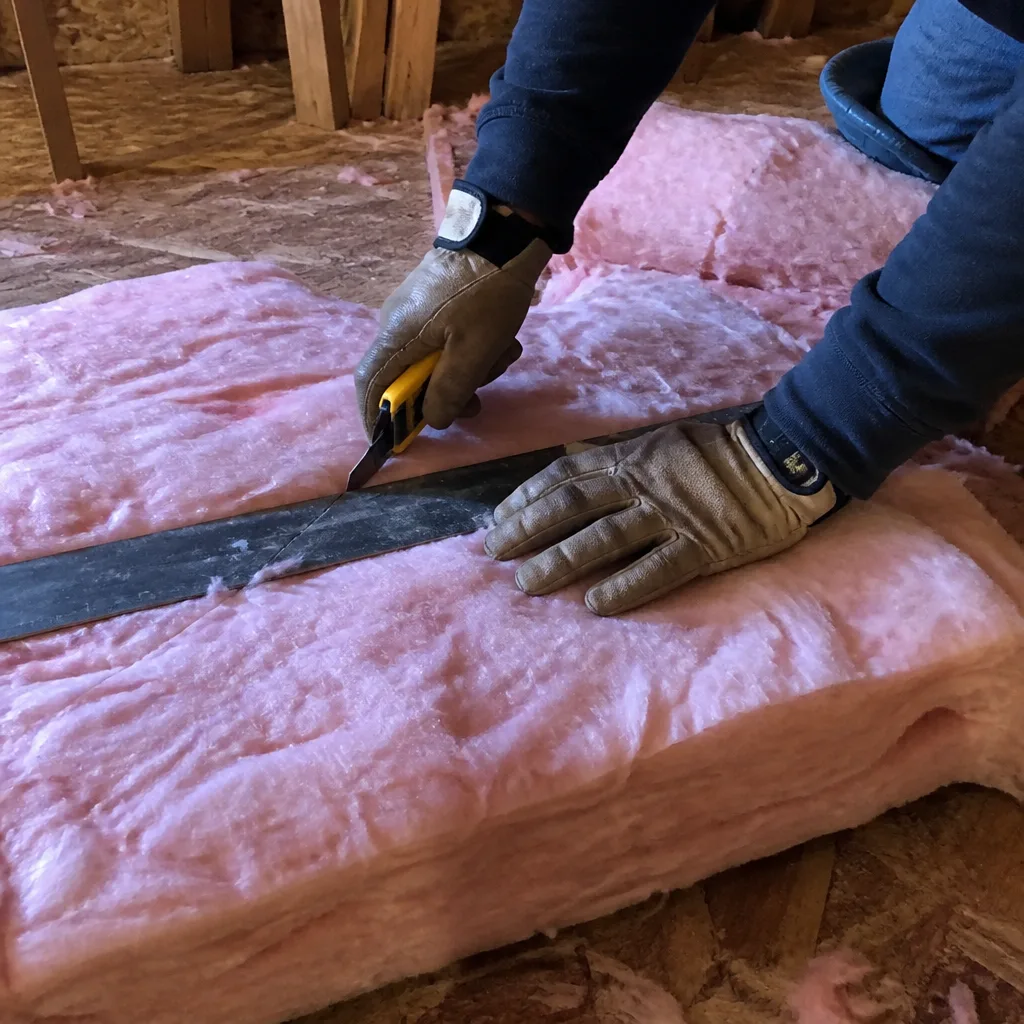
When we analyze competitor quotes for Schertz homeowners who bring us a free second opinion, three exclusions account for most of the price gap between low and high bids.
1. Air Sealing Linear Footage
The low bid often assumes sealing “major penetrations” or “visible leaks,” which in practice means the plumber’s vent stack and maybe the chimney chase. The full-scope bid specifies linear footage: top plates where interior walls meet the attic floor, every can light housing, every wire penetration, every duct boot, every soffit drop. A 1,800-square-foot Schertz home typically has 80-150 linear feet of top plate alone. At 15-20 minutes per foot including access, setup, and material, that’s 20-50 hours of labor that the low bid simply doesn’t include.
How to read for it: look for “air sealing of all top plates, penetrations, and envelope transitions” with a labor-hour estimate. Vague language like “seal major leaks” or “weatherize attic” without specificity is a scope gap.
2. Hatch Replacement Versus Weatherstripping
The attic hatch is the most concentrated thermal bridge in most Schertz homes. An uninsulated plywood hatch with a loose fit can leak as much as a square foot of open wall. The low bid often includes “hatch weatherstripping,” a gasket replacement that does nothing for the R-value of the hatch itself. The full-scope bid specifies either a new insulated hatch assembly, R-10 minimum with sealed edges, or a site-built insulated cover with weatherstripping and latches.
How to read for it: “Replace attic hatch with insulated assembly” versus “weatherstrip existing hatch.” The cost difference is $200-$450, but the performance difference is measurable on the blower-door test.
3. Duct Insulation Included or Excluded
Schertz’s cooling-dominated climate means ducts in unconditioned attics lose significant efficiency. The low bid treats ducts as someone else’s problem. The full-scope bid evaluates whether duct insulation, repair, or replacement is needed to achieve the overall system performance the homeowner expects. This isn’t always required, but it should always be evaluated and documented.
How to read for it: look for “duct condition assessment” or “duct insulation as needed” with a separate line item or explicit note that ducts were inspected and found adequate. Absence of any duct mention in a Schertz attic job is a red flag.
These three items, air sealing scope, hatch treatment, and duct evaluation, typically explain $1,200-$2,600 of the bid spread. The homeowner who understands them can ask direct questions and read quotes with precision.
Payback Math for Attic Air Sealing in Schertz’s Climate
Schertz sits in Climate Zone 2, hot-humid, with roughly 2,800 cooling degree days and 1,800 heating degree days annually. Our summers are long and punishing; our winters are short but can bring hard freezes that test envelope integrity. This climate profile makes attic air sealing particularly valuable, because the stack effect drives conditioned air upward year-round, and the cooling load dominates utility bills. For maintenance tips matched to this climate, see our Seasonal Insulation Care for Schertz: Year-Round Homeowner’s Guide.
Here’s the math for a typical 1980s Schertz home, 1,800 square feet, 12 ACH50 pre-test:
- Baseline annual HVAC energy: roughly 9,500 kWh for cooling, 4,000 kWh for heating, at CPS Energy’s 2026 residential rate of approximately $0.14/kWh blended = $1,890/year.
- Post-air-sealing ACH50 of 6: roughly 15% reduction in cooling load, 20% reduction in heating load, based on DOE-2 modeling for our climate zone and construction type.
- Annual savings: $200-$340 in year one, depending on thermostat setpoints, duct efficiency, and equipment SEER rating.
- Air sealing cost at mid-range: $1,200.
- Simple payback: 3.5-6 years.
This payback accelerates if the home has older HVAC equipment, significant duct leakage, or if crawl space encapsulation is performed simultaneously to address the full envelope. It extends if the home has already been partially sealed or has high-efficiency equipment with limited runtime.
The more important number for many Schertz homeowners is comfort value, rooms that actually reach setpoint, reduced humidity intrusion, and elimination of the second-floor penalty common in homes with unsealed attics. These don’t appear in simple payback math but drive the decision for families who’ve lived with uneven temperatures.
We’ve measured post-seal results in Schertz homes from the 1970s through new construction. The worst-performing stock, 1970s-1980s homes with original recessed lights and no attic hatch seal, routinely drop 6-10 ACH50 points with thorough air sealing. The best-performing stock, 2015+ homes built to tighter codes, might only drop 2-3 points. Both are worth doing, but the payback math differs significantly. A blower-door test before quoting removes the guesswork.
Warranty and Documentation: The Hidden Value in Higher Bids
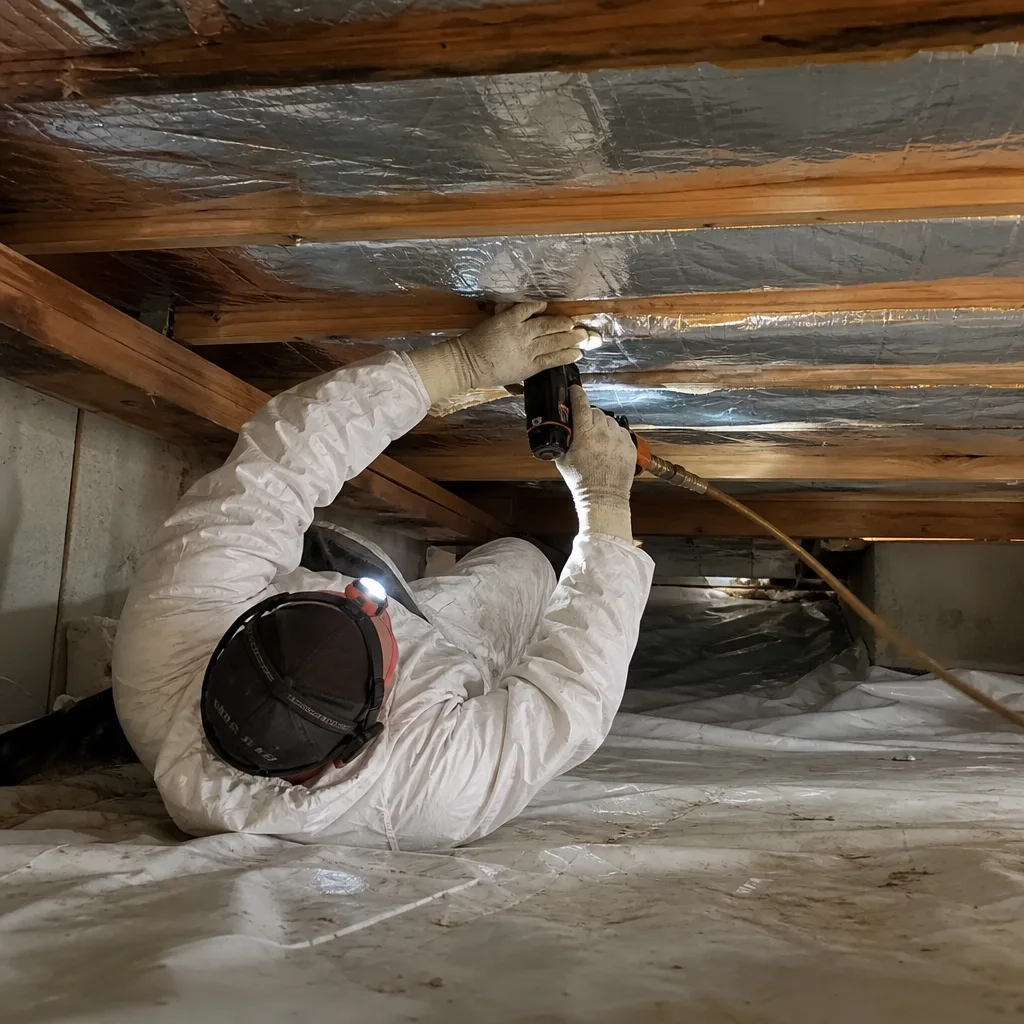
The documentation package embedded in a full-scope bid costs real money to produce, and it transfers value to the homeowner in ways that persist beyond the initial comfort improvement.
Here’s what it includes and what it costs us to deliver:
- Written scope of work: 30-60 minutes of technician and office time to document exactly what was sealed, insulated, and upgraded. Cost: $40-$75.
- Before-and-after blower-door report: Calibrated equipment depreciation, testing time, report generation. Cost: $150-$250 per test.
- Documented photo record: Technician time to photograph pre-condition, critical sealing details, and post-condition; office time to organize and deliver. Cost: $75-$125.
- Written warranty and 365-Day Done Right Promise documentation: Legal and administrative overhead. Cost: $25-$50.
Total documentation cost: $290-$500 per job. This is why low bids exclude it. The contractor saves labor, equipment, and overhead, and the homeowner receives a verbal assurance.
The resale value of documentation is where this becomes significant. Schertz’s housing market has appreciated steadily, and buyers in the $300,000-$500,000 range increasingly request utility history and improvement documentation. A file with blower-door readings, photo evidence of professional air sealing, and a transferable warranty differentiates a home from comparable properties with undocumented attic work. We’ve had Schertz homeowners tell us this documentation helped close sales or supported appraisal values.
Under Haven Standard, every job begins with a written price and ends with a documented record, no exceptions. The 365-Day Done Right Promise, if it’s not done right, we make it right, is only enforceable because the original scope was written and the original condition was photographed. A verbal promise with no record is unenforceable by design.
Common Mistakes to Avoid
- Comparing bids by total price without line-item scope comparison. A $2,200 bid and a $4,200 bid for the same attic are not comparable services until you verify what each includes. Request line-item breakdowns and read for the three scope items above.
- Assuming all blown insulation performs equally. Fiberglass, cellulose, and spray foam have different air-sealing characteristics, settling rates, and moisture tolerance. In Schertz’s humid climate, cellulose requires proper vapor management; fiberglass requires dense packing to limit convection. The material choice should follow the building science, not the contractor’s inventory.
- Ignoring the attic hatch. We’ve tested Schertz homes where the hatch leaked more than all other penetrations combined. A new R-49 blanket over the floor means little when the access point is uninsulated and unsealed.
- Skipping the pre-test because “we know it leaks.” The pre-test establishes baseline and identifies priority leaks. Without it, air sealing is guesswork, and you can’t verify improvement.
- Accepting “R-value added” as the only performance metric. R-value measures material resistance to heat flow in a laboratory. In your Schertz attic, air movement degrades R-value dramatically. A sealed R-38 performs better than an unsealed R-49.
- Hiring based on material brand alone. Owens Corning, Johns Manville, and Knauf all produce quality insulation. The installation quality and air-sealing protocol matter more than the brand on the bag. We source from multiple manufacturers to match material to application, with no proprietary lock-in.
- Neglecting to verify warranty terms in writing. Verbal warranties expire when the crew leaves. Under Haven Standard, you receive written warranty documents before work starts, so the terms are fixed and enforceable.
When to Call a Professional
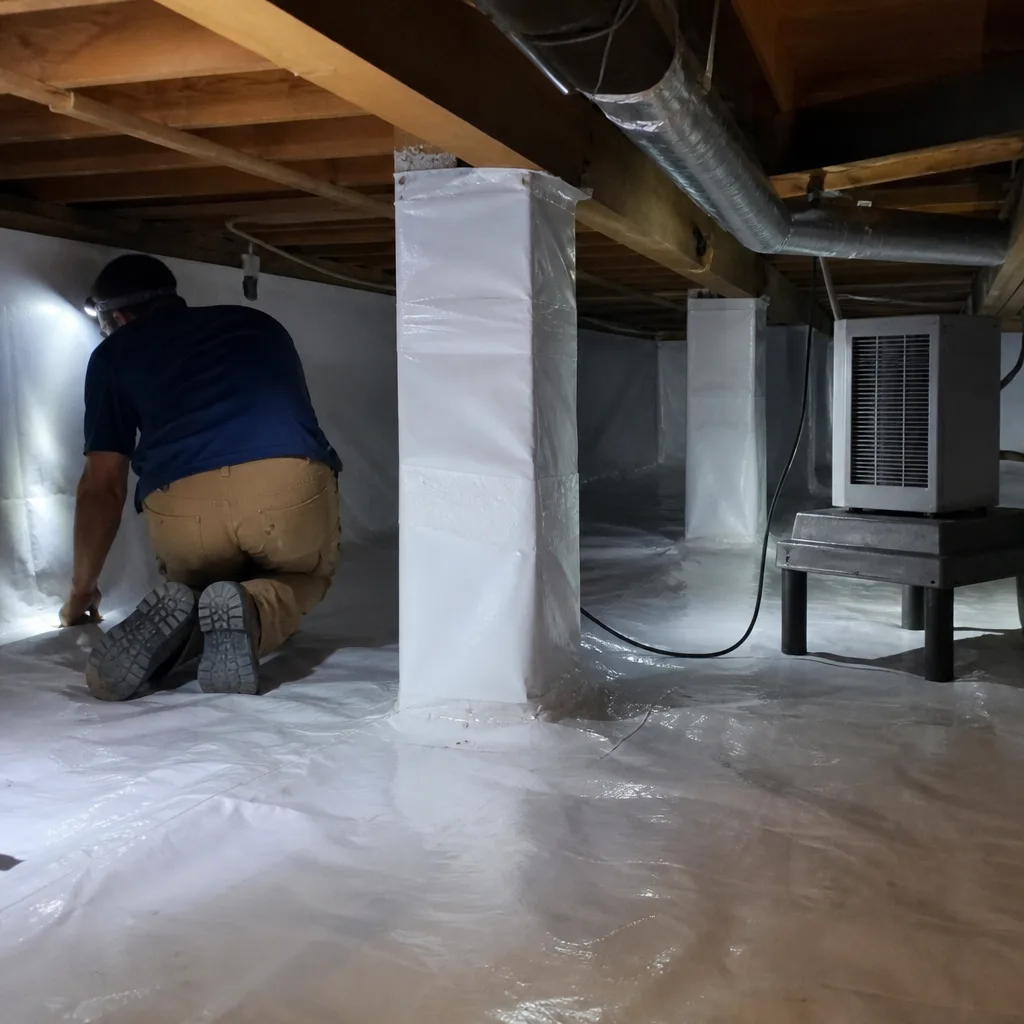
Call a professional when your upstairs rooms won’t hold temperature, your energy bills spike in July and August, you feel drafts from ceiling fixtures, or you’ve received three bids with no line-item breakdown. These symptoms point to envelope failures that material alone won’t fix.
Topside Attic Insulation Schertz offers free estimates in Schertz, and we deliver a written price before any work starts. Our technicians are background-checked and uniformed, and calls are answered by a live person 24/7. If you have a competing quote, bring it to us for a free second opinion, we’ll read it with you and identify scope gaps. Call (830) 402-5240.
Frequently Asked Questions
A complete attic insulation job in Schertz runs $2,800-$4,800 for a typical 1,800-square-foot home when air sealing, blower-door testing, and documentation are included. The same attic quoted without these scope items typically ranges $1,200-$2,200. Call (830) 402-5240 for a written estimate with line-item breakdown, estimates are free.
Repair, meaning adding insulation over existing material without air sealing, is cheaper upfront but often wastes money because it doesn’t address the air leakage that degrades performance. Replacement with full removal, air sealing, and new insulation costs more but delivers measurable results. In Schertz’s climate, we’ve found that homes with pre-1990 insulation and no prior air sealing almost always need the full-scope approach to achieve comfort goals. Call (830) 402-5240 and we’ll assess your specific attic condition.
Most full-scope attic jobs require two days: one for testing, air sealing, and preparation; one for insulation installation and post-testing. Same-day service is available for urgent situations like insulation removal after rodent damage or water intrusion, but performance-oriented work shouldn’t be rushed. We schedule based on scope, not speed. Call (830) 402-5240 to discuss your timeline.
Schertz’s hot-humid climate drives the stack effect year-round, pulling conditioned air upward through ceiling penetrations. Insulation blown over these leaks acts as a filter, not a barrier, and performs at a fraction of its rated R-value. Air sealing stops the air movement first, so the insulation can do its job. We’ve tested Schertz homes where sealed R-38 outperformed unsealed R-49 by measurable margins.
A blower-door test is a pressurization reading that shows, in one number, how much air your building envelope is losing. It matters for cost because it transforms air sealing from guesswork into measured performance. Without it, you’re paying for labor hours, not results. With it, you know exactly what improvement you bought. Every applicable job we complete in Schertz includes before-and-after blower-door numbers so you can verify the change.
Look for specific language: “air sealing of all top plates, penetrations, and envelope transitions” with a labor-hour or linear-foot estimate. Vague terms like “weatherize attic” or “seal major leaks” without specificity typically mean minimal work. Also verify that pre-install and post-install blower-door tests are listed as separate line items. If they’re absent, the contractor can’t measure or guarantee air-sealing performance. Bring any quote to us for a free second opinion, we’ll show you what’s missing.
The Bottom Line
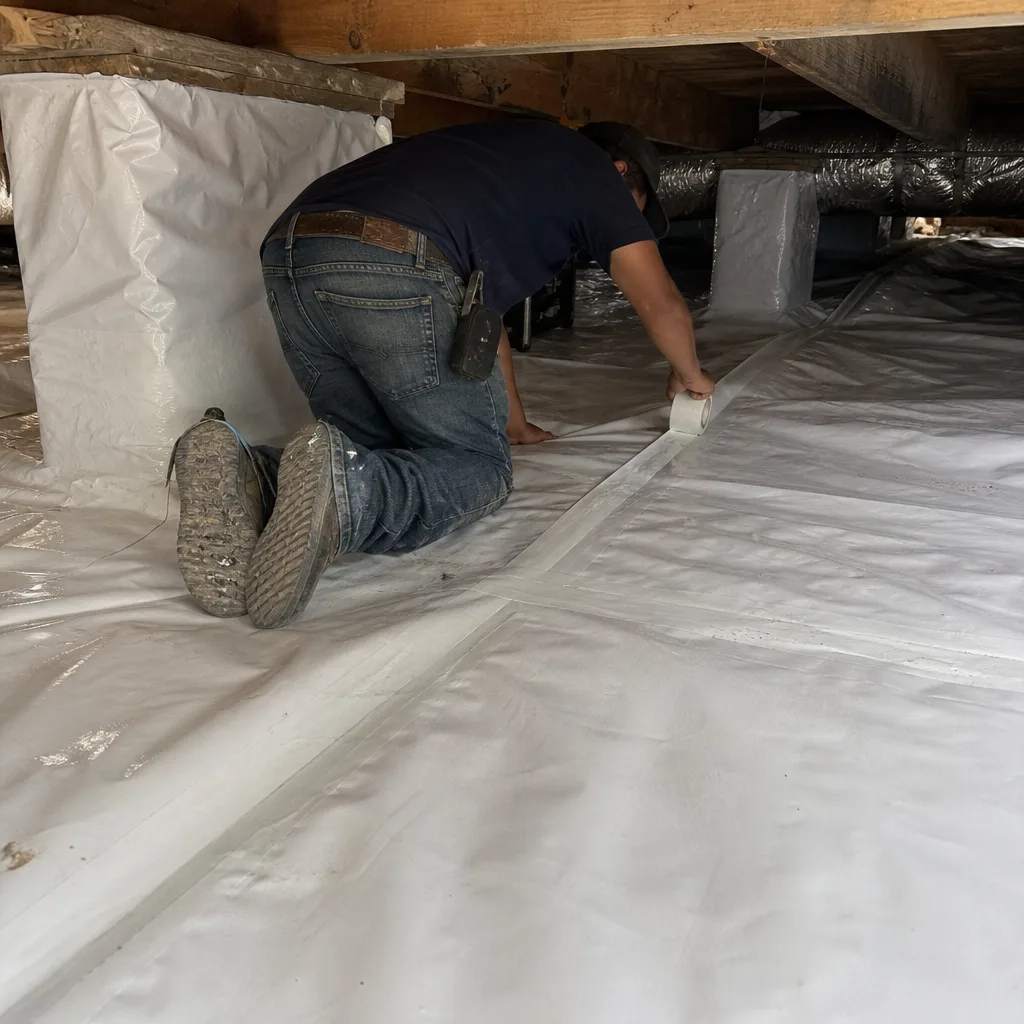
Insulation cost in Schertz isn’t primarily about material price or brand name. It’s about scope, specifically whether air sealing, performance testing, and documentation are treated as integral to the job or excluded to hit a lower number. A complete job tests before, seals thoroughly, insulates to verified depth, tests after, and documents everything. A partial job blows material over an unsealed floor and hopes for the best. The 2026 market ranges are clear: $1,200-$2,200 for material-only work, $2,800-$4,800 for full-scope performance work. The payback on the higher investment typically runs 3.5-6 years in Schertz’s climate, with additional value at resale from documented, verified improvements. Read every quote for the three critical scope items, ask for blower-door numbers, and refuse to pay for undocumented labor.
Written by Wes Okafor, Owner at Topside Attic Insulation Schertz, serving Schertz since 2016.